REVIEW · MUSEUMS
Munich Private Walking Tour with the BMW Museum and BMW Welt
Book on GetYourGuide →Operated by Travmonde OÜ · Bookable on GetYourGuide
Munich has a way of mixing speed, politics, and beer in the same day. This private tour threads that needle: you start with BMW’s cars and engineering, then shift into Munich’s center for major sights, local legends, and hard-hitting WWII resistance stories. Two things I especially like are the pairing of BMW Museum + BMW Welt in one session, and the way the city walk ties landmarks to the stories you actually remember. One consideration: it’s a lot to fit into 4 hours, and you’ll want comfy shoes for walking plus a bit of transit.
The tour also earns points for guide quality and pacing. The best review signals were about the guide being very knowledgeable and warm, with Claudio singled out for strong history knowledge and an easy, friendly style. I’d just flag that the itinerary touches dark topics like the Beer-Hall Putsch, Hitler-related history, the White Rose, and Georg Elser, so it’s not a light, comedy-only tour.
In This Review
- Key things to know before you go
- BMW Museum and BMW Welt: Where Munich’s Motoring Story Starts
- Marienplatz Meeting Point to Mary’s Column: Getting Oriented Fast
- St. Peter’s Church and the Frauenkirche Legends: Sacred Sites With Teeth
- From Odeonsplatz to White Rose and Georg Elser: History You Can Walk Past
- Hofbräuhaus Beer Culture: A Munich Stop That Doesn’t Feel Like an Afterthought
- Public transportation between BMW and the center: Why this matters
- What you get with a private group (and why it’s worth it)
- Who this tour suits best
- Price and value: Is $539 per group reasonable?
- Should you book this Munich BMW and beer history tour?
- FAQ
- Where does the tour start?
- How long is the tour?
- What’s included in the price?
- Is public transportation included?
- What languages is the guide available in?
- What should I budget for at Hofbräuhaus?
Key things to know before you go
- BMW Museum + BMW Welt back-to-back means you see both heritage and the brand’s future-looking side.
- Engines, motorcycles, and racing cars aren’t treated like filler; they connect to why BMW matters.
- Old Town landmarks are paired with stories, from royal romance to WWII resistance.
- Frauenkirche legends include the devil’s footprint, tied to the real building and its symbolism.
- Odeonsplatz + Hofbräuhaus gives you Nazi-history context and Munich beer culture in the same itinerary.
- A private group guide keeps things flexible and more conversational for your crew.
BMW Museum and BMW Welt: Where Munich’s Motoring Story Starts
If you’re into cars, the BMW Museum is the practical warm-up. It covers roughly a century of BMW success and innovation in motorsports, and it’s built around the ideas behind the machines, not just dates on walls. You’ll see exhibits tied to the evolution of BMW cars, motorcycles, and engines, so the whole thing clicks together instead of feeling like random display cases.
A smart detail here is the range. You’re not limited to one type of vehicle or one type of fan. The museum layout makes it easy to pause on what interests you most—racing achievements if that’s your thing, engineering if you prefer the why behind the horsepower, or iconic vehicles if you just want the visual hits.
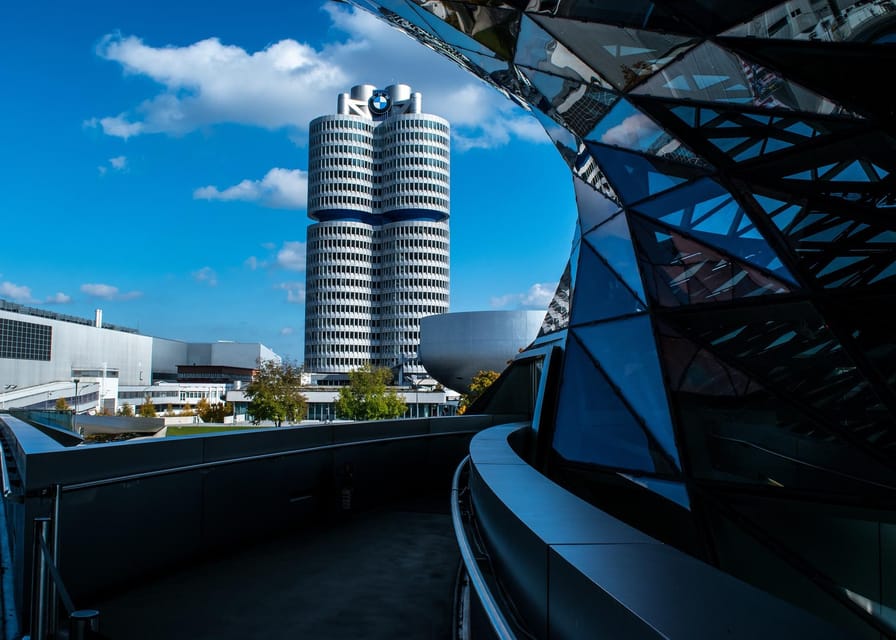
Then you move to BMW Welt, which changes the mood. Instead of focusing only on the past, it gives you a peek at future vision—think design and tech as part of the BMW identity. There’s also mention of MINIs and Rolls-Royces in the showroom exhibit, which can be a fun breather if your group includes people who don’t want to stay locked into BMW-only history. The point isn’t that it’s a mall; it’s that you get a broader view of how BMW Group brands present themselves in modern Munich.
What makes this pairing good value for your time is the logic. In 4 hours, you won’t usually get a full BMW story and a city story unless they’re stitched together. Here, you get a clear arc: legacy first, future glance second, then a transfer into central Munich.
You can also read our reviews of more walking tours in Munich
Marienplatz Meeting Point to Mary’s Column: Getting Oriented Fast
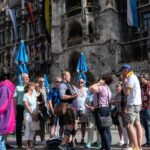
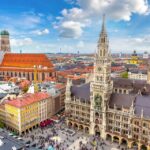
Your tour starts in a very scenic, easy-to-find place: in front of the Fish Fountain at Marienplatz Square, right outside the city hall area (Am Marienplatz, 80809 München). This matters because Marienplatz is a natural hub for understanding Munich’s geometry. Before you hop into specific stops, you’re already standing in the middle of it all.
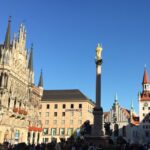
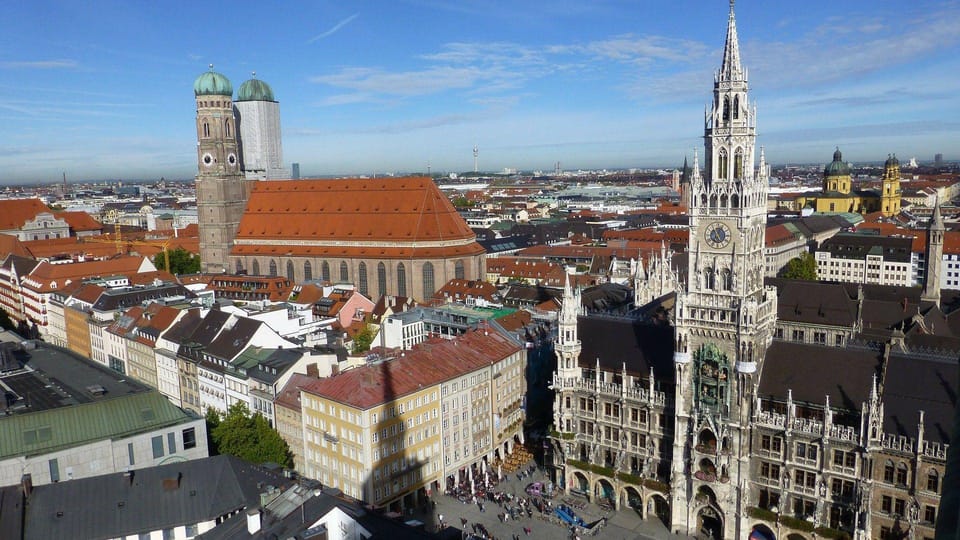
From there, the city walking portion brings you through the historic center with landmark anchors and story threads. The plan includes Mary’s Column, the Old Town Hall and New Town Hall, and the famous Glockenspiel in the clock tower area. If you’re trying to decide what to prioritize in Munich, these are the “you’ll recognize it later” sites—great for first-timers and still satisfying if you’ve been here before.
The tour also adds context to make these stops more than photo backdrops. Instead of simply pointing at buildings, the guide weaves in stories connected to what you’re seeing. That’s where the experience earns its “beyond landmarks” claim in a way that’s actually useful: you leave with mental hooks.
And it’s not just one era. You’ll hear about the royal side of Munich, including the love story of King Ludwig I and Lola Montez. You’ll also get the story of Ludwig II, described as the Not So Mad King, which helps balance the caricature you might have heard elsewhere. The tour then touches on the life of Eva Braun, presented as misunderstood—again, not as trivia, but as a framing for how people got caught in and around the machinery of power.
St. Peter’s Church and the Frauenkirche Legends: Sacred Sites With Teeth
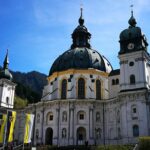
Once you’re in the religious and architectural stretch, you’re looking at Munich through a different lens. St. Peter’s Church is noted as the city’s oldest Catholic church, and that alone gives it weight. What I like about including it in a mixed tour is that it gives you a calmer pause after the intensities of the BMW and the royal story beats.
Then you shift to Frauenkirche, one of Munich’s biggest visual anchors. The tour includes the chance to learn about legends linked to the church, including the devil’s footprint story. These kinds of legends aren’t just folklore wallpaper. They explain how people made sense of fear, faith, and meaning in a city that kept growing and changing.
Here’s the practical tip: when your guide mentions a legend like the devil’s footprint, ask yourself what the symbol is trying to do. It’s usually about boundaries—what’s holy, what’s dangerous, and how a community reads the world. Even if you don’t care about symbolism, it’s a great way to turn “big church, pretty views” into something you can remember.
From Odeonsplatz to White Rose and Georg Elser: History You Can Walk Past
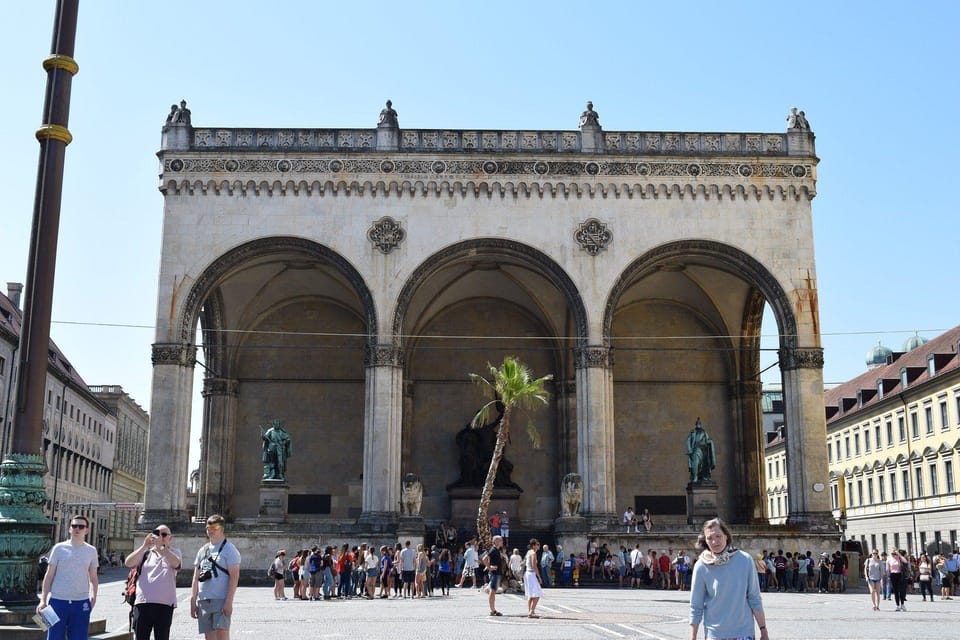
You don’t stay in warm, safe history mode for long. The tour includes Odeonsplatz, specifically in relation to the Beer-Hall Putsch, described as a major event in Nazi history when Hitler and his followers attempted to seize power. This is one of the stops where a guide really matters. The difference between reading about history later and understanding it on the street is pacing, context, and what gets emphasized.
The same city walk then connects to resistance history, including the White Rose and Georg Elser’s bold act. I like that these resistance references balance the storyline. You’re not only seeing the rise and propaganda. You’re also being reminded that opposition existed—and that individuals acted even when outcomes were grim.
A possible drawback is emotional weight. This is not a casual “beer and jokes” tour the whole way through. If your group includes younger travelers or anyone sensitive to WWII material, you’ll want to be ready for the topic shift. On the plus side, being guided helps keep it grounded instead of sensational.
Hofbräuhaus Beer Culture: A Munich Stop That Doesn’t Feel Like an Afterthought
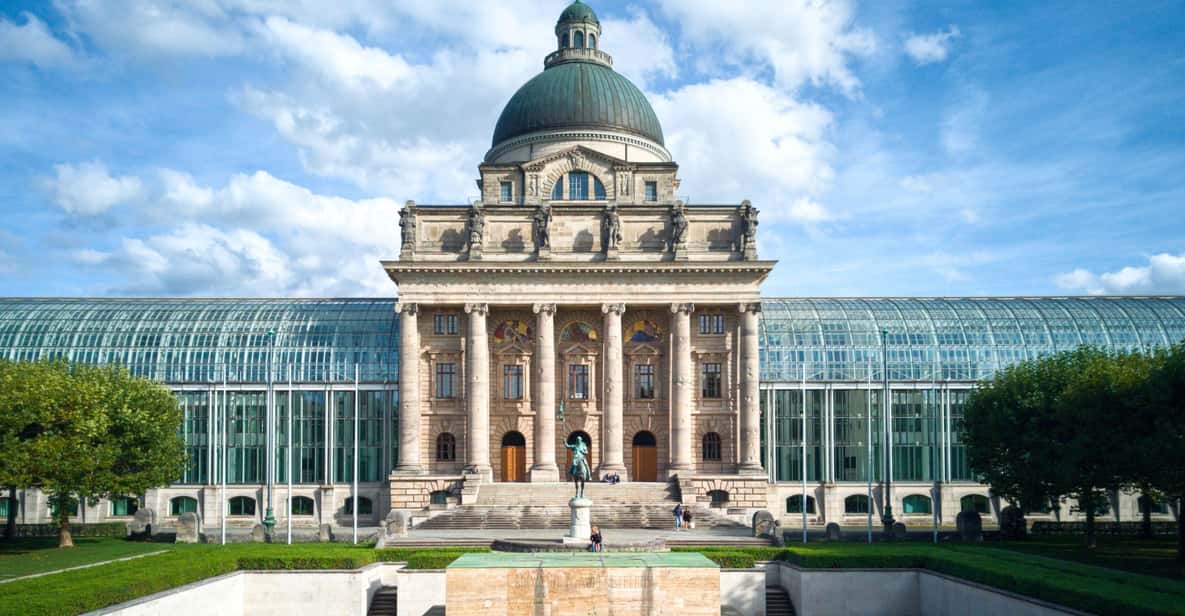
The tour ends its major Munich-history run at Hofbräuhaus, which the tour notes was established in 1589. That’s a big deal because it helps you understand why beer hall culture became part of Munich identity, not just part of tourism.
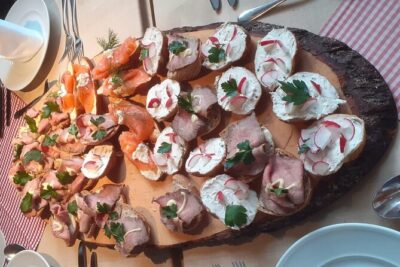
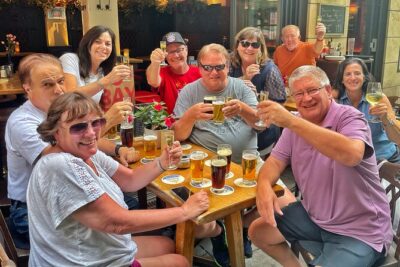
The tour framing here is practical: you experience Munich beer culture in the live atmosphere and have time to savor local delicacies and refreshing beverages. Just remember what’s included vs. not included. Food and drinks aren’t included, so plan to budget for whatever you order at the hall. This is one of those moments where you choose the experience level: a single beer and a snack works, but a full meal costs more.
Also, because it’s a private group, you don’t have to perform social bravery in a packed crowd the whole time. You can keep your group together, ask questions of your guide, and get a real sense of what beer-hall culture means to locals as opposed to what it means in a marketing brochure.
You can also read our reviews of more private tours in Munich




Public transportation between BMW and the center: Why this matters
One logistics piece that can make or break the day: public transportation isn’t included. The tour uses public transportation to get you from the BMW side to Munich’s historical center. That means you should have transit figured out before the tour starts—at minimum, know how you’ll pay for it and whether you’ll need tickets or passes.
Why I care about this for your trip: if you’re in Munich for a short stay, transit surprises are stressful. A guide can tell you where to go, but the cost and actual ticketing are still on you. If you already have a transit plan, you’ll feel the tour as smooth and efficient. If you don’t, you’ll lose a chunk of mental energy.
What you get with a private group (and why it’s worth it)
This is a private group tour, designed for your group only, with a local guide dedicated to you. The price is listed as $539 per group up to 15, which changes the value equation in a big way. With a group of a few people, it can feel like a premium splurge; with 8 to 15 people, it can start to look like excellent value compared to paying multiple individual tours.
The other value point is the BMW portion itself. Museum entry is included, which reduces admin stress. And the guide’s role matters especially here, because BMW Museum and BMW Welt can be fun on your own, but they’re far more satisfying with someone explaining what you’re looking at and how the racing/engineering stories connect.
Language options are English and German, which is useful if you’re bringing bilingual friends or you want the flexibility to pick your guide language.
Who this tour suits best
This tour is ideal if you want a Munich day that’s more than a “walk and point” sightseeing loop. It suits you if:
- you like BMW cars, engines, motorsports, or design, and you want context fast
- you want Old Town landmarks paired with specific stories (royal romance, WWII resistance)
- you’re going with friends or family who prefer a private format
- you enjoy beer culture but don’t want it separated from the city’s larger story
It may be less ideal if your group wants a purely light, cheerful experience or if you’re uncomfortable with Nazi-era topics and resistance history.
Price and value: Is $539 per group reasonable?
Let’s talk value like adults. You’re paying $539 per group (up to 15) for a 4-hour experience with a dedicated guide and BMW Museum entrances included. What you’re getting is essentially two tours in one: a BMW-focused cultural/engineering experience plus a central Munich walking experience with history and legend stops.
Where the value really lands:
- BMW Museum entry included reduces the biggest “hidden” cost for a car-themed museum day.
- Private guiding generally improves your experience at stops like Odeonsplatz and Frauenkirche, where context makes the difference.
- You’re not paying separate guides for BMW and Old Town; it’s one coordinated flow.
Where you might feel the cost: if you travel as a couple or solo, $539 can feel steep compared to a group tour. But if you share the price across a small group, the math gets friendlier fast.
Should you book this Munich BMW and beer history tour?
I’d book it if you want Munich through three lenses at once: engineering, architecture/legends, and WWII-era context, followed by a classic beer hall stop. It’s also a strong choice when your group includes mixed interests, since BMW Museum/Welt satisfies the tech-and-design crowd while the city section keeps things grounded with landmarks and stories.
If you want a slower, deeper museum day and a long sit-down lunch, you might prefer adding time on your own before or after. But as a 4-hour private mix, this is a practical way to see more of Munich than the usual checklist.
If you do book, make sure your group is prepared for both kinds of history: the fun stories (royal romance, local legends) and the heavy ones (Beer-Hall Putsch, White Rose, Georg Elser, and related WWII history). The balance is part of what makes the day feel like Munich instead of just a museum and a photo walk.
FAQ
Where does the tour start?
It starts in front of the Fish Fountain at Marienplatz Square, Am Marienplatz, 80809 München, Germany.
How long is the tour?
The duration is 4 hours.
What’s included in the price?
A local guide dedicated to your group only is included, and there are entrances to the BMW Museum.
Is public transportation included?
No. Public transportation is not included.
What languages is the guide available in?
The live tour guide is available in English and German.
What should I budget for at Hofbräuhaus?
Food, drinks, and other expenses are not included, so you’ll want to plan a budget for meals or beverages at Hofbräuhaus.