REVIEW · THIRD REICH & WWII WALKING TOURS
Third Reich Walking Tour Munich
Book on Viator →Operated by Radius Tours GmbH · Bookable on Viator
Munich has a hard past in plain sight. This Third Reich walking tour uses nearby streets and buildings to explain how Nazi propaganda gained power, then includes stops at memorials for people who resisted and suffered.
I love the way the guides connect the landmarks to cause-and-effect, from propaganda to street-level power grabs. I also like the small-group feel (max 25) and how guides often use photos to make the story click, from Keith’s patient storytelling to Michael’s frank answers.
One thing to plan for: the tour is mostly outdoors, so cold wind or rain can make the walk feel like more of a marathon.
In This Review
- Key things I’d watch for
- Munich on Foot, With the Nazi Story Behind the Facades
- Starting at Radius Tours and Getting Oriented Fast
- Königsplatz: Where Power Became a Public Performance
- Odeonsplatz: Marches, Memorials, and the Choreography of Control
- Staatliches Hofbräuhaus: When Beer Halls Became Political Social Space
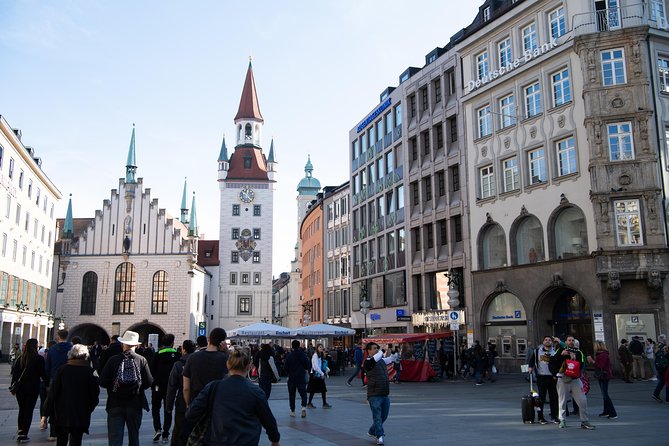
- Old Town Hall and the Symbolism of Civic Power
- Marienplatz Finish: Turn Learning Into the Rest of Your Munich Day
- What the Best Guides Tend to Do (So You Actually Remember It)
- Price and Value: Is $45.95 Worth It?
- Who Should Book This Third Reich Walking Tour in Munich?
- Should you book this tour?
- FAQ
- How long is the Third Reich Walking Tour in Munich?
- What language is the tour offered in?
- Where do I meet, and where does the tour end?
- How much does the tour cost?
- What’s included in the price?
- What’s the group size limit?
- Is the tour mostly outdoors?
- Are service animals allowed, and is it near public transportation?
- What is the cancellation policy?
Key things I’d watch for
- Real landmarks, real context: you’re not just hearing names—you’re seeing the places where public power was staged
- Questions are welcome: guides answer openly, even when the topic is uncomfortable
- Königsplatz is central: a major Nazi-era site that many first-time Munich visitors miss
- Squares and beer halls show the theater of politics: propaganda wasn’t confined to speeches
- Memorial stops keep focus on victims and resistance
- You finish at Marienplatz: easy to roll right into standard Munich sightseeing
Munich on Foot, With the Nazi Story Behind the Facades
If you’ve only seen Munich as beer halls and pretty streets, this tour will reset your mental picture fast. The route goes through the city’s public spaces and historic institutions, and the guide ties them to how the Nazi movement gained visibility, legitimacy, and momentum. It’s the kind of history lesson that lives in stone, not just in books.
What makes it valuable is the balance: you learn how the system worked—how messages spread and crowds were shaped—while also remembering the human cost. In a city that looks calm from a distance, these stops matter. They turn your walk into a lesson in how hate scales up when ordinary life becomes part of the plan.
Still, this isn’t light sightseeing. Plan for heavy subject matter and a walking pace that assumes you can stand and move for long enough to get through multiple squares and buildings.
You can also read our reviews of more walking tours in Munich
Starting at Radius Tours and Getting Oriented Fast
The tour begins at Radius Tours at Dachauer Str. 4 in central Munich. You’ll check in at the start point, pick up your bearings quickly, and then get moving on foot. It’s a convenient location for a walking tour, and it’s close to public transportation, so you’re not trapped in a complicated commute.
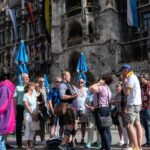
A small but helpful detail: you’ll have a mobile ticket, which keeps things simple on the day. And since the tour has a maximum of 25 people, it stays personal enough for the guide to actually keep track of what the group is asking.
Timing-wise, the first stretch is short—just enough to set context—then the tour builds into longer landmark stops. If you like your history with clear pacing (and not just a steady stream of facts), this structure helps.
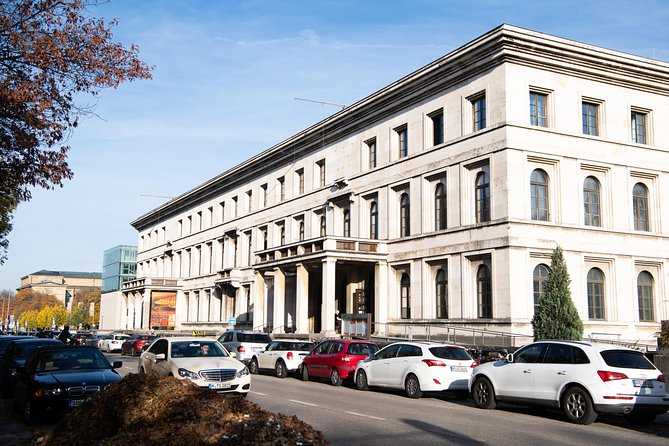
Königsplatz: Where Power Became a Public Performance
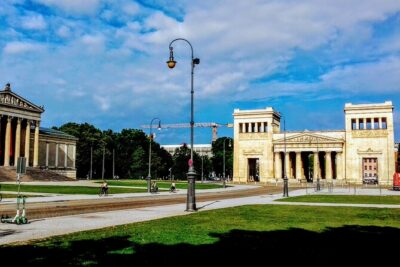
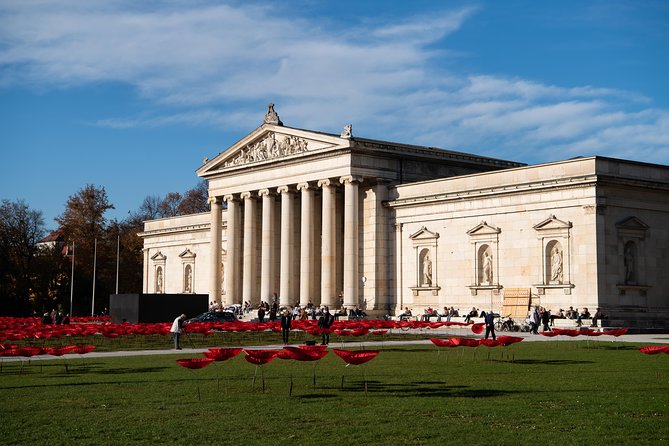
Königsplatz is the first major stop on the route, and it’s there for a reason. This is an important Nazi-era landmark site, and the guide uses the space to explain how the Nazi Party treated public architecture and open areas like stage sets.
Here’s what you’ll likely take away: propaganda didn’t just mean posters or radio. It meant controlling the atmosphere around people—making rallies feel inevitable, synchronized, and meaningful. When you stand in the space, those ideas feel less abstract. The guide should help you connect the physical setting to the political theater.
A practical note: this is a good stop to pay attention to where you’re standing and how the guide positions the group for sightlines. If the day is windy or cold, you may want to keep your layers easy to manage, because outside squares can feel harsher than they look on the map.
Odeonsplatz: Marches, Memorials, and the Choreography of Control
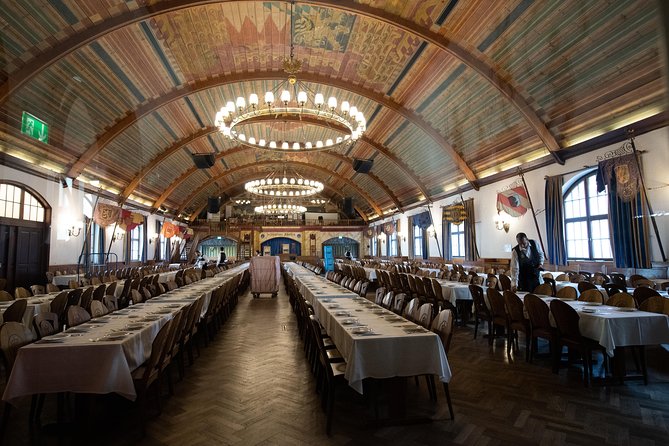
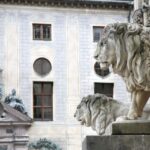
Next up is Odeonsplatz, another key square tied to Nazi marches and memorials. This stop is where the tour often feels most like a story unfolding in front of you. The guide talks about how large gatherings were staged to create emotion and momentum—and how those moments helped normalize the ideology.
This is also where you start seeing the pattern: public spaces become tools. A march isn’t only about walking. It’s about who leads, who follows, and what the city is made to look like in that moment. When you pair that with the guide’s explanations, you get a clearer picture of how the movement tried to bind itself to Munich’s public identity.
If you’re the kind of person who likes to ask follow-up questions, this is a good moment to speak up. Reviews highlight that guides often handle uncomfortable questions with patience and honesty, instead of brushing them off. That matters here, because the topic asks for real engagement.
Staatliches Hofbräuhaus: When Beer Halls Became Political Social Space
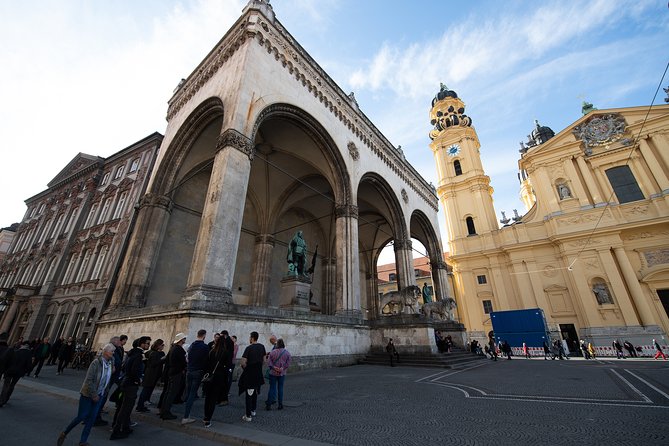
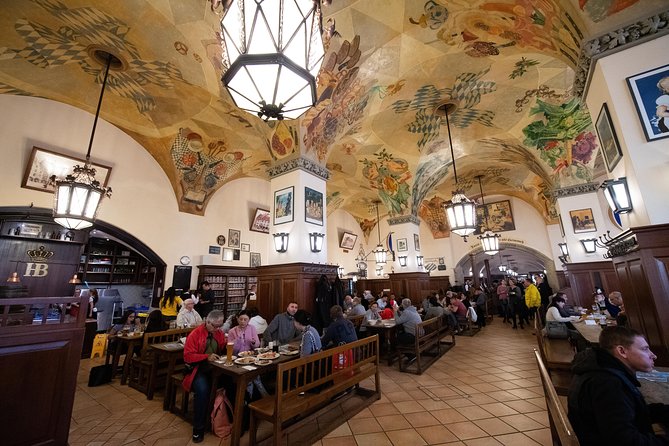
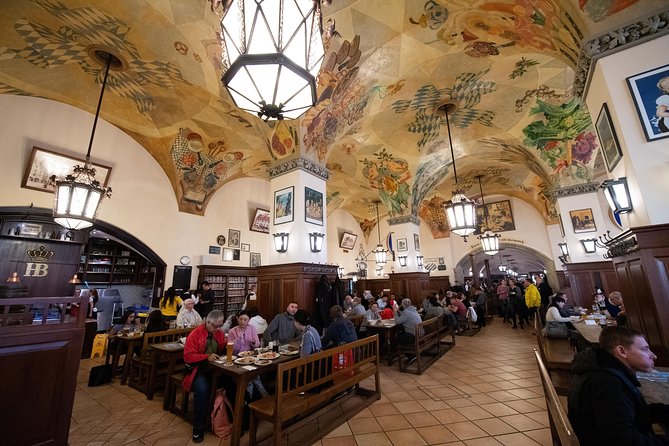
After the squares, you’ll move to the Staatliches Hofbräuhaus area. Even the Hofbräuhaus is described as an important structure for the Nazi Party, and the stop helps explain why beer halls and social venues were part of the political ecosystem.
This is a crucial concept for visitors: politics didn’t live in a separate universe. Social life was one of the pipelines. Places associated with everyday routines could be repurposed to pull people into speeches, messaging, and influence. The guide should help you see the difference between a historic building you visit for atmosphere and a building that was used for power.
This stop is also a good reality check. Munich still has plenty of places where you can eat, drink, and relax. The tour doesn’t tell you to avoid them. It asks you to notice what changed and what was exploited along the way.
Old Town Hall and the Symbolism of Civic Power
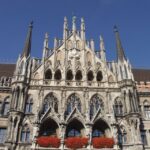
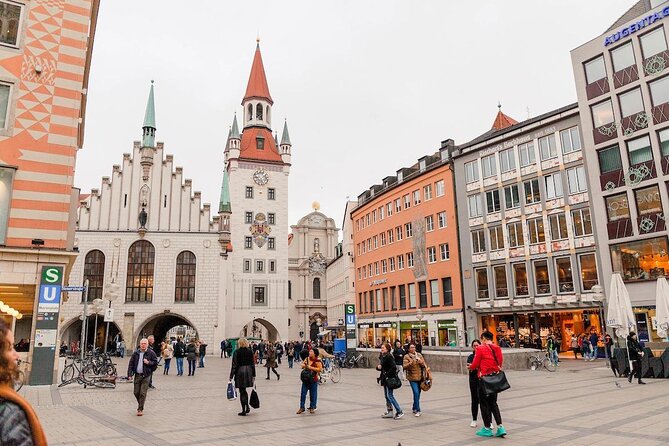
The route then brings you to the Old Town Hall. This is a lighter-feeling stop in terms of atmosphere, but the meaning can be heavy. The guide uses the civic setting to connect Munich’s institutions to the larger political shift—how a city’s identity gets leveraged when a regime wants legitimacy.
Even without going into complicated legal details, this stop helps you understand something visitors often miss: dictatorships don’t only win with force. They also try to win with symbolism. They aim to look official, historic, and inevitable—like they’re the natural next chapter for the city.
You’ll likely get a clear explanation of what to look for as you pass by the building—what makes it historically significant in the way it represents authority, and why that matters for the story of power moving into place.
Marienplatz Finish: Turn Learning Into the Rest of Your Munich Day
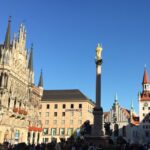
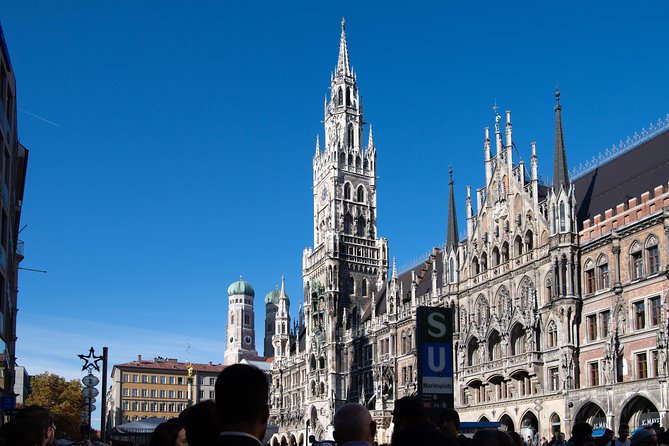
The tour ends at Marienplatz, right in Munich’s center. That ending point is practical: it leaves you exactly where you want to be for the rest of the day—shopping streets, major sights, and lots of café options.
More importantly, finishing in Marienplatz gives you a useful contrast. You started with the Third Reich story in specific landmark spaces. Now you’re in the city’s everyday heart. The contrast can be unsettling—in a good way—because it reminds you that history doesn’t sit in museums only. It sits under regular life.
If the topic touched you, consider adding related resistance history after your walk. One example mentioned in the guide’s orbit is the White Rose museum, which many people pair with this kind of learning to understand the moral opposition to Nazi ideology from those who resisted.
What the Best Guides Tend to Do (So You Actually Remember It)
A huge part of the experience is the guide. Over multiple departures, you’ll see names like Michael, Jake, Nik, Keith, Aileen, and others. That doesn’t mean you’ll get a specific person on your date—but it does suggest the tour’s style: guides aim to be clear, organized, and responsive.
In particular, the most praised tours share a few strengths:
- They answer questions openly, even when it makes people uncomfortable.
- They use visual aids like photos to connect the buildings to what happened around them.
- They keep pacing human, including moments to breathe and regroup.
- They balance gravity with a tone that doesn’t numb you.
There’s also a repeated theme in feedback: the best guides manage the outside conditions. If it’s bitter cold, you’ll appreciate when the group is brought into sunnier spots when possible, rather than forcing everyone to freeze through the same angle of explanation.
Price and Value: Is $45.95 Worth It?
At $45.95 per person for about 2.5 hours with a local guide, this tour sits in the “reasonable and focused” category. You’re paying for two things you can’t easily replicate on your own: interpretation and structure.
Munich does have plenty of plaques and information boards, but it’s easy to walk past key context. This tour gives you that missing glue: how Nazi ideology spread, how political staging worked in public spaces, and why specific locations mattered.
It’s also good value because you’re not paying extra admission at each listed stop. And the group size cap of 25 keeps the experience from feeling like a stampede.
One more value tip: the tour’s popularity means booking ahead helps. The average booking window is around 29 days, so if you’re traveling in a busier period, earlier planning is smart.
Who Should Book This Third Reich Walking Tour in Munich?
You should book if you want your Munich history in a form you can see while you walk. It’s a strong option for first-timers who feel they’ve only skimmed the surface. It’s also a good fit if you like your history explained as cause-and-effect—how propaganda and public life fed into power.
You might want to skip or choose a different format if:
- walking for 2.5 hours outside is hard for you
- you strongly prefer an lighter, strictly sightseeing-style day
- you want a slower, more museum-heavy format for this topic
This tour is for people ready to learn, not just for people passing through landmarks on autopilot.
Should you book this tour?
If you’re in Munich and you want to understand how the Nazi movement gained traction in a real city—not just in abstract terms—this is a solid choice. The stopping points are central, the guide-led interpretation is the main value, and finishing at Marienplatz keeps the day flexible.
My rule of thumb: if you can handle a respectful, serious topic and you’re fine with outdoor walking, book it. If you’re not in that headspace, save it for another trip when you can give it the attention it deserves.
FAQ
How long is the Third Reich Walking Tour in Munich?
The tour is about 2 hours 30 minutes long.
What language is the tour offered in?
It’s offered in English.
Where do I meet, and where does the tour end?
You meet at Radius Tours, Dachauer Str. 4, 80335 München, Germany. The tour ends at Marienplatz in central Munich (80331 München-Altstadt-Lehel, Germany).
How much does the tour cost?
The price is $45.95 per person.
What’s included in the price?
You get a 2.5-hour walking tour and a local guide.
What’s the group size limit?
The tour has a maximum of 25 travelers.
Is the tour mostly outdoors?
The experience requires good weather, so plan for time outside.
Are service animals allowed, and is it near public transportation?
Yes, service animals are allowed, and the tour is near public transportation.
What is the cancellation policy?
There is free cancellation. You can cancel up to 24 hours in advance for a full refund. If it’s canceled due to poor weather, you’ll be offered another date or a full refund.