REVIEW · THIRD REICH & WWII WALKING TOURS
Munich in the 3rd Reich and WW2 private walking tour
Book on Viator →Operated by Dark History Tours · Bookable on Viator
Munich can feel like a living history book. This private walking tour turns the city’s streets into a clear, street-level story of the Third Reich and World War II, with your guide focused only on your group. Private means you can ask questions and steer the pace instead of following a crowd.
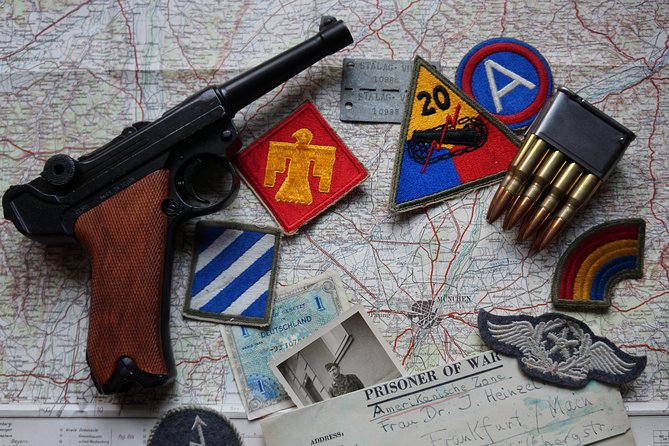
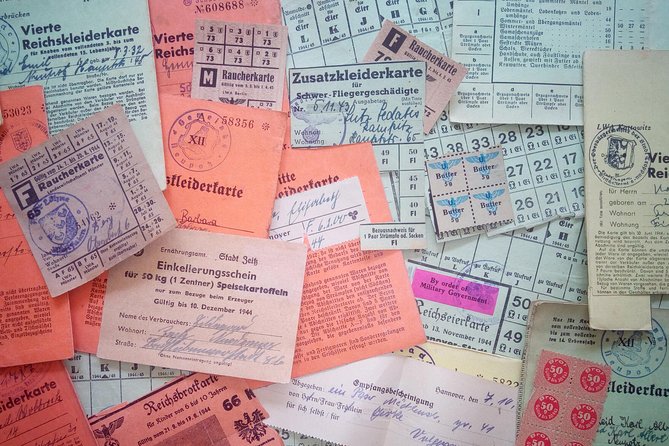
I also love the way the guides use photos and memorabilia to help you recognize what you’re seeing, not just hear dates and names. The result is that key locations feel connected, from the post–World War I chaos through the Nazi rise and the lead-up to the Holocaust.
The main tradeoff is simple: you’ll do moderate walking and you’ll do it in all weather. If you want a sit-down, car-style sightseeing day, this one won’t match your style.
In This Review
- Key highlights worth planning for
- Munich’s Third Reich story, told on the pavement
- Your route: Isar Gate to Odeonsplatz (with easy city access)
- From Versailles and unrest to the Nazi Party’s rise
- Beer Hall Putsch: why Munich became a symbol
- Crystal Night and the origins of the Holocaust
- SS birthplace, Nazi Party Headquarters, and the Munich Pact area
- Allied bombings and the 1945 fall to US forces
- How the guide experience shapes what you get out of it
- Beer hall break: yes, it’s part of the story
- Walking time, weather, and footwear you’ll thank yourself for
- Price and value: $423.44 per group (up to 6)
- Who this tour is best for (and who should consider another option)
- Should you book this Munich Third Reich and WWII private walking tour?
- FAQ
- How long is the private walking tour?
- How many people are in a group for this private tour?
- Where do we meet and where does the tour end?
- What topics and sites are included?
- Is the tour offered in English?
- Do you use a bus or car during the tour?
- Is there a break during the tour?
- Does the tour run in bad weather?
- Can I cancel for a refund?
Key highlights worth planning for
- Private, on-foot format with undivided attention from your guide
- A timeline you can walk from the Great War and Versailles to 1945 and the US forces
- Visual learning with photos, memorabilia, and sometimes added presentation tools
- Historical break built in at a beer hall tied to the period (cafe option if you prefer)
- Central route starting at Isar Gate and finishing near Odeonsplatz
- Guide-led questions and flexibility when your group wants more or needs less time
Munich’s Third Reich story, told on the pavement
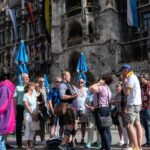
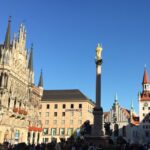
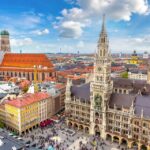
Munich is famous for its looks—church towers, the river, and the whole Oktoberfest vibe. This tour adds the other side of the city: the painful political story that helped drag Europe toward World War II. You don’t just learn what happened. You learn how it grew, step by step, in a city people already loved.
The private format matters more than you might expect. In a one-on-one or small-group setup, you can stop when something clicks or when your questions get more specific. And because you’re walking, the city’s layout helps the story make sense instead of feeling like a classroom lecture.
This is the kind of experience I think history fans will really enjoy, especially if you like connecting politics, propaganda, and real places. You’ll also get enough context to understand why Munich was called the Capital of the Movement, not just a backdrop.
You can also read our reviews of more walking tours in Munich
Your route: Isar Gate to Odeonsplatz (with easy city access)
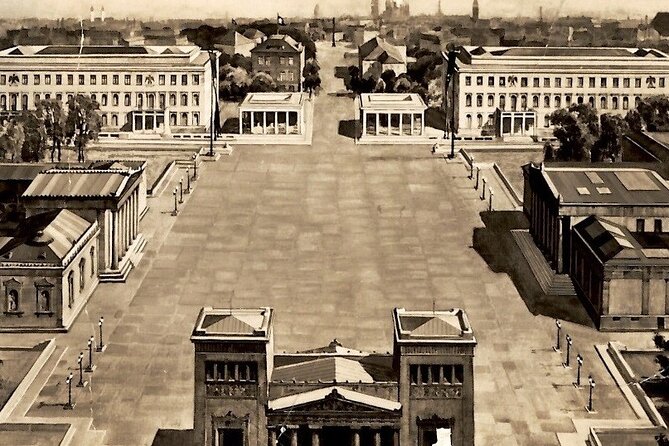
The tour begins at Isar Gate (Tal 50, 80331 München) and ends at Odeonsplatz (Odeonspl. 3, 80539 München). Odeonsplatz is a big plaza by the Residenz palace and only a few minutes from Marienplatz, so it’s a convenient finish if you want to keep exploring after.
Along the way, you’ll move between key sites associated with World War II and the Nazi era. The actual order can shift based on your guide and conditions, but you should expect a coherent flow rather than random stops. If you’re mapping your day, treat it as a central-city loop: you’ll end in the same historic core where many Munich highlights cluster.
There are also options for where pick-up can happen, including Hauptbahnhof (main train station) or Marienplatz. That’s handy if you’re staying near transit and don’t want to taxi across town before your tour even starts.
From Versailles and unrest to the Nazi Party’s rise
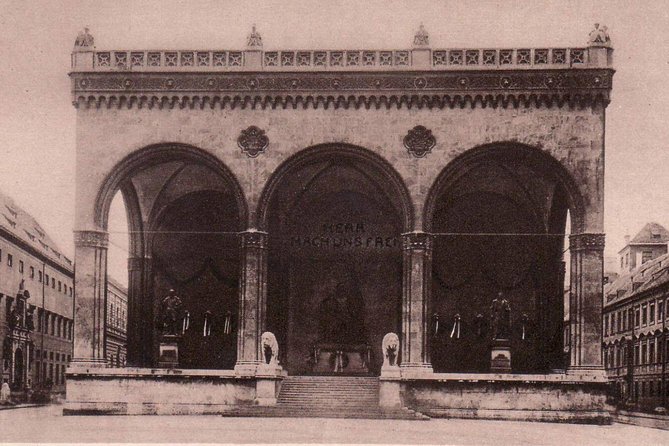
One of the strongest parts of this tour is how it starts before the Nazi Party is even fully formed. You’ll cover the Great War and the Treaty of Versailles, then follow how the period after 1914–18 became traumatic for Germany and Munich. The tour frames Munich as a place where social and economic unrest helped political extremism take root.
You’ll then move into the origins of the Nazi Party and learn how the movement emerged out of that instability. The guide’s job here isn’t just to list events. It’s to connect the conditions to the choices people made, which makes the story feel less abstract.
This approach is valuable because it stops you from treating history like isolated chapters. Instead, you see the cause-and-effect logic—how one crisis can create space for extreme solutions.
Beer Hall Putsch: why Munich became a symbol
After you understand the early groundwork, the tour heads toward dramatic moments that turned Munich into a political symbol. A key stop is tied to the infamous Beer Hall Putsch.
Even if you already know the broad outline, a walking format helps you understand why public spaces matter in political movements. A city is more than a set of buildings; it’s stagecraft. When the tour shows you sites linked to the coup attempt, the propaganda and power theater stop being theoretical.
I like that this part of the tour is presented as part of a larger arc. You’re not asked to memorize one incident. You’re shown how incidents helped build momentum and public identity.
Crystal Night and the origins of the Holocaust
The tour includes Crystal Night and the origins of the Holocaust. This is heavy material, and it’s also the moment where the story stops being only political and starts becoming human tragedy on a massive scale.
What makes this part worth your time is the way it is framed as part of a system rather than a shocking one-off event. You learn how the Nazi regime’s actions connected to broader persecution policies. The walking stops give you a sense of place, which can make the reality harder to dismiss as something that happened far away.
Because you’re on foot and in a small group, you have room to pause mentally. And because it’s private, you can ask for clarification if something feels confusing or if you want context without derailing the whole day.
You can also read our reviews of more private tours in Munich



SS birthplace, Nazi Party Headquarters, and the Munich Pact area
The tour also targets some of the most important power locations in the Nazi era. You’ll see and learn about the birthplace of the SS, the Nazi Party Headquarters, and the signing of the Munich Pact.
These topics matter because they show you how authority became institutional. It’s easy to think of evil as personal. This tour nudges you to see it as organized—structures, agreements, and offices that turned ideology into policy.
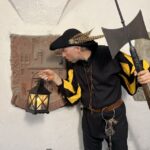
The visual tools help here. Guides often use photos and period references to anchor what you’re seeing in the same way a museum display does, but without the glass case. You get to stand in the modern city while the guide explains what it meant at the time.
One nice bonus from guide styles: some guides are willing to go beyond the standard stops if your questions point there. In past tours, guides have added extra context tied to resistance themes, such as the White Rose, when it fits the conversation.
Allied bombings and the 1945 fall to US forces
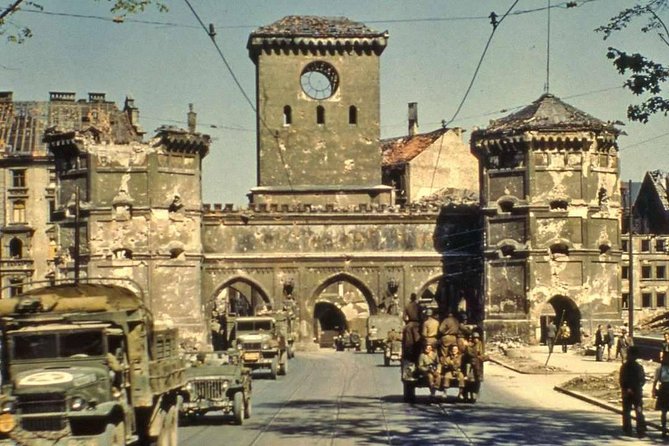
Then the tone shifts toward the war’s destruction. The tour covers the Allied bombing campaign, and it also addresses how the city fell to US forces in 1945.
This section is useful because it doesn’t let you leave with only the rise-and-power story. Munich’s World War II chapter includes aftermath and collapse. Even if you’ve read about the war before, seeing the city’s layout alongside the bombing narrative helps you understand what it means for a war to reach a civilian place.
It also helps you connect the timeline. You start with the post–World War I breakdown, move through ideological consolidation, and end with the city’s wartime reality and final defeat. That arc is one of the main reasons this tour works better than a quick highlights walk.
How the guide experience shapes what you get out of it
This tour lives or dies on the guide. The good news: the guides connected to these tours have a reputation for being prepared and flexible, and the private setup gives you the room to benefit from that.
For example, guides such as Taff (also referred to as David Taff Simon) have used photos supporting the sites, and some have used props or dramatic presentation when appropriate. Taff has also been described as adapting the route smoothly when weather or timing demanded it, which matters in Munich because winter days can turn fast.
Other guides mentioned in connection with this experience include Kevin, who has been praised as funny and effective with younger visitors, and Joanne, who stepped in and kept the tone engaging while using historical photos of the area. That matters if your group has mixed interests—some folks want the big picture, others want the gritty details.
If you’re the type who likes questions, this tour tends to reward that. You’ll hear the story, then you can ask for more context where you personally want it.
Beer hall break: yes, it’s part of the story
The tour generally stops for a break in a beer hall associated with this history. Refreshments aren’t included, but it gives you a chance to slow down, warm up, and reset before the next section.
Important practical detail: if you’d rather take a break in a cafe, tell your guide. That flexibility can make the difference between a comfortable day and a miserable one, especially in cold or rainy weather.
Also, remember: the tour is on foot. So this stop isn’t just a pause—it’s a rhythm change. It helps you digest the heavier parts without rushing.
Walking time, weather, and footwear you’ll thank yourself for
The duration is roughly 3 hours 30 minutes to 4 hours 30 minutes, depending on pacing and conditions. You’ll do a moderate amount of walking, and the tour operates in all weather.
That means your clothing matters. Dress appropriately and wear suitable footwear. In December and other winter months, you can easily end up on icy sidewalks in central Munich. Your guide can adapt, but your shoes still control how enjoyable the day feels.
Most importantly, this is not a car or bus tour. You’re choosing a walking experience, and you should expect to move.
Price and value: $423.44 per group (up to 6)
The price is $423.44 per group, for up to 6 people. That’s not cheap if you’re traveling solo. But for families or small groups, it can be a very efficient way to get a private guide without paying for six separate tours.
Think of it like this: you’re buying time with a guide who can tailor your pace, stop for your questions, and use visual aids to make the story stick. If you have two or more people who genuinely want history, private pricing can start to make sense fast compared with booking multiple group tours and then splitting your attention.
Also, the fact that the tour is in English helps prevent translation friction that can happen when you rely on secondhand audio. You can follow the thread of a complex and emotional subject without constantly re-checking details.
Who this tour is best for (and who should consider another option)
Book this tour if you:
- Want a guided walk through Munich’s Third Reich and World War II sites
- Like a story that connects early causes (post–World War I unrest) to later results (bombing and 1945)
- Appreciate visual aids like photos and memorabilia
- Value a private experience where questions are welcome
You might think twice if you:
- Want minimal walking or a sit-down day
- Get uncomfortable with serious WWII and Holocaust-related material
- Prefer a purely general overview instead of a more structured, site-based narrative
Should you book this Munich Third Reich and WWII private walking tour?
If you’re coming to Munich for more than just beer gardens and churches, I think this is a smart use of time. It’s one of those experiences where the city’s beauty and the city’s darkness coexist, and the guide helps you hold both truths without getting lost.
If your group includes history lovers, teenagers, or anyone who asks a lot of questions, the private format makes the cost easier to justify. And because the tour uses visuals and supports flexibility in how you pace and break, it tends to work well even when weather gets cranky.
FAQ
How long is the private walking tour?
The tour is approximately 3 hours 30 minutes to 4 hours 30 minutes.
How many people are in a group for this private tour?
The tour is private, with pricing listed per group of up to 6 people.
Where do we meet and where does the tour end?
You start at Isar Gate (Tal 50, 80331 München) and end at Odeonsplatz (Odeonspl. 3, 80539 München).
What topics and sites are included?
The tour includes sites and lessons covering the Great War and the Treaty of Versailles, the origins of the Nazi Party, the SS, the Beer Hall Putsch, Crystal Night and the origins of the Holocaust, Nazi Party Headquarters, the Munich Pact, the Allied bombing campaign, and how Munich fell to US forces in 1945.
Is the tour offered in English?
Yes. The tour is offered in English.
Do you use a bus or car during the tour?
No. It’s a walking tour and you do not use a car or bus to visit the sites.
Is there a break during the tour?
Yes. The tour generally stops for a break in a beer hall linked to this history. If you prefer a cafe, tell your guide. Refreshments aren’t included.
Does the tour run in bad weather?
Yes. It operates in all weather conditions, so dress appropriately.
Can I cancel for a refund?
You can cancel for a full refund if you cancel at least 24 hours in advance. If you cancel less than 24 hours before the start time, the amount paid is not refunded.