REVIEW · CITY TOURS
Munich City Walking Tour, includes Third Reich & Viktualienmarkt
Book on Viator →Bookable on Viator
One of Munich’s best first walks. You’ll connect big landmarks with the everyday rhythms of the city, including Third Reich context and real local food culture during a market break. I like that the pace is friendly for a 3+ hour walk, and I love the practical guide style, especially the Viktualienmarkt lunch stop that turns history into something you can taste. The main thing to plan for is weather: lots of time outdoors, and in cold or snowy days you’ll feel it.
This is a classic “get your bearings fast” route, built around major squares, churches, and gates, then capped with the places locals actually use. If you’re the type who wants facts plus street-level tips—where to walk, how to move efficiently, what to prioritize next day—this hits the mark. One drawback to keep in mind: some explanations can run long, so if you prefer shorter stops with more time inside sites, you’ll want to mentally budget for standing around.
In This Review
- Key things I’d highlight before you go
- The pacing: 3 hours 15 minutes that actually helps your next days
- Starting in the old center: your mental map begins fast
- Frauenkirche and the medieval idea of Munich in stone
- From hunting legends to how people once lived
- Hofbräuhaus and beer-hall culture without skipping the history
- Marienplatz: the square you’ll use as your compass
- Squares that turn into history: Max-Joseph-Platz to Odeonsplatz
- Churches for different centuries: St. Michael and Alter Peter
- Stachus and the gate idea: Karlsplatz as a city hinge
- Platzl and the old-center atmosphere that still feels used
- Viktualienmarkt: lunch break, food culture, and a reason to return
- The hidden power of a guide: tips that make you faster (and smarter)
- Price and logistics: what $31.78 delivers
- Should you book this Munich walking tour?
- FAQ
- How long is the Munich City Walking Tour?
- Is the tour offered in English?
- What is the maximum group size?
- Where do we meet and where does the tour end?
- What is included in the tour price?
- Which market do you stop at for lunch?
- Are there admission tickets required for the stops?
- FAQ (cancellation)
- Is free cancellation available?
Key things I’d highlight before you go
- Small-group energy (max 20): you get room for questions and more personal guidance while still moving efficiently.
- Sensitive Third Reich explanation: the focus stays contextual, so you learn without the walk feeling like a dry lecture.
- Beer-and-history stops: Hofbräuhaus and the surrounding old-center squares help you understand Munich’s culture, not just photograph it.
- Iconic churches plus practical viewpoints: from Frauenkirche to Alter Peter, you’ll see why Munich’s skyline is so distinctive.
- Viktualienmarkt as the mid-tour reset: you get a real food moment in the middle, plus a reason to explore afterward.
- Long walk, but not rushed: ~3 hours 15 minutes with structured stops—still, dress for cold and take your time.
The pacing: 3 hours 15 minutes that actually helps your next days
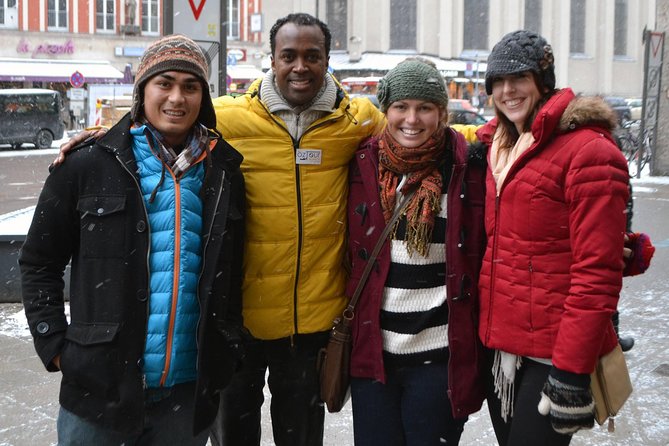
This tour is built for orientation. In about 3 hours 15 minutes, you cover a string of landmarks that sit across Munich’s historic core, so you start understanding how the city is laid out. The route is compact enough to feel complete, but varied enough that you don’t just bounce between the “top 10” postcards.
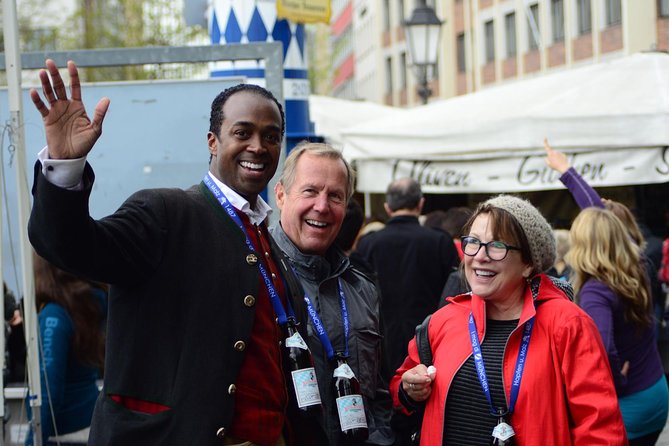
The group size matters here. With up to 20 people, you’re not lost in a huge herd, and the guide can slow down for questions, directions, or bathroom stops. That small-group dynamic is one reason this tour consistently earns such high marks: you get a tour, not just a walking audio track.
Comfort note: the tour is mostly outdoors. If it’s winter, chilly shoulder-to-shoulder weather can turn a long standing moment into a real test. Bring layers, gloves, and shoes you can walk in for a few hours without grumbling.
You can also read our reviews of more walking tours in Munich
Starting in the old center: your mental map begins fast
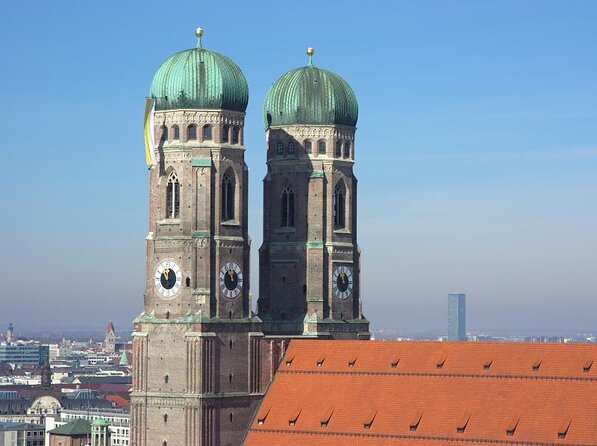
You’ll meet near Schützenstr 11 and end at Odeonsplatz. That “start slightly south, finish by the grand squares” route is useful because it ends near areas that connect to many other sights. Even if you plan to explore on your own after, you’ll have a clear sense of what’s close, what’s a short tram ride away, and what’s worth returning to.
Right away, the walk sets up Munich’s layers: medieval fortifications, Renaissance and Baroque churches, and 19th-century grand squares. It’s the kind of route where you begin to see patterns—how power and wealth shaped the streets, and how everyday life still fills those spaces.
And yes, you’ll get the kind of guide tips that help you avoid wasting time. Think: how to navigate efficiently, what direction to head for views, and what to skip later if you already saw the essentials.
Frauenkirche and the medieval idea of Munich in stone
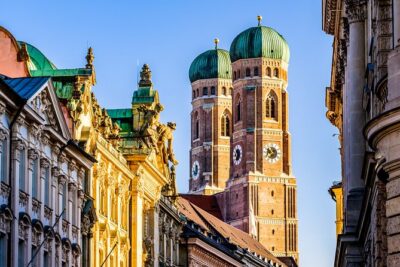
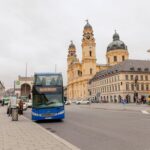
The tour opens with Frauenkirche, Munich’s famous twin-towered cathedral. It’s late Gothic, and it anchors the skyline in a way that’s hard to replicate with photos alone. You’ll also hear about the crypt and the legendary Devil’s Footstep, a detail that turns the building from “big church” into a story you can repeat on day two.
Why this stop works for value: it’s a high-impact site early, when your eyes are fresh and your legs are still smiling. You leave with a landmark in your head. That makes everything else easier to place later—especially when you start comparing other churches and gates.
A possible drawback: because this is a key icon, it can feel busy if you’re unlucky with timing. Even then, spending your first minutes at a major reference point helps you get oriented fast.
From hunting legends to how people once lived
Next up is the German Hunting and Fishing Museum, housed in a former Augustinian church. The exhibits spread across about 3,000 square meters, so it’s not a tiny stop; it’s a real time capsule.
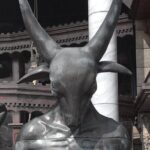
You’ll see stuffed wildlife and antique weapons, and the most Munich-ish part is the Wolpertinger—those legendary Bavarian creatures that show how local folk imagination has always mixed with hunting life. This is a nice pivot from religious architecture to everyday culture, even if the subject is a bit darker than a typical art museum.
If you’re squeamish about stuffed animals, mentally note that this is not a purely “pretty” museum stop. But if you want context for Bavaria’s traditions beyond beer halls, this adds real texture.
Hofbräuhaus and beer-hall culture without skipping the history
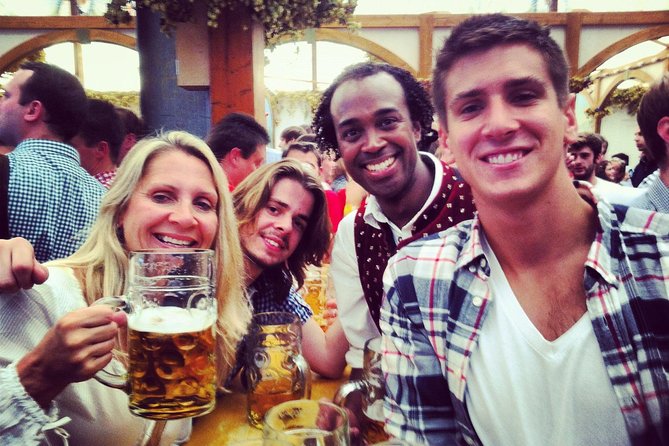
You’ll walk through Hofbräuhaus, the legendary beer hall that dates back to 1589. Even if you’ve heard the name a thousand times, the setting matters: royal brewery origins, big hall energy, Bavarian beer culture, and live traditional music.
This stop is about more than taste. It helps you understand how Munich turned drinking into a public tradition—something social, structured, and part of the city’s identity. And you’ll get enough context that you can spot the difference between a tourist spectacle and what locals actually treat as normal life.
One planning thought: beer halls can be loud and crowded. If you want the calmer side of the experience, you’ll do best using your time for a quick orientation inside, then stepping out to nearby squares for the next walk.
You can also read our reviews of more city tours in Munich


Marienplatz: the square you’ll use as your compass

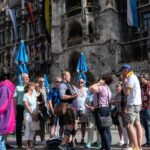
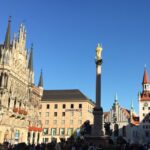
Marienplatz is the center of the city’s gravity. It’s been here since 1158, and it surrounds you with key symbols: the New Town Hall, the Glockenspiel, and the Mariensäule.
Why I like pairing Marienplatz with everything else on this tour: it’s not just a stop for views. It’s where you mentally anchor your next decisions. When you understand Marienplatz’s place in the map, you stop feeling like Munich is one long maze.
This is also where you can quickly switch from “guided understanding” to “independent exploring.” If you feel energized, you’ll know where to drift next—shopping streets, small side lanes, and nearby churches.
Squares that turn into history: Max-Joseph-Platz to Odeonsplatz
As you continue, you’ll reach Max-Joseph-Platz, linked to major cultural institutions like the National Theatre and the Munich Residenz. The architecture here leans neoclassical and grand, and it helps you understand Munich’s official face—the side that shows power in stone.
Then the route moves toward Odeonsplatz, designed in the early 19th century by Leo von Klenze. This area connects several big storylines: the Theatine Church, the Feldherrnhalle, and the Residenz again through the feel of the square.
This is also where the tour’s “Third Reich & Munich” component typically becomes more concrete. The guide’s job is to place those events in context along the streets you’re actually walking. The best part is when the explanation stays balanced: you understand what happened, why it mattered in public life, and how the city’s later identity formed around those scars.
Churches for different centuries: St. Michael and Alter Peter
St. Michael’s Church is Munich’s largest Renaissance church, built for the Jesuit order in the late 1500s. It has a striking facade and a big barrel-vaulted ceiling, and you’ll also hear about its royal crypt and Bavarian rulers. This stop makes Munich feel like a living timeline, not a list of buildings.
Then comes St. Peter’s Church, known as Alter Peter. It dates back to the 12th century, and the star feature is the 91-meter tower, which gives city views. Even if you don’t linger, seeing where the tower sits in the skyline helps you understand how locals navigate their own city.
If you like church architecture, this is a strong pairing: Renaissance scale and Jesuit planning on one side, then medieval foundations and layered interior styles on the other.
Stachus and the gate idea: Karlsplatz as a city hinge
At Karlsplatz (Stachus), you’ll see how modern Munich sits on top of older defenses. The area connects to Karlstor, and you’ll notice the square’s practical role in daily life—fountains in warmer months, and winter activities like an ice rink.
This is a good moment to regroup, especially if your feet are starting to complain. The square is open and easy for photos, but it also gives you a “here’s where people actually meet” feeling.
Platzl and the old-center atmosphere that still feels used
Platzl is one of those small squares that feels like it has kept its manners. It’s connected to traditional Bavarian atmosphere, with cobblestones and historic buildings. You’ll also hear about the Orlandohaus and the way Hofbräuhaus anchors the nearby area.
This is a nice stop because it’s not only about buildings. It’s about how the street scene works: where you see the flow of people, where a quick coffee or snack makes sense, and what kind of streets you’ll find around it.
Viktualienmarkt: lunch break, food culture, and a reason to return
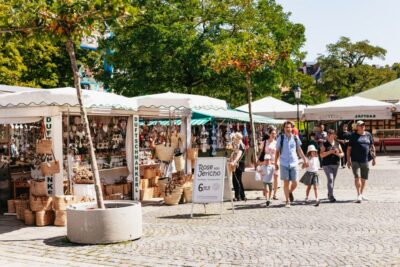
The tour’s mid-point energy shift happens at Viktualienmarkt, Munich’s historic open-air market. It’s been active since the early 1800s, and it works as both a local food hub and a place for visitors to slow down.
This is where the “Third Reich and politics” side of the tour gets balanced by everyday life. The market is where you remember Munich isn’t only about monuments. It’s also about groceries, beer gardens, and the kind of casual eating that feels part of the day.
The lunch break is built around Bavarian choices. The sample menu includes things like a Bavarian Bratwurst (regular, spicy, or cheese) or Bavarian potato salad with a pretzel, plus Bavarian beer and a reusable bottle holder. Since snacks are not listed as included, think of this as an opportunity: grab a proper Bavarian meal, then use your energy to keep exploring.
Practical tip: markets are lively. If you want a comfortable lunch, plan for some line time and keep your coats on if the weather is cold.
The hidden power of a guide: tips that make you faster (and smarter)
One reason this tour stands out from typical “see this, see that” walking routes is the focus on how to move. You’ll learn how to get around Munich in real terms, not just general advice. That includes how to handle direction changes, where the walking routes make sense, and what you can do next based on what you’ve already seen.
If you want to save money later, pay attention here. A guide who can point out what’s worth returning to—and what you can skip—can easily beat the cost of the tour over the course of your trip. Think of it as buying time and clarity, not just buying access to a handful of photos.
Small-group tours can also be a shortcut for family pacing. If your travel party has kids or older adults, the guide’s ability to manage breaks matters. You’ll want to be ready for a lot of steps, but you shouldn’t feel abandoned during downtime.
Price and logistics: what $31.78 delivers
At about $31.78 per person for roughly 3 hours 15 minutes, this is strong value for a route that covers a lot of high-recognition Munich sites plus a mid-tour market break. The fact that the listed stops are marked as admission ticket free helps too, because it keeps your costs more predictable.
You’re also paying for the human part. A good guide makes the city feel legible, and the best moments on this tour are when the explanation connects a building to the people who used it—whether that’s church life, royal power, beer hall culture, or local market routines.
Logistics you can plan around:
- Meet: Schützenstr 11 (near the start of the old-center action)
- End: Odeonsplatz (great for continuing into central sights)
- Language: English
- Group size: up to 20 people
Weather matters most. This is a walking tour, and the scenery is mostly outdoors.
Should you book this Munich walking tour?
I’d book it if you want:
- a first-day orientation that makes Munich feel smaller and more navigable
- a mix of big landmarks and everyday culture, with a real lunch/food break at Viktualienmarkt
- a guide approach that covers heavier topics like the Third Reich with context, not noise
I’d pause before booking if you:
- hate standing in the cold for long stretches
- prefer fewer facts and more time sitting inside specific sites
- want a purely scenic walk with minimal discussion
If you’re flexible with the weather and open to learning as you go, this is the kind of tour that can shape your whole trip. I like tours that help you move with confidence the next day—and this one does that.
FAQ
How long is the Munich City Walking Tour?
The tour is approximately 3 hours 15 minutes.
Is the tour offered in English?
Yes, the tour is offered in English.
What is the maximum group size?
The tour has a maximum of 20 travelers.
Where do we meet and where does the tour end?
The start location is Schützenstr 11, 80335 München, Germany. The end is OdeonsplatzOdeonspl. 3, 80539 München, Germany.
What is included in the tour price?
The tour includes a guided tour. The mid-tour snack/lunch at Viktualienmarkt is not included.
Which market do you stop at for lunch?
The tour includes a mid-tour lunch break at Viktualienmarkt.
Are there admission tickets required for the stops?
The listed stops are marked as Admission Ticket Free.
FAQ (cancellation)
Is free cancellation available?
Yes. You can cancel for a full refund if you cancel at least 24 hours before the experience’s start time.