REVIEW · MUNICH OLD TOWN WALKING TOURS
Fall in Love with Munich in a Private Old Town Walking Tour
Book on Viator →Operated by Victoria – Key to Munich · Bookable on Viator
Munich has a way of telling stories. This 2-hour private walk stitches medieval walls, beer-hall lore, and Marienplatz traditions into one easy route, led by Victoria – Key to Munich. You’ll also get entrance fees handled for the key stops, plus practical tips to help you plan what comes next.
What I really like is the small-group private format (up to 6), which keeps the pace human and makes it easy to ask questions. I also love the way Victoria uses iPad visuals like maps and images to make the buildings and legends click, whether you’re with teens or grandparents.
One thing to consider: the route covers a lot of standing and walking, and it includes a stop tied to Hitler and the Nazi Party, so it’s not purely light and funny. If you need maximum quiet time or lots of sitting, you may want a slower plan.
In This Review
- Key things that make this tour work so well
- Value at $157.28 for Up to Six: Two hours of Munich in one smart route
- Meeting at Isar Gate and ending at Marienplatz: how the walk flows
- Stop 1: Isar Gate and the medieval city wall stories you won’t get on your own
- Stop 2: Sterneckerbräu and the disturbing origins tied to Hitler
- Stop 3: Dürnbräugasse and the oldest tavern in town, quietly surviving for centuries
- Stop 4: Hofbräuhaus München interior—beer myths, the purity law, and real hall atmosphere
- Stop 5: Pfistermühle and the pretzel legend tied to royal baking
- Stop 6: Alter Hof courtyard—Wittelsbach power, a royal zoo legend, and Munich’s flag colors
- Stop 7: Dallmayr Delikatessenhaus—royal tradition you can still taste
- Stop 8: Schäfflerstraße and the coopers’ street legend of pest containment
- Stop 9: Frauenkirche—Devil’s footprint, construction legend, and the cathedral’s weird wind
- Stop 10: Marienplatz and the Glockenspiel—fish fountain rituals, wallets, sausages, and town halls
- Who should book this tour (and who might choose something else)
- Quick practical tips to get the most from the walk
- Should you book Fall in Love with Munich Private Old Town Walking Tour?
- FAQ
- How long is the private old town walking tour?
- How big is the group?
- What language is the tour offered in?
- Where do you meet and where does the tour end?
- What is included in the tour price?
- Are food and drinks included?
- Is there a mobile ticket?
- Is there free cancellation, and how far in advance can I cancel?
Key things that make this tour work so well
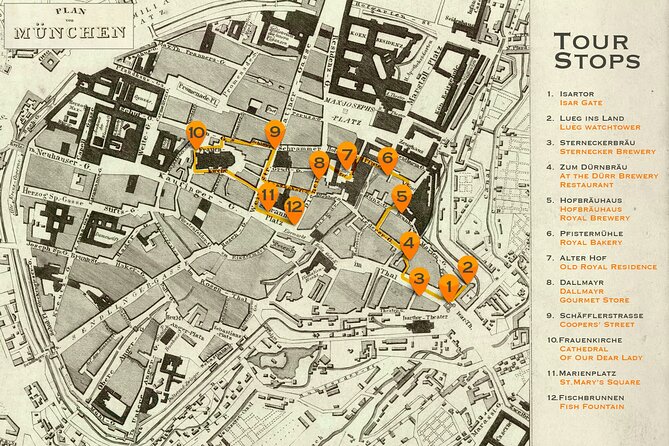
- Private pacing for up to 6 people, with room to adjust for families and different ages
- Entrance fees included at the main sights on the route
- Stories backed by iPad maps/photos, so you understand what you’re looking at
- Beer-and-food themed stops that connect Munich’s culture to what you can still taste today
- A strong finish at Marienplatz, where Victoria’s tips help you keep exploring on your own
Value at $157.28 for Up to Six: Two hours of Munich in one smart route
This is priced per group, not per person: $157.28 per group (up to 6) for about 2 hours. Do the math and it can be a steal if you’re traveling with friends or family: at full capacity, it works out to roughly $26 per person. Even if you’re a solo traveler or a couple, you’re paying for the convenience of a dedicated guide and a tight, story-driven route.
The best part is what’s included. The tour wraps key stops with entrance fees included, which matters in Munich because even short “quick photo” stops can turn into ticket lines and budget headaches. Add in the digital itinerary map and the guide’s recommendations for food and drink, and this becomes less of a “stand here and listen” tour and more of an easy way to get oriented on Day 1.
You can also read our reviews of more walking tours in Munich



Meeting at Isar Gate and ending at Marienplatz: how the walk flows
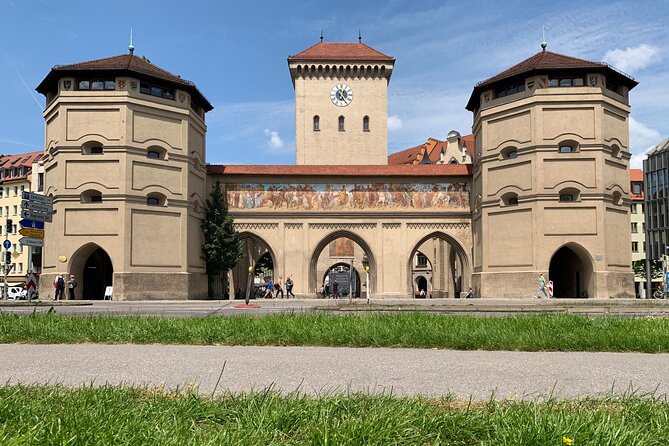
You start at Isar Gate (Isartor), Tal 50, 80331 München, right under the central arch. The tour ends at Marienplatz, Munich’s central square, which is a smart move because Marienplatz is where you can branch out in many directions without needing taxis or extra planning.
Timing-wise, expect a relaxed schedule built from short segments: some stops are only a few minutes, while the big-ticket moments like Hofbräuhaus and Frauenkirche get more time. That structure keeps energy up, especially if you’re dealing with jet lag or traveling with kids.
Stop 1: Isar Gate and the medieval city wall stories you won’t get on your own
Isar Gate is a perfect kickoff because it’s both practical and symbolic. Your guide introduces Munich’s medieval fortifications and points out disguised remains of the main city wall, so you’re not just staring at a gate—you’re learning how the city once defended itself and how it grew.
Then comes the fun part: legends and odd details. You’ll hear the legend of the city’s foundation and a story about how trading one single product helped Munich rise into a metropolis. You’ll also learn about the museum hosted by the towers of Isar Gate, tied to Munich’s most beloved comedian, plus the playful local idea that time in Bavaria runs backwards.
This is where a good guide makes the difference. Without that context, the gate can feel like one more impressive structure. With it, the same stones turn into a timeline.
Stop 2: Sterneckerbräu and the disturbing origins tied to Hitler
Next is Sterneckerbräu, where you’ll spot the place linked with Adolf Hitler’s first public speech that set him on the path toward joining the German Workers’ Party. Your guide connects the building’s later role to its importance within the Nazi Party story.
It’s a heavy stop, and it’s worth being honest with yourself: this tour isn’t trying to sugarcoat the past. If you’d rather avoid this topic, you might choose a different Munich tour focused only on food and beer. But if you want to understand how places in Munich connect to the 20th century, this is one of the places you can’t responsibly skip.
Stop 3: Dürnbräugasse and the oldest tavern in town, quietly surviving for centuries
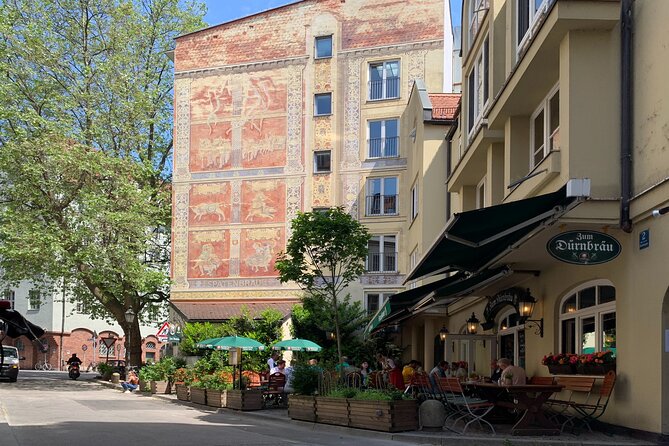
At Dürnbräugasse, you’ll pass by what your guide describes as the oldest tavern in Munich. The whole point here isn’t a deep interior visit—it’s the endurance. You’ll hear how it managed to preserve its status for more than half a millennium.
I like this stop because it’s a reminder that old towns aren’t just museums. Some of the oldest buildings in Munich still function in everyday life, and walking past them is the fastest way to feel that continuity.
You can also read our reviews of more private tours in Munich




Stop 4: Hofbräuhaus München interior—beer myths, the purity law, and real hall atmosphere
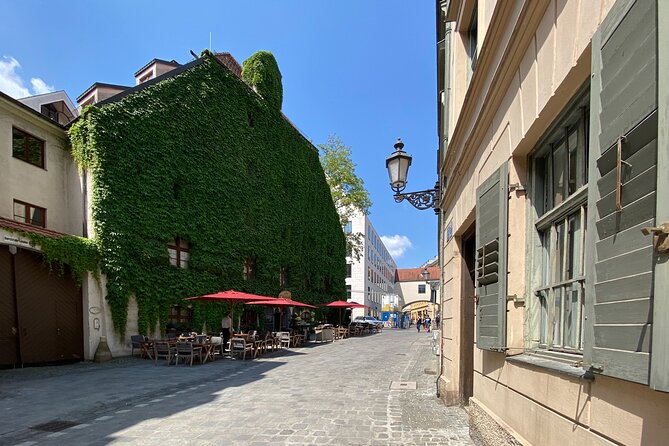
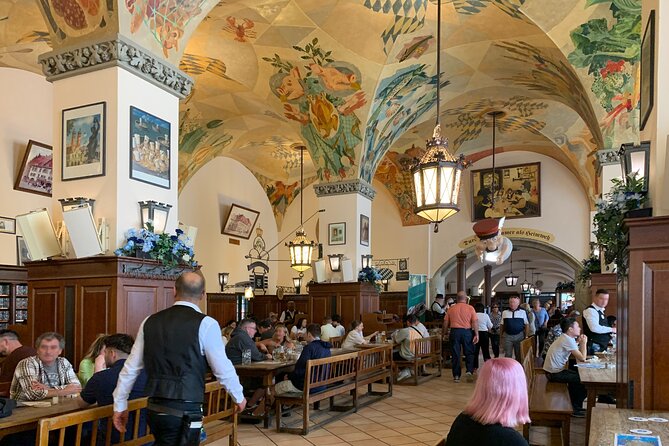
Now you get the payoff: Hofbräuhaus München. Your guide frames it as a former royal brewery that’s now one of the world’s best-known beer halls. But the tour isn’t only about beer branding. You’ll learn the centuries-old story behind the place and meet the “beer angel,” a classic Bavarian charm tied to the hall’s identity.
You’ll go inside the main hall to admire the interiors and see what makes the room feel so Bavarian. You’ll also notice the regulars’ tables and the beer mugs of long-time guests kept in special cells. That detail helps you understand that the hall isn’t just a tourist backdrop—it’s built around regular culture and repeat rituals.
Then the story broadens into Bavarian brewing. Expect talk about the beer purity law, brewing tradition, and how Oktoberfest fits into the larger beer calendar. Your guide also connects it to Munich beer gardens, which is useful because it helps you plan what to look for later when you’re choosing where to drink.
Stop 5: Pfistermühle and the pretzel legend tied to royal baking
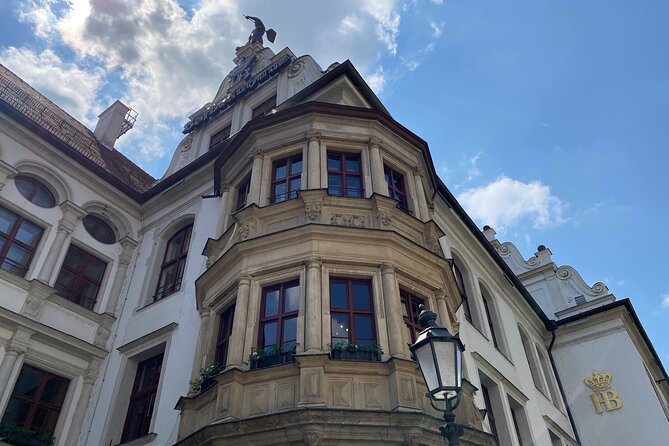
At Restaurant Pfistermühle, you’ll sight the former royal bakery and hear the legend of the pretzel—plus how it connects symbolically to Munich. This is a short stop, but it’s one of those “wait, that makes sense” moments.
Pretzels are everywhere in Munich, but most people just treat them as snacks. A guide can tie the food to local identity, which makes what you eat feel less generic and more like a local custom.
Stop 6: Alter Hof courtyard—Wittelsbach power, a royal zoo legend, and Munich’s flag colors
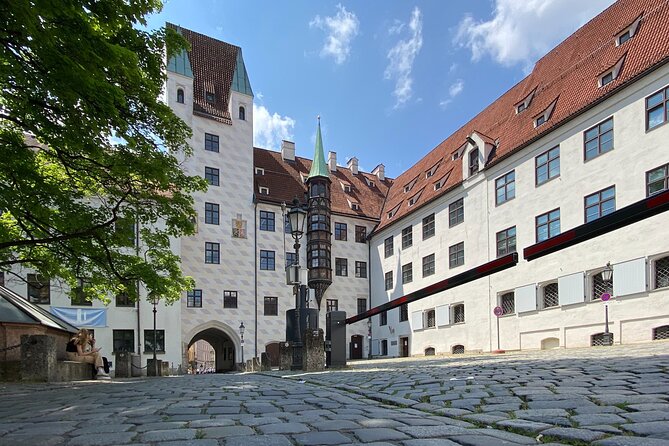
At Alter Hof, you’ll visit the inner courtyard of the first residence of the Wittelsbach royal family in Munich. Your guide brings legends into the mix, including the story of the Royal Zoo and how it played an unexpected role in the life of Holy Roman Emperor Louis IV.
You’ll also learn how Munich’s flag got its colors. I like this because it turns a familiar symbol into something you can explain later at dinner. It also makes the courtyard feel like a political space, not just pretty architecture.
Stop 7: Dallmayr Delikatessenhaus—royal tradition you can still taste
Next is Dallmayr Delikatessenhaus, a historic gourmet store with longstanding royal tradition. Your guide notes that it has grown into one of Europe’s largest delicatessen companies, and then shifts into the practical side for food and coffee lovers.
This stop is short, but it’s useful in a very real way: Victoria’s tips help you decide what to buy or where to go when you want a quality bite without spending hours searching. If you’re the type who likes to bring back coffee, chocolates, or small edible souvenirs, this is the kind of stop that makes sense.
Stop 8: Schäfflerstraße and the coopers’ street legend of pest containment
At Schäfflerstraße, you’ll cross Coopers’ Street and hear Munich’s legend tied to 16th-century pest containment. The story includes a traditional dance connected to that celebration, performed in the Bavarian capital even until now.
This is the kind of detail that changes how you move through a city. Instead of seeing a street name as a label, you see it as a memory of trades, festivals, and community survival.
Stop 9: Frauenkirche—Devil’s footprint, construction legend, and the cathedral’s weird wind
At Frauenkirche, your guide takes you into Munich’s cathedral and focuses on both story and details. You’ll hear the legend of its construction and learn about how it connects to the interior layout.
You’ll also spot the Devil’s footprint, a famous mark that many visitors miss if they’re only taking general photos. Then comes the oddest claim, the one that sounds like a tall story until your guide explains it clearly: a secret about wind around the cathedral all year, regardless of season.
Even if you’re not the type to chase supernatural facts, this stop works because it teaches you where to look and what to notice once you’re standing there.
Stop 10: Marienplatz and the Glockenspiel—fish fountain rituals, wallets, sausages, and town halls
You finish at Marienplatz, where Munich shows off its public-life heart. First up is the Fischbrunnen (Fish Fountain), and with it a set of local traditions your guide explains, including wallet washing and butchers’ jump.
You’ll also hear about the spot where Munich white sausage was invented. Then you shift to the architecture around St. Mary’s Square, including the New and Old Town Halls, which helps you place the square in the city’s civic story.
And yes, the Glockenspiel is part of the experience: your guide explains the mechanical clock and how it reenacts two moments from Munich’s history with carillon tunes. It’s one of those classic things that can feel repetitive if you don’t know what you’re watching. With context, it becomes a moving history lesson in miniature.
Who should book this tour (and who might choose something else)
This fits best if you want:
- A fast, high-signal orientation to Munich’s old-town core
- A guide who can handle questions and adapt pacing for different group members (including families)
- A mix of beer culture, food lore, and city legends, not just straight museum stops
It might be less ideal if:
- You hate walking and standing and want a mostly seated tour
- You prefer to avoid World War II and Nazi-related context
Quick practical tips to get the most from the walk
- Wear comfortable shoes. This is a walking tour with stops where you’ll spend time standing and looking up at buildings.
- Bring a jacket layer. Even in mild weather, churches and indoor halls can feel cooler than the street.
- If you’re visiting for beer and food, ask your guide during the walk what to try next. Victoria’s recommendations are part of the value, and the best suggestions are often based on what you’ve already seen.
Should you book Fall in Love with Munich Private Old Town Walking Tour?
If you’re visiting Munich for the first time and want a guide-led route that makes the city make sense in two hours, I’d book it. The private setup, the included entrance fees, and the strong storytelling around both famous sights and local legends are the combination that makes this one practical, not just decorative.
Book it early if you can. On average, it’s booked about 71 days in advance, which usually means you’ll want to plan ahead rather than waiting until the last minute. If you want a quick start that leads to a better rest of your trip, this is a very solid way to begin.
FAQ
How long is the private old town walking tour?
The tour is about 2 hours.
How big is the group?
It’s a private tour for only your group, with pricing listed per group up to 6 people.
What language is the tour offered in?
The tour is offered in English.
Where do you meet and where does the tour end?
You meet at Isar Gate (Isartor), Tal 50, 80331 München, and the tour ends at Marienplatz, 80331 München.
What is included in the tour price?
Included items are the digital map of the itinerary, a guide fluent in English, a 2-hour private walking tour through old town highlights and hidden gems at a comfortable pace, and insider tips and recommendations. The tour also lists entrance tickets as free for the stops shown, meaning entrance fees are handled.
Are food and drinks included?
No. Food and drinks are not included.
Is there a mobile ticket?
Yes, the tour includes a mobile ticket.
Is there free cancellation, and how far in advance can I cancel?
Yes, you can cancel for free up to 24 hours in advance for a full refund. If you cancel less than 24 hours before the start time, the amount paid is not refunded.