REVIEW · DACHAU MEMORIAL TOURS
Dachau Concentration Camp Private Tour by Train from Munich
Book on Viator →Operated by Nuremberg City of Empires Tours · Bookable on Viator
Dachau is close enough to change you. This private tour turns the trip north from Munich into a guided, question-friendly lesson on how the Nazi camp system worked, from the gate to the crematorium—and then gives you time in the museum to sit with what you’ve learned. I especially like the train-and-guide setup and the chance for personalized attention on a visit that’s emotionally intense.
I like that the tour is built around an officially accredited guide and a focused visit on the memorial site (about three hours), with optional museum time afterward. I also like the logistics: pick-up from central spots in Munich, train tickets included, and a day that comes out to about 4–5 hours total. One drawback to consider is that a private experience still depends on the individual guide—there’s at least one report of a mismatched tone—so if you want a very strictly solemn style, I’d ask about how they handle pacing and questions.
In This Review
- Key Things That Make This Tour Worth Your Time
- Munich to Dachau by Train: the day’s real rhythm
- Hotel Pickup vs Hauptbahnhof: choosing what fits your Munich style
- Why private really matters here (and where it can go wrong)
- Getting to the memorial: the short ride that changes the mood
- Inside Dachau: what you’ll see and why the guide’s context matters
- The pacing question: three hours on site can feel fast or just right
- Museum time and the English documentary option: using the extra space wisely
- Sensitive questions: how the best guides turn context into meaning
- Price and logistics: what you’re really paying for at $266.16
- Who this tour is best for (and who should think twice)
- My practical advice before you go
- Should you book Dachau Private Tour by Train from Munich?
- FAQ
- How long does the Dachau private tour take?
- Where do we meet in Munich?
- Is transportation included?
- How long is the guided part at the memorial?
- Is the tour offered in English?
- What parts of Dachau will the guide cover?
- Is food included?
- How old do you have to be to join?
- What should I do if I need to cancel?
- How do tickets work for entry?
Key Things That Make This Tour Worth Your Time
- Accredited guide + private format: you get context and space to ask questions, not just a fast walk-through.
- About 30 minutes by train to Dachau: the day moves efficiently without you wrestling with transit alone.
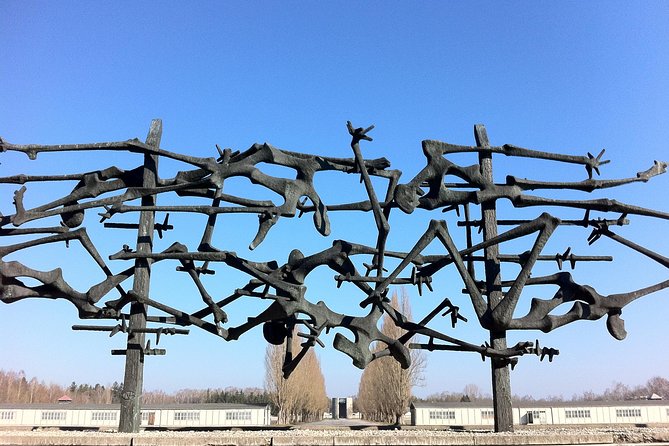
- Memorial site focus for ~3 hours: you’ll cover the gatehouse area, bunker, crematorium, and administrative areas with guidance.
- Museum time with an English documentary option: you can choose to go deeper on your own pace.
- Transport included: train to Dachau and a bus transfer to the memorial are part of what you pay.
- Age limit (13+): plan for teenagers and adults who can handle difficult subject matter.
Munich to Dachau by Train: the day’s real rhythm
This tour is designed as a full, guided half-day. You meet your guide in Munich—either at your centrally located hotel or at Munich Central Station (Hauptbahnhof)—then you ride the train north to Dachau. The train part is short, roughly 30 minutes, and you’re not left trying to figure out rail schedules while your mind is already bracing for what’s ahead.
That matters because Dachau isn’t a casual stop. Your body learns the story before your brain finishes it. With a guided flow from Munich to the memorial, you can settle into the right mindset early instead of spending the first hour confused, late, or distracted.
Expect a total day length of about 4 to 5 hours, including meeting your group, the ride out, the memorial visit, and getting back to Munich. The guided portion at the memorial is around three hours, so you’re not doing a quick highlight circuit.
You can also read our reviews of more private tours in Munich


Hotel Pickup vs Hauptbahnhof: choosing what fits your Munich style
You get options. The start can be at your hotel lobby in central Munich, or at Hauptbahnhof. For many people, the hotel pickup feels easier—less walking with luggage, fewer directions in German, and you start the day with someone already assigned to your group.
If you’re staying near transit, starting at Hauptbahnhof can be just as painless. It’s a major hub, so you’re likely already passing through it during your trip. Either way, the goal is the same: reduce friction so you can spend more energy on the visit.
There’s also an option for meeting at the Dachau memorial. That’s useful if your plans already put you in the area, but most people pick the Munich start because the tour is meant to manage the full journey for you.
Why private really matters here (and where it can go wrong)
A private tour sounds nice on paper, but for Dachau it becomes practical. When you visit a memorial site, what you need most is context that matches what you’re seeing right now. With a private guide, you can ask follow-up questions as they occur—about timelines, terms, how the camp developed, or what different prisoner groups faced.
The best-rated guides in this setup tend to handle the emotional weight with care and keep a clear timeline. Names that came up with strong praise include Lucia, Nick, Jason, Richard, Achim, Keith, and Nic. People repeatedly highlight that these guides were sensitive with topics, answered questions clearly, and kept the visit organized rather than chaotic.
Now the caution: private tours still depend on the individual guide’s teaching style. One account singled out a guide named Eric for focusing more on personal storytelling and casual jokes during the walk and train. That kind of mismatch can feel wrong at Dachau, because the setting demands respect and careful tone. If your priority is a very solemn pace, it’s smart to communicate that upfront—especially if you’re traveling with teens.
Getting to the memorial: the short ride that changes the mood
Once you arrive in Dachau, you don’t park and wander. You transfer from the train to the memorial area by bus, and the tour price includes those transportation costs.
This is one of the most underrated parts of the day. When transit is handled for you, you arrive calmer. You also avoid the temptation to rush—because someone has already built in the timing for the train, transfer, and guided time on site.
For many visitors, the emotional shift happens right when the transport ends. The guided structure helps you land there properly, instead of treating it like another museum stop.
Inside Dachau: what you’ll see and why the guide’s context matters
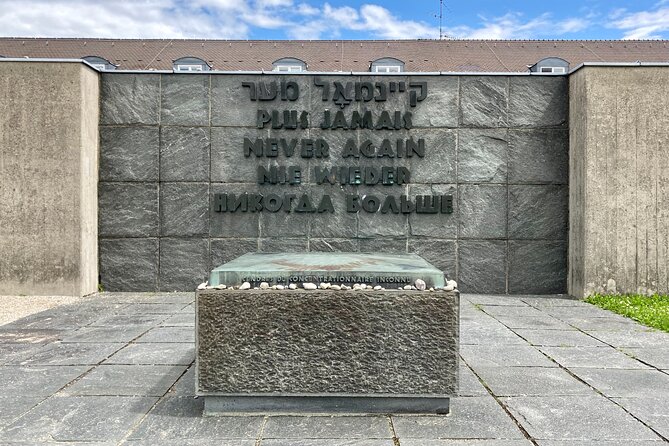
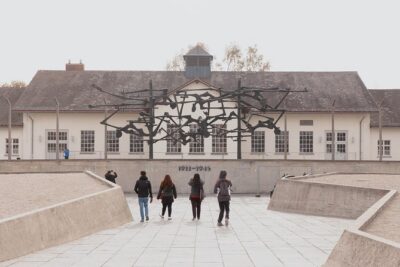
The memorial site is the centerpiece of the tour. Dachau is described as the first permanent concentration camp in Nazi Germany and as a model for others that followed. That framing changes how you look at the grounds. You’re not just reading about isolated cruelty; you’re seeing the early blueprint of a system that expanded elsewhere.
Your guided walk covers major remaining features and reconstructed elements, including:
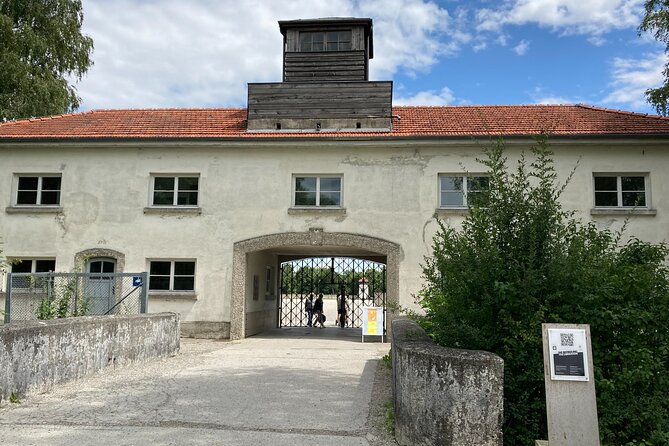
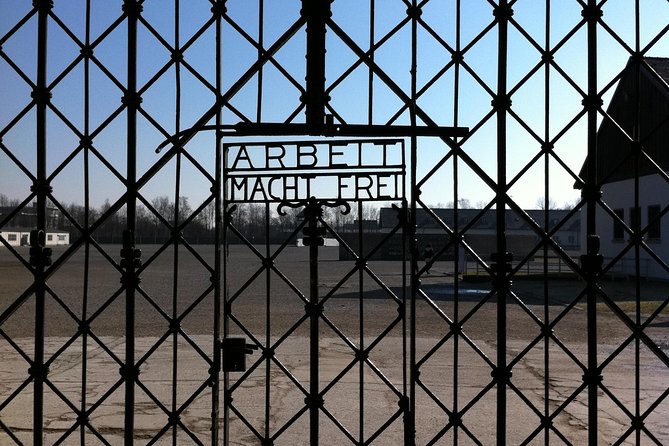
- The gatehouse area with the Arbeit macht frei gateway
- The bunker
- The crematorium
- The administration headquarters
- The rail platform where prisoners once arrived
- Photographs, documents, and reconstructed cell blocks
This is where the guide becomes essential. Without context, some areas can look like “old buildings” rather than a place engineered for dehumanization. A strong guide helps you connect the physical evidence to the human reality: how confinement worked, what control looked like, and what the camp system was designed to do.
You’ll also learn about key Nazi figures linked to the site, including Heinrich Himmler. Knowing who was involved, and at what level, helps you avoid viewing events as random cruelty and instead understand the structure behind the violence.
Just as important, you’ll hear stories of prisoners from different groups. The tour description specifically mentions communists, German dissidents, gay men, Jehovah’s Witnesses, and Jewish and Polish men and women. That detail matters because Dachau’s story isn’t one single category—it’s a pattern that targeted multiple groups.




The pacing question: three hours on site can feel fast or just right
Three hours at a memorial is a serious commitment. The upside is depth: you cover the key elements without feeling like you’re getting the “tallest highlights only.” The possible downside is that Dachau can be mentally exhausting, and you might want more time with certain areas.
That’s where the private format helps. If you’re overwhelmed, you can often ask to slow down, focus on what you’re ready to absorb, or get clarification so you don’t leave with blank spots. If you prefer a strict, timed march, that’s also a conversation you can have with your guide before or early in the day.
The most praised guides tended to keep a chronological feel, which many people find helps the complexity land in order. The visit becomes less confusing when you understand what came first and what developed next.
Museum time and the English documentary option: using the extra space wisely
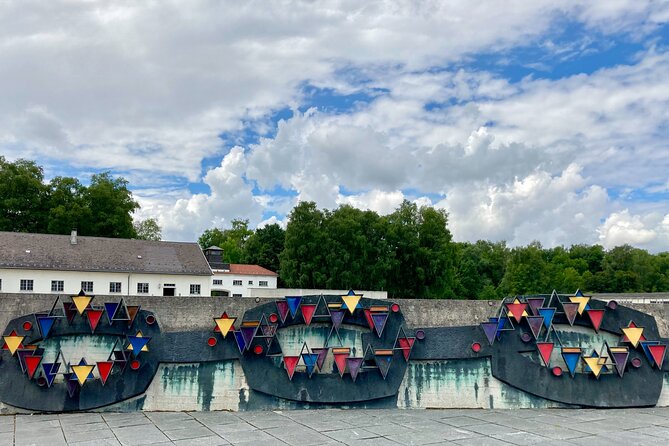
After touring the camp grounds, you get some free time to explore the museum. This is not a filler stop. The museum is where you can take your time. In a guided memorial walk, the information comes in waves. The museum lets you return to specific parts of the story at your own pace.
There’s also mention of an English-language documentary you can watch if you want. If you find the walk emotionally heavy, the documentary can offer a different channel—still sobering, but often easier to follow when you’re sitting.
Practical tip: museum time is when I’d decide what I’m trying to understand. If you want a fuller picture of the system’s rise and operation, spend your extra time reading the documents and looking at photographs slowly. If you already came for the camp layout and physical evidence, keep your museum time lighter and focus on the most relevant exhibits.
Sensitive questions: how the best guides turn context into meaning
The tour is built for questions. That sounds like marketing, but the difference at Dachau is real. When you ask something and the guide answers directly, you stop guessing and start understanding. Questions can be about terminology, prisoner groups, how the camp functioned day to day, or why Dachau became a template.
The praised accounts show a consistent pattern: guides like Lucia and Nick were described as patient with questions and careful with emotional moments. Jason and Richard were praised for being detailed and sensitive, not just reciting facts. In other words, the best guides treat your reaction as part of the experience, not a disruption.
On the flip side, if your guide’s style becomes too personal or too light in tone, the whole day can feel off. That’s rare, but it’s the main “watch out” piece for a private experience.
Price and logistics: what you’re really paying for at $266.16
The listed price is $266.16 per person, and the tour duration is about 4 to 5 hours. That number can feel steep until you break down what’s included.
You’re not just buying a guide. You’re getting:
- A private guide for the day
- Train tickets from Munich to Dachau and back
- Included transportation costs overall, including a transfer by bus to the memorial site
- A guided visit of around three hours at the memorial
- Museum time afterward
- Admission ticket noted as free (for the guided memorial portion mentioned)
Food and drinks are not included, so you may want to budget for a snack or lunch plan in Dachau or return to Munich afterward. That’s normal for a half-day tour and not surprising, but it’s a real add-on cost.
So is it good value? For me, it’s value if you care about context and you want to reduce mental load. If you already speak German and enjoy transit planning, a cheaper group tour might work. But if you’re traveling with teens, juggling limited time, or want a guide to handle the story in a thoughtful way, the private format earns its keep.
One review also raised the feeling that it was overpriced, which is fair as a subjective read. But compared with what you’d pay for a certified guide plus transport separately, this is often the simplest way to get it all handled.
Who this tour is best for (and who should think twice)
This tour is suitable for people aged 13 and above. That age floor isn’t arbitrary. Dachau is not a “history theme park.” It requires maturity, and the emotional impact can be intense even when the guide is excellent.
It’s a strong choice if:
- You’re interested in World War II and European history and want a clear, guided explanation.
- You prefer to ask questions instead of sitting through a crowded group script.
- You value getting from Munich to Dachau without figuring out transit logistics.
You might think twice if:
- You’re sensitive to emotional material and need a very carefully controlled tone from the guide.
- You know you want a purely quiet visit with minimal conversation.
- You’re expecting a light sightseeing day. This is education with a heavy human cost behind it.
My practical advice before you go
A few things help the day go better:
- Plan to take breaks. Even if the route is tight, you may need a moment. The pace should be guided, but your body still decides when it’s too much.
- Dress comfortably for walking. The tour asks for moderate physical fitness, so wear shoes you can stand and walk in.
- Bring a small plan for after. Since food isn’t included, decide ahead of time whether you’ll eat in Dachau or return to Munich. Knowing that reduces stress.
- Prepare a question or two. It can be about terminology, timeline, prisoner groups, or how the camp system spread. Asking one good question often makes the whole visit click.
And if you’re traveling with teenagers, I’d frame the day as learning and reflection, not a “tough trip” for toughness’ sake. The strongest guides make room for reactions, and that’s what you want.
Should you book Dachau Private Tour by Train from Munich?
I’d book it if you want the easiest path to a serious visit: pick-up in Munich, included train and transfer, an accredited guide, about three hours at the memorial, then museum time. At $266.16, the price makes sense when you factor in transport and the private, question-friendly structure—especially if you don’t want to spend your energy on transit.
I’d also book it if you’re the kind of traveler who likes understanding the “how” behind history, not just seeing the “where.” The memorial’s physical layout plus a careful guide’s context is where the experience becomes meaningful.
The one reason to pause is guide-fit. Because the tour is private, the guide you get shapes your day more than you’d expect. If you want a strictly solemn tone and minimal personal commentary, say so.
If that matches your style, this is a strong, practical way to visit Dachau from Munich—handled with care, and built so you can focus on what matters most.
FAQ
How long does the Dachau private tour take?
The full experience runs about 4 to 5 hours, including meeting your group in Munich, traveling to Dachau, roughly 3 hours at the memorial site, and returning to Munich.
Where do we meet in Munich?
You can meet at Munich Central Station (Hauptbahnhof) or at your centrally located Munich hotel. The activity can also be started at the Dachau memorial.
Is transportation included?
Yes. Train tickets from Munich to Dachau (and back) are included, and a bus transfer is used to reach the memorial site after the train.
How long is the guided part at the memorial?
The memorial site tour is about 3 hours with an accredited guide. After that, you have free time to explore the museum.
Is the tour offered in English?
Yes, it’s offered in English.
What parts of Dachau will the guide cover?
You can expect to see the gatehouse area with the Arbeit macht frei gateway, the bunker, the crematorium, the administration headquarters, and the rail platform where prisoners arrived, plus documents, photographs, and reconstructed cell blocks.
Is food included?
No. Food and drinks are not included, so plan a snack or meal either before or after.
How old do you have to be to join?
Children under age 13 are not allowed to participate.
What should I do if I need to cancel?
Free cancellation is available up to 24 hours before the experience starts for a full refund.
How do tickets work for entry?
The tour uses a mobile ticket, and the memorial admission ticket is described as free for the guided visit portion.