REVIEW · THIRD REICH & WWII WALKING TOURS
Munich: Private or Group Third Reich and WWII Walking Tour
Book on GetYourGuide →Operated by Weis(s)er Stadtvogel GmbH · Bookable on GetYourGuide
Munich remembers what it would rather forget. This Munich Third Reich and WWII walking tour turns the city’s iconic squares into evidence—showing where the NSDAP formed, how Hitler gained followers, and why places around Marienplatz and Königsplatz matter. What I like most is the way your guide uses original locations plus period documents and pictures, so you’re not just hearing dates. I also love the human side—stories of resistance and what happened to victims, not only the propaganda. One thing to consider: this is heavy subject matter, and it isn’t ideal for kids under 10.
You’ll walk for about 2 hours with a certified guide in German or English, and you can go private or join a group depending on what you book. The meeting point is easy to spot at Mariensäule on Marienplatz, where you’ll find the tour guide with a blue bag marked Weis(s)er Stadtvogel. Expect a steady pace through Old Town, with stops designed to connect street-level Munich to the machinery of Nazism—and to the damage left behind.
In This Review
- Key takeaways before you go
- Munich’s Third Reich story isn’t an abstract chapter
- Meeting at Marienplatz: Mariensäule and the blue-bag guide
- Beer halls, the Beer Hall Putsch, and how propaganda took hold
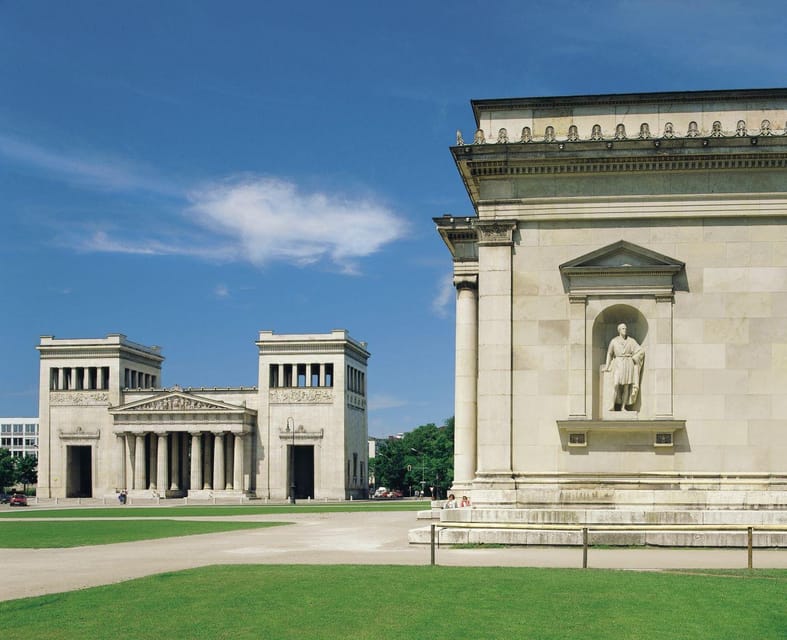
- From Marienplatz to Königsplatz: the Capital of the Movement angle
- Former Nazi headquarters and the uncomfortable contrast of old buildings
- Resistance stories and memorials that keep the focus on victims
- Private vs group tour: how format changes the experience
- Price math: what $259 per group can mean for value
- Practical tips for your 2-hour walk
- Should you book the Munich Third Reich and WWII walking tour?
- FAQ
- How long is the Munich Third Reich and WWII walking tour?
- How much does the tour cost?
- What languages are offered?
- Where do we meet?
- Is transportation included?
- Is video recording allowed?
- Is the tour wheelchair accessible?
- Is it suitable for children?
Key takeaways before you go
- Marienplatz to Königsplatz route: two famous anchors that help you track the story geographically.
- Documents and photos at each stop: your guide points out what the buildings looked like in the Nazi era.
- Clear explanations, built for context: the tour connects early propaganda to the later machinery of power and war.
- More than Nazi leaders: resistance stories and memorials for victims are part of the walk.
- Guides who answer questions: guides like Karl and Ina are described as friendly, patient, and responsive.
Munich’s Third Reich story isn’t an abstract chapter
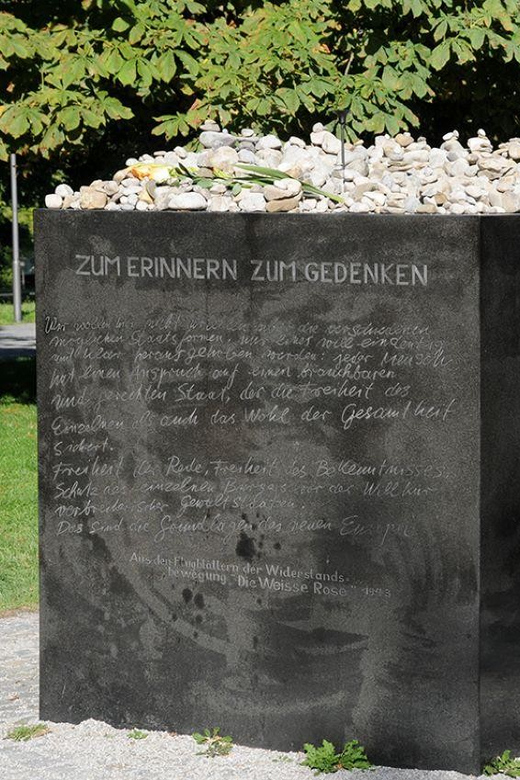
Most cities have history. Munich has history that still sits on street corners. You’ll see how a place people visit for beauty also hosted the rise of National Socialism: the NSDAP began here, the Beer Hall Putsch failed here, and in 1935 Munich was named the Capital of the Movement.
This matters because the tour doesn’t treat Nazi history as a distant, sealed-off topic. It connects ideology to locations—beer halls, public squares, and political sites—so the rise of the party feels grounded in real space. And since many central Munich buildings survived Allied bombing while others were destroyed, you get a visual contrast: grand structures ordered by the regime still standing next to the places that reveal what the war and persecution did.
Guides on this walk are praised for enthusiasm and interaction, not just reading facts. The result is practical and teachable: you leave with a clearer mental map of how the movement grew, how it spread through public life, and how violence followed.
You can also read our reviews of more walking tours in Munich
Meeting at Marienplatz: Mariensäule and the blue-bag guide
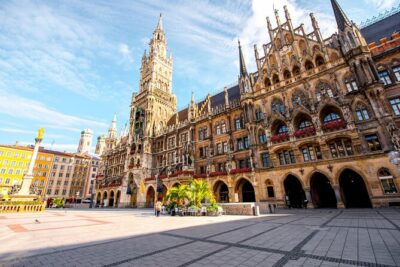
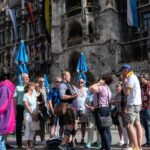
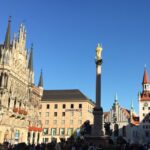
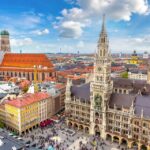
Start at Mariensäule in the center of Marienplatz. You’ll meet at a golden statue on a tall red marble column. Look for the tour guide carrying a blue bag with the words Weis(s)er Stadtvogel on it.
This is one of those small logistics details that makes a real difference. Marienplatz is busy, especially in peak sightseeing hours, so having a clear landmark reduces stress. Since the tour is only 2 hours, you don’t have time to hunt around.
Since there’s no transportation included, you’ll rely on walking between stops within central Munich. The pace is manageable for a city tour, but you still want comfortable shoes—you’re covering Old Town streets while listening closely.
Beer halls, the Beer Hall Putsch, and how propaganda took hold
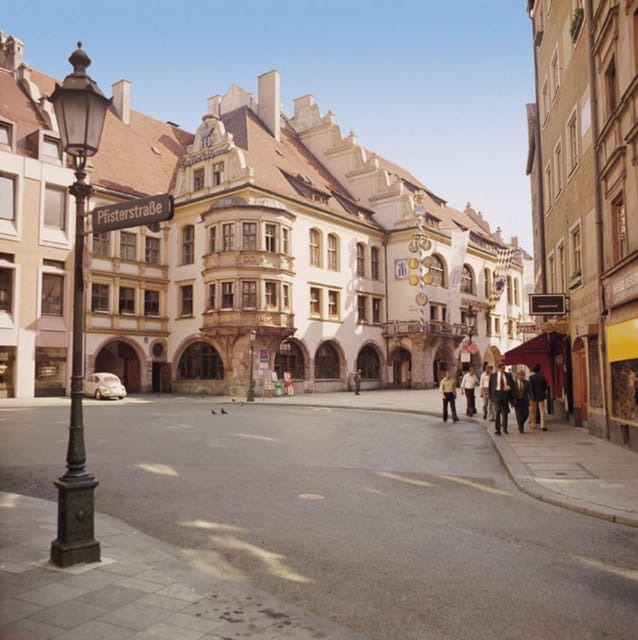
One of the tour’s core themes is how the Nazi movement gained attention before it became state power. You’ll hear how Hitler was already a public figure in Munich—a beer hall orator—revered by a small circle of followers as the Führer. The walk focuses on places that helped turn that small group into something bigger.
A key stop is built around the lead-up and aftermath of the Beer Hall Putsch, Hitler’s early failed coup. Expect your guide to explain not only what happened, but why it worked as propaganda even when it failed militarily. Your guide uses documents and pictures to show how the buildings were used and what the public events looked like during the Nazi period—something you simply can’t replicate by staring at the facade today.
This is also where the tone matters. A strong guide doesn’t turn history into spectacle. Instead, you’ll get straight context: how the regime’s messaging tied together anti-Semitic persecution, intimidation, and political violence.
From Marienplatz to Königsplatz: the Capital of the Movement angle
The route links two major areas: Marienplatz and Königsplatz. That sequence helps you see how Munich’s role evolved. After World War I turmoil and the instability of the early 1930s, the Nazi movement needed symbolic space—places where crowds gathered and ideas became public performance.
By 1935, Munich was declared the Capital of the Movement (Hauptstadt der Bewegung). The walk uses that point as a thread: you’ll understand what it meant to have a city function as the official hub of Nazism and a headquarters for the national party. Around these squares, your guide connects broad political developments to concrete places where public life was organized.
This is also where your understanding shifts from names and dates to patterns. You begin to notice how power seeks visibility—how regimes like to borrow the language of normal civic life while pushing violence behind the scenes.
Former Nazi headquarters and the uncomfortable contrast of old buildings
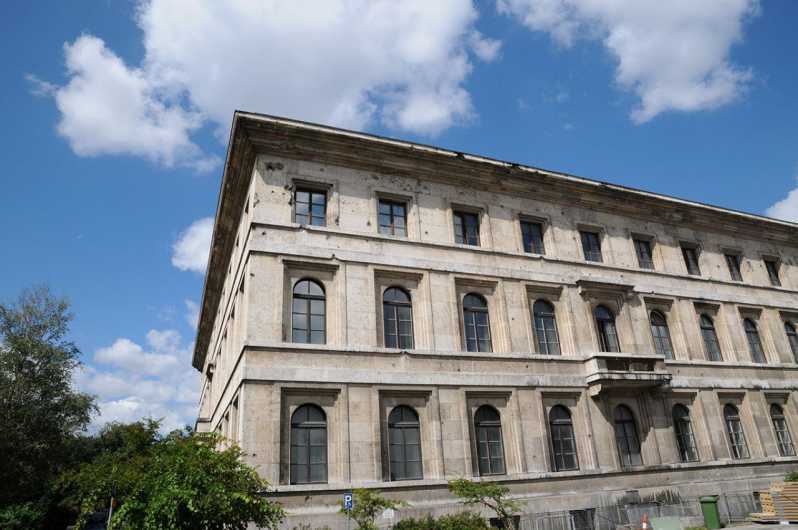
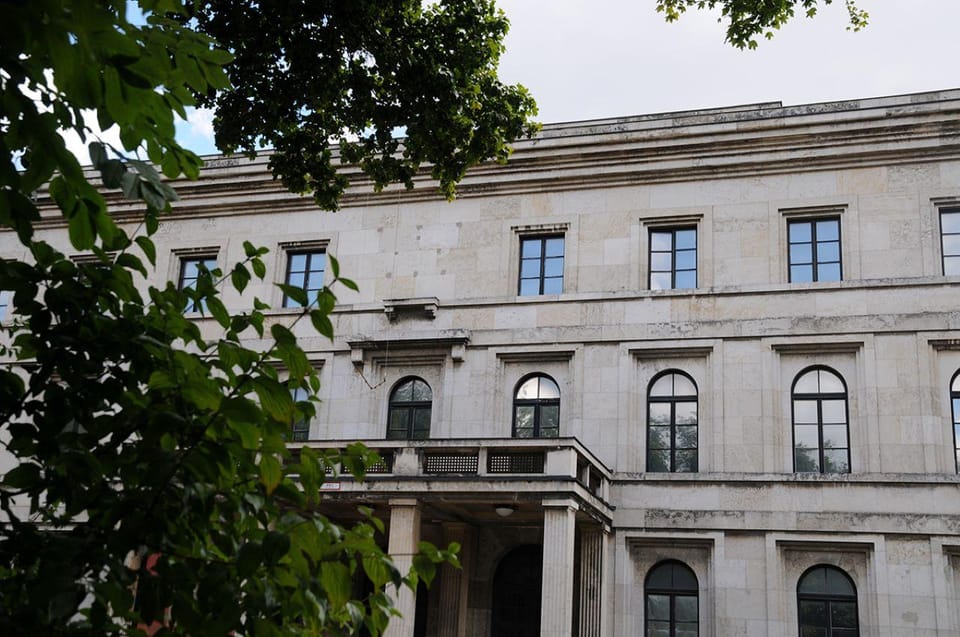
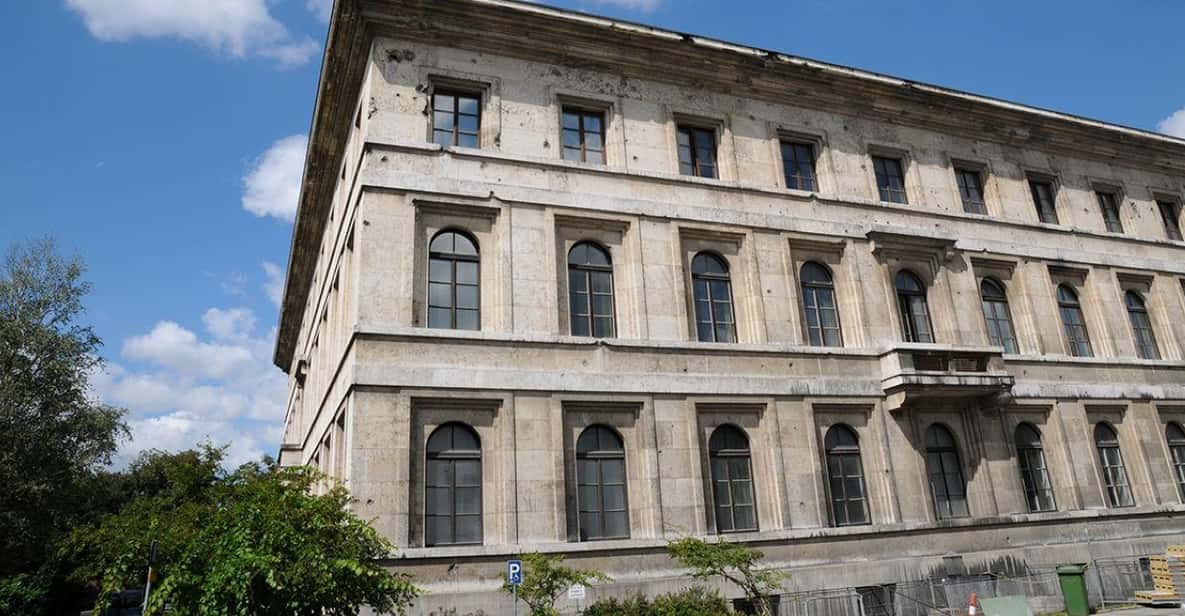
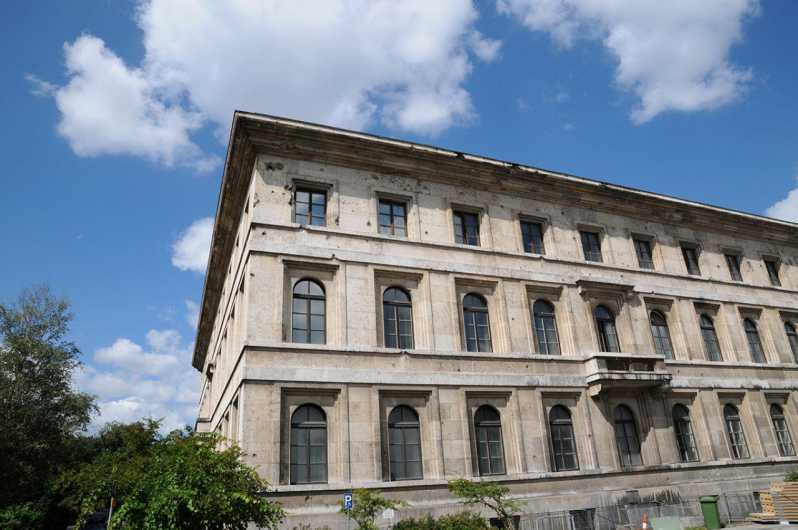
The tour includes a stop at the former Nazi Headquarters, described as the place where Hitler once wielded power. Walking through that area with a guide changes how you see it. It’s not just architecture—it’s function. Your guide explains the role of leadership space in turning ideology into policy.
There’s also an important visual irony in this story. Central Munich was heavily damaged by Allied bombing, yet many of the grandiose structures built on Hitler’s orders survived and still stand today. So you get a strange pairing: buildings that look impressive at first glance alongside the memorials and evidence of what happened through the regime’s actions.
This is exactly why the tour leans on period pictures. They help you compare what’s there now to what the Nazi-era scene would have looked like. That comparison makes the moral weight clearer—not just what happened, but how it was presented to the public at the time.
You can also read our reviews of more private tours in Munich



Resistance stories and memorials that keep the focus on victims
A tour like this can easily become a parade of perpetrators. The better version puts the victims and resistance into the frame, and this one does.
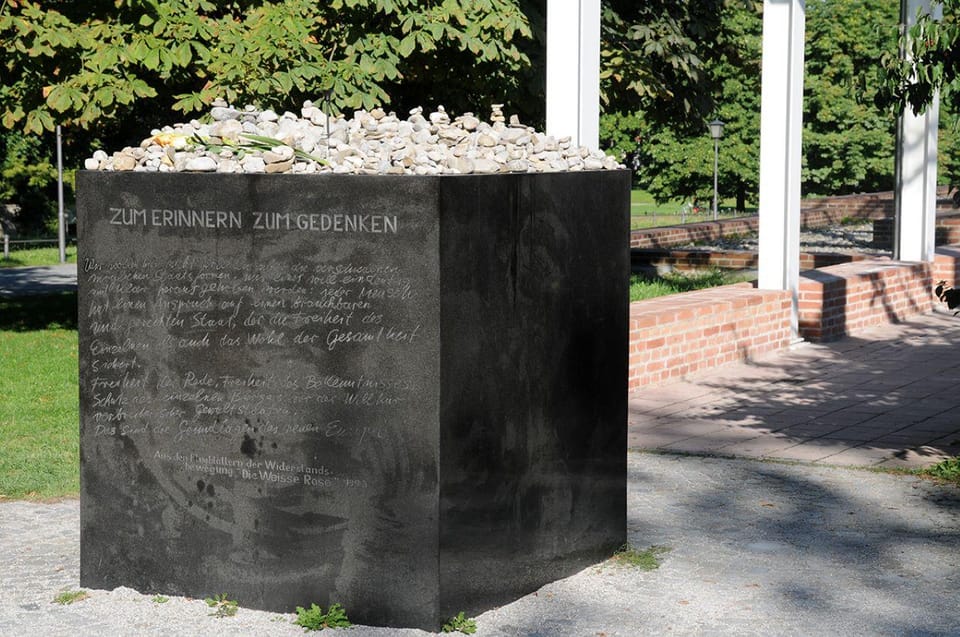
Your guide talks about Hitler’s rise to power, but you also hear about people who resisted in the name of democracy. That balance shows up in the way the tour moves from the rise of propaganda to the reality of persecution—anti-Semitic pogroms, destruction of synagogues, and public burning of books are part of the narrative your guide addresses.
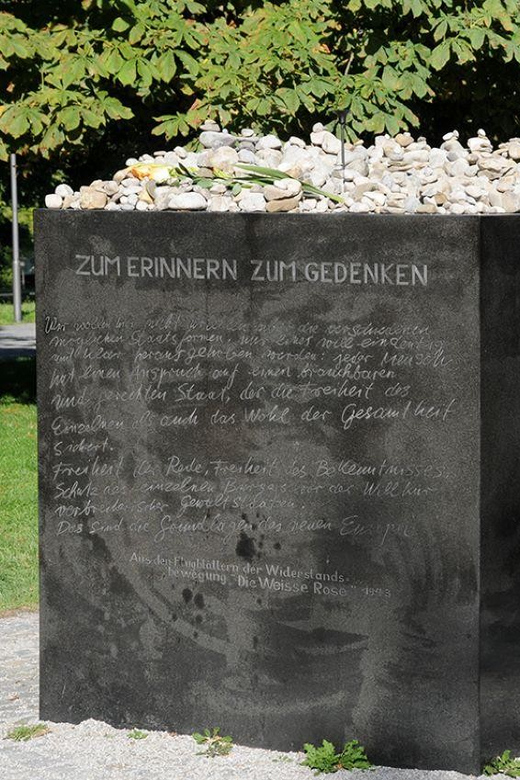
You’ll also encounter memorials dedicated to people who suffered under Nazism, including those who opposed Hitler’s ideology. The goal is not to make you feel guilty for visiting a city. The goal is to make you understand the human cost and to see how memory is handled in Munich today.
In the accounts of guides like Ina, the emphasis is described as personal and heartfelt—less like reciting a script, more like explaining why these places matter now. That tone can feel more respectful, especially when you’re dealing with events that are hard to absorb.
Private vs group tour: how format changes the experience
You can book this tour as a private group (and the option is available alongside a group format, depending on what you choose). The practical advantage of a private setup is straightforward: you can ask questions at your own speed and get explanations tailored to your interests.
This matters on a subject as layered as the Third Reich and WWII. If you want tighter focus on early Nazi tactics in Munich, or if you want more attention to resistance and victims, a private group makes it easier to steer the conversation. Guides are also praised for being interactive, which works especially well if you’re not trying to hold a train of questions for a room full of people.
For solo travelers, it can also be a good fit because the guide’s role is to turn the city into a coherent story. That context is the difference between “I saw buildings” and “I understand what those buildings signaled.”
Price math: what $259 per group can mean for value
The price is listed as $259 per group up to 25 people for a 2-hour walking tour. That pricing structure can be a deal or not, depending on your group size.
- If you fill a group close to 25, the cost per person can drop dramatically.
- If you’re a small group (say 2–4 people), the per-person cost is much higher—but you’re buying pacing, interaction, and a guide who can respond to your questions.
I’d treat this as a value choice when at least one of these is true:
- you care about interpretation, not just photos and captions
- you want the tour in English or German with a certified guide
- you’re visiting a short trip and want the most efficient way to understand Munich’s darkest chapter
The high rating—4.9 overall from 13 reviews—suggests most people feel the guide quality lands well.
Practical tips for your 2-hour walk
Bring comfortable shoes and drinks. That sounds basic, but on a tightly timed walk, you’ll be glad you did. You’ll be outside and listening closely, and Munich weather can be unpredictable.
A few rules and details matter:
- No video recording is allowed. Still photos should be fine in most cases, but follow the guide’s instructions on the day.
- Wheelchair accessible is listed, so there’s a route designed to work for mobility needs. Still, you’ll want to consider cobblestones and city walking.
- The tour is not suitable for children under 10, which tells you the guide is working at an appropriate maturity level for the topic.
Also note the language options: German and English. If you’re choosing between languages, pick the one where you’ll catch nuances—this tour relies on explanations, not just pointing.
Should you book the Munich Third Reich and WWII walking tour?
If you’re the type of traveler who wants more than a quick “sights” checklist, I’d book it. This is a focused, guided way to understand Munich’s role in National Socialism—from the origins and public performances to the later consequences and memory work.
Book it especially if:
- you’re spending limited time in central Munich and want a coherent route
- you like guides who use documents, pictures, and on-site context
- you want resistance and victim-focused context, not only the mechanics of power
Skip it or reconsider if:
- the subject matter will overwhelm your group and you’d rather do lighter, less intense city content
- you expected something casual and photo-first, because this walk is built for learning and respectful attention
Overall, it’s the kind of tour that turns familiar squares into meaningful landmarks. You’ll see the city differently afterward, and you’ll carry a clearer map of how propaganda, politics, and violence used real places to change history.
FAQ
How long is the Munich Third Reich and WWII walking tour?
It lasts 2 hours.
How much does the tour cost?
The price is $259 per group up to 25 people.
What languages are offered?
The live tour guide speaks German and English.
Where do we meet?
Meet at Mariensäule in the center of Marienplatz, at the golden statue on a tall red marble column, and look for the guide with a blue bag marked Weis(s)er Stadtvogel.
Is transportation included?
No. Transportation is not included.
Is video recording allowed?
Video recording is not allowed.
Is the tour wheelchair accessible?
Yes, it is listed as wheelchair accessible.
Is it suitable for children?
It is not suitable for children under 10.