REVIEW · EVENING EXPERIENCES
Munich: Night Watchman Walking Tour
Book on GetYourGuide →Operated by Weis(s)er Stadtvogel GmbH · Bookable on GetYourGuide
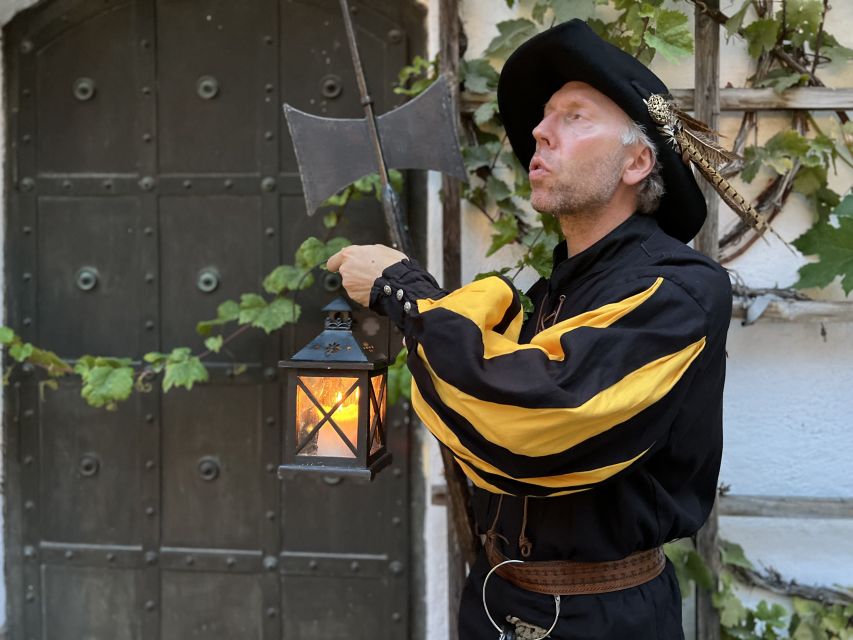
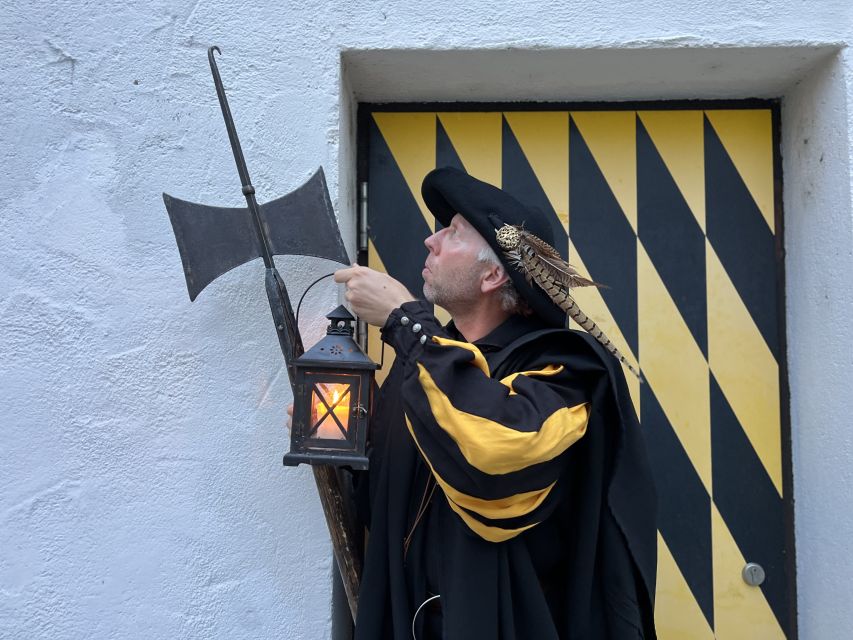
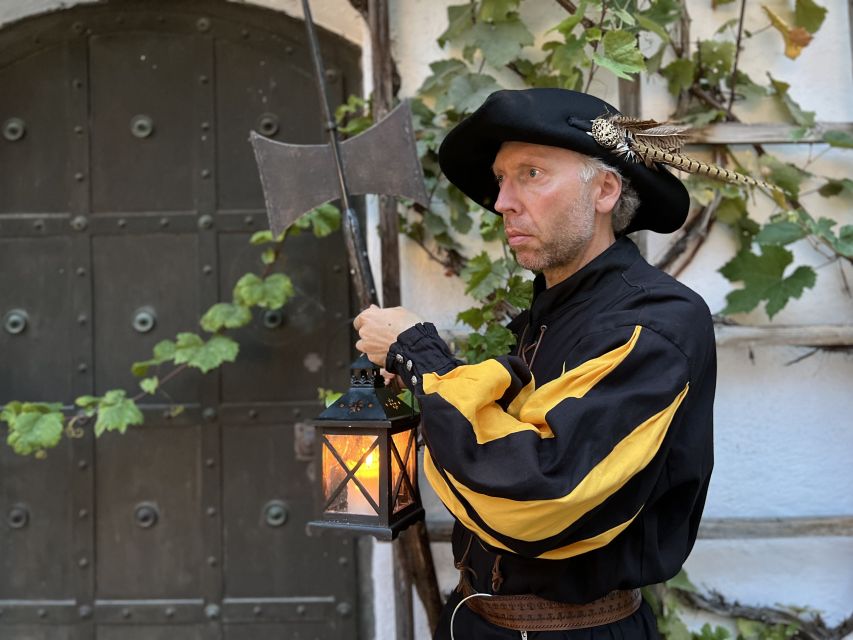
A night watchman with a lantern changes everything. This Munich old-town walking tour turns the evening streets into a storybook maze, with costume, lantern mood, and history you actually remember. It’s not just looking at buildings; it’s hearing why the city’s corners feel different after dark.
I like the characterful storytelling most. You get anecdotes from the night watchman’s life, plus quick, funny corrections when he thinks you’re missing the local vibe—like patron-saint talk and his straight-faced humor (yes, the taps question gets a for-the-beer answer).
One thing to weigh: the tour leans toward the darker side of old Munich—funeral customs, decomposing corpses, prison and torture-chamber stops, and unsettling epitaph stories. If you want light and breezy sightseeing only, this might feel too spooky for your taste—and at $530 per group, it’s best when you can split the cost with friends.
In This Review
- Key points before you go
- A Costumed Night Watchman, Not a Standard History Lesson
- Timing and the 1.5-Hour Route Through Munich’s Old Town
- Marktplatz to St. Peter’s Church: Munich Seen in Lantern Light
- Churchyard Gravestones, Missing Pew Stories, and Funerary Rules
- Salzstraße and the Altes Rathaus: Towers, Complaints, and Patron Saints
- Torture Chamber to Alter Hof: Louis II and the Cost of Control
- Following the 12th-Century City Walls Toward Gruftgasse
- Schäfflergasse and the Drink of the Middle Ages: Wine Over Beer
- Frauenkirche and Promenadeplatz: Epitaphs, Falls, and Tower Lore
- Palais Porcia, Palais Holstein, and Karl Albrecht’s Mistress
- Salvatorkirche, Theatinerkreuzgang, and the Host Desecration Story Chain
- Price, Value, and Group Size Math That Actually Matters
- Who This Tour Suits Best (And Who Might Prefer Something Else)
- Small Practical Tips for a Smooth Night Walk
- Should You Book the Munich Night Watchman Walking Tour?
- FAQ
- How long is the Munich Night Watchman Walking Tour?
- What’s the price of the tour?
- What language is the live guide?
- What does the tour include?
- What’s not included in the price?
- Where does the tour meet?
- Is the tour wheelchair accessible?
- Is a private group option available?
- Cancellation and payment options?
Key points before you go
- Costumed guide, not a slideshow: You’ll follow the night watchman’s rounds through little alleys and dark corners with a living voice.
- Night-only perspective of landmarks: Towers, courtyards, and churches feel different when the streets calm down.
- Morbid details with a reason: Gravestones and prison scenes aren’t just shock; they explain how people handled fear and death.
- Specific Munich clues you can repeat later: St. Peter’s skew towers, Salzstraße drama, Frauenkirche tower lore, and more.
- Short time, full mood: At 1.5 hours, you get the atmosphere without losing your whole night.
- Wheelchair accessible and in German/English: Built for mixed groups and clear guidance.
A Costumed Night Watchman, Not a Standard History Lesson
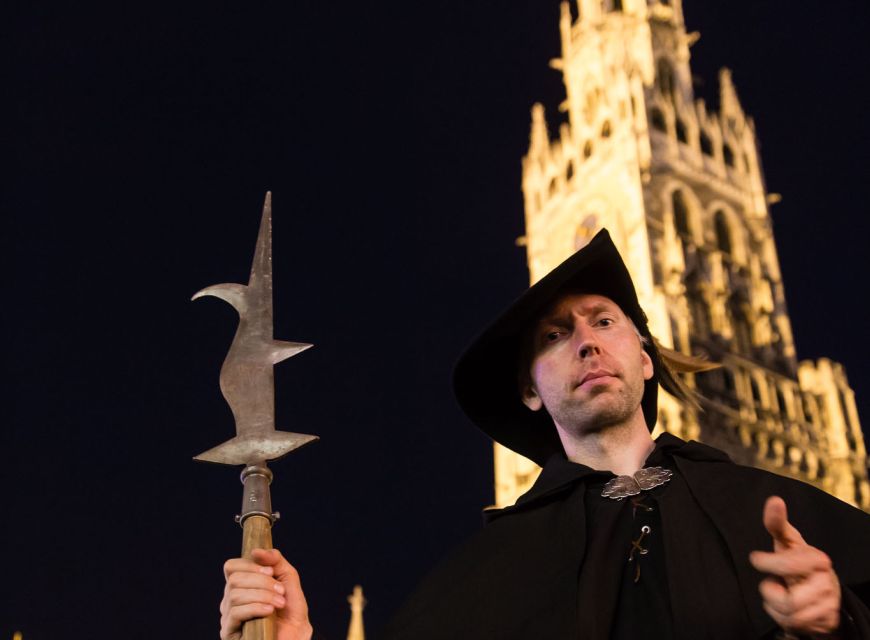
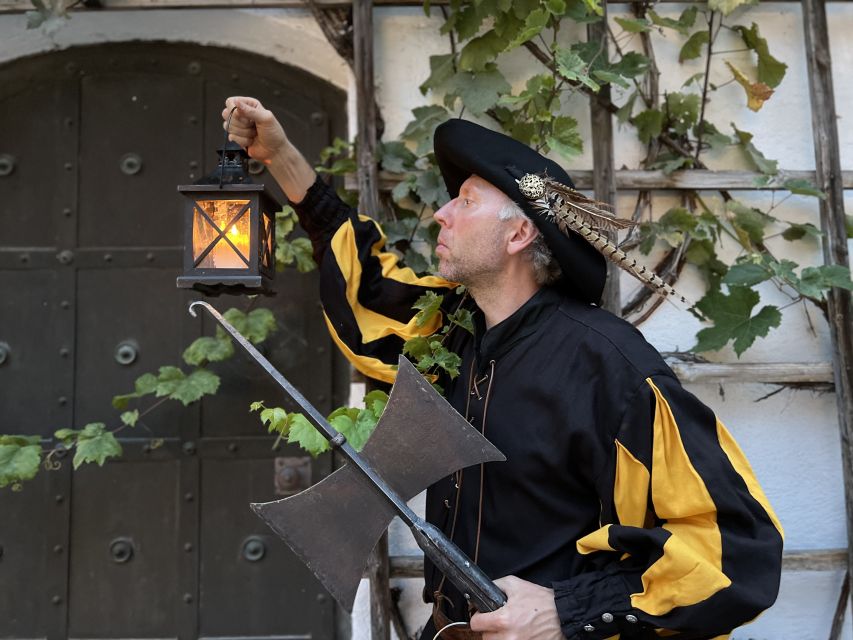
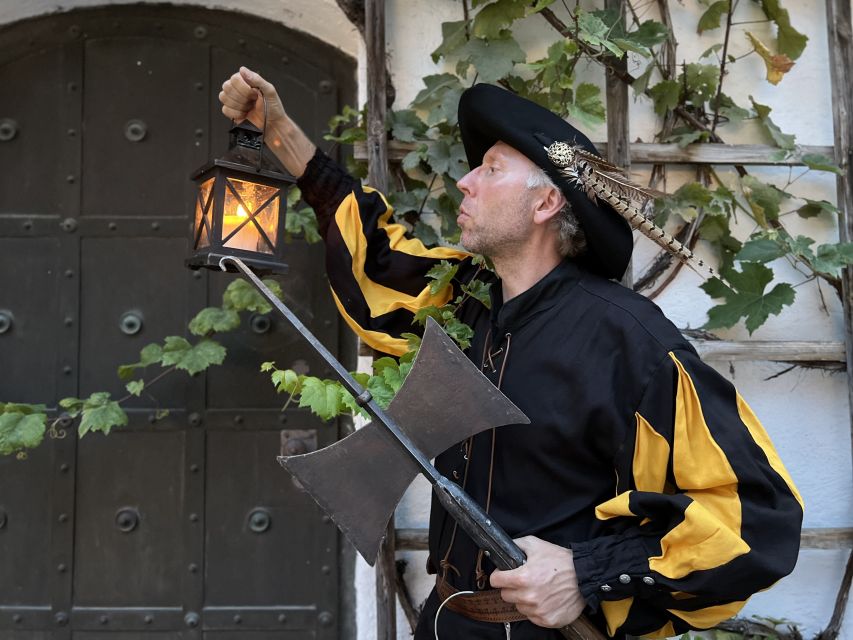
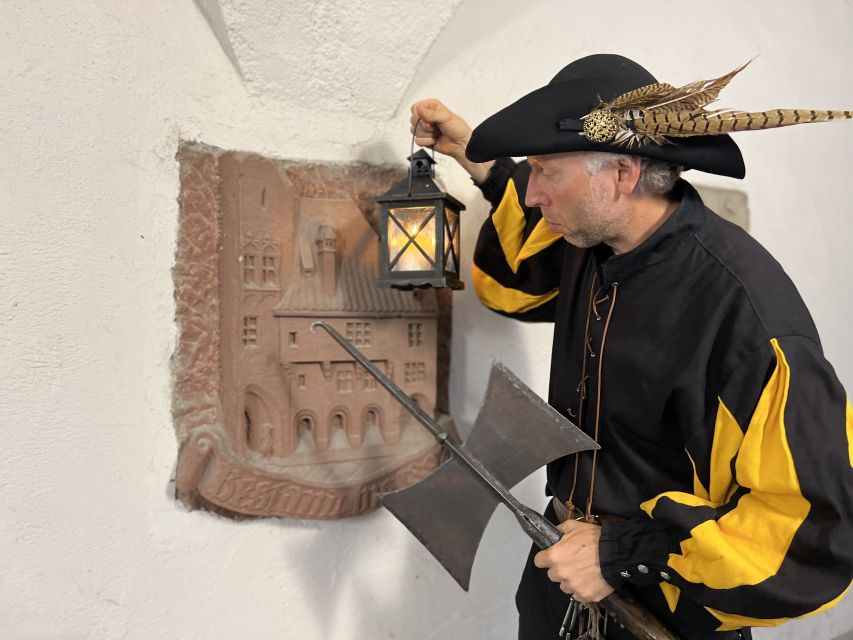
This is the kind of tour where you feel the shift from day Munich to story Munich. The guide arrives as the night watchman, lantern in hand, and he treats the streets like a job site. When people sleep, his job is keeping order in the alleyways and those shadowy corners where trouble likes to hide.
You’ll get a mix of theater and street-level history. The night watchman isn’t gentle about it either. He scolds you if you don’t know the patron saints of the city, then happily answers when you ask practical questions—like why there are so many taps around Munich. His answer is simple and cheeky: for the beer.
What makes it work is that the stories connect to real places you can point to later. You don’t just hear “there was a church” or “there were walls.” You walk through Marktplatz, stare up at towers, and get the feeling that the city had its own logic for fear, faith, and daily life long before smartphones.
You can also read our reviews of more walking tours in Munich
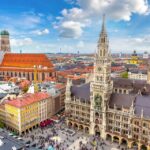
Timing and the 1.5-Hour Route Through Munich’s Old Town
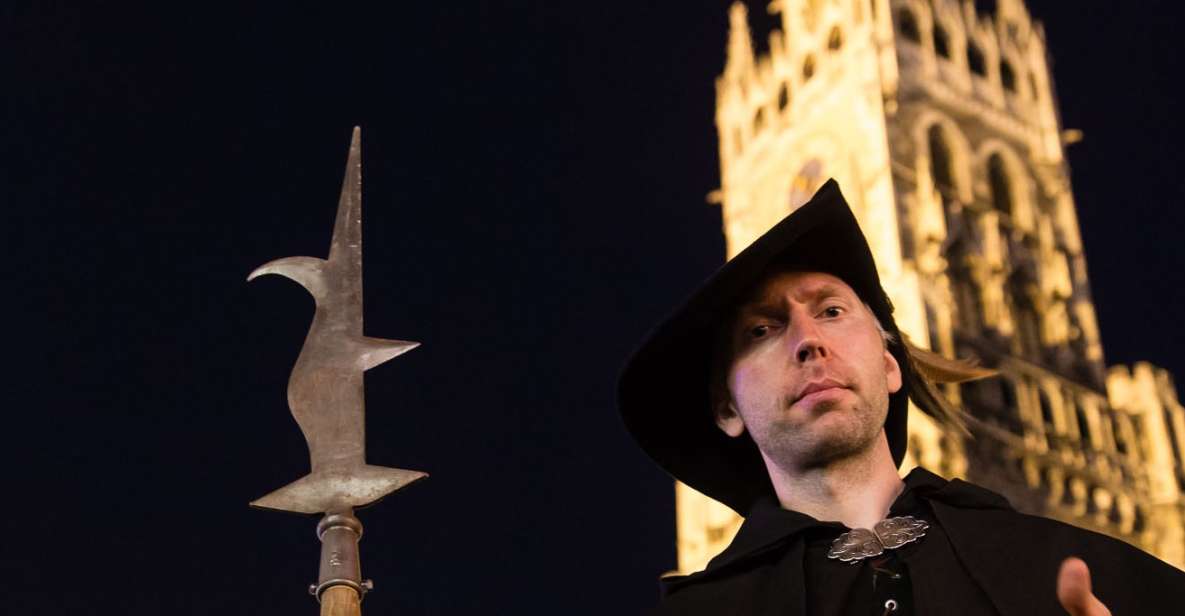
The tour runs about 1.5 hours, aimed at the later hours of the evening. That timing matters. In daylight, old streets can look like streets. At night, they feel like narrow corridors in a maze—exactly the kind of routes a watchman would patrol.
You’ll cover a compact inner-city loop that hits the big landmarks plus the small lanes between them. Expect a pace that keeps you moving, because the tour is designed to tell stories as you reach each spot. It’s short enough that you won’t get exhausted, but packed enough that you’ll want comfortable shoes.
Also: no food or drinks are included. If you’re eating dinner late, plan it so you’re not hungry halfway through. If you’re prone to feeling cold at night, bring a layer—this is the kind of walking tour where your comfort affects how much you enjoy the mood.
Marktplatz to St. Peter’s Church: Munich Seen in Lantern Light
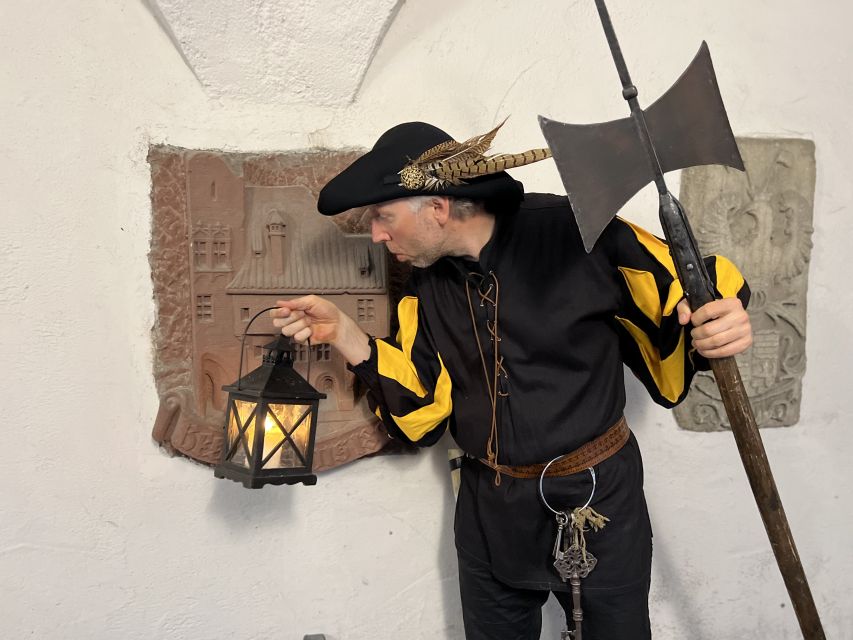
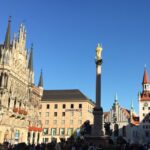
The tour starts by the night watchman shepherding his flock at Marktplatz. It’s a smart opener because it frames the night watchman as part of daily civic order, not just a spooky character for tourists. He’s there to keep peace when the city quiets down.
From there you move toward St. Peter’s Church. The big moment is going up in your imagination at least, with a focus on the tops of the towers. The guide points out why the towers stand askew, and he uses that detail like a doorway into older Munich logic—how things were built, repaired, and understood.
One of my favorite parts of this section is the way it shifts from architecture to everyday emotions. In daylight, you might walk past a churchyard. At night, you feel the weight of what people used to carry—grief, faith, and fear—right alongside faith and civic life.
Churchyard Gravestones, Missing Pew Stories, and Funerary Rules
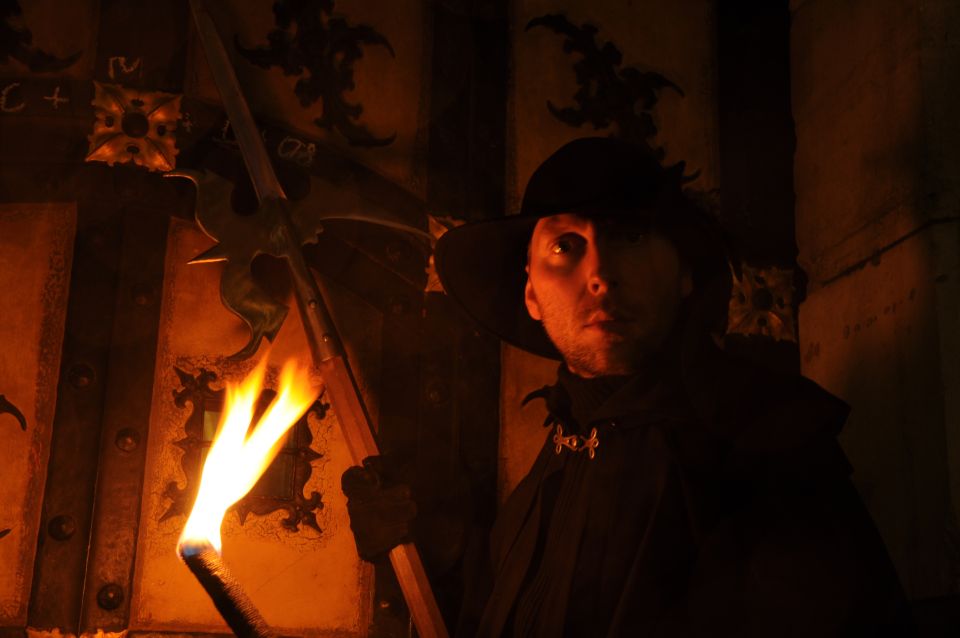
On the south side near St. Peter’s, you’ll get into the churchyard world. The tour turns the focus to gravestones and what they reveal about older funeral customs and epitaphs. And yes, the guide doesn’t pull punches: you’ll hear about decomposing corpses and other grim details people used to face.
There’s also a practical angle hidden in the mood. The guide connects these stories to how communities handled death as a routine part of life, not a distant idea. You learn to read the churchyard like a record book.
You’ll also hear about missing church pews. That’s the kind of detail that sounds small until it becomes a clue about how places were managed, valued, and sometimes stripped over time. The effect is that the churchyard stops being scenery and becomes a lived-in history lesson.
Salzstraße and the Altes Rathaus: Towers, Complaints, and Patron Saints
Next up is the Altes Rathaus at historic Salzstraße. Here, the story gets theatrical in a different way: the old Stadttor comes to life and complains about its rebuilding in the 1970s. It’s playful, but it also teaches you how a city keeps changing while trying to preserve itself.
This is also where the guide pushes the idea of piety. He questions visitors’ devotion, and then names specific patron saints tied to protecting people from sudden death—Onuphrius and Henry the Lion.
That detail is more than name-dropping. It helps you understand why medieval cities were obsessed with rituals and symbols. In a world without modern emergency systems, sudden death wasn’t rare. Faith wasn’t abstract. It was supposed to matter.
If you’re the type who enjoys hearing why people cared, this section will keep you leaning forward. You’ll look at the Rathaus tower and start thinking about what society wanted from its buildings: permanence, protection, and authority.
You can also read our reviews of more evening experiences in Munich


Torture Chamber to Alter Hof: Louis II and the Cost of Control
As you continue, you pass the torture chamber and prison. This part can feel heavy, but it’s also one of the most historically grounded segments because it’s about power and the enforcement of order—exactly what a night watchman would care about.
Then you reach the Alter Hof, built by Louis II. The guide explains why this ruler was considered so harsh, and he also covers how the House of Wittelsbach came to Munich. This adds the political backbone beneath the scary stories.
You’ll also learn what’s behind the name Zwingerstock. The tour treats these place names like clues, which is one of the best ways to make history stick. You’re not just hearing facts; you’re building a mental map of what people labeled, repaired, and feared.
Following the 12th-Century City Walls Toward Gruftgasse
You’ll then follow city walls from the 12th century, heading west from Wasserburg. Walking along the idea of ancient walls changes the way you see the city. Even if you’re not touching stone from that exact era everywhere, you get a sense of boundaries—physical and social—that shaped Munich for centuries.
At Gruftgasse, the guide tells a spooky story involving Waller in Walchensee, a young lady, and a golden ring. The story is built to match the narrow lane feeling: tight streets make mystery feel believable.
This section is a good example of why a night tour can be better than a daytime one. In daylight, you can focus on the “what.” At night, you get the “why does this place feel strange,” and that keeps you engaged even if you’re not a hardcore history person.
Schäfflergasse and the Drink of the Middle Ages: Wine Over Beer
In Schäfflergasse, you get a Middle Ages surprise: the guide explains why wine, not beer, was the drink of choice back then. It’s the kind of detail that changes how you think about Munich.
Yes, Munich has beer in its DNA. But this isn’t a beer-only tour, and it’s helpful for balancing stereotypes. The city’s food and drink history wasn’t one straight line. It shifted with trade, taste, and social habits.
I also like how the tour keeps bouncing between big and small. You’ll move from walls and towers to narrow streets and one sharp cultural detail, and then back toward major landmarks again. That rhythm helps the tour stay interesting for a full 1.5 hours.
Frauenkirche and Promenadeplatz: Epitaphs, Falls, and Tower Lore
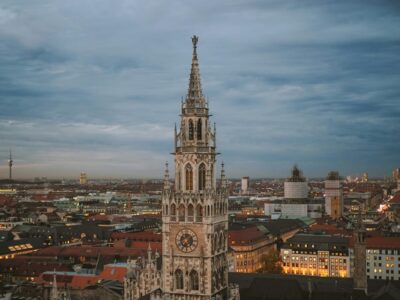
As you near the cathedral area, the guide turns your focus upward toward the two towers of the cathedral. It’s a classic Munich marker—easy to recognize in photos, but more meaningful when you’re hearing the city’s symbolic language.
Then you’ll hear about a rich widow’s epitaph. Epitaph stories can sound like trivia until you realize they show what people wanted remembered. They’re basically a public message from private grief.
Another standout is the story of Fanny von Ickstatt’s unlucky fall from the north tower of the Frauenkirche. This is exactly the kind of narrative that makes an old building feel alive. The tower isn’t just a structure now; it’s tied to human fate.
You’ll continue to Promenadeplatz, where you pass the old Salzstadel. It’s a reminder that Munich’s major places weren’t just religious or royal—they were tied to trade and storage too. That broadens the picture beyond palaces and churches.
Palais Porcia, Palais Holstein, and Karl Albrecht’s Mistress
Next, the tour threads past Palais Porcia and Palais Holstein, guided by the night watchman’s story instincts. He tells the tale of Karl Albrecht, who had the palaces built for his mistress.
This is where the tour does something clever: it brings politics and personal life into the same frame. Even if you’re not into dynastic history, you start to see how power shaped architecture. Buildings weren’t neutral. They were statements—who mattered, who paid, and what relationships were worth displaying.
Since this is a walking tour at night, the palaces can feel almost stage-like. You’re not just reading history on a plaque; you’re hearing it like a rumor that fits the dark streets.
Salvatorkirche, Theatinerkreuzgang, and the Host Desecration Story Chain
At Salvatorkirche, the guide tells heavier material: an enormous host desecration, plus a love story involving Henriette Adelaide, consort of electoral prince Ferdinand Maria. The tour then moves into the Theatinerkreuzgang, where the guide weaves faith and family plans into one arc.
After 10 years, the long-sought heir is born, and then the Theatine Church gets built. That turns the tour’s earlier focus on patron saints, death, and symbolism into a broader idea: belief systems shape what gets built, funded, and protected.
If you like story chains—one event leading to another—this finale section is satisfying. You start earlier with the fear and order of a watchman. You end with how rulers and citizens turned belief into monuments.
Finally, the night watchman lets his herd loose into the night so the rounds continue. It feels like the tour is handing the city back to you, minus the fear. You leave with a fresh way to look at familiar streets.
Price, Value, and Group Size Math That Actually Matters
The price is $530 per group, up to 30 people, for about 1.5 hours. That sounds pricey until you do the math with your actual group size.
- If you’re a party who can share the cost with friends, the per-person price drops quickly. For larger groups, this can be a strong way to get guided storytelling without paying separate fees for every person.
- If you’re traveling solo or as a couple with no extras, it can feel steep. In that case, compare it to what you’d spend on multiple individual paid experiences for Munich’s old-town highlights.
What you’re really paying for is the costumed night watchman experience plus a compact route that hits major places: Marktplatz, St. Peter’s, Altes Rathaus, Alter Hof, Frauenkirche, and Theatinerkreuzgang. You’re not piecing together these stops on your own at night and then finding the narrative thread. The guide does the linking for you.
One more value point: the tour includes a living guide in German or English, and it’s wheelchair accessible. That matters when you want a single plan that works for mixed mobility needs.
Who This Tour Suits Best (And Who Might Prefer Something Else)
You’ll likely love this if:
- You enjoy story-driven history more than museum-style facts.
- You like eerie mood, but still want the places to be real.
- You’re okay with dark themes like funerary customs, prison, and torture-related history.
You might skip it if:
- You want modern Munich nightlife or comedy in the lighter sense only. The night watchman has a clear attitude that law and order matter most, and he’s not focused on partying.
- You dislike morbid storytelling. This one includes decomposing-corpse details, unsettling tower lore, and prison and torture-chamber stops.
It also fits well for couples, small friend groups, and families who can handle spooky topics. Since the tour is only 1.5 hours, it’s easier for kids than longer “dark history” experiences, but you’ll still want to judge how your group feels about the grim content.
Small Practical Tips for a Smooth Night Walk
A night watchman route is still a walking tour. You’ll cover a handful of stops, and you’ll be moving between them.
- Wear comfortable, grippy shoes. Even if the streets look smooth, night walking punishes slips fast.
- Dress warm. Even in mild seasons, night air can cool you down during a lantern-paced tour.
- Come with basic curiosity, not a checklist. If you ask questions about things like the taps for beer, you’ll get more out of it.
- Expect lively guidance and character acting. Guides can bring extra charm, and a well-liked guide style includes authenticity and humor—like the Elsbeth-led performances praised for being engaging and informative.
If you’re the type who likes getting your bearings fast, this tour can do that. You’ll come away with names of buildings you can use later, plus the story threads that connect them.
Should You Book the Munich Night Watchman Walking Tour?
Book it if you want a night-only lens on Munich’s old town, with a costumed night watchman who tells stories tied directly to specific stops. It’s short, guided, and heavy on atmosphere—exactly what many “day tours” miss.
Skip it if your priority is daytime sightseeing comfort, lighter storytelling only, or you’re traveling solo without anyone to share the group price. With the cost, the best value comes when you’re splitting the $530 with a group up to 30.
If you do book, go in ready for dark humor and dark history in equal measure. You’ll leave knowing why the towers look the way they do, what the city’s patron saints were called on to protect, and how beer, wine, and power shaped daily life in old Munich.
FAQ
How long is the Munich Night Watchman Walking Tour?
The tour lasts about 1.5 hours.
What’s the price of the tour?
It costs $530 per group, up to 30 people.
What language is the live guide?
The tour is offered in German and English.
What does the tour include?
You get guidance from the night watchman, clad in medieval garb.
What’s not included in the price?
Food and drinks are not included, and transport is not included.
Where does the tour meet?
The meeting point may vary depending on the option you book.
Is the tour wheelchair accessible?
Yes, it’s listed as wheelchair accessible.
Is a private group option available?
Yes, a private group is available.
Cancellation and payment options?
You can cancel up to 24 hours in advance for a full refund, and there is an option to reserve now and pay later.