REVIEW · THIRD REICH & WWII WALKING TOURS
Munich: Third Reich and World War II Private Guided Tour
Book on GetYourGuide →Operated by Rosotravel Germany · Bookable on GetYourGuide
Nazis turned Munich into a stage. This private walking tour connects the street signs to the people and decisions behind the Third Reich story, from Hitler’s rise to the 1945 bombing. I especially liked the focused route starting at Marienplatz and ending at Königsplatz, where the Nazi spectacle played out in real places.
Two standouts for me: first, seeing Hofbräuhaus am Platzl in the context of Hitler’s 1920 speech that helped launch the National Socialist movement; second, reaching the former power centers around Führerbau and learning how the Munich Agreement landed right here in the city. One possible drawback: the topic is heavy, and if you pick only the 3-hour option, you’ll have less time for museum-style context than the longer 4.5-hour visit.
In This Review
- Key highlights at a glance
- Munich’s Old Town route: from Marienplatz to war-torn 1945
- Hofbräuhaus am Platzl and the party origin story you can stand on
- Following the Beer Hall Putsch: Feldherrnhalle and Odeonsplatz
- Führerbau and the Munich Agreement signed in 1938
- Resistance in Munich: White Rose and the Monument to Victims
- NS Documentation Center option: photos, film, and media stations (4.5 hours)
- How the guide turns facts into questions (not slogans)
- Price and value: what $311 buys you in Munich
- Who should book this tour, and who might skip it
- Should you book the Munich Third Reich and WWII private tour?
- FAQ
- How long is the tour?
- What does the 4.5-hour option include?
- What are the main places you visit on the 3-hour walk?
- Does the tour cover the Beer Hall Putsch?
- Is Führerbau part of the tour?
- Who is the White Rose mentioned in the tour?
- Where do I meet the guide?
- What languages is the guide available in?
- Is the tour wheelchair accessible?
- Can I cancel and pay later?
- Is it a private tour?
Key highlights at a glance
- Marienplatz start: the square tied to Nazi propaganda events, with major wartime landmarks nearby
- Hofbräuhaus am Platzl: Hitler’s 1920 speech connected to the party’s origin story
- Beer Hall Putsch route: you follow the movement toward Feldherrnhalle and Odeonsplatz
- Führerbau and 1938: learn about Chamberlain and Hitler signing the Munich Agreement here
- Königsplatz finale: Nazi mass rally ground and the book-burning site
- 4.5-hour NS Documentation Center add-on: photos, documents, film projections, and media stations for WWI/WWII context
Munich’s Old Town route: from Marienplatz to war-torn 1945
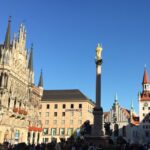
This tour is built on walking through Munich’s historic core and noticing how power uses space. You begin at Marienplatz, the central square where the Nazi movement staged propaganda events. Even if you know Munich as beer halls and medieval streets, the route forces you to read the city differently: not as scenery, but as a set of choices—staged, repeated, and defended.
One of the most practical parts of this experience is that it stays anchored to visible locations you can keep in your head. You move past the areas tied to rallies and offices, then you reach sites connected to the city’s destruction during World War II. The tour points out the reconstructed Neues Rathaus, still carrying traces of the 1945 bombing impact that demolished most of downtown.
You also get a sense of how Munich became a center for the National Socialist movement. The route threads together origin, escalation, and consequence, so you aren’t just memorizing names. You’re seeing how one political idea turned into a citywide system—then collapsed under war and liberation.
You can also read our reviews of more guided tours in Munich
Hofbräuhaus am Platzl and the party origin story you can stand on
The tour’s big turning point (and it’s not subtle) is the visit to Hofbräuhaus am Platzl, the famous beer hall tied to Adolf Hitler’s speech in 1920. You learn how the National Socialist German Workers’ Party grew out of that early momentum, and how Munich offered visibility and opportunity to the movement.
What makes this stop valuable is the contrast. Hofbräuhaus is a place many people associate with Bavarian tradition and casual fun. Here, your guide frames the same walls through a different lens: politics as performance. When you connect the 1920 speech to the later events around the party and its supporters, the timeline starts to feel less abstract.
You’ll also hear how the movement attracted supporters and, equally important, you’ll be nudged to consider who enabled it locally. That doesn’t mean blaming everyone as one block. It means asking the more difficult questions that this kind of tour is designed for—questions about responsibility, motivation, and silence.
If you want a tour that stays grounded in street-level reality (not just dates and documents), this is the moment that makes it click.
Following the Beer Hall Putsch: Feldherrnhalle and Odeonsplatz
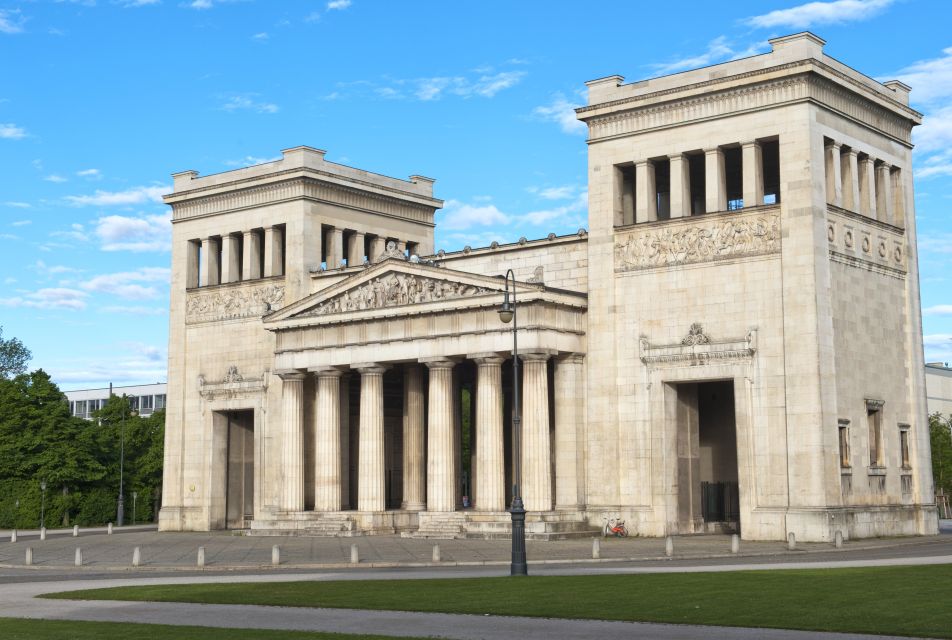
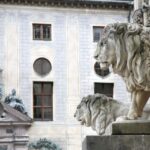
After the early origin story, the tour traces the Beer Hall Putsch path. You walk toward Feldherrnhalle and Odeonsplatz, following the same kind of political theatre the Nazis used to push their claim that force could seize power.
This part is useful because it shows escalation as a process. You’re not only hearing that there was an attempted putsch. You’re seeing the “why here” logic of the route—how a movement tries to seize attention in the center of a city, then tries to convert that attention into control.
The tour also covers the attempt involving the Bavarian Defense Ministry, and how that failed action helped shape the ideas and tone behind Hitler’s writing, including Mein Kampf (literally My Struggle). The takeaway for me wasn’t that a single event caused everything. It was that the early shockwaves became fuel for a future political program.
Practical note: since this is a walking tour in central Munich, wear shoes you trust. You’ll want your brain fresh for the harder parts, and good footing helps you focus.
Führerbau and the Munich Agreement signed in 1938
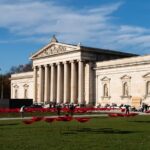
One of the most striking stops is Führerbau, often referred to as the Führer’s building. Here, the guide connects location to decision-making at the highest level. The tour specifically points out that Chamberlain and Hitler signed the Munich Agreement in 1938 in this space.
Even if you’ve read about the Munich Agreement before, seeing the building context changes how you remember it. It shifts the story from something that happened “in Europe” to something negotiated in a particular place, by particular people, with consequences that played out quickly afterward.
This stop also reinforces the tour’s main method: using architecture and urban planning as evidence. The guide helps you notice how formal institutions were used, how Nazi power positioned itself as legitimate, and how the city’s role in that legitimacy mattered.
There’s also a value in pacing here. The tour sets up the early movement, then the dramatic attempt to seize control, and then moves to the period where agreements and official actions helped lock the path forward. That structure helps you understand the Nazi rise-to-power arc as a chain of steps, not a single turning point.
Resistance in Munich: White Rose and the Monument to Victims
This tour does not only focus on Nazi leadership and supporters. You also visit the Monument to the Victims of National Socialism, and you learn about resistance groups in Munich, including the White Rose Group led by five university students.
Including resistance is essential. It keeps the story from becoming a one-note portrait of power. It also gives you a more balanced view of what people did in the face of intimidation and state pressure. The guide’s framing pushes you to think about choices under risk, not just what the regime achieved.
This is the kind of stop where you’ll probably slow down. The monument stands as a reminder that the consequences were personal and real, not just political history. And when you pair that with what you learn about the White Rose, the tour turns from observation into reflection.
If you’re someone who prefers tours that connect history to human actions, this section is a strong match. If you’re emotionally sensitive to memorial sites, plan a moment for yourself afterward. It’s a lot to carry, and you deserve time to absorb it.
You can also read our reviews of more private tours in Munich


NS Documentation Center option: photos, film, and media stations (4.5 hours)
If you choose the 4.5-hour option, you add a visit to the NS Documentation Center for the History of National Socialism in Munich. This is where the tour becomes more than a street-walk.
The center includes photographs, documents, and texts, plus film projections and media stations. That combination matters because it changes how the story lands. On the street, you learn through places. In the center, you learn through evidence, curated presentation, and multiple ways of seeing the same events.
The center covers both the origin and rise of the Nazi movement and the broader arc through war and the postwar period in Munich. In other words, it helps you zoom out enough to make the street details meaningful. You can connect what you saw around Königsplatz or Führerbau to how the regime functioned and how Munich experienced the war years.
For me, this is also the best fit if you’re coming to Munich specifically for WWII context. The 3-hour option is strong, but the museum-time makes it easier to ask your questions and get clarity. Your guide is there to help you understand the causes and consequences, and to answer difficult questions with structure.
How the guide turns facts into questions (not slogans)
A private historian guide is the point here. This format matters because Third Reich history is full of traps: oversimplifying, turning tragedy into spectacle, or treating victims as background. The guide’s job is to keep the story factual and balanced while still making you face the moral questions.
You’re encouraged to ask difficult questions about Munich’s role and its citizens’ part in the rise and fall of National Socialism. That’s not a casual talking point. It’s what turns a tour from “seeing sites” into real understanding.
This kind of guide also helps you interpret what you’re looking at. For example, when you see the Nazi-connected buildings and rally-related locations, you’re not just collecting a list. You’re learning what those places were used for and why the regime wanted the city to feel like it belonged to them.
And yes, English, German, French, Italian, and Spanish are available. That’s practical if you’re traveling with friends or prefer to ask your questions in a language you’re fluent in.
I also like that the tour doesn’t pretend the topic is easy. If you’re expecting a cheerful walking tour, you’ll be disappointed. If you want a serious, well-paced history session with the ability to ask questions, you’ll likely feel well served.
Price and value: what $311 buys you in Munich
At $311 per person for a 3-hour private guided walking tour, you’re paying for access: a dedicated guide, a planned route, and the ability to slow down where you have questions. In big cities, this can be a smart move because you avoid wandering and guessing.
Is it expensive compared to group tours? Sure. But private history tours often pay off when the subject is complex and uncomfortable. You don’t want a rushed schedule or a guide forced to keep things general. Here, the format is designed for clarity: origin, rise, major events like the Beer Hall Putsch, and key locations including Führerbau and Königsplatz.
The value jumps if you care about WWII context and you pick the 4.5-hour option with the NS Documentation Center. That extra time is not just “more walking.” It’s an additional evidence-based stop with photos, documents, film projections, and media stations that help you connect Munich’s street-level sites to the wider war story.
One more practical value: the tour starts in the city center and keeps things walkable. You’re not piecing together multiple museum tickets and transit transfers just to get the basic timeline.
Who should book this tour, and who might skip it
This tour is ideal if you:
- want a street-level WWII narrative tied to specific Munich locations
- like guides who can explain the Nazi movement’s rise and the city’s role without dodging hard questions
- want to see both Nazi-era sites and memorial/resistance context (like the White Rose and the monument)
You might skip it if you:
- prefer light sightseeing and comedy-style storytelling
- only want a quick photo-and-go overview of WWII-era sites
- aren’t comfortable with the emotional weight that comes with memorials and difficult history
If you’re traveling with someone who mainly wants beer halls and old streets, I’d suggest checking that their interest matches the serious focus of this tour. Munich can do both, but this particular experience leans firmly toward the darker side.
Should you book the Munich Third Reich and WWII private tour?
Yes, I think you should book it if you want structure, specificity, and a guide-led walk through the places where the Nazi story took physical form. Starting at Marienplatz, reaching Hofbräuhaus am Platzl, tracing the Beer Hall Putsch route, and ending at Königsplatz gives you a clear geographic storyline you can remember long after you leave.
If you can swing the extra time, I’d choose the 4.5-hour option with the NS Documentation Center. It’s the difference between learning the sites and understanding the context behind them.
If you’re tired after a day of travel, keep your expectations calm and realistic: you’ll be walking and thinking, not just sightseeing. But if that’s your idea of a meaningful Munich day, this tour fits very well.
FAQ
How long is the tour?
The walking tour is 3 hours (270 minutes). There is also a longer 4.5-hour option that adds the NS Documentation Center.
What does the 4.5-hour option include?
The 4.5-hour option includes a visit to the NS Documentation Center for the History of National Socialism in Munich in addition to the walking route.
What are the main places you visit on the 3-hour walk?
On the walking route, you visit areas including Marienplatz, Hofbräuhaus am Platzl, the route tied to the Beer Hall Putsch (including Feldherrnhalle and Odeonsplatz), Führerbau, a Monument to the Victims of National Socialism, and the final stop at Königsplatz.
Does the tour cover the Beer Hall Putsch?
Yes. The route follows the infamous Beer Hall Putsch path to places including Feldherrnhalle and Odeonsplatz.
Is Führerbau part of the tour?
Yes. The tour includes the former office buildings of the Nazi Party, including Führerbau, and it notes the significance of the 1938 Munich Agreement signing there.
Who is the White Rose mentioned in the tour?
The tour includes information about resistance in Munich, including the White Rose Group, led by five university students.
Where do I meet the guide?
Meet your guide in front of hotel BEYOND by Geisel, Marienplatz 22, 80331 Munich, opposite St Peter. Do not enter the hotel.
What languages is the guide available in?
The live guide is available in English, German, French, Italian, and Spanish.
Is the tour wheelchair accessible?
Yes, it is wheelchair accessible.
Can I cancel and pay later?
You can cancel up to 24 hours in advance for a full refund. You can also reserve now and pay later to keep plans flexible.
Is it a private tour?
Yes, it is a private group experience.