REVIEW · GHOST & TRUE CRIME TOURS
Munich: Scary Tour with actors in GERMAN
Book on GetYourGuide →Operated by Weis(s)er Stadtvogel GmbH · Bookable on GetYourGuide
Witch hunts meet theatre on Munich streets. This 90-minute German walking tour turns the Old Town’s landmarks into live scenes, with actors in historic costume reenacting grim fates and dark folklore. It’s the kind of history that doesn’t stay in a textbook; it follows you from square to church to alley.
What I like most is how the show balances fear and facts, especially when the acting clips line up with real places like the Neuhauser Tor and the Frauenkirche. I also like the specific stories you remember afterward, like the devil-helping-church-builder bit and the alchemy talk tied to the town hall. The main drawback is simple: it’s German-only, and the themes are heavy (witch hunts, torture, prostitution), so it may not be your cup of tea if you want light city vibes.
In This Review
- Key highlights that matter
- Scary, but guided: what this Munich tour really covers
- Price and where the value comes from
- Starting at Karlsplatz/Stachus: finding the Weis(s)er Stadtvogel guide
- Neuhauser Tor: the walk begins at the edge of punishment
- Salzstraße and the Jesuit school: witch-hunt context in plain streets
- St. Michaelis Church: Renata vs. Father Ignatius and the tower collapse
- Schöner Turm to Frauenkirche: goldsmith tragedy, then devil logic
- Town Hall and Marco Bragadino: alchemy in the political center
- St. Peter’s Church: hangmen’s daily life and the uncomfortable details
- Old Town Hall and the Platzl: torture spaces and red-light history
- What the acting adds (and why the language matters)
- Rain, timing, and how to plan your evening
- Who should book this Munich scary tour
- Should you book this Munich scary tour?
- FAQ
- How long is the Munich scary tour with actors?
- Where do I meet the guide?
- What language is the tour in?
- Does the tour run in bad weather?
- Is the tour wheelchair accessible?
- What themes are covered during the tour?
Key highlights that matter
- Meeting your guide at Karlsplatz/Stachus under the Karlstor archway, with a big blue bag marked Weis(s)er Stadtvogel
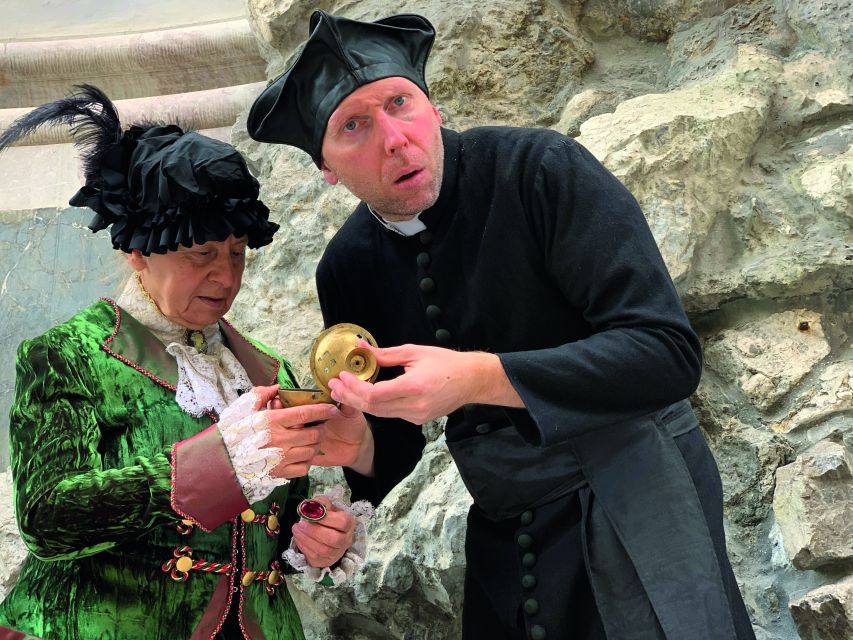
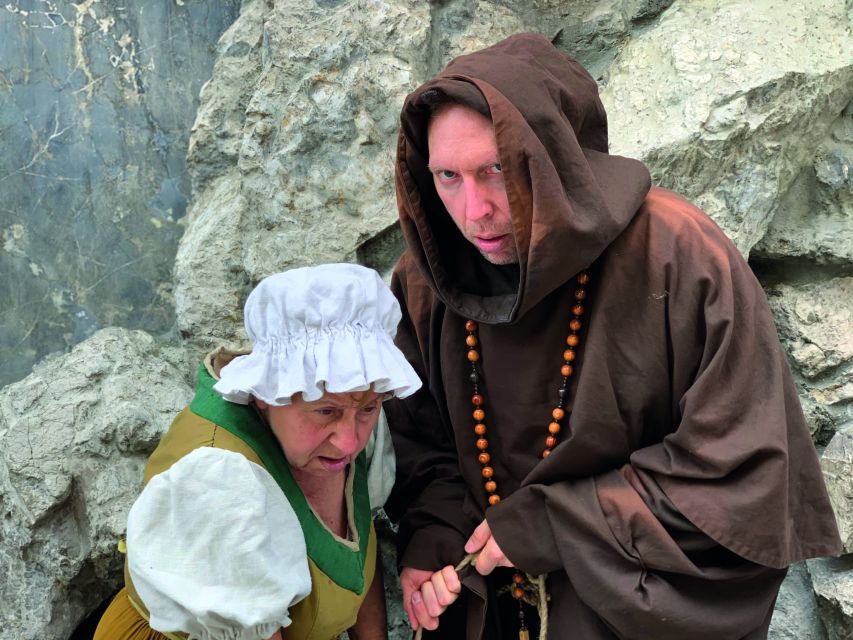
- Professional actors in costume who perform scenes right on the street, not in a theatre
- Old Town route you can visualize fast, from Neuhauser Tor through St. Michaelis, Frauenkirche, and the Town Hall area
- Gothic storytelling with concrete details, including witch-flight questions and why executions happened outside town
- Dark Munich history with a specific pivot, from witch hunts and torture to the Platzl red-light district ending around the 1970s
Scary, but guided: what this Munich tour really covers
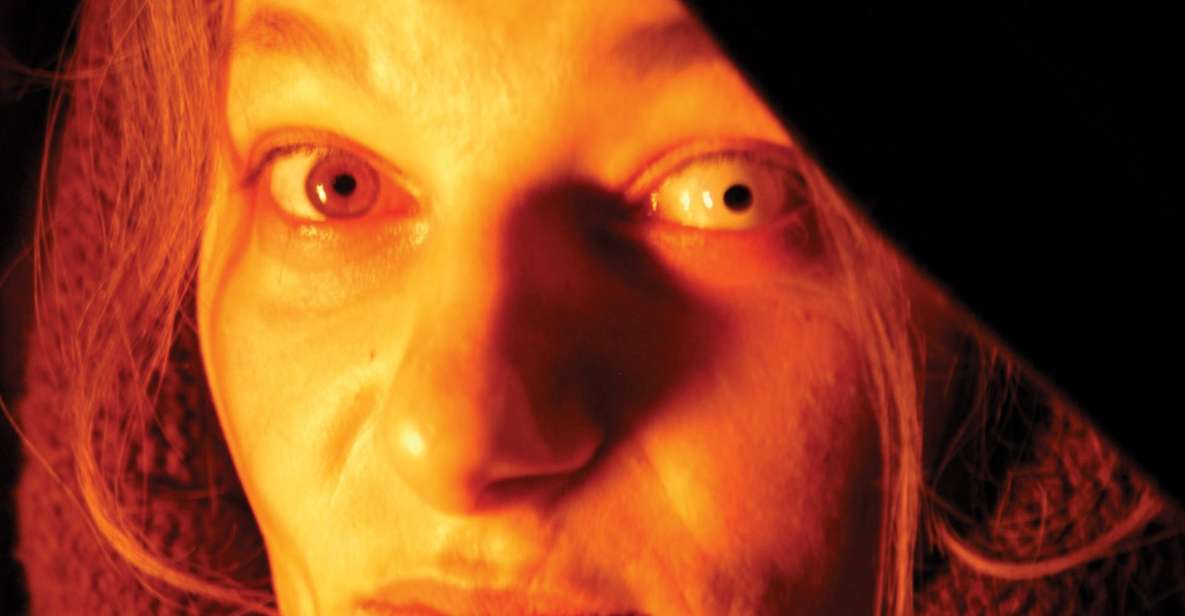
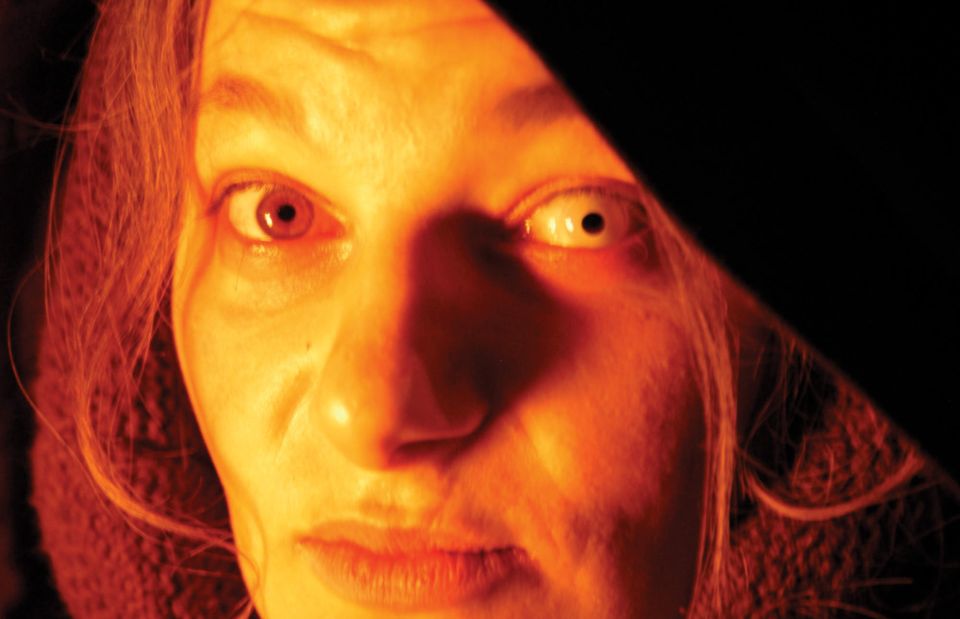
This is a scary walking tour with a clear focus: Munich’s dark side. The storyline centers on witch hunts, prostitution in the historic center, torture, and executions, all told through scripted scenes performed by professional actors.
The “scary” part is mostly theatrical. You’re hearing grim explanations and seeing dramatized reenactments, but the pacing stays practical—90 minutes, walking between major spots, and a guide who keeps the facts connected to what you’re standing in front of.
And yes, the Devil shows up in a story tied to the Frauenkirche, plus there’s comedy tucked inside the horror. That mix is often what makes the difference between a spooky gimmick and a tour you’ll actually recommend.
You can also read our reviews of more tours and experiences in Munich.
Price and where the value comes from
At $46 per person for 90 minutes, you’re paying for more than a lecture. You’re paying for the cost of actors, costumes, and a performance that uses Munich’s public squares as the stage.
If you enjoy history that moves—scenes, dialogue, and quick context—this price can feel fair. If you want purely academic detail, you may find the drama more than you expected, and you might prefer a standard walking tour without characters.
Starting at Karlsplatz/Stachus: finding the Weis(s)er Stadtvogel guide
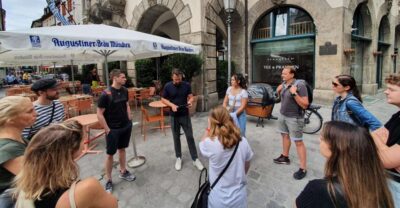
You meet at Karlsplatz/Stachus, under the archway of the Karlstor. Your guide wears a big blue bag with the white words Weis(s)er Stadtvogel, so you should be able to spot them fast even if you’re arriving close to departure time.
The tour language is German, and that matters more than you might think. Even if you know some German, the best part of the experience is the story beats and punchlines, so plan on following it as it’s told.
This tour runs rain or shine, so bring a jacket you’re comfortable wearing for walking. Since it’s a mostly outdoor route, your comfort depends on weather, not on a planned bus ride.
Neuhauser Tor: the walk begins at the edge of punishment
The story kicks off at the Neuhauser Tor, a key location because it links the city center to what happened outside it. The theme here is simple and stark: delinquents were led out of town toward execution.
Standing at a city gate like this changes how you think about Munich’s layout. You start to notice how control and authority worked through space—what was inside the walls versus what was done beyond them.
Even if you’ve visited gates and towers before, this stop reframes them. Instead of treating the gate as a nice photo spot, you treat it as a decision point in the city’s history.
Salzstraße and the Jesuit school: witch-hunt context in plain streets
From the gate, you move along Salzstraße and toward the area connected with the Jesuit school in the era of witch hunts. This part is about setting up the logic behind the fear—how accusations formed, who argued, and why the stories spread.
Expect dramatized conflict. There’s an argument scene featuring Duchess Renata and Jesuit Father Ignatius, and it’s tied directly to a dramatic moment during the construction of St. Michaelis Church.
That link matters. It’s not just, someone said something scary; it’s connected to what people interpreted as storms, accidents, and blame in the 1500s-style mindset.
St. Michaelis Church: Renata vs. Father Ignatius and the tower collapse
At St. Michaelis Church, you’ll hear how a tower collapse was explained through superstition. The story frames the unusual storm as something caused by accursed bad women—basically, disaster turned into accusation.
This is one of the tour’s best examples of why performance helps. Actors make it easier to feel how a community could go from ordinary events to mass fear. You’re not just hearing that witch hunts happened; you’re seeing the emotional chain reaction spelled out.
If you’re the type who wants real-world causes rather than folklore, this may still satisfy you. The guide keeps the discussion grounded in the way people of that era interpreted events.
Schöner Turm to Frauenkirche: goldsmith tragedy, then devil logic
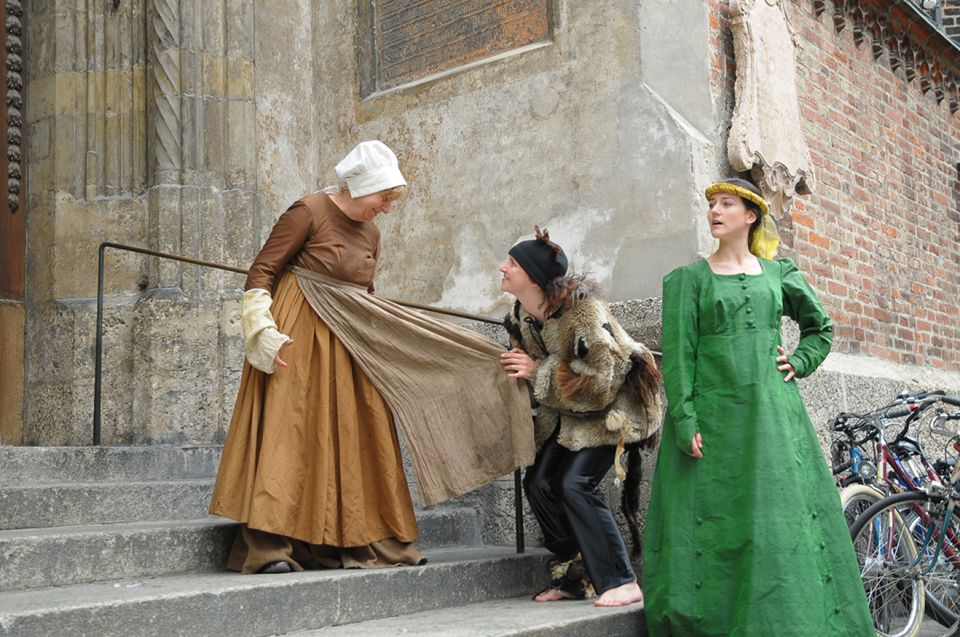
Next you reach Schöner Turm, where the tour includes a sad story about an unfortunate goldsmith. It’s another reminder that accusations weren’t random gossip; they could attach to ordinary livelihoods.
Then comes the big shift toward the landmark most people photograph: the Frauenkirche. The air of this stop matches the story, because you’ll hear why it’s so windy around the church in the legend-telling version of events.
And yes, the devil enters the scene as the prince of darkness. You’ll get the tale of how the devil supposedly helped the master builder construct the church, including the amusing question about the devil’s shoe size. It’s dark, but it’s also clearly written to keep you listening.
Town Hall and Marco Bragadino: alchemy in the political center
As you walk toward the Town Hall, the tour switches from punishment to fraud and obsession. Inside this part of the route, you meet alchemist Marco Bragadino, who’s presented with that classic performance energy—part pitchman, part charmer, part warning.
The reason this works is that the tour keeps tying big themes to the city’s power structures. The town hall area isn’t just impressive architecture; it becomes the stage for ideas about wealth, deception, and how people tried to get ahead.
This stop is also where you’ll likely feel the best pace. Scenes tend to land when you’re between two recognizable landmarks, and this tour uses that effect well.
St. Peter’s Church: hangmen’s daily life and the uncomfortable details
At St. Peter’s Church, the tour focuses on hangmen—how they looked, why people tried to avoid them, and how someone would get a gallows rope. It’s not graphic in a movie way, but it’s direct in a historically honest way.
This segment adds balance. If you’ve only heard about witch hunts as a headline, the hangman angle reminds you that society ran on jobs that most people wanted to forget.
And then there’s the moment about a beautiful woman escaping sure death. The tour uses it as a dramatic counterpoint to all the doom around it, which keeps the story from becoming one long downward spiral.
Old Town Hall and the Platzl: torture spaces and red-light history
Near the end, you cross into the area of the Old Town Hall, where you’ll hear about the former torture chamber. The idea here is to help you picture what happened in spaces that still sit among everyday life.
This is also where Munich’s red-light history becomes part of the same story arc. The Platzl is described as the home of Munich’s red light district until the Olympic Games of 1972 changed how the city handled that area.
The tour even nods to popular culture—there’s a reference to the Spider Murphy Gang song about the Sperrbezirk, tying the past to what many people recognize in the present. It’s a clever way to show that history leaves echoes, even when the buildings stay.
What the acting adds (and why the language matters)
The best praise this tour gets comes down to acting quality. The scenes are designed to break up monotony, and the performers use humor to keep you engaged while the topics stay grim.
A key practical detail: the actors may involve you in small ways. That’s part of why people leave feeling entertained and informed rather than just talked at.
The language is German-only. If you can’t follow much German, you’ll still catch the locations and the shape of the story, but the jokes and the factual links may fall flat. This is the biggest reason to think twice if you rely on English or another language.
Rain, timing, and how to plan your evening
You’re walking for 90 minutes, and it’s outdoors in all weather. Plan for steady strolling through Old Town streets. Wear comfortable shoes, since you’ll want to keep your legs fresh for the final stretches toward the Town Hall and Old Town Hall areas.
Timing matters because this is evening-style theatre. You’ll feel the atmosphere more when the streets are busy enough for you to stay safe, but quiet enough for the performance to land.
Also, consider pairing it with another daytime visit. Use the tour to connect the landmarks you saw in daylight to the stories you didn’t know.
Who should book this Munich scary tour
You’ll probably love this tour if you enjoy:
- History with dialogue and stage energy
- Munich landmarks as story settings, not just sightseeing stops
- Dark themes told with a mix of seriousness and jokes
It may not be the right choice if:
- You want a light, family-friendly experience. The topics include torture and witch hunts.
- You need English-language narration. It’s German throughout.
- You prefer facts only, no characters. The show format is built into the structure.
Should you book this Munich scary tour?
Book it if you want a memorable Munich evening with professional actors and clear storytelling tied to real places like Neuhauser Tor, St. Michaelis Church, Frauenkirche, and the Town Hall area. It’s also good value if you like your history explained through scenes, not just slides and street corners.
Skip it if German is a problem for you or if dark topics will ruin your mood. In the right mindset, this is exactly the kind of tour that makes a city feel alive for a night, with facts you’ll still be repeating the next day while you walk past the same buildings in daylight.
FAQ
How long is the Munich scary tour with actors?
The tour lasts 90 minutes.
Where do I meet the guide?
Meet at Karlsplatz/Stachus, under the archway of the Karlstor. The guide will be wearing a big blue bag with the white words Weis(s)er Stadtvogel.
What language is the tour in?
The tour guide gives the tour in German.
Does the tour run in bad weather?
Yes. This tour takes place rain or shine.
Is the tour wheelchair accessible?
The tour is listed as wheelchair accessible.
What themes are covered during the tour?
The tour focuses on witch hunts, prostitution, torture, and executions, with stories tied to multiple Old Town landmarks.