REVIEW · WALKING TOURS
Walking Tour on Origins of Nazism in Munich – English
Book on Viator →Operated by Todo Tours · Bookable on Viator
Munich becomes uncomfortably understandable on foot. This 2-hour English route connects the dots behind the birth of the Nazi party and the rise of the Third Reich, using major physical landmarks rather than abstract lectures. I love the expert guide and I love how the route adds resistance-and-victim memorials alongside the darker origin points. The possible drawback: the subject is heavy, and the pace is brisk, so you may want extra time afterward for deeper museum context.
I also like the practical side. You get a mobile ticket, you move between central squares and buildings, and the group stays small (up to 35 people), which helps the guide keep track of questions. At $20.16 per person, it is an efficient way to orient yourself in Munich’s 20th-century story without spending all afternoon.
If you’ve got limited time in town, this tour can be a strong first step. Just be ready for serious material: from Nazi organizing spaces to sites linked to propaganda and public ideology.
In This Review
- Key things to know before you go
- Why Munich’s Nazi origins make sense in two hours
- Meeting at Marienplatz and timing your afternoon
- Stop-by-stop: Opfer des Nationalsozialismus to Hofbräuhaus
- Haus der Kunst: propaganda building meets the present
- Hofgarten: a major park used as part of the story
- Odeonsplatz and Königsplatz: squares shaped by ideology
- The guide, the tone, and how to get the most out of a dark tour
- Price and value: $20.16 for a focused 2-hour orientation
- Logistics that matter: mobile ticket, small group, and English
- Who should book this walking tour?
- Should you book this Munich Nazism origins walking tour?
- FAQ
- What is the duration of the Walking Tour on Origins of Nazism in Munich?
- What time does the tour start, and where does it meet?
- Where does the tour end?
- Is the tour in English, and is there an expert guide?
- What is included in the price?
- Is there a cancellation window?
Key things to know before you go
- Two hours, tightly focused: you cover multiple major sites without long downtime.
- Memorials are built in: the walk includes the Square of the Victims of National Socialism, not just party landmarks.
- Hofbräuhaus is central to the origin story: you stop at the brewery where the Nazi party established its base.
- Architecture is part of the lesson: you walk through settings tied to Third Reich design and symbolism.
- Some entrances are included: Hofbräuhaus, Haus der Kunst, and Hofgarten have admission included.
- Small group feel: max 35 travelers helps keep it conversational.
Why Munich’s Nazi origins make sense in two hours
This isn’t a casual city stroll. It’s a structured walk through the places that helped the Nazi movement gain traction in Munich, and then through the parts of the city that acknowledge what followed.
The smart thing is the way it balances cause and consequence. You’re not only shown where the party began. You also get to monuments dedicated to resistance and to victims of the war. That matters, because it keeps the story from becoming one-note or purely historical.
The route also helps you understand the mechanics. Nazi power didn’t appear out of nowhere. It grew through meetings, propaganda spaces, and the use of public settings for mass messaging. Seeing those settings in person makes the history easier to grasp, even when the facts are brutal.
You can also read our reviews of more walking tours in Munich
Meeting at Marienplatz and timing your afternoon
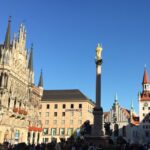
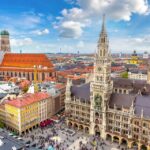
You start at 3:00 pm at Mariensäule, Marienplatz 22, 80331 München. The walk ends at Königsplatz 1, 80333 München. Because it’s in the center, you can usually plan this without a complicated transit puzzle, and the tour is listed as near public transportation.
You’ll want to arrive a bit early so you’re not trying to find the group while your brain is already bracing for heavy topics. With a 2-hour duration, the tour is designed to keep momentum. If you show up late, you’ll miss the start that frames the entire story.
There’s no lunch included. That’s not a big issue if you eat before 3:00 pm. If you normally snack on tours, consider bringing a small option for after. You’ll likely want time to absorb what you learned once the walk ends near Königsplatz.
Stop-by-stop: Opfer des Nationalsozialismus to Hofbräuhaus
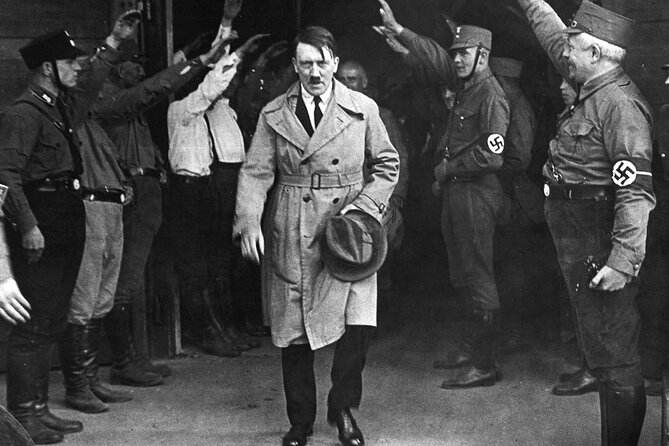
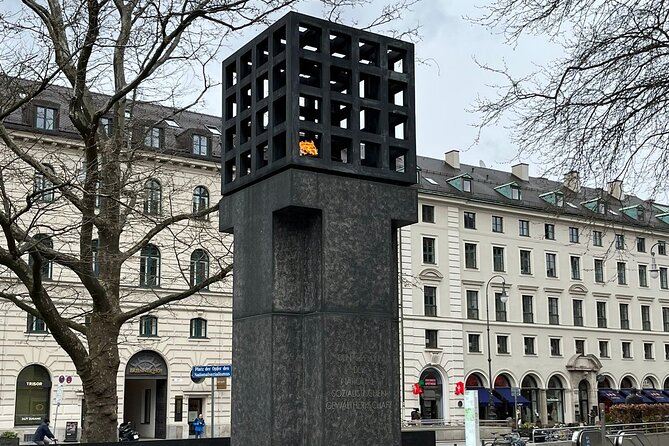
The opening stop is Platz der Opfer des Nationalsozialismus (Square of the Victims of National Socialism). It’s free to enter and the stop lasts about 15 minutes. Starting here sets the tone fast. You’re reminded that this history is not just about ideology in theory. It’s about people who suffered and were destroyed by the system.
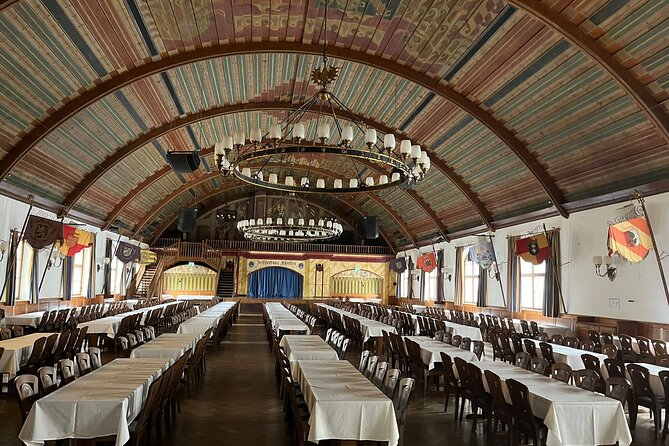
From there, you head to the Staatliches Hofbräuhaus, often described as a “mother of all breweries” in the context of Munich culture. Here, the tour’s historical thread tightens. You spend about 15 minutes at this stop, and the admission is included. This is where the Nazi party established its base, so it becomes a real-world example of how political movements can leverage everyday social spaces.
Why this stop works: a brewery doesn’t look like a headquarters on the surface. That mismatch is part of the lesson. The Nazi movement didn’t only operate in official rooms. It used public settings and gatherings. Seeing it in place gives you that uncomfortable realism.
Haus der Kunst: propaganda building meets the present
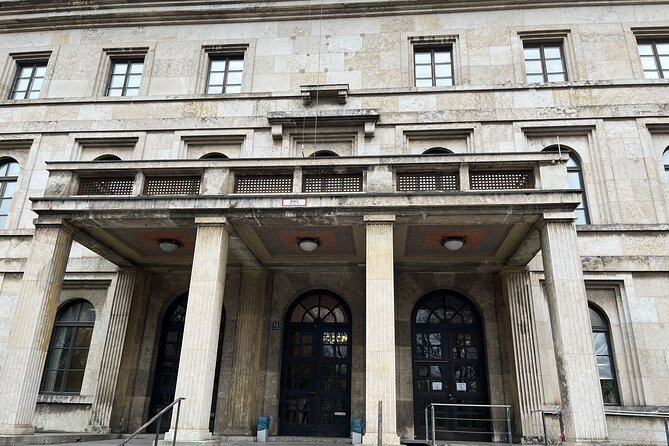
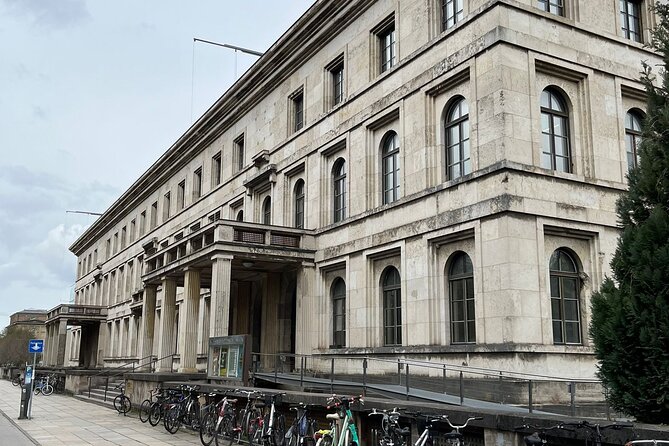
Next is Haus der Kunst, a stop tied directly to the way the Third Reich used culture and public messaging. It’s about 15 minutes, and admission is included.
The key idea here is that propaganda wasn’t always delivered like a marching band. It could be wrapped in arts institutions and official-sounding programs. This is one of the reasons the tour is so valuable: it teaches you to watch for the difference between style and purpose.
Even though today’s use of the building may feel museum-like, the stop is framed around what it represented in the Nazi era. You’ll get context for how the “message” was packaged. And when you connect that to later stops, the story reads more clearly, instead of feeling like separate scenes.
Hofgarten: a major park used as part of the story
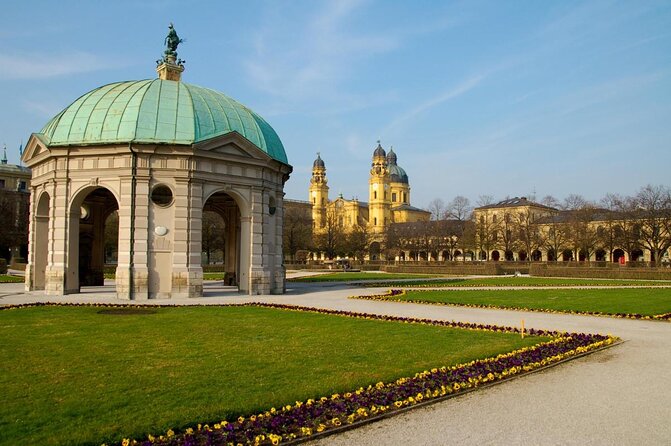
The tour then moves to Hofgarten, one of Munich’s important parks. You’ll spend about 20 minutes there, with admission included.
At first glance, a park can feel like a breather—trees, paths, and space for your thoughts. But for this kind of tour, parks and open areas can also function as political stages. Open space lets people gather, move, and be seen. It helps turn ideology into public ritual.
This stop is also a smart pacing tool. After two heavier, more institution-focused stops, you get a slightly different kind of setting. The tour uses it to keep you moving forward without dumping all the emotional weight at once.

Odeonsplatz and Königsplatz: squares shaped by ideology
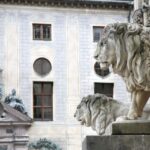
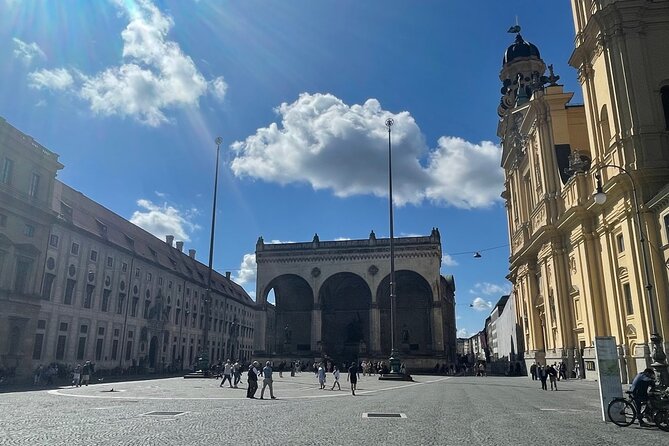
The next stop is Odeonsplatz, one of Munich’s most important squares. It’s free to enter and lasts about 15 minutes. From here, you can feel how central squares helped define public life. These are not tiny corners. They are spaces where crowds and symbols make sense.
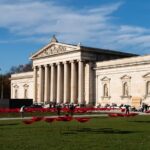
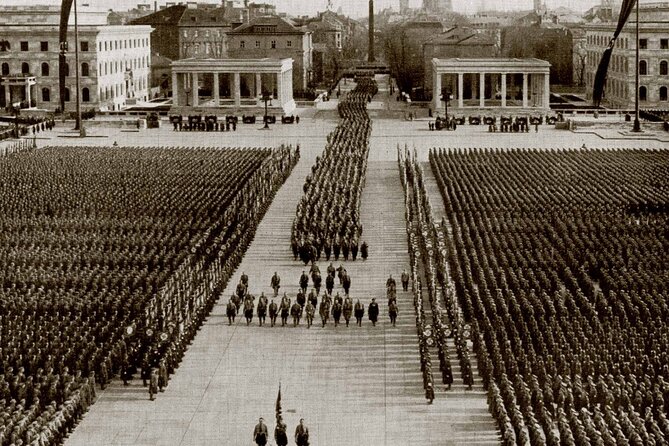
Then the walk ends at Königsplatz, another major square, free to enter and about 15 minutes. This square is described as part of the new city designed by the Third Reich, and the tour treats it as part of the “backbone” of the ideology in stone and layout.
This is where you’ll probably notice the most. Public spaces designed for a regime don’t just happen. They’re planned to guide how people see themselves and how they see authority. Königsplatz is a strong final anchor because it leaves you with a lasting visual reference point.
The guide, the tone, and how to get the most out of a dark tour
The biggest strength of this experience is the expert guide. In my experience with history walks like this, the difference between good and great is whether the guide turns facts into clarity without turning the topic into theater. Here, the tour is built to address doubts about a complex, controversial subject, and that approach matters.
You can expect the guide to connect the major episodes that shaped the Nazi rise. The themes mentioned in the tour description include Hitler’s coup attempt, the burning of Goebbels’ books, and the night of broken glass. Those aren’t random “dark trivia” points. They help explain how the movement escalated from ideology to organized violence.
A practical tip: as you walk, jot down (mentally or on your phone) two questions. For example: How did Nazi propaganda spread through public institutions? Or how did Munich’s physical spaces help the story move forward? When the guide hits those points, you’ll understand them faster and remember them longer.
Also, be gentle with yourself. Some people handle heavy history better by taking photos and moving quickly. Others need pauses to process. Since the tour is time-limited, you may not get huge breaks, so decide ahead of time how you want to handle the emotional load.
Price and value: $20.16 for a focused 2-hour orientation
At $20.16 per person for about two hours, this tour is priced to be accessible. You’re paying mainly for expert guidance and for the structure that turns scattered Munich facts into a coherent story.
The value improves because part of the cost is offset by included admissions. Admission is listed as included for Staatliches Hofbräuhaus, Haus der Kunst, and Hofgarten. That means you’re not just walking past buildings while paying for a narration. You’re getting inside at least a few key stops.
One more value point: your time. Munich is busy, and two hours can disappear if you don’t pick the right plan. Booking this kind of route at 3:00 pm gives you a compact historical anchor you can build on later with whatever you feel like doing in the evening.
Logistics that matter: mobile ticket, small group, and English
This tour uses a mobile ticket, which simplifies your day. You don’t need to hunt for paper while you’re trying to find the meeting point near Marienplatz.
The group size cap is 35 travelers. For a topic like this, smaller groups usually help the guide keep things clear and answer questions without rushing.
It’s also described as an English walking tour, and it’s marked as suitable for most travelers. You are on foot between central locations, so comfortable walking shoes are a must. The stops are spread across key Munich sites, and the structure relies on you being ready to move.
Finally, the start point and end point are in different areas. Plan your next step after Königsplatz accordingly, so you’re not scrambling for a plan while your brain is still processing what you just learned.
Who should book this walking tour?
I think this tour fits best if you want:
- A clear, organized introduction to the origins of Nazism in Munich.
- A route that includes not only party-linked locations, but also monuments to victims and resistance.
- A time-friendly plan that works in about two hours.
It’s also a good choice if you like learning by seeing places rather than reading. You’ll get the historical narrative while standing in the spaces where the story unfolded.
If you want a deep museum-style experience, this might feel short. One of the common concerns is that the theme can feel extensive for the amount of time. In that case, I’d treat this as a foundation, then pair it with more study on your own afterward.
Should you book this Munich Nazism origins walking tour?
Yes, if you want an efficient, English-speaking orientation to Munich’s Nazi-era story that doesn’t ignore victims and resistance. The guide-led format, the included admissions at several key stops, and the compact route make it a solid value at $20.16.
Skip it only if you know you need slower pacing or you’re hoping for a purely uplifting or light activity. This is history with real human cost. It’s worth doing with respect, and it’s best approached with the mindset of learning—not just sightseeing.
FAQ
What is the duration of the Walking Tour on Origins of Nazism in Munich?
The tour lasts about 2 hours.
What time does the tour start, and where does it meet?
It starts at 3:00 pm and meets at Mariensäule, Marienplatz 22, 80331 München, Germany.
Where does the tour end?
The tour ends at Königsplatz 1, 80333 München, Germany.
Is the tour in English, and is there an expert guide?
Yes. The tour is in English and includes an expert guide.
What is included in the price?
The price is $20.16 per person and includes the expert guide. Admission is included for specific stops such as Staatliches Hofbräuhaus, Haus der Kunst, and Hofgarten, while other stops are free.
Is there a cancellation window?
Yes. Free cancellation is available up to 24 hours in advance for a full refund.