REVIEW · SEGWAY TOURS
Munich Third Reich and WWII Segway Tour
Book on Viator →Operated by FireWheels GmbH · Bookable on Viator
History rolls by fast on a Segway. This Munich Third Reich and WWII Segway tour turns central Munich into a moving timeline, linking stops like Königsplatz and the Führerbau to the story of how Adolf Hitler rose and how Munich shaped his plans. You’ll cover a lot of ground without the stop-and-go rhythm of walking, and the guide’s job is to connect the dots between the city and the politics.
I especially like two things. First, the route gets you onto streets and areas cars can’t easily reach, so you feel like you’re seeing Munich from inside the city—not just along the main tourist lanes. Second, the guides I’ve heard about (like Karl, Josef, and Claudia) seem to slow down when you need it, whether you’re new to Segways or just have lots of questions.
One possible drawback: downtown can get crowded, and the Segway ride can feel cold if the weather turns. Dress for the wind and be ready to move with the pace of a busy city.
In This Review
- Key things to know before you go
- Munich by Segway: Why this tour is more than a moving photo stop
- Getting started at Artur-Kutscher-Platz: Timing, group size, and first-ride nerves
- The big story your guide is telling in plain terms
- Königsplatz and the surrounding Nazi-era architecture stops
- Alte Synagoge
- Königsplatz
- Führerbau and Braunes Haus: Where the politics show up in stone
- Führerbau
- Braunes Haus
- Schelling-Salon and the resistance thread at White Rose
- Schelling-Salon
- White Rose stop
- Haus der Kunst and the Angel of Peace: Culture and consequences
- Haus der Kunst
- Angel of Peace
- Two Hitler apartment stops: Seeing the timeline in locations
- Hitler’s apartment 1933
- Hitler’s apartment 1920–29
- Hofbräukeller, Hofbräuhaus, and Munich’s public life in the same loop
- Hofbräukeller
- Hofbräuhaus
- Maximilianeum and Odeonsplatz: Civic power and the final sweep
- Maximilianeum
- Maximilianeum Strasse
- Residenz München
- Odeonsplatz
- The Segway experience itself: Safe training, but come prepared
- Who this tour is best for (and who should think twice)
- Value check: Is $82.82 worth it?
- Should you book the Munich Third Reich and WWII Segway Tour?
- FAQ
- How long is the Munich Third Reich and WWII Segway tour?
- What is the price?
- What time does the tour start?
- Where do I meet for the tour?
- What language is the tour offered in?
- How big is the group?
- Is the ticket mobile?
- Can I cancel for a full refund?
Key things to know before you go
- A 3-hour loop built to cover major WWII-era Munich sites without wasting time
- Small group (max 20), which helps with instruction and photo stops
- Segways go where cars don’t, so you’ll get an efficient, street-level view
- Guides tailor the pace, including extra support for nervous riders
- English mobile ticket for smoother check-in
Munich by Segway: Why this tour is more than a moving photo stop
A lot of city tours are basically walking lectures. This one uses a Segway to change the pace. You still get the story, but you also get that hands-on feeling of being out there on the streets—quiet lanes, plazas, and historic frontages—while your guide keeps the narrative tied to the Nazi rise-and-reckoning thread.
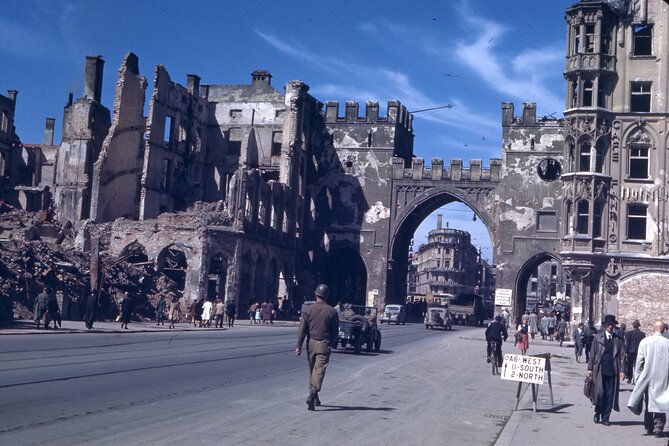
The “Third Reich and WWII” angle matters here because Munich isn’t just a backdrop. It was part of the early political movement and later wartime reality. In about three hours, you’ll see a chain of sites your guide uses to explain how Hitler tried to make Munich a stage for his movement, why some attempts failed (including the Beer Hall Putsch), and where resistance fits into the picture.
Price-wise, $82.82 for a 3-hour, English guided Segway tour is easier to justify than it looks at first glance—because you’re not paying just for a guide. You’re paying for a guided ride plus the time on-the-ground that usually costs you extra energy on foot. And the tour includes admission ticket access listed as free, which helps keep the “total day cost” simple.
You can also read our reviews of more tours and experiences in Munich.


Getting started at Artur-Kutscher-Platz: Timing, group size, and first-ride nerves
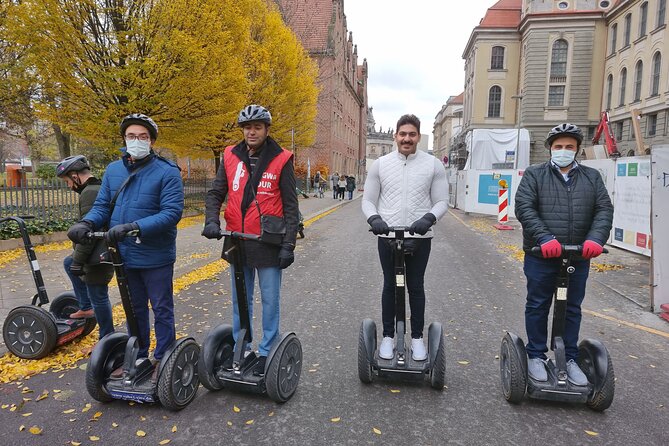
You meet at Artur-Kutscher-Platz 2A, 80802 München, and the tour starts at 10:00 am, ending back at the same meeting point. It’s near public transportation, so it’s not a hassle to get there.
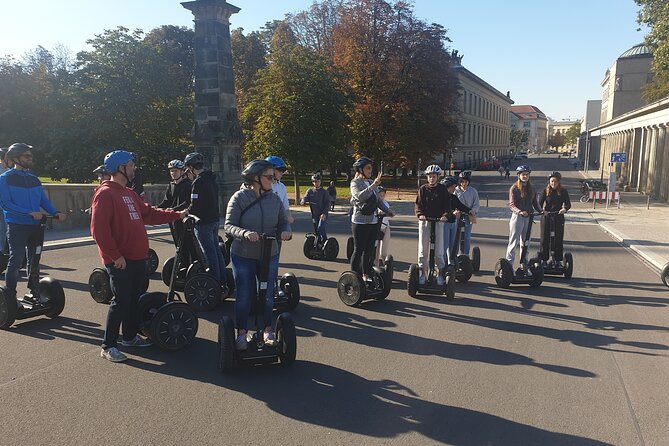
With a maximum of 20 travelers, you should expect a more controlled setup than big coach-style tours. That group size is also why you’re more likely to get real instruction and help if you’re not steady yet. People have specifically mentioned guides being patient with first-timers and even taking time to get you comfortable before you roll.
If you’re prone to getting flustered on new vehicles, this is one of the safer ways to do Munich as a first Segway experience, because the schedule is built around learning time and photo time—not racing.
The big story your guide is telling in plain terms
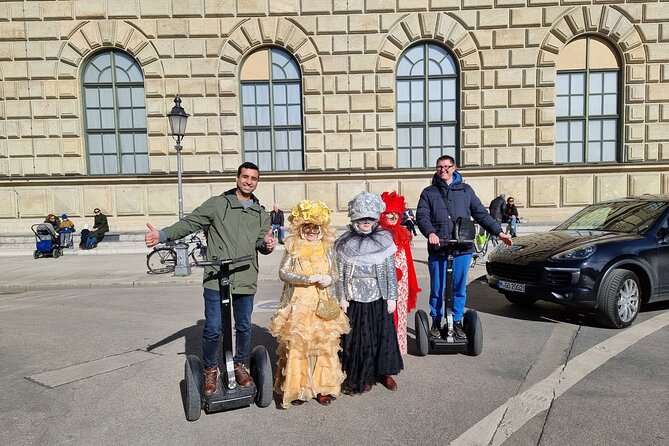
This isn’t “WWII details only.” The tour is framed around Hitler’s path and Munich’s role in the political rise, then expands into the idea of who opposed the regime and why.
Your guide sets up a clear storyline: a young Austrian arrives in Munich, power follows, and the city becomes part of the movement’s public life. Along the way, you’ll also hear about attempts to seize power and the reasons they didn’t play out the way the movement wanted. Then the tour turns toward how people resisted—most notably with a stop associated with the White Rose.
The best part is that the guide ties the story to what you’re seeing right now, not just what a plaque says. That makes the place-names do work.
Königsplatz and the surrounding Nazi-era architecture stops
Alte Synagoge
You begin by rolling toward the Alte Synagoge area. Even before the tour hits the more famous Nazi-era buildings, this stop matters because it highlights how Munich’s historic identity gets tangled into the darker chapters. The value here is contrast: you’re not only seeing the power side of the story—you’re seeing that the city had an older world that the regime targeted and reshaped.


Königsplatz
Next is Königsplatz, a big civic space where a guide can use geometry and scale to explain how political movements loved public stages. On a Segway, you can actually cover the square efficiently while still feeling the openness of the space, instead of rushing past it.
One practical upside: you’ll likely get a better view of the setting from the ride than you would if you arrived on foot and spent all your time navigating crowds.
Führerbau and Braunes Haus: Where the politics show up in stone
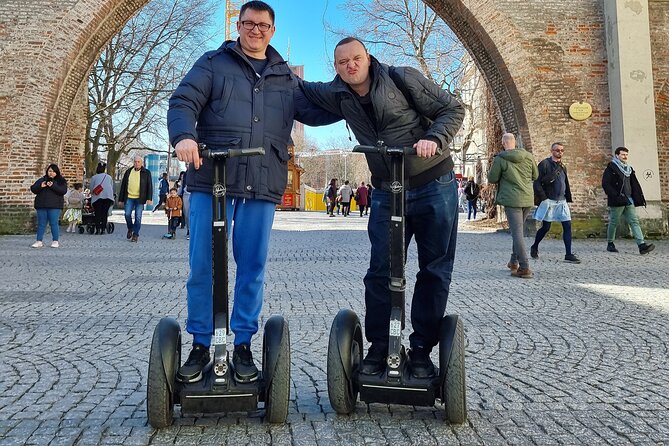
Führerbau
Then you reach Führerbau. This is the kind of stop where the building’s presence makes the topic feel immediate. The guide’s job is to connect that physical landmark to the story of Nazi power in Munich—how it was displayed, built up, and used as part of the movement’s image.
A Segway helps here because you’re not stuck staring at a single angle. You can shift position slightly, keep moving, and still get the context the guide is offering.
Braunes Haus
After that comes Braunes Haus. The name itself is a strong clue about what the guide is focusing on: the regime’s public face and the machinery of party power. Think of this as another “politics-in-the-street” moment in the tour’s chain.
Schelling-Salon and the resistance thread at White Rose
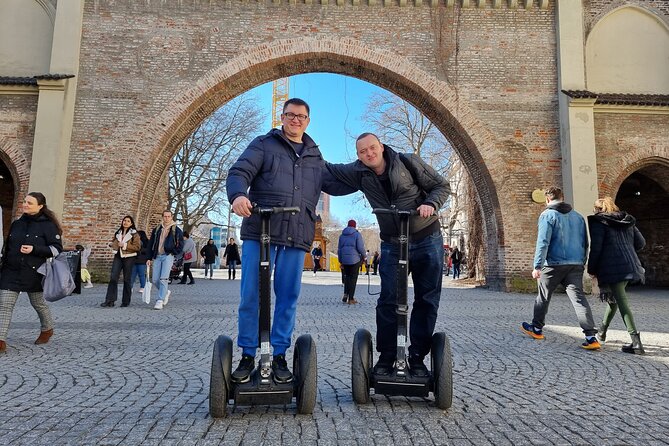
Schelling-Salon
You’ll then roll past Schelling-Salon. This stop is useful because it keeps the story from becoming only about monuments. The guide uses these points to show how people and institutions connected to the movement’s rise—then, crucially, how those connections create opportunities for resistance or for people to push back.
White Rose stop
Next up is White Rose (listed on your route as IWhite Rose). This is where the tour shifts from “how power grew” to “how people resisted.” If you want the WWII-era story to have more than just uniforms and buildings, this is one of the most important moments to slow down and listen.
On a Segway, you can pause for a photo without losing your place in the narrative—your guide can keep the momentum while still giving you time to take it in.
Haus der Kunst and the Angel of Peace: Culture and consequences
Haus der Kunst
Haus der Kunst appears next. The value of this stop is how it broadens the theme beyond politics alone. Even without turning it into a museum visit, it gives your guide a place to talk about how regimes used culture and public life as part of the story.
If you’re the type who likes your history tied to everyday places (not only courtrooms and battlefields), this segment tends to land well.
Angel of Peace
Then you’ll reach Angel of Peace. This is another one of those “let’s connect the emotional outcome to the physical location” stops. The guide uses it to bring the tour’s tone toward reflection—what people wanted, what wars wrecked, and what societies struggled to rebuild.
Because this part is still part of a moving tour, your photos matter. Take them, then keep listening so the stop doesn’t just become another quick snapshot.
Two Hitler apartment stops: Seeing the timeline in locations
One of the smartest uses of time in this tour is hitting Hitler’s apartment in two periods: 1933, and later 1920–29.
Hitler’s apartment 1933
At the Hitler’s apartment 1933 stop, the guide uses the location as a marker: by this point, the story is no longer just about rise—it’s about a person who has shifted Munich into a public stage for the movement’s agenda.
Hitler’s apartment 1920–29
Then you’ll come back to earlier years with Hitler’s apartment 1920–29. Seeing the timeline in two different spots is the kind of storytelling device that makes the history stick. You’re not just hearing dates; you’re watching your guide point to places that represent different stages.
This is a great moment for couples and families because you can compare the “before” and “after” of the story while still moving at a comfortable pace.
Hofbräukeller, Hofbräuhaus, and Munich’s public life in the same loop
A lot of history tours skip the everyday social side of a city. This one includes classic Munich beer-hall landmarks.
Hofbräukeller
At Hofbräukeller, your guide ties the story back into public life. This is a chance to see how political momentum and public gathering spaces can overlap, even if you’d never guess it from the building alone.
Hofbräuhaus
Then you roll to Hofbräuhaus. This stop gives you a very real sense of why Munich’s identity is inseparable from its public traditions. The history theme doesn’t erase the city’s personality; instead, your guide shows how the same settings can carry very different meanings in different eras.
If you’ve got kids, this is also a nice “breather stop” in the middle of heavier topics.
Maximilianeum and Odeonsplatz: Civic power and the final sweep
Maximilianeum
You’ll pass Maximilianeum next, and it’s one of those places where the city’s civic face shows up. Your guide uses the stop to continue the link between political ambitions and public institutions.
Maximilianeum Strasse
Right after, Maximilianeum Strasse keeps the route connected and gives you more time to view the area from the saddle. It’s practical: you’re already in motion, so using short segments like this makes the tour feel less like a series of isolated stops.
Residenz München
Then Residenz München appears on the route. Even without turning this into a long palace visit, the Segway loop lets you register the scale and importance of Munich’s older power centers. That contrast can be useful after you’ve just spent time on the Nazi story.
Odeonsplatz
Finally, you reach Odeonsplatz, closing the tour near where Munich’s grand squares help you reorient. When the ride wraps back at the meeting point, you’re likely to feel like you’ve mapped the center of the city—fast.
The Segway experience itself: Safe training, but come prepared
Your tour is designed for most travelers to participate, and guides are described as patient with nervous riders. That’s huge. It means you’re not stuck thinking you’ll slow the group down.
Still, remember: one issue can be as simple as a mechanical hiccup, and another is your comfort in weather. If it’s cold, you’ll feel it while you’re moving. One rider advice was direct: rug up, because the ride can get chilly.
So bring layers, wear something comfortable for sitting, and plan to take it slow at the start. Once you find your balance, the tour gets much more fun than you expected.
Who this tour is best for (and who should think twice)
This is a strong fit if you want:
- A history-focused route in a short window
- An easy way to cover lots of Munich without exhausting yourself on foot
- A tour that mixes public landmarks with the WWII and Nazi-era story
It’s also a good match for families and couples. Multiple people singled out the fact that it kept teens engaged, and it’s easier to do together than a long walking history slog.
Who should think twice? If you’re very sensitive to crowds or you’re hoping for an all-day quiet, controlled museum vibe, this isn’t that. Downtown can be busy, and the ride means you’ll share space with city life.
Value check: Is $82.82 worth it?
For $82.82 per person, you’re buying three things:
- A guided English story that’s tied to specific Munich locations
- A Segway ride that replaces a chunk of walking time
- Enough stop-and-go pacing to ask questions and take photos
The small-group size (max 20) and the three-hour length are what make the price feel fair. If you were doing this by yourself, you’d spend time just getting from place to place, plus you’d miss the connections your guide draws between the city and the Nazi rise and resistance narrative.
Should you book the Munich Third Reich and WWII Segway Tour?
Book it if you want a fast, street-level way to understand Munich’s role in the Nazi era and WWII story, with a guide who helps you feel steady on the Segway and keeps the stops tied to the bigger timeline.
Skip it or adjust expectations if you prefer deep, indoor museum time, or if you’re worried about cold weather and city crowds. In that case, you might still enjoy it—but you’ll want to show up dressed for motion and ready for a more public setting.
Bottom line: if you’re curious about the place-names behind the headlines, and you like your history with motion and photos, this tour is a great way to get your bearings fast while learning something real.
FAQ
How long is the Munich Third Reich and WWII Segway tour?
It runs for about 3 hours.
What is the price?
The tour costs $82.82 per person.
What time does the tour start?
The start time is 10:00 am.
Where do I meet for the tour?
You meet at Artur-Kutscher-Platz 2A, 80802 München, Germany.
What language is the tour offered in?
The tour is offered in English.
How big is the group?
The tour has a maximum of 20 travelers.
Is the ticket mobile?
Yes, it uses a mobile ticket.
Can I cancel for a full refund?
Yes. You can cancel for free up to 24 hours in advance for a full refund.