REVIEW · MUNICH OLD TOWN WALKING TOURS
A delicacy tour through Munich’s old town
Book on Viator →Operated by Weis(s)er Stadtvogel GmbH · Bookable on Viator
Old town Munich tastes in two hours. You start at the Isartor with a seasonal welcome drink, then roll through Munich’s old town with a beer sommelier-style tasting and classic bites that feel like they belong right here.
I especially like that the food stops come with real explanations, not just wandering. Claudia leads in a way that stays entertaining and story-led, with stops placed at genuinely nice spots. One thing to consider: the tour includes beer sampling, plus items like a sausage stop and lard noodle, so if you avoid alcohol or pork-based dishes, you’ll want to think it through first.
In This Review
- Key things you’ll taste and learn
- Where the tour starts: Isartor and a seasonal welcome sip
- Pfennigmuckerl and the Hofkunstmühle link you can taste
- Beer sommelier style: three 0.1 l pours with obazdn and bread
- The Alfons Schuhbeck stop: quick visit, small surprise
- Viktualienmarkt: fresh white sausage and a market-style taste
- Lard noodle finale in the old town: watching Schmalznudeln made
- The pacing: a tight two hours with a focused route
- Price and value: what $46.25 buys you here
- Who should book this Munich delicacy tour
- Should you book? My decision guide
- FAQ
- How long is the Munich old town delicacy tour?
- How much does the tour cost?
- Where does the tour start and end?
- Is the ticket mobile?
- What do you get at the start of the tour?
- Is beer included, and how much?
- What are the main food highlights during the tour?
- How many people are in the group?
- Can I cancel for free?
Key things you’ll taste and learn
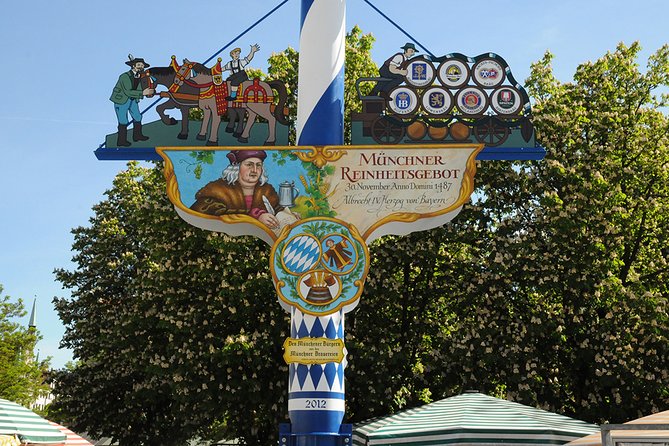
- Isartor welcome drink made with kosmo-bio-dynamic syrup from St. Michaelshof, served warm or cold by season
- Pfennigmuckerl from Hofkunstmühle, a traditional Munich sweet you can’t fake at home
- Beer sample in three short pours (3 x 0.1 l) paired with Munich obazdn and double-baked farmer’s crust bread
- A short Alfons Schuhbeck visit with a small surprise thrown in
- Viktualienmarkt fresh white sausage as a quick, market-style highlight
- Lard noodle finale where you watch Auszog´ne, Strizerl, or Schmalznudeln made
Where the tour starts: Isartor and a seasonal welcome sip
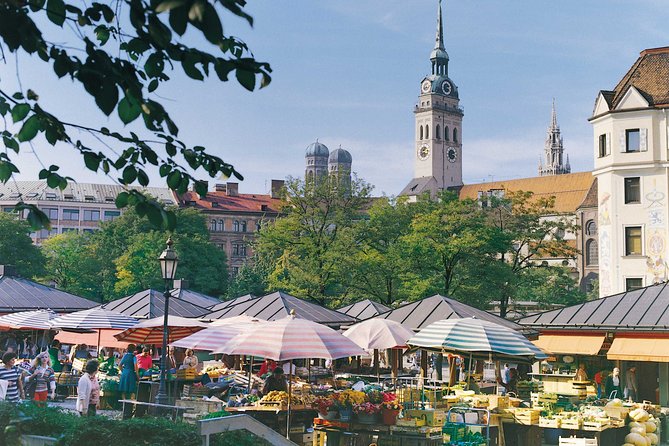
The tour begins at the Isartor (80331 Munich). Before you even hit the main tasting circuit, you get a welcome drink with kosmo-bio-dynamic syrup from St. Michaelshof on the Viktualienmarkt. The best part here is that it’s handled in a practical way: depending on the season, the drink is prepared warm or cold.
This opening matters more than it sounds. It sets the tempo for the walk and gives you a local flavor anchor before you start switching gears into beer, bread, and market food. Also, syrup from a specific place (St. Michaelshof) isn’t just a random sweet. It signals that this is meant as a Munich-focused food introduction, not a generic sightseeing tour.
Right after that sip, you move from “seeing Munich” to “tasting Munich.” And because your first food item is traditional (Pfennigmuckerl, from Hofkunstmühle), you quickly get a sense of the route’s goal: recognizable Bavarian classics, served with enough context to make you care.
You can also read our reviews of more tours and experiences in Munich.

Pfennigmuckerl and the Hofkunstmühle link you can taste
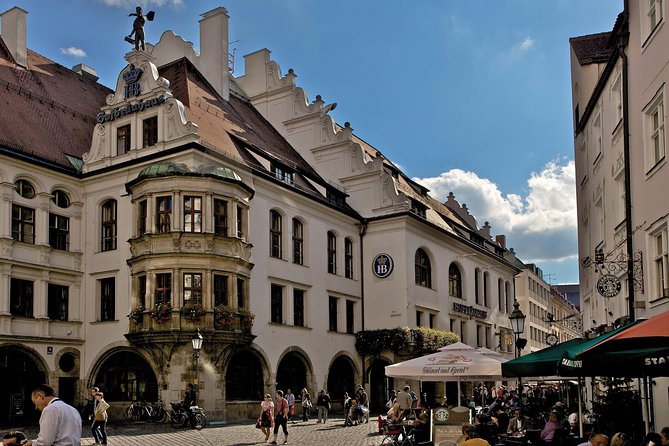
Among the early bites, you’ll try traditional Munich Pfennigmuckerl from Hofkunstmühle. This is the kind of food stop that makes sense for a short, two-hour tour: you don’t need a long sit-down meal to get a meaningful taste of local tradition.
Why I like this as a tour design choice: Pfennigmuckerl gives you something sweet and traditional early on, so the rest of the tasting doesn’t feel like it’s only heavy or only salty. It also helps you avoid the common problem on food walks where you’re suddenly hit with strong flavors before you’re ready. Here, you start with a gentle footing—drink, then sweet—then you ramp up.
If you tend to get overwhelmed by long lists of foods, this sequencing helps. You get variety without going into full meal mode.
Beer sommelier style: three 0.1 l pours with obazdn and bread
One of the most central parts of this tour is the beer tasting. You’ll try a moderated beer sample in three short pours (3 x 0.1 l), guided in a way that treats the tasting like more than just drinking.
The pairings are where the experience becomes properly Munich. You don’t just get beer on its own. You also get Munich’s best obazdn and double-baked farmer’s crust bread. This is a classic combo that works because it balances the fat-and-creamy texture of obazdn with bread that has the structure to hold it. The double-baked angle also matters: it tends to give you a crunch and firmness that makes the pairing feel intentional.
For you, this means the tasting has a built-in lesson. You’ll see how beer and food actually work together in the Bavarian way—less about exotic novelty, more about using local favorites in the same way locals do.
A practical consideration: the tasting is moderated and portioned, which is a good sign for a 2-hour tour. Still, the tour does include beer, so it’s smart to plan around that if alcohol isn’t your thing.
The Alfons Schuhbeck stop: quick visit, small surprise
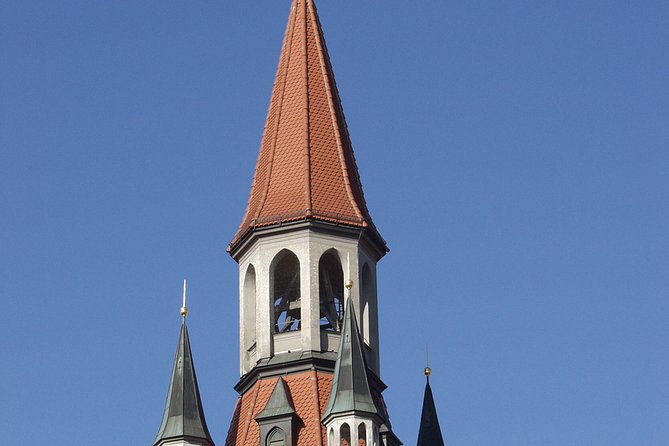
Midway through the walk, there’s a short visit connected to Alfons Schuhbeck, with a small surprise included. The key point is that this isn’t treated like a long detour. It’s a brief moment built into the food flow, which keeps the tour’s timing tight.
What’s useful for you: you get a recognizable name tied to Bavarian food culture, but you don’t lose the main theme of the tour—tasting your way through Munich old town. If you’re the type who likes your tours to be focused, you’ll appreciate how short this segment stays.
The surprise element also means you’re not doing everything by script. You’re still on a guided path, but you get at least one moment of genuine unpredictability, which helps keep energy up.
Viktualienmarkt: fresh white sausage and a market-style taste
After the Schuhbeck moment, you end up at Viktualienmarkt for a short visit and another highlight: a fresh white sausage. This is where the tour turns from “food tastings around town” into a more market-rooted feel.
That matters because Viktualienmarkt isn’t just a pretty place to walk through. It’s tied directly to what you’re eating on the tour. The sausage stop feels like a practical payoff: you’re in a market area, surrounded by the kinds of food traditions that make Bavarian snacks what they are.
Also, this is a good spot for people who like to watch how food culture shows up in real life. You’re not just tasting in a vacuum. You’re tasting where the local food scene actually happens.
One thing to keep in mind: sausage means meat. If you avoid certain ingredients, you’ll need to adjust your expectations based on that.
Lard noodle finale in the old town: watching Schmalznudeln made
Your final highlight is the lard noodle. Here, you can watch how Auszog´ne, Strizerl, or Schmalznudeln are made, and then enjoy them where the preparation happens.
This is a great closing choice for a tour like this because it’s both food and process. You don’t end with just another bite—you end with seeing what makes the dish itself. Watching the shape and preparation helps you understand why these are considered proper comfort food in Bavaria. It also gives you a stronger memory than taste alone.
If you’re curious about traditional techniques, this is the part to lean into. Even if you’re not a cooking person, seeing how a dish comes together usually makes the flavor feel more meaningful when you eat it.
Food detail note: the phrase lard noodle tells you what kind of ingredient family you’re dealing with. So this is another point where dietary choices matter. If you don’t eat pork fat-based dishes, this ending might not be your best match.
The pacing: a tight two hours with a focused route
The tour lasts about 2 hours and runs through Munich’s old town, starting at Isartor and ending at Viktualienmarkt. It’s designed to fit into a busy day without turning into a half-day mission.
For you, the value of this pacing is simple: you get enough tastings to feel like you experienced Munich food culture, but you still keep time for other sights or a normal meal afterward. It’s also a good format if you like structured wandering—guided enough to know what you’re looking at, flexible enough to feel like a walk through the city.
Group size is capped at a maximum of 25 travelers, which helps keep things manageable and keeps the guide’s attention more likely to spread evenly.
Price and value: what $46.25 buys you here
The price is $46.25 per person, and this tour is often booked about 38 days in advance. On paper, that’s not a “cheap snack” price. But when you map it to what’s included, it starts to look like good value for a short guided food experience.
Here’s what you’re paying for in practical terms:
- A welcome drink (kosmo-bio-dynamic syrup from St. Michaelshof, warm or cold by season)
- A traditional sweet (Pfennigmuckerl from Hofkunstmühle)
- A moderated beer tasting in three small pours (3 x 0.1 l)
- Pairings that make sense together (Munich obazdn and double-baked farmer’s crust bread)
- A small surprise tied to Alfons Schuhbeck
- A fresh white sausage stop at Viktualienmarkt
- A lard noodle finale, including watching the making of Auszog´ne/Strizerl/Schmalznudeln
Most importantly, you’re not paying for one item. You’re paying for a sequence, with food and explanation connected. For me, that’s where the value sits: the guide helps you understand what you’re eating, and the route keeps the tastings from turning into random sampling.
If you’re the type who wants to avoid hours of figuring out where to eat, this format can save you decision fatigue. You buy a plan, and the plan includes the right amount of quantity for a 2-hour window.
Who should book this Munich delicacy tour
This tour is a strong fit if you want:
- A short, guided route through Munich old town focused on food
- Beer and Bavarian classics like obazdn and bread in a paired format
- Market energy at Viktualienmarkt without needing to plan it yourself
- A traditional ending where you watch lard noodle preparation and then eat
It also fits families in the sense that the tour says most travelers can participate, and it’s paced as a tour format rather than a long hike. The maximum group size of 25 helps keep it from feeling too chaotic.
If you avoid alcohol or don’t eat pork-based dishes, I’d be more cautious. The beer sample and the lard noodle finale are both core to the experience as described.
Should you book? My decision guide
Book it if you want a high-concentration taste of Munich in two hours, with a guide who makes the stops feel like more than just locations. The standout here is the guided storytelling style led by Claudia, plus the fact that you’re finishing with an actual watching-and-eating food moment, not just another bite on the go.
Skip it or go in carefully if alcohol or pork-based items won’t work for you. Also, if you’re the kind of visitor who wants heavy sightseeing with very little food, this tour is built to be food-first.
FAQ
How long is the Munich old town delicacy tour?
It lasts about 2 hours.
How much does the tour cost?
The price is $46.25 per person.
Where does the tour start and end?
It starts at Isartor, 80331 Munich, Germany, and ends at Viktualienmarkt, 80 München-Altstadt-Lehel, Germany.
Is the ticket mobile?
Yes, the tour includes a mobile ticket.
What do you get at the start of the tour?
You get a welcome drink prepared with kosmo-bio-dynamic syrup from St. Michaelshof on Viktualienmarkt, served warm or cold depending on the season.
Is beer included, and how much?
Yes. You’ll have a moderated beer sample of 3 x 0.1 l.
What are the main food highlights during the tour?
You’ll try Munich Pfennigmuckerl, Munich obazdn with double-baked farmer’s crust bread, a fresh white sausage at Viktualienmarkt, and a lard noodle where you can also watch Auszog´ne, Strizerl, or Schmalznudeln being made.
How many people are in the group?
The tour has a maximum of 25 travelers.
Can I cancel for free?
Yes. You can cancel up to 24 hours in advance for a full refund. Cancellation less than 24 hours before the start time is not refunded.