REVIEW · THIRD REICH & WWII WALKING TOURS
Inside the Third Reich (Private Tour)
Book on Viator →Operated by Big Hat Tours · Bookable on Viator
Munich has the sort of history that sticks to the street corners. This private tour threads together places tied to the Nazi rise and fall, with on-the-ground context you can actually question as you walk. I especially like the way the guide slows history down into what you can see in front of you, and I love the built-in visual support that helps you connect buildings to what happened there.
One thing to consider: this is not light sightseeing. You’re looking at sites tied to violence and persecution, so plan for an emotionally heavy experience even if the pacing is flexible for questions.
In This Review
- Key Highlights You’ll Feel Fast
- A Private Munich Walk Through Third Reich Footprints
- Curt Milburn and the iPad That Turns Streets Into Evidence
- Isartor: The Beer Hall Where the Nazi Meeting Energy Started
- Platzl and Old Town Hall: From Early Success to Kristallnacht’s Beginning
- Platzl Again: Evidence of War Damage on Munich’s Facades
- Odeonsplatz: The SA Purge and Hitler’s Speech Sites
- Platz der Opfer des Nationalsozialismus: A Memorial That Keeps It Human
- Glyptothek: Munich Rally Grounds and Fascist Buildings That Still Exist
- Alter Botanischer Garten: The Largest Nazi Eagle on Public Display
- Residenz München: Failed Putsch and the Story of Resistance
- Timing, Walking Style, and What to Bring
- Price and Value for a Private Group up to 15
- Who This Tour Suits Best (and Who Might Want Something Else)
- Should You Book This Inside the Third Reich Private Tour?
- FAQ
- Where does the tour start?
- What time does the tour begin?
- How long is the experience?
- Is this a private tour or shared?
- How much does it cost?
- Do you need tickets for the stops?
- What kind of ticket do I get?
- Can I cancel for a full refund?
- Is it near public transportation?
- Are service animals allowed?
- FAQ
- Is the tour suitable for most travelers?
- How many stops are included?
- What does the guide use to support explanations?
- Does the tour allow questions during the walk?
Key Highlights You’ll Feel Fast
- Private guide, your questions in real time instead of one-way talking
- Curt Milburn’s iPad visuals with hundreds of films and images from over 1000 years of European history
- War-damage details on Munich buildings you might otherwise miss
- Stops tied to specific moments like Hitler’s first public speech and Kristallnacht’s beginning
- A memorial stop dedicated to the victims of National Socialism
A Private Munich Walk Through Third Reich Footprints
This is the kind of tour that works when you want more than photos. You’re guided through Munich landmarks connected to the Third Reich, moving stop to stop with commentary that stays tied to the street layout, the architecture, and the visible traces of the past. Because it’s private, you get time to ask the questions that matter to you, not the questions that fit someone else’s schedule.
The experience is run by Big Hat Tours, and it’s designed for a group size of up to 15 people per booking. That matters for comfort and attention. You’re not fighting crowds just to hear what’s going on. You’re also more likely to get the kind of back-and-forth conversation that makes difficult history feel clearer, not like a blur of dates.
You’ll also get a mobile ticket, which is one less thing to fuss over. And since the route starts near Marienplatz (Marienplatz 18, 80331 München) and ends back there, it’s easy to plan the rest of your day around it.
You can also read our reviews of more private tours in Munich

Curt Milburn and the iPad That Turns Streets Into Evidence
What sets this tour apart is the guide’s teaching style. Curt Milburn runs the experience, and the operation highlights his years of experience, plus a track record that’s earned him top local ratings and a long list of guest recommendations. The point isn’t “credentials” for their own sake. It’s that you’re dealing with someone who knows how to explain hard material in a way that’s grounded and practical.
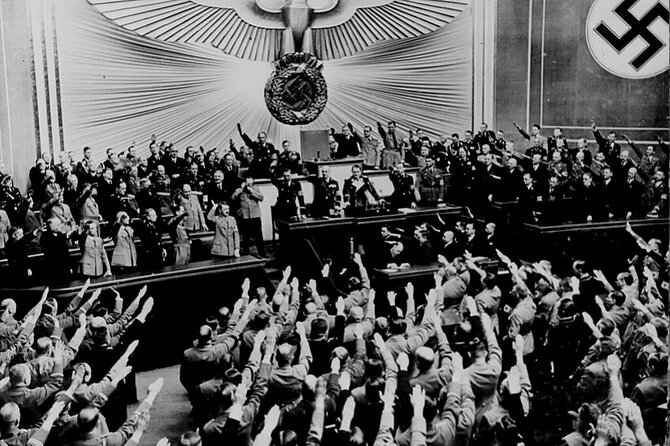
The tour also includes an iPad loaded with hundreds of films and images covering over 1000 years of European history. That support is more useful than you might think. When you’re standing in front of a building, your brain tries to translate what you’re seeing into a story. The iPad helps you make that connection quickly—so you can spend your attention on how the place itself mattered, rather than getting lost in lecture-mode.
And Curt’s approach is built for interaction. The experience is structured so you can ask questions along the way, and the pacing can flex around what you want to understand most—Hitler’s rise and fall, the way Nazi power operated through specific events, or why certain Munich sites carry that particular weight today.
Isartor: The Beer Hall Where the Nazi Meeting Energy Started
Stop one is at Isartor, where the notes connect the location to the early Nazi meeting scene. The stop is around 15 minutes, with no site admission ticket listed for the visit.
Even if you already know the broad story, beer-hall history lands differently when you’re actually looking at the area. Places like this are where ideas moved from speeches to followers. It’s also where momentum could gather fast—before the regime had control over everything.
In this kind of stop, I like focusing on your own “what am I seeing?” checklist. Look at the scale of the street and the flow around the entrance areas. Then pay attention to the guide’s framing. The goal isn’t to romanticize a setting tied to persecution—it’s to understand how ordinary urban space became part of a political machine.
Platzl and Old Town Hall: From Early Success to Kristallnacht’s Beginning
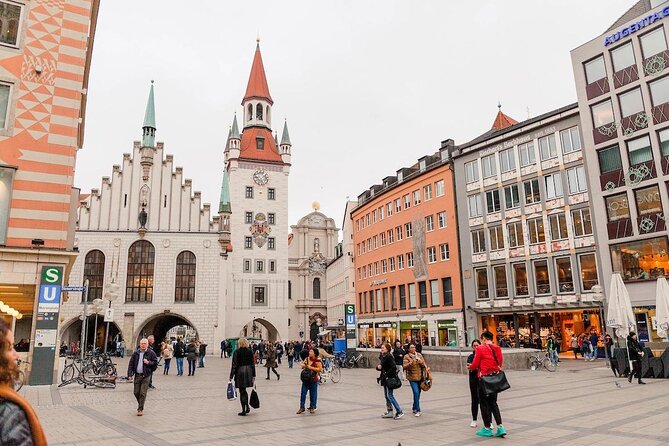
Next you’ll hit Platzl and then Old Town Hall, with time carved out at each.
At Platzl (about 20 minutes), the tour connects the site to Hitler’s first speech and his rise to success. This is one of those stops where the guide’s ability to place the event into the local setting helps a lot. A first speech sounds like a single moment. But on the ground, the story becomes: how that moment helped turn interest into momentum.
Then you move to Old Town Hall (about 20 minutes). Here the tour ties the location to the beginning of Kristallnacht and also notes an assassination attempt on Hitler’s life. That’s a lot of weight for one area, so pace matters. The private format helps because you can pause and ask questions if your brain needs a minute to process what you’re hearing.
Practical tip: if you’re prone to feeling overwhelmed, don’t force yourself to absorb every detail at once. Ask your main question first. Then let the rest land after your brain catches up.
Platzl Again: Evidence of War Damage on Munich’s Facades
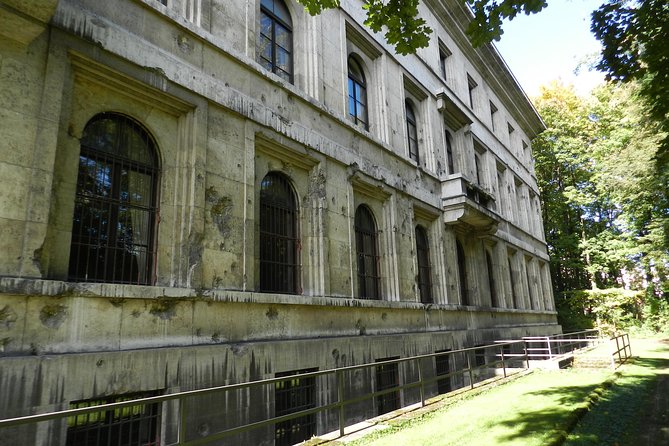
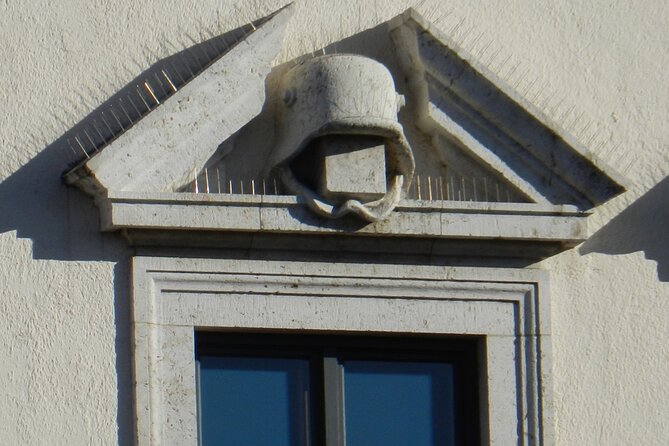
This tour does something I really appreciate: it doesn’t leave you with ideology only. There’s a stop back at Platzl (around 15 minutes) focused on visible evidence of war damage on Munich’s buildings.
This matters because it changes how you understand the Third Reich’s legacy. The regime’s impact isn’t just in documents or museum exhibits. It’s also in the city itself—scars that remain in architecture and reconstruction. You can walk past plenty of damage without noticing it. A guided eye changes that.
The drawback here is also subtle: with only a short window (15 minutes), you’ll only see the most obvious markers. This is still valuable, because it trains you to look. Afterward, you’ll likely spot damage elsewhere on your own.

Odeonsplatz: The SA Purge and Hitler’s Speech Sites
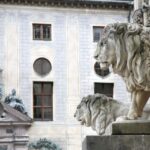
At Odeonsplatz (about 10 minutes), the tour connects the location to Hitler’s purge of the SA and to a site of speeches. That quick stop works because it’s focused. You don’t get “generic facts.” You get a specific storyline tied to a specific place.
A short timing like this can be a plus if you prefer intensity without getting dragged through extra background. Still, if you’re the type who likes deep rabbit holes, you’ll want to use the private format to ask follow-ups while you’re there.
Platz der Opfer des Nationalsozialismus: A Memorial That Keeps It Human
One of the most important moments on the route is Platz der Opfer des Nationalsozialismus (around 15 minutes). This is Munich’s memorial to those who died at the hands of the Third Reich.
This stop shifts the experience from “how power worked” to “what it cost.” Even if the tour covers multiple sites with political milestones, this is the place that reminds you the stakes were not abstract. The length of the stop feels right: long enough to let the space do its job, short enough that the tour doesn’t treat remembrance as a checkbox.
If you’re visiting Munich for history, don’t rush past memorials like they’re just another photo stop. Let your attention settle here.
Glyptothek: Munich Rally Grounds and Fascist Buildings That Still Exist
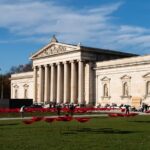
Next is the Glyptothek (about 20 minutes). The tour describes it as part of Munich’s rally grounds and points out still-standing fascist buildings of Hitler.
This is one of the most visually striking sections because the buildings are still there. You don’t have to imagine what power architecture looked like. You can stand in the same urban space and let that “presence” hit you.
The benefit of a guided stop is that you’ll get help interpreting what you’re seeing, instead of just staring at stone and wondering why it feels so heavy. The potential drawback: if you’re sensitive to propaganda aesthetics, you may find your mind reacting before it can process the explanation. That’s normal. Give yourself a moment, then ask for clarification if you want it.
Alter Botanischer Garten: The Largest Nazi Eagle on Public Display
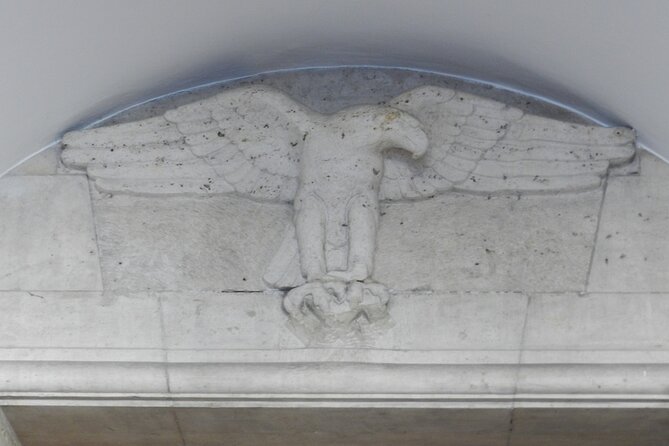
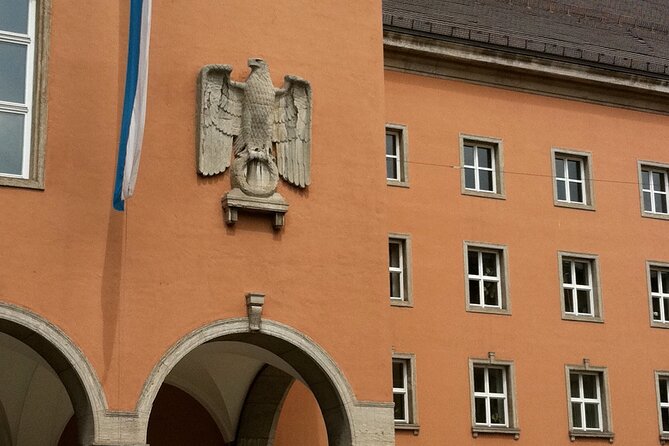
At Alter Botanischer Garten (about 15 minutes), the tour focuses on the largest Nazi Eagle still on public display in Germany and uses it as a lens for Nazi architecture and art.
This stop is powerful because it forces a confrontation with how symbolism was made visible and treated as normal. Art and design don’t only decorate. They instruct people what to admire, what to fear, and what to follow.
I’d approach this stop with a simple mindset: watch the guide’s interpretation, then decide for yourself what visual language is doing here. Short timing is fine as long as you stay present.
Residenz München: Failed Putsch and the Story of Resistance
The final major stop is at Residenz München (about 20 minutes). The tour connects it to Hitler’s failed putsch and to the story of resistance to the Nazis during the Third Reich.
This ending is a smart balance. It prevents the tour from becoming only a “how the regime rose” storyline. By pointing to resistance and failure, you get a fuller picture of how events didn’t move in a straight line.
Because the tour ends back near where you started, you’re not stranded across town at the end. That’s great when you want to continue your day with cafés, a museum visit, or just time to decompress.
Timing, Walking Style, and What to Bring
The tour runs about 2 to 3 hours, starting at 10:30 am and ending back at the meeting point. It’s a concentrated route with nine named stops, so you should expect a steady walking rhythm rather than long, slow hangs at each location.
Most people can participate, and the tour is near public transportation. That’s a practical advantage in Munich, where the transit system is reliable. Still, this is a history walk across city streets and monumental sites. Comfortable shoes matter more than you’d think.
What to bring is simple: water, and a willingness to ask questions. If you’re the kind of person who wants time to process, you can ask Curt to slow down at a stop that hits hardest. The private setup is made for that.
Price and Value for a Private Group up to 15
The price is $180.72 per group for up to 15 people. That’s the big value question: how does a history tour stay worth it compared to doing things on your own?
Here’s the honest answer: the cost isn’t paying for entrance tickets. The stops listed are marked free admission. You’re paying for interpretation, pacing, and context delivered by a guide who can answer questions as you go. You’re also paying for that iPad content, which is designed to help you connect scenes and buildings fast.
If you’re traveling solo or as a couple, the “per group” pricing can feel like a flex rather than a bargain, but it often works out well if you want private guidance and you don’t want to join a larger group. If you’re traveling with family or a small circle of friends, the math gets easier quickly because the guide stays focused on fewer people.
Also, timing demand matters. The tour is booked on average 66 days in advance, which suggests it’s a popular choice when people plan their Munich days. If you’re going in a high-demand period, booking earlier is wise.
Who This Tour Suits Best (and Who Might Want Something Else)
This tour is a strong match if you:
- want a private way to learn about Munich’s Third Reich connections
- like asking questions and getting direct answers while standing in place
- prefer seeing visible evidence like war damage and remaining architecture tied to the era
It may be less ideal if you:
- want a light, casual city walk
- get overwhelmed by heavy subject matter and want slower emotional pacing
- dislike structured stops with a set route length
If you’re torn, think about your goal for Munich. If you want “see the sights” only, there are easier city walks. If you want “understand how this city was involved,” this tour is built for that.
Should You Book This Inside the Third Reich Private Tour?
I’d book it if you care about accuracy you can question, and if you appreciate learning that stays tied to specific places—Isartor, Platzl, Old Town Hall, Odeonsplatz, the Opfer memorial, Glyptothek, Alter Botanischer Garten, and Residenz München. The private format and the iPad support make the experience easier to follow, even when the topics are tough.
Skip it only if you want a casual day or if heavy themes will derail your enjoyment. In that case, consider a lighter history option instead. But if you’re ready for a respectful, place-based look at a difficult chapter of German history, this is one of the more practical ways to do it in Munich.
FAQ
Where does the tour start?
The tour starts at Marienplatz 18, 80331 München, Germany.
What time does the tour begin?
The start time listed is 10:30 am.
How long is the experience?
It runs about 2 to 3 hours.
Is this a private tour or shared?
This is a private tour/activity. Only your group participates.
How much does it cost?
The price is $180.72 per group (up to 15).
Do you need tickets for the stops?
The stops on the route are marked as free admission tickets.
What kind of ticket do I get?
You receive a mobile ticket.
Can I cancel for a full refund?
Yes. Free cancellation is available up to 24 hours in advance for a full refund.
Is it near public transportation?
Yes, it’s near public transportation.
Are service animals allowed?
Yes, service animals are allowed.
FAQ
Is the tour suitable for most travelers?
The tour notes that most travelers can participate.
How many stops are included?
The route includes nine named stops.
What does the guide use to support explanations?
The guide uses an iPad with hundreds of films and images from over 1000 years of European history.
Does the tour allow questions during the walk?
Yes. A key feature is that the private format allows you to ask questions throughout.