REVIEW · CITY TOURS
Paul’s Private Tour in Munich old City
Book on Viator →Operated by Paul Riedel · Bookable on Viator
A great first walk in Munich starts with context. This private Old City tour gives you an easy route through landmark streets like Viktualienmarkt and Marienplatz, without you wrestling with a map, and you get restaurant and shop guidance for the rest of your stay. I especially like the private, personalized pacing and the fact that the stops are tied to real stories—construction details, royal influence, and the city’s turning points.
The main consideration is timing. Church access and how long you’ll spend inside can depend on service hours, and several stops are short—so you’ll want to ask questions as you go and wear shoes that handle a lot of walking.
In This Review
- Key highlights worth knowing before you go
- Why this Munich Old Town private walk is a smart use of your time
- Price and value: what $127.72 gets you (and why it can be worth it)
- Starting at Karlstor and Frauenkirche: your orientation begins with the skyline
- Biergarten photo spots and Heilig Geist near Viktualienmarkt
- St. Peter’s Church and the long view: from the earliest Munich to baroque details
- Maximilianstrasse to Marienplatz: where the city grew up
- Residenz Munchen, Bayerische Staatsoper, and Odeonsplatz: royalty, art, and turning points
- Funf Hofe and Promenadeplatz: shopping streets with a practical purpose
- Platzl, the Rathaus-Glockenspiel, and Neus Rathaus: engineering and civic pride
- Old Town Hall, Mariensaule, and Viscardigasse: history you can’t unsee
- What the guide flexibility means for your day, not just the route
- Comfort and practical tips: shoes, pacing, and questions to ask
- Who this tour fits best
- Should you book Paul Riedel’s Munich Old City tour?
- FAQ
- How long is Paul’s Private Tour in Munich Old City?
- How much does the tour cost per person?
- Where do we meet, and where does the tour end?
- Is pickup offered?
- What’s included in the tour price?
- Are admission tickets included for churches and related stops?
- Is this a private tour?
- Is a mobile ticket provided?
- Are service animals allowed?
- Can I cancel for a full refund?
Key highlights worth knowing before you go
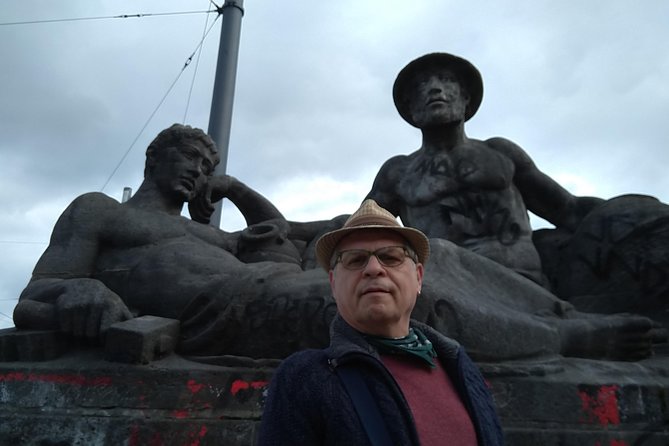
- Private tour, just your group: you won’t be merged into a crowd, and you can steer the route toward what you care about
- Landmarks in one sweep: Frauenkirche, Marienplatz, Old Town Hall, and more all fit into a compact Old Town route
- Biergarten photo planning: you’ll get guidance on the best picture spots before you wander market-and-church streets
- Royal and modern Munich, side by side: Residenz, Bayerische Staatsoper, and shopping areas like Maximilianstrasse and Funf Hofe
- Serious history without the lecture voice: the walk includes darker chapters like Viscardigasse, handled with factual framing
- Practical local tips included: shop and restaurant suggestions, plus the guide’s book, Loving Munich
Why this Munich Old Town private walk is a smart use of your time
Munich is one of those cities where the streets look pretty… and the meanings hide in plain sight. This tour is built to do two things fast: help you get your bearings, and give you the background that turns buildings into something you can actually picture later.
I like that the route is described as flexible. That matters because “Old Town highlights” can mean different things to different people. Some folks want churches and art details. Others want royal power and major historical dates. With a private guide, you can ask for more time on the stuff that grabs you and less on what doesn’t.
If you’re arriving with limited time, the 2-hour length is also a big deal. You’re not committing half a day. You’re getting a focused orientation that makes the rest of your Munich days easier to plan.
You can also read our reviews of more city tours in Munich


Price and value: what $127.72 gets you (and why it can be worth it)
At $127.72 per person for a private tour, you’re paying for guide time plus an efficient path through central sights. In cities like Munich, the “value” isn’t just seeing places—it’s reducing the guesswork.
Here’s what you’re getting that helps justify the price:
- A professional local guide with full background on the buildings and landmarks you hit
- Practical recommendations for shops and restaurants so your sightseeing becomes a real itinerary, not just wandering
- A take-home guide book: Paul’s Loving Munich
- A route designed to stack major sights into a tight window, instead of spreading them across multiple half-days
One more value point: several of the church-related stops list free admission tickets (and the itinerary includes both inside options and outside viewing). That’s not the same as “everything is free,” but it helps keep the tour from turning into a pile of extra fees.
The cost can feel steep if you compare it to a big group tour. But if you care about asking questions, adjusting pace, and having the guide explain what you’re actually looking at, the private format is usually the difference between seeing Munich and understanding it.
Starting at Karlstor and Frauenkirche: your orientation begins with the skyline
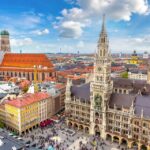
The meeting point is at Karlstor, Neuhauser Str. and the walk ends at Odeonsplatz. You’ll begin near the heart of Old Town, then work your way through the most recognizable pieces of Munich’s center.
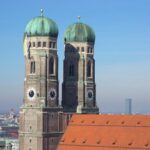
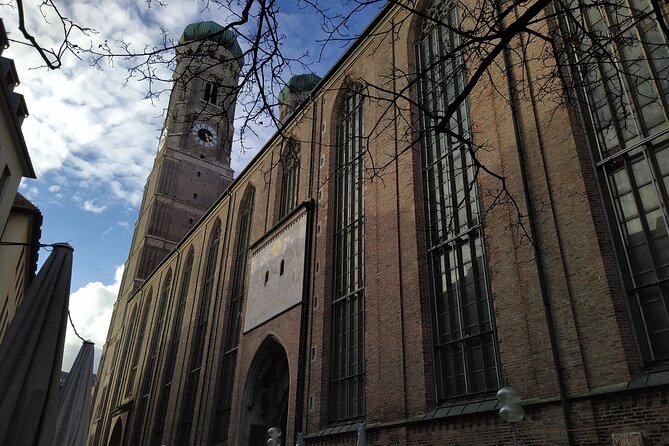
Stop 1 is the Frauenkirche. This is the cathedral that anchors the view of Munich’s Old Town, and it’s also a great way to start because the guide talks through the construction story and what makes the building feel so “Munich.” If you want to go inside, you can—but entry depends on service hours. In practice, that means you should treat inside time as flexible rather than guaranteed.
Even if you don’t get much time inside, this stop is still useful. You’ll get a mental map: why the church looks the way it does, what it symbolizes, and how it fits into the city’s development.
Biergarten photo spots and Heilig Geist near Viktualienmarkt
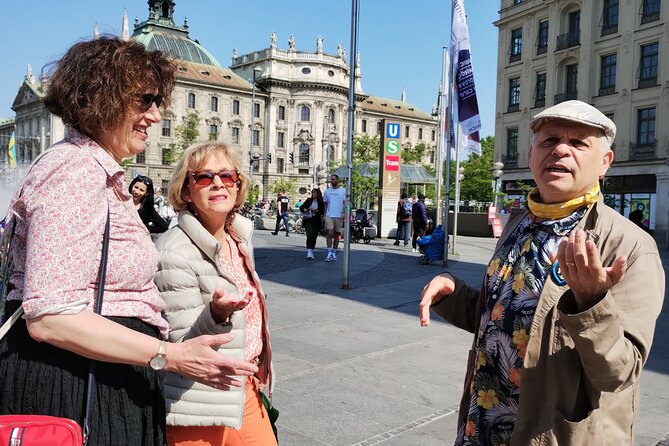
Next you’ll pause for a Biergarten visit, with guidance on special picture spots. This is more than a photo break. It’s a gentle transition from architecture-heavy stops into the human scale of Munich—where food, conversation, and outdoor beer culture show up naturally in the city center.
Then you move to Heilig Geist, positioned as a must-see stop to help you connect the area around Viktualienmarkt. The guide explains what this place was before it became a church, and you can optionally go inside. This is a good example of the tour’s approach: you’re not just collecting sights—you’re learning how the same spot can serve different roles over time.
If you like history that stays close to everyday life, this section is a win. Markets and old churches sit side by side in Munich, so your perspective shifts from “monuments” to “a city that lives.”
St. Peter’s Church and the long view: from the earliest Munich to baroque details
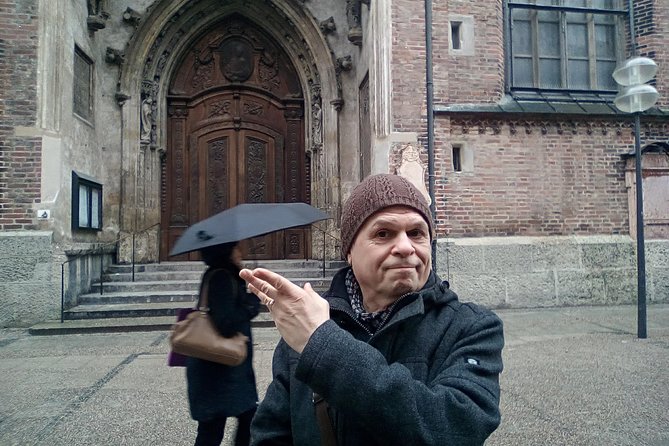
The itinerary continues with St. Peter’s Church. The framing is important here: it’s described as the first church in Munich, even before Munich existed as we know it today. That’s a powerful way to get perspective early in the walk.
If you want to go inside, the guide can show you baroque works and reliquies. Inside time again depends on timing, so ask on the spot if it looks possible. Either way, the outside stop is still worth it because the guide’s explanation gives you something to look for.
For readers who hate feeling like they’re standing around, this stop helps. The guide doesn’t just point at walls; they give you reasons, timelines, and visual cues.
You can also read our reviews of more private tours in Munich




Maximilianstrasse to Marienplatz: where the city grew up
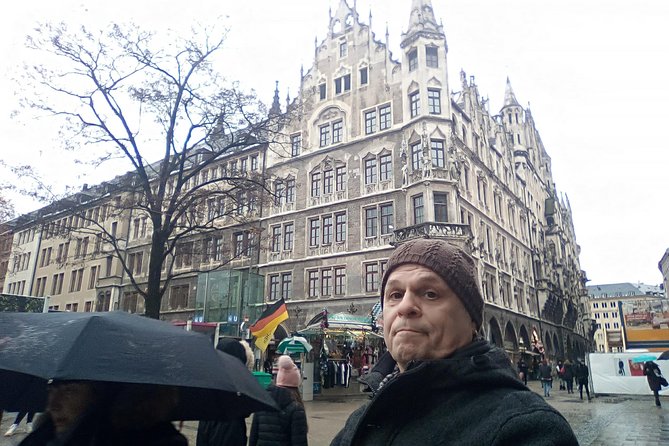
You’ll pass through Maximillianstrasse, described as featuring monumental constructions and a major shopping stretch. This is a good time to get your bearings because it’s not just “scenery.” The guide points out how the grandeur of the street connects to power and wealth in Munich’s story.
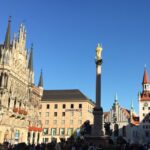
Then it’s on to Munich Marienplatz, where you’ll hear how the city grew from a small market into a major town. That’s one of the tour’s strongest themes: it treats big landmarks like chapters in a single narrative. You stop, you learn, and the next location makes more sense.
If you’ve ever visited a town square and felt like you missed the point, this is the fix. Marienplatz becomes more than a postcard when you understand what it used to mean and how the city’s role shifted over time.
Residenz Munchen, Bayerische Staatsoper, and Odeonsplatz: royalty, art, and turning points
The tour moves into the royal orbit with a stop at Residenz Munchen. You’ll visit the palace outside, with an additional option if you want to go inside. Even the exterior view is worth it here, because the guide can connect the palace to how Munich operated as a center of power.
Then you head to Bayerische Staatsoper, where the guide talks about connections between King Ludwig II and Richard Wagner. This isn’t handled as gossip. The emphasis is on historical facts and how events moved from the 18th century through the 20th century and into today.
This is a good segment if you like culture tied to real people and real power. Munich’s musical reputation isn’t random—it’s linked to patronage and political influence.
Finally, you reach Odeonsplatz, framed as a place with lots to tell about Bavaria: architecture, kings, and how the World War era changed the city. It’s the kind of stop that makes you look at buildings differently. You’ll start noticing patterns—what gets rebuilt, what gets remembered, and how authority gets displayed in stone.
Funf Hofe and Promenadeplatz: shopping streets with a practical purpose
From the classic monuments, you shift toward modern city life with Funf Hofe (Five Courts). It’s described as modern luxury, and you’ll also see Elyasson Sculpture mentioned as part of the experience. This stop helps balance the tour: not all of Munich’s story lives in churches and palaces.
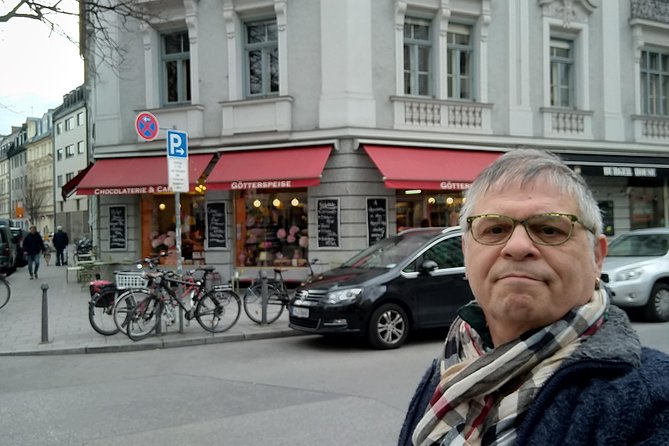
You’ll also visit Promenadeplatz, where the guide references Michael Jackson having been there. More importantly, the stop is used to deliver practical info—restaurants, cafes, and good options for your stay. For many people, this is where the tour turns from interesting into directly useful.
If you’re planning dinner and you want a guide’s opinion more than an online list, this is one of the most valuable parts of the tour. You’re getting location awareness plus food guidance in the same walk.
Platzl, the Rathaus-Glockenspiel, and Neus Rathaus: engineering and civic pride
At Platzl, the guide passes through a reconstruction from the medieval city. This helps you understand why parts of Old Town feel like they’re “staged” in places. Reconstruction is part of how Munich protects identity while keeping the city functional.
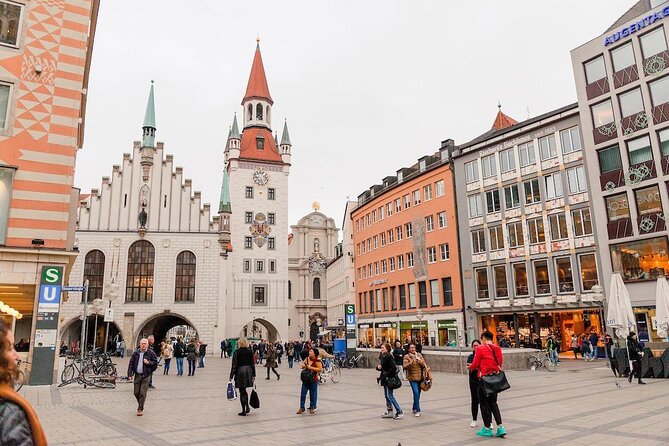
Then comes a highlight: Rathaus-Glockenspiel at Marienplatz. You’ll learn about the clock’s engineering and stories behind what it shows. The tour describes the guide as one of the few who visited it inside, meaning you’ll get the kind of details people usually miss just by standing outside watching figures go by.
After that, you head to New Town Hall (Neus Rathaus), where the guide explains the facade and points out personalities shown on it. This makes the building feel less like background and more like an intentional display.
If you like architecture, this section is especially rewarding. Even the short stops are packed because the guide uses each facade and mechanism to explain why it exists.
Old Town Hall, Mariensaule, and Viscardigasse: history you can’t unsee
The walk continues to the Old Town Hall, with a stark reference to where Goebbels signed the Reichspogromnacht order. This is one of the stops where the guide’s job matters. The goal isn’t shock. It’s clarity—so you understand why the location carries weight.
Next is Mariensaule, tied to the Holy Mary and the 30 Years War. This balances the darker placement. It reminds you that Munich’s center has always been shaped by conflict and rebuilding, and religion wasn’t only personal—it was public and political.
Then you reach Viscardigasse, described as connected to Hitler’s Putsch, World War II, and the Nazi terror. The tour doesn’t pretend this is pleasant sightseeing. But handled carefully, it can make your visit more honest.
If you prefer your tours light, this part might feel heavy. But if you want Munich to make sense as a real historical city—not just a pretty one—these stops matter. You’ll finish the walk with a sharper understanding of how the modern city emerged.
What the guide flexibility means for your day, not just the route
The tour is designed to customize based on your interests. In real life, that means the guide can shift emphasis: more time at churches if you want interiors, more focus on civic buildings if you care about government and public life, or more time on food and shopping if that’s your priority.
It also helps with a practical problem: timing. Some inside visits are optional, and church hours can affect entry. If you show up and everything inside is closed, the guide can still make the stop work by teaching you what you can see outside, and by steering you to choices you can make later on your own.
That’s the kind of “flexibility” that actually improves a vacation. You get structure, but you’re not stuck.
Comfort and practical tips: shoes, pacing, and questions to ask
This is a walking tour with many central stops, so plan for lots of steps. The itinerary is fast, with some stops around 5 minutes and others around 10. That doesn’t mean you’ll feel rushed if you’re prepared. It does mean you should come ready with a few questions.
Two smart questions for your guide:
- Which stop is best if one inside option is closed due to timing?
- What’s your top pick for a meal nearby that matches the kind of food we like?
Also, wear shoes you can trust. Several guides in the tour’s guide team have been praised for energy and for making the day feel like an event. That’s great—but it usually means you walk.
And don’t ignore the optional inside moments. The tour specifically calls out potential inside access at Frauenkirche, Heilig Geist, and St. Peter’s, plus an inside option at Residenz Munchen. If you’re on the fence, ask early. You’ll save time and avoid disappointment.
Who this tour fits best
This tour is a strong choice if:
- You want a first-day Munich orientation without losing half the day to maps
- You like history, but you also want it explained in a way you can visualize
- You care about practical tips—where to eat, where to shop, and what to prioritize next
- You prefer private pacing, meaning you can ask questions and adjust time
It may be less ideal if:
- You only want outdoor sightseeing and don’t want stops connected to heavy events
- You hate walking and can’t handle a compact 2-hour route with frequent short stops
- You need guarantees about inside church access at a specific time (service hours can affect it)
Should you book Paul Riedel’s Munich Old City tour?
If you want to understand Munich instead of just collecting photos, I think this is a very solid booking. The tour blends major landmarks, local life through market-and-biergarten energy, and both the bright and difficult parts of history—all with a private guide who can steer the focus toward your interests. Add in the included Loving Munich book and the restaurant and shop suggestions, and you’re not just paying for a walk. You’re buying a smarter plan for the rest of your stay.
FAQ
How long is Paul’s Private Tour in Munich Old City?
The tour lasts about 2 hours.
How much does the tour cost per person?
The price is $127.72 per person.
Where do we meet, and where does the tour end?
You start at Karlstor, Neuhauser Str., 80331 München, and the tour ends at Odeonsplatz, 80333 München.
Is pickup offered?
Pickup is offered.
What’s included in the tour price?
It includes a guided tour with full background, restaurant and shop suggestions, and the guide’s book Loving Munich.
Are admission tickets included for churches and related stops?
Several listed stops note free admission tickets, and inside visits can be optional depending on timing. The exact inside access depends on service hours.
Is this a private tour?
Yes. It’s private, and only your group participates.
Is a mobile ticket provided?
A mobile ticket is included.
Are service animals allowed?
Yes, service animals are allowed.
Can I cancel for a full refund?
Yes. Free cancellation is available up to 24 hours in advance for a full refund.