REVIEW · HISTORICAL TOURS
Munich: National Socialism Historical Tour in GERMAN
Book on GetYourGuide →Operated by Weis(s)er Stadtvogel GmbH · Bookable on GetYourGuide
Munich can feel like a time machine on foot. This National Socialism walking tour is a clear, place-based way to understand how the movement took root, using real locations like Königsplatz and the former Führerbau, plus black-and-white photographs to bring the 1920s and 1930s into focus. I like that the guide connects events to what you see in front of you, but one drawback is that it runs rain or shine, so you’ll want truly comfortable shoes and a plan for wet weather.
I really appreciated the setup. You meet in front of the main entrance of the Staatliche Antikensammlungen, and your guide is easy to spot with a BIG BLUE BAG marked with Weis(s)er Stadtvogel. The tour is only 2 hours, but it covers a lot of ground in a tight loop around key sites from the Nazi era.
One more practical note: the tour is listed as wheelchair accessible, yet it’s also marked not suitable for people with mobility impairments. If mobility is a concern for you, it’s worth double-checking before you book.
In This Review
- Key Things I’d Plan Around
- Why Munich’s National Socialism Story Belongs on These Streets
- Starting at Staatliche Antikensammlungen: Finding the Right Group Fast
- Königsplatz: Where the City’s Power Shows Up First
- Führerbau and the Munich Agreement Era: The Building You’ll Remember
- Briennerstrasse: Walking the Stretch Between Context and Consequence
- Passing the Former Gestapo Headquarters: When the Story Turns Dark
- Odeonsplatz and Feldherrnhalle: November 9 and the Beer Hall Putsch
- German-Language Tour: How to Make It Work for You
- Price and What’s Actually Included for $34
- Rain or Shine, 2 Hours on Foot: Practical Tips That Help
- Who This Tour Fits Best
- Should You Book This National Socialism Tour in Munich?
- FAQ
- How long is the Munich National Socialism Historical Tour?
- What language is the tour guide speaking?
- Where do I meet for the tour?
- How much does the tour cost?
- What are the main places you visit?
- Is food included?
- Are entrance fees included?
- Will the tour run in bad weather?
- Is it wheelchair accessible or not suitable for mobility impairments?
Key Things I’d Plan Around
- Meet at Staatliche Antikensammlungen so you start with the right orientation in the city.
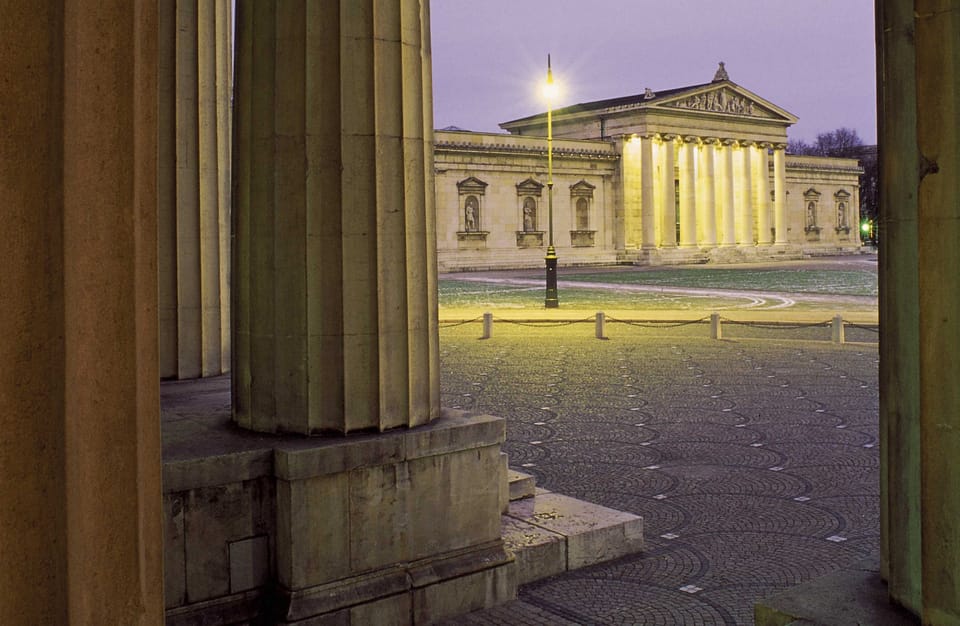
- Königsplatz sets the tone for how public space was used to project power.
- Führerbau is more than a building since it links directly to the Munich Agreement era and today’s Documentation Centre area.
- You’ll hear about the Gestapo headquarters while walking Briennerstrasse.
- Feldherrnhalle at Odeonsplatz is where the guide ties together the November 9 events and the Beer Hall Putsch.
- Photos are part of the method, not decoration, helping you read what you’re seeing.
Why Munich’s National Socialism Story Belongs on These Streets
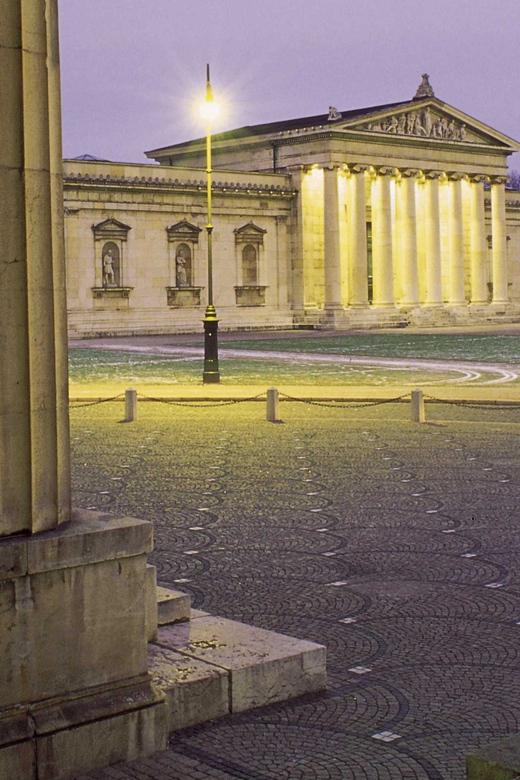
This tour focuses on one uncomfortable truth: National Socialism didn’t rise in a vacuum. It rose in public spaces—squares, streets, and iconic buildings—where messaging could be repeated and seen. Walking from one site to the next makes the story feel less abstract.
What I liked most is how the guide uses the city as evidence. You’re not just hearing dates; you’re seeing where the movement wanted people to look, gather, and believe. That matters, because many Munich visitors concentrate only on the old town charm. Here, the streets pull you into the political machinery of the 1920s and 1930s.
The tone is also structured. The highlights include the events of November 9, the way the NSDAP rose to power, and what Germany was like during National Socialism. In 2 hours, that’s a lot of weight, but it stays anchored to locations you pass in real time.
You can also read our reviews of more historical tours in Munich

Starting at Staatliche Antikensammlungen: Finding the Right Group Fast
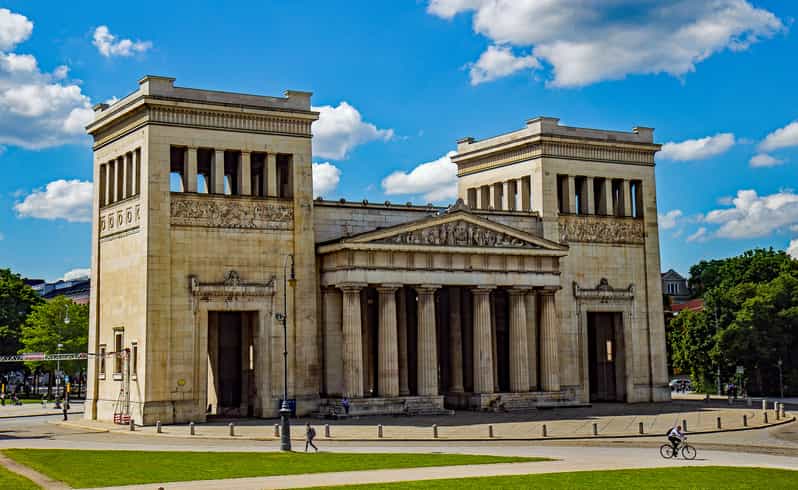
You’ll start at the main entrance of the Staatliche Antikensammlungen. That’s a helpful choice because it gives you a clear meeting point before the tour moves into the action-oriented history of central Munich.
Your guide is wearing a BIG BLUE BAG with the white words Weis(s)er Stadtvogel. If you’ve ever wandered near a meeting point trying to guess which person is the guide, you’ll appreciate this. It’s basically follow the blue bag and you’re good.
The tour language is German, so you should know what level you’re comfortable with. If you’re not confident reading German in real time, you may still catch a lot through the visuals and stop-by-stop structure, but plan on not understanding every word.
Königsplatz: Where the City’s Power Shows Up First
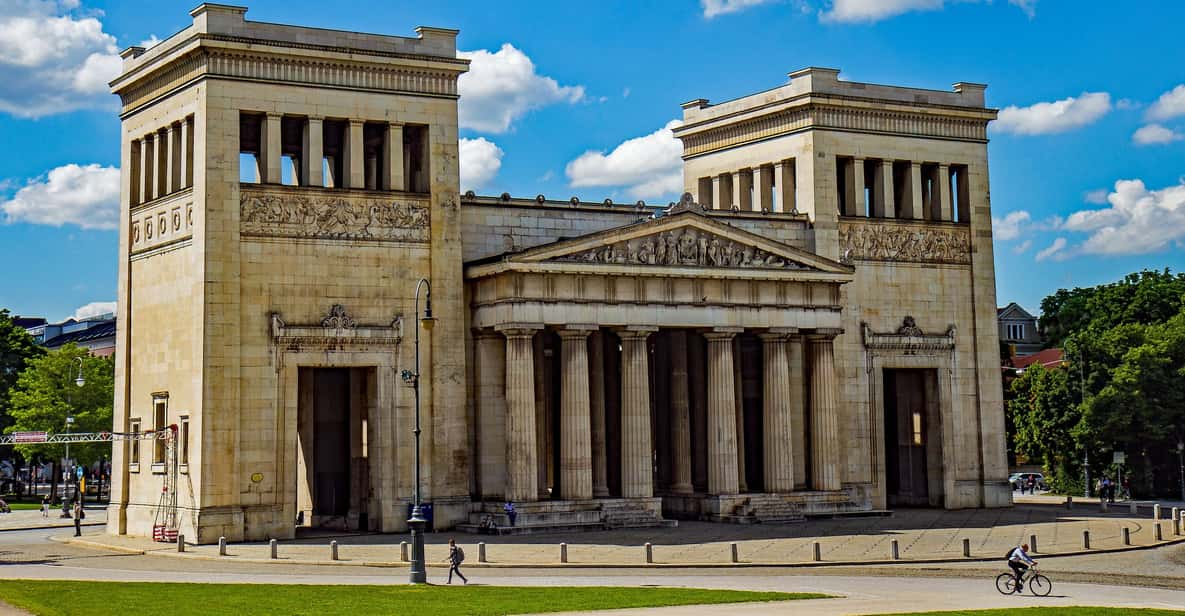
The walking route begins at Königsplatz, which is one of those places where architecture and politics get tangled together. The guide uses this area to set context for how Munich earned the reputation tied to the movement’s growth.
This is where you’ll likely get your first big “aha” moments: how the NSDAP didn’t only gain support through speeches, but also through visible staging—public space designed to make gatherings feel official and inevitable. Even if you’ve read about the rise of the party before, seeing the layout and scale helps you understand why it worked.
For me, the practical value of starting here is that it trains your eye early. You start noticing sightlines and the “center stage” feeling of key spots, so later stops land with more meaning.
Führerbau and the Munich Agreement Era: The Building You’ll Remember
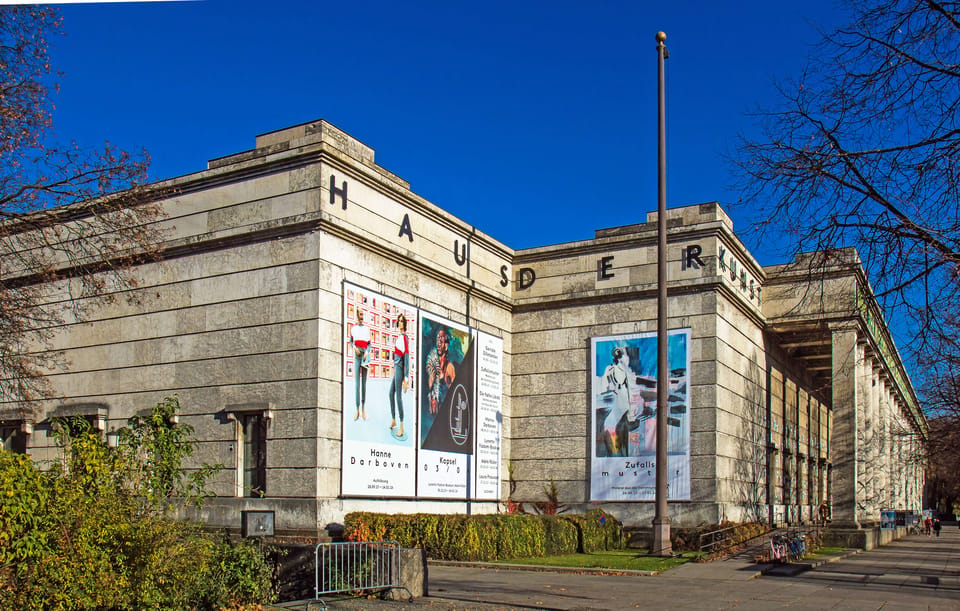
Next comes the former Führerbau, the former Führer’s building. The tour frames this stop in a very specific way: it’s tied to the Munich Agreement signed in 1938, and it also points you toward what stands there today, the Munich Documentation Centre for the History of National Socialism.
This stop is valuable because it links a political decision to a physical place in Munich. When you connect a 1938 agreement to a real site, the topic stops being a timeline in a book and starts being a story rooted in locations that still exist.
A small heads-up: entrances aren’t included. So you’ll likely be learning from the outside and from the guide’s commentary. If you want to go into the documentation centre itself, budget time and extra cost separately, since entrance fees aren’t part of the tour.
Briennerstrasse: Walking the Stretch Between Context and Consequence
As you move along Briennerstrasse, the tour shifts from “how the movement looked” to “how it operated.” This is the in-between part of many history walks, but it serves a purpose here.
The guide uses the route to transition from public messaging to coercive power. That shift is subtle when you’re just walking, which is why having a professional city guide matters. You’ll get the story beats timed to what you see.
Also, remember: this is still a 2-hour walking tour. That means the stops are paced tightly. Briennerstrasse helps keep the walk efficient while still connecting major dots.

Passing the Former Gestapo Headquarters: When the Story Turns Dark
At some point you’ll pass the former Gestapo headquarters. This isn’t an optional “extra stop” type of moment. It’s a key turning point because it explains what came after the party gained influence.
Learning about Germany during National Socialism isn’t only about rallies or propaganda. It’s also about the systems that enforced control. When you hear those details while walking by a building tied to that machinery, it hits harder because you’re connecting description to location.
If you’re sensitive to heavy topics, it helps to know that this tour intentionally covers them. The guide is presenting a historical narrative, not trying to soften it. I’d treat the whole walk like an educational museum experience, just in street form.
Odeonsplatz and Feldherrnhalle: November 9 and the Beer Hall Putsch
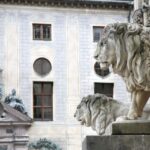
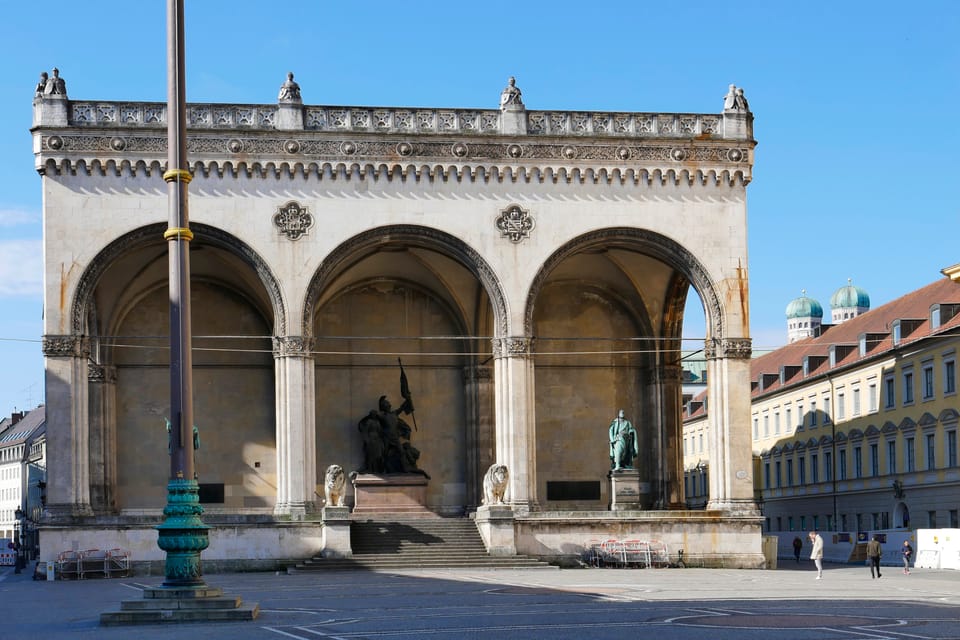
The walk ends at Feldherrnhalle at Odeonsplatz. This is the famous kind of location—the sort of place where history isn’t behind glass. Here, the tour ties the story to the events of November 9 and the Beer Hall Putsch.
This part of the tour is where the dates start to click into a bigger pattern. You’ll hear how the NSDAP’s early momentum and its public challenges to authority fed its later growth. The guide keeps bringing things back to why Munich was such fertile ground for the movement in the first place.
The guide also uses black-and-white photographs during these explanations. That’s a smart teaching trick. When you’re looking at modern streets, photos help you picture what the city looked like when these events unfolded. You’ll likely find the images make it easier to understand the scale of gatherings and the tone of the era.
German-Language Tour: How to Make It Work for You
This is a German-language live tour. That doesn’t automatically mean you’ll be lost, but it does change your expectations.
Here’s how I’d handle it:
- If your German is basic, rely on the stop order and visuals. The photo support helps.
- If you want full comprehension, go prepared with a basic knowledge of the NSDAP rise and key events around November 9.
- Watch for what the guide emphasizes out loud at each site—those points usually line up with the tour’s highlights.
Also, the tour is wheelchair accessible on the listing, but it’s not suitable for people with mobility impairments according to the same provided information. That inconsistency matters. If you use a wheelchair or have limited mobility, I’d ask the provider directly what “accessible” means for this specific route and pace.
Price and What’s Actually Included for $34
The price is $34 per person for a 2-hour guided walking tour. Given the specific, high-stakes locations you’ll see—Königsplatz, former Führerbau linked to the Munich Agreement, the former Gestapo headquarters area, and Feldherrnhalle—that’s pretty reasonable.
Here’s the important value math:
- You’re paying for a professional city guide and structured commentary tied to real historical sites.
- You’re not paying for food, hotel pickup/drop-off, or entrance fees.
So if you’re hoping to turn this into a day-long sightseeing plan, plan food and any inside museum time separately. But if your goal is understanding the story through places you can visit on foot, the included guide time is the main attraction—and the price fits that.
Rain or Shine, 2 Hours on Foot: Practical Tips That Help
The tour runs rain or shine, and the guidance says to bring comfortable shoes. That’s not fluff. The history stops are spread along a walking route, and you’ll be on your feet for the whole 2-hour block.
I’d also think about weather gear:
- A light rain jacket beats fighting an umbrella in wind around open squares.
- A small bag for photos if you’re taking your own reference notes can be helpful.
- If you’re visiting in colder months, dress in layers so you stay steady on your feet.
If you’re expecting a sit-down style museum experience, you might be disappointed. This is street-level learning.
Who This Tour Fits Best
This is a great fit if you want a guided, location-based explanation of how National Socialism grew in Munich and Germany. It’s especially useful if you’ve read headlines before but want clearer connections between events and specific sites.
It’s also well-suited for people who like structure in their tours. You get a set route and a guide’s narrative arc—Königsplatz to Führerbau to the Gestapo headquarters area to Odeonsplatz and Feldherrnhalle.
Consider whether it’s right for you if:
- You need a tour in English (the tour guide language listed is German).
- You have significant mobility limitations, since it’s marked not suitable for mobility impairments even while being listed as wheelchair accessible.
- You prefer lighter, more relaxed historical walks. This one has heavy subject matter by design.
Should You Book This National Socialism Tour in Munich?
Book it if you want your Munich history grounded in the exact places tied to the NSDAP’s rise, including the November 9 story and the shift from ideology to control. The guide-led route and the use of black-and-white photographs are practical tools that help you “see” the era, not just memorize it.
Skip it (or at least confirm details first) if German isn’t workable for you, if mobility needs require extra care, or if you’re not prepared for a rain-or-shine outdoor walk on historically difficult material.
If you’re choosing between wandering on your own and doing a guided walk here, I’d pick guided. The city is full of historical signage, but the guide is what turns landmarks into meaning.
FAQ
How long is the Munich National Socialism Historical Tour?
It lasts 2 hours.
What language is the tour guide speaking?
The live tour guide speaks German.
Where do I meet for the tour?
Meet in front of the main entrance of the Staatliche Antikensammlungen.
How much does the tour cost?
The price is $34 per person.
What are the main places you visit?
The route includes Königsplatz, the former Führerbau (the site linked to the 1938 Munich Agreement and now associated with the Munich Documentation Centre for the History of National Socialism), Briennerstrasse, the former Gestapo headquarters area, and ends at Feldherrnhalle at Odeonsplatz.
Is food included?
No. Food and drinks are not included.
Are entrance fees included?
No. Entrance fees are not included.
Will the tour run in bad weather?
Yes. The tour takes place rain or shine.
Is it wheelchair accessible or not suitable for mobility impairments?
The activity is listed as wheelchair accessible, but it is also marked not suitable for people with mobility impairments. If mobility affects you, you should confirm suitability for the route with the provider.