REVIEW · NEUSCHWANSTEIN & LINDERHOF CASTLE DAY TRIPS
Neuschwanstein and Hohenschwangau Exclusive Skip-the-Crowds Tour
Book on Viator →Operated by Sightseeing Bavaria Exclusive · Bookable on Viator
Early morning helps everything click.
You get skip-the-line access to Neuschwanstein without wasting your day on queue stress, plus door-to-door pickup in a new Mercedes or VW minivan. I especially like the way the guide builds your timing around what matters most: castle interiors first, the best viewpoints when crowds are lowest, and extra stops only if they fit your day. One thing to weigh: this is a long, active day with stairs and uphill walking (some options add costs).
The route also mixes must-sees with alternates, so your exact day depends on your chosen package length and what you add on. If you want a slow pace or you hate stairs, plan carefully before booking.
In This Review
- Key Highlights You’ll Care About
- A Private Early Start Out of Munich (That Actually Works)
- Lake Starnberg and Ludwig II’s Most Unsettling Chapter
- Hohenschwangau: Use It Like a Base Camp, Not a Detour
- Neuschwanstein Castle: Fairytale Views With Real-Time Logistics
- The Walk, the Stairs, and the Elevator Option You Might Need
- Marienbrücke Queen Mary’s Bridge: How to Get the Best View
- Pöllat Waterfall: The Quick Payoff Between Viewpoints
- Optional Füssen Stops If You Have Extra Time
- Linderhof and Plansee: Ludwig’s Smaller Palace With Big Effects
- Oberammergau for Murals, Wood Carvings, and the Passion Play
- Baroque Church Stops: Ettal Abbey and Wieskirche
- The Guide Factor: Why People Name Stefan, Thomas, Maria, Karl, and Christian
- Price and Value at $759.49: What You Pay For (and What You Still Need to Budget)
- Who Should Book This (and Who Might Prefer a Different Plan)
- Should You Book This Skip-the-Crowds Day Trip?
- FAQ
- What’s included in the tour price?
- Do I get skip-the-line for Hohenschwangau Castle?
- How do I reach Marienbrücke (Queen Mary’s Bridge)?
- Is Neuschwanstein accessible if I can’t handle a long uphill walk?
- Are shuttle buses and bridges available in winter?
- How long is the day?
- Does the tour include lunch?
- Can I add Füssen or other optional activities?
- Do you visit Linderhof Palace and Oberammergau?
Key Highlights You’ll Care About
- Skip-the-line Neuschwanstein so you spend energy on rooms and views, not line-control.
- Door-to-door Munich pickup in an A/C minivan where it’s just your group.
- Marienbrücke timing strategy plus a backup viewpoint if bridge access is delayed.
- Choose your add-ons: Hohenschwangau, Füssen, Linderhof, Oberammergau, Alpine Coaster.
- Guided castle time + self-exploration so you get context and still wander.
- Practical transport options for the uphill sections, including shuttle buses and horse-drawn carriages when needed.
A Private Early Start Out of Munich (That Actually Works)
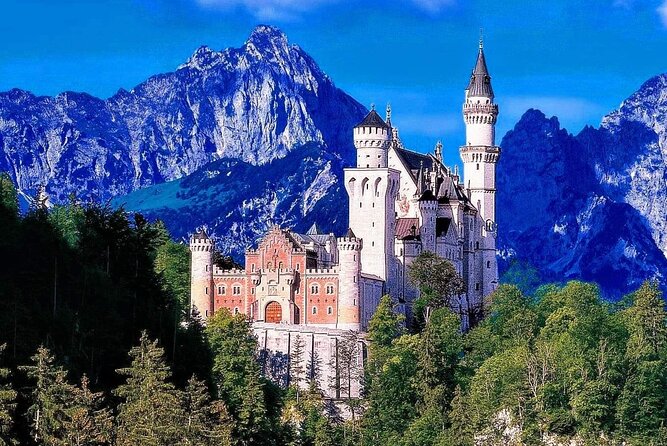
This is built for one thing: getting you into the Neuschwanstein area while the biggest tour buses are still asleep. Pickup runs from 7:00am to 10:00am, and for the skip-the-crowds departure you select 7:00am. That early start is not just marketing. It changes how smooth the day feels at the castle approach and at viewpoints.
You ride in a new, comfortable Mercedes or VW minivan with A/C, and it’s only your group in the vehicle. That matters because the schedule can flex a bit for the people in your van—unlike big-group tours that act like an airport shuttle.
If you’re coming from outside Munich (like the airport), pickup can be arranged on request, with possible additional costs.
You can also read our reviews of more tours and experiences in Munich.
Lake Starnberg and Ludwig II’s Most Unsettling Chapter
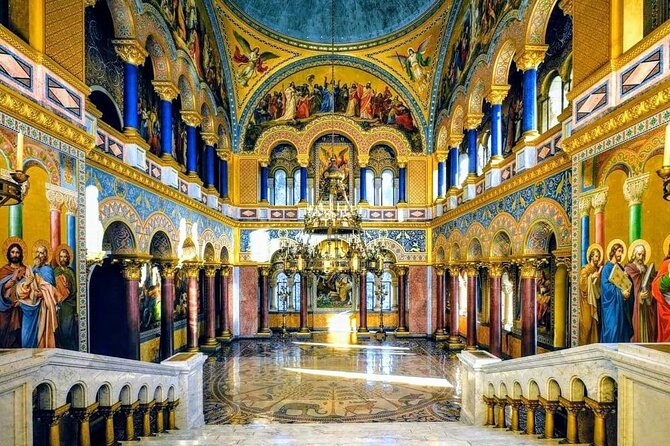
Before castles, you get a breather at Starnberger See, about 20 minutes after pickup. This lake is sometimes called the Dukes’ Lake, and the shore is lined with impressive villas—plus the summer residences tied to Sissi (Empress of Austria). The stop is short, but it gives you a useful emotional frame for why these royal buildings feel so dramatic.
Your guide also points out the spot where King Ludwig II died on June 13, 1886. You’ll hear how Ludwig’s relationship with Sissi shaped his choices and why he didn’t want to marry Sissi’s younger sister. It’s the kind of story that makes the castles make more sense, instead of just looking like fairytale scenery.
This stop is ticket-free and lasts about 20 minutes, so it’s not a time sink.
Hohenschwangau: Use It Like a Base Camp, Not a Detour

Hohenschwangau is where the castle day becomes real. After about an hour of rural driving, you approach the Alps and start seeing Neuschwanstein towers at around 1,000m / 3,000ft. Then you arrive in the village of Hohenschwangau, the usual starting point for both castles.
Here’s what I like: you get skip-the-line tickets for Neuschwanstein and a detailed map of the surrounding area. The guide also gives practical tactics you’ll use later—things like the Queen Mary’s Bridge viewpoint, whether to rely on shuttles or carriages, and where it’s best to eat or shop.
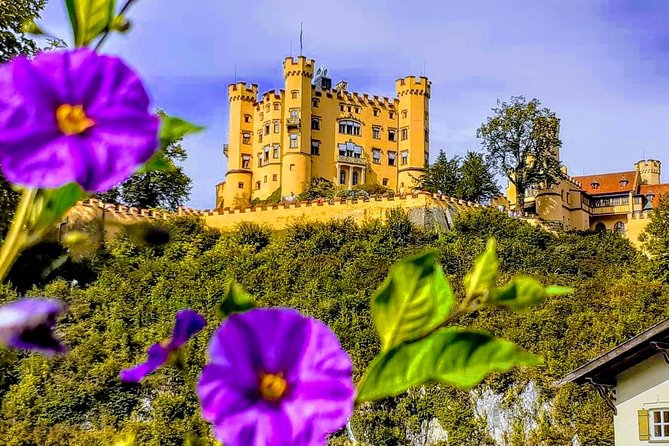
You can also add Hohenschwangau Castle. If you do, you’ll get information after booking on how to buy skip-the-line tickets online. The guided visit is about 45 minutes.
One consideration: the Hohenschwangau carriage service can get you close, but you still climb stairs to the 3rd floor and back (no elevator). If you have mobility limits, this part deserves honest planning.
Neuschwanstein Castle: Fairytale Views With Real-Time Logistics
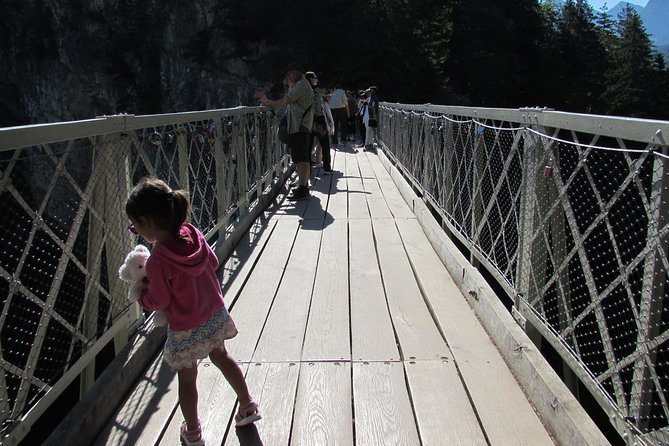
Neuschwanstein is why most people book in the first place. The castle is inspired by Wagner’s operas and Ludwig II’s obsession with grand art and myth. On arrival, you have options for the approach:
- Walk up from the car park
- Shuttle bus (not operating in snow and ice)
- Horse-drawn carriage (with details handled by your guide)
Inside, the guided tour is about 35 minutes, and then you explore additional rooms on your own for around 15 minutes. That mix is smart: you get the big-picture story first, then you can slow down for details without feeling rushed.
The Walk, the Stairs, and the Elevator Option You Might Need
This tour can be fantastic, but you should go in with eyes open about the physical side.
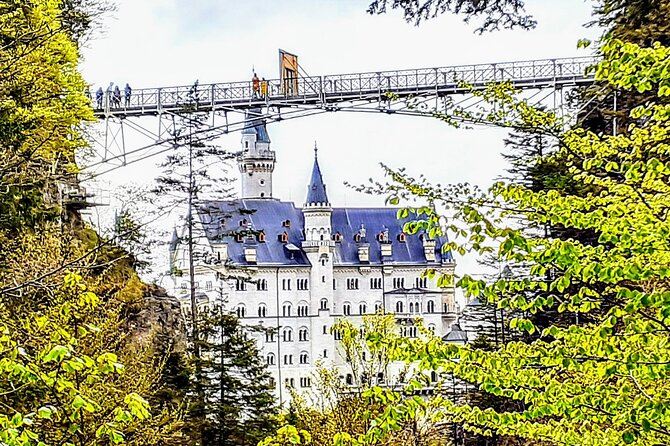
From the car park, you’ll need to manage a walk of about 1.5 km (1 mile) in around an hour if you do it on foot, or at minimum a steeper stretch (about 450 meters uphill up to 15% slope from the terminal to the entrance). Even if you use transport options, there are still short uphill/downhill segments to handle.
Inside Neuschwanstein, there are 346 stairs (up and down). If you have a medical certificate for a walking disability or mobility restriction, you need to tell the operator immediately after booking. They can request an exclusive lift service with a limited number of tours, and it must be reconfirmed by castle staff due to fire regulations.
Even if you do everything right, this is still a castle built for stairs. Plan around that, not around wishful thinking.


Marienbrücke Queen Mary’s Bridge: How to Get the Best View
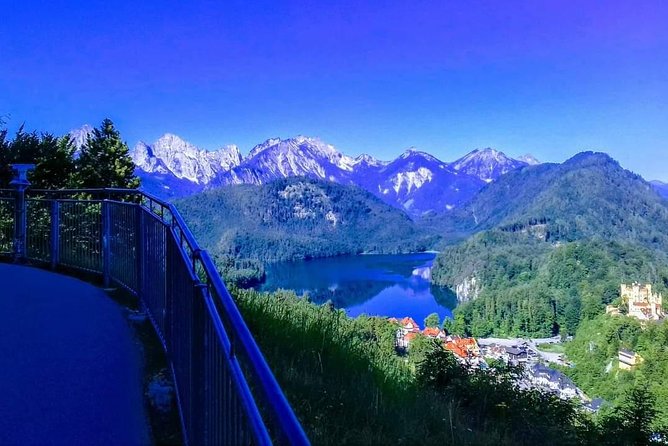
Next comes the viewpoint hit: Marienbrücke (Queen Mary’s Bridge), built in 1866 by Ludwig II. This is the top classic photo spot, and for good reason—you look straight at the castle and gorge-side drama.
You can reach the bridge in two ways:
- A shuttle bus from the parking lot for €4.00 per person
- A 40-minute uphill hike
Timing is key. For departures after 8:00am, there may be waiting times for the shuttle bus and bridge access. If that happens, your guide can take you to another spectacular viewpoint without waiting.
Weather matters. During snow and ice, the bridge is not accessible, and Neuschwanstein can only be reached on foot or by the shuttle/alternative carriage options described for that season. Your guide handles this in real time, which is exactly what you want when conditions change.
Pöllat Waterfall: The Quick Payoff Between Viewpoints
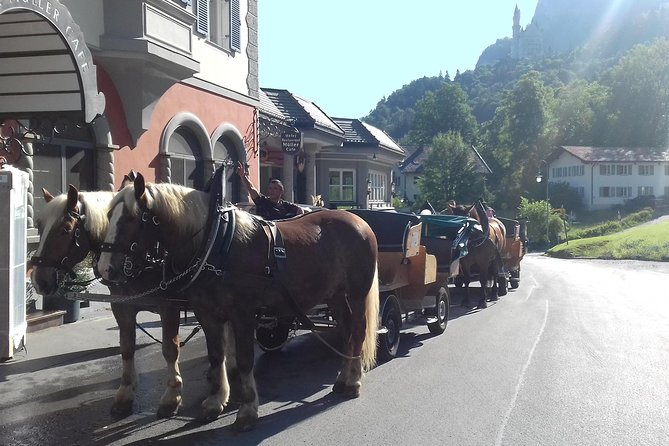
After the bridge, you’ll get views of the Pöllat Waterfall from the Neuschwanstein courtyard and again from the Marienbrücke area. The Pöllat is a wild river system about 10 km long, rising not far from Neuschwanstein in the Bavarian Alps.
This is short—around 5 minutes—but it’s a nice palate cleanser. You go from architecture to moving water, and it helps the whole day feel less like one long photo session.
Optional Füssen Stops If You Have Extra Time
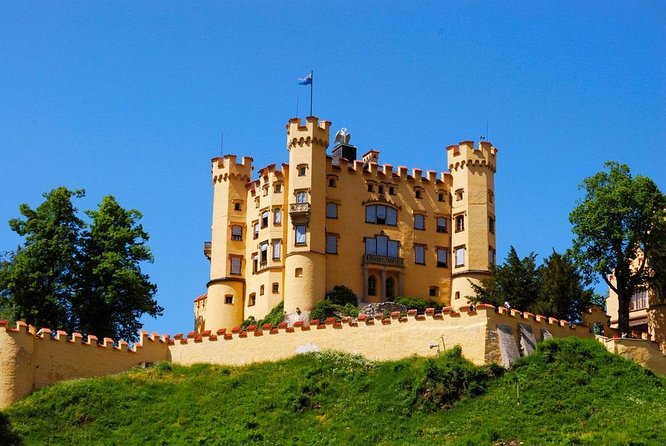
If you book the 11-hour option (or trade time in the shorter package), Füssen can be added. The medieval town is full of narrow streets and old walls, with a history that goes back about 2,000 years.
In Füssen, you’ll learn about Maximilian I (Habsburg Emperor) and see the High Castle, noted as one of the best preserved medieval castles in Bavaria. The route also highlights crooked houses and a former monastery complex with a baroque church.
If you love photos of old streets and you want time to shop or grab a drink, this is one of the best “social breaks” on the day. If you want to stay focused on castles only, you can skip it and protect your energy.
Linderhof and Plansee: Ludwig’s Smaller Palace With Big Effects
Depending on your package and choices, the day can shift from Neuschwanstein toward Linderhof Palace via Plansee, a mountain lake drive that takes about 50 minutes (with the route adapting to traffic, and in winter to avalanche risk).
Linderhof is Ludwig II’s smaller, more intimate palace—still very ornate, but it feels different from the dramatic fairy-tale silhouette of Neuschwanstein. You’ll also see the baroque palace park, which blends into a landscape setting, plus fairytale-style structures like the Venus Grotto.
A key detail: Venus Grotto reopened in April 2025 after renovation, and it has an extra entry cost of €3.00 per adult, cash only. It requires a very steep path about 0.3 miles and is closed in winter.
If you’re choosing between Hohenschwangau and Linderhof add-ons, think about mood. Hohenschwangau gives you Ludwig II’s family context, while Linderhof shows you the style he wanted to live inside.
Oberammergau for Murals, Wood Carvings, and the Passion Play
Another add-on route is Oberammergau, reached after Linderhof. You’ll have a 20-minute guided tour focused on the murals called Lüftlmalereien and the Passion Play Theatre. Then you get free time to stroll and shop.
This is where the trip stops feeling like pure royal tourism and starts feeling local. Oberammergau is famous for wood carvings, including nativity sets and other Christmas items year-round.
It’s also a useful time block if your group wants a break from walking between castle viewpoints.
Baroque Church Stops: Ettal Abbey and Wieskirche
Toward the end of the day, you may visit a baroque church stop, depending on your route.
One option is Ettal Abbey, a Benedictine monastery near a little pass. You’ll follow your guide in a 12-wall domed medieval hall with church decoration, and you can buy Ettal monastery beer or liqueur in the shop.
Another option is the Pilgrimage Church of Wies (the famous Wieskirche). If the day drives via the Lake Plansee route to Linderhof or Oberammergau, then Wieskirche cannot be visited. Your guide will choose the route accordingly.
The Guide Factor: Why People Name Stefan, Thomas, Maria, Karl, and Christian
This tour can feel like a blur unless your guide keeps it organized. The best part here is that guides actively run the schedule, explain what you’re seeing, and help you move through each bottleneck without stress.
In the real-world experience reports behind this tour, names like Stefan, Thomas, Maria, Karl, and Christian come up again and again for being attentive and making timing work. Some guides even mention the early start strategy directly, like starting around 7:00am to beat the big bus waves near Neuschwanstein.
You also get small but important practical help: guidance on whether walking is worth it that day, when to use shuttle options, and where to find good food. That makes the difference between seeing castles and actually having a good day.
Price and Value at $759.49: What You Pay For (and What You Still Need to Budget)
At $759.49 per person, this is not a cheap day trip. But it’s expensive in a targeted way.
Your money mainly buys you:
- Door-to-door transfers from Munich in a private A/C minivan
- A licensed guide for the full day
- Skip-the-line entry to Neuschwanstein
- Bottled water and a setup designed to prevent schedule chaos
What you should still budget for:
- Lunch (not included)
- Optional entry add-ons like Hohenschwangau Castle and Linderhof Palace (skip-the-line tickets are extra)
- Shuttle/transport add-ons near viewpoints, including €4.00 per person for the Marienbrücke shuttle bus
- Optional attractions like the Alpine Coaster (extra)
If you’re the type of traveler who hates waiting and wants a guide to manage the day, the value makes sense fast. If you’re happy walking, don’t mind lines, and want to DIY with public transit, you might decide this price isn’t worth it.
Who Should Book This (and Who Might Prefer a Different Plan)
Book this if you want:
- Maximum castle time with minimal queue time
- A private group ride where the schedule can adjust
- Clear guidance on viewpoints like Marienbrücke and how to manage walking uphill
Consider a different approach if:
- You struggle with stairs. Neuschwanstein has 346 steps, even when you use mobility options.
- You don’t want an all-day plan. This day can run around 9.5 to 11 hours, depending on your package and add-ons.
- You expect lunch and optional tickets to be fully included. They’re not.
Should You Book This Skip-the-Crowds Day Trip?
I think this is a strong pick if Neuschwanstein is a top priority and you want the day to feel organized from pickup to final viewpoints. The combination of skip-the-line Neuschwanstein, early timing, and real guide support is the core reason it works.
If you book it, do three things to make it run smoothly: choose the 7:00am pickup, be honest about walking and stairs, and plan your add-ons based on your energy—not on wish lists. If you do that, you’ll leave with the “castle in the sky” feeling, plus enough context to make it more than a photo stop.
FAQ
What’s included in the tour price?
Skip-the-line admission for Neuschwanstein Castle, hotel pickup and drop-off from Munich, a licensed guide, bottled water, and bottled water. Shuttle buses and optional castle tickets for add-ons are not included.
Do I get skip-the-line for Hohenschwangau Castle?
You can visit Hohenschwangau Castle, but the skip-the-line entrance ticket for it is extra and must be purchased separately online after booking.
How do I reach Marienbrücke (Queen Mary’s Bridge)?
You can reach it either by a shuttle bus (€4 per person) or by a 40-minute uphill hike. After 8:00am, waiting times for shuttle and bridge access may happen.
Is Neuschwanstein accessible if I can’t handle a long uphill walk?
You’ll need to manage an uphill or downhill segment near the terminal to the castle entrance in any case. If mobility is limited, the operator can request a limited lift service inside Neuschwanstein if you provide a medical certificate.
Are shuttle buses and bridges available in winter?
During snow and ice, the Marienbrücke bridge is not accessible. The shuttle bus to Neuschwanstein is also not operating in snow and ice conditions.
How long is the day?
The experience is roughly 9 hours 30 minutes to 11 hours, depending on the package length and which optional stops you choose.
Does the tour include lunch?
No. Lunch is not included, so you’ll need to plan for it during free time.
Can I add Füssen or other optional activities?
Yes, but some extras depend on your chosen package length. Füssen and the bike option are only available with the longer timing setup, and activities like the Alpine Coaster require advance notification.
Do you visit Linderhof Palace and Oberammergau?
Linderhof Palace and Oberammergau are part of the longer option route choices. The exact combination depends on your package length and selections. Wieskirche may be swapped out depending on the driving route via Lake Plansee.