Munich feels instantly more understandable with a guide. This essential walking tour hits the city’s big icons with local context, not just photo stops. You’ll move through central squares at an easy pace and hear the stories behind what you’re looking at. I like that it’s limited to your group, so the guide can answer questions as you go and keep the flow practical.
Two things I really enjoy: the mix of major landmarks and a real market break at Viktualienmarkt, and the way the stops connect into one story of how Munich grew. You also get a proper focus on details like the Glockenspiel’s marriage tale and the Scheffler dance at the New Town Hall. One thing to consider: this tour needs good weather, and it’s still a walking experience, so plan on comfortable shoes and a moderate fitness level.
In This Review
- Key things you’ll notice on this Munich walking tour
- Why this private Munich walking tour works in real life
- Starting out at Marienplatz (and finding your guide fast)
- Frauenkirche: the “brick cathedral” story you’ll remember
- New Town Hall (Neues Rathaus): Glockenspiel and the Scheffler dance
- Old Town Hall: broken-glass legend and a medieval dance
- Viktualienmarkt: your market break with real tastes
- St. Peter’s Church: the architecture layers and the tower view
- Ohel Jakob Synagogue: a different side of Munich you won’t get on autopilot
- Pace, timing, and what to wear
- Tour guide impact: what makes the stories feel usable
- Price and value: when $360.42 per group makes sense
- Who should book this tour (and who might skip it)
- Should you book the Munich essential walking tour?
- FAQ
- FAQ
- How long is the Munich essential walking tour?
- Is this tour private?
- How many people can be in a group?
- What language is the tour offered in?
- Where does the tour start and end?
- What time does the tour begin?
- Is admission included for St. Peter’s Church?
- Are the other stops free to enter?
- Is there food or drink during the market stop?
- What should I know about weather?
- Are service animals allowed?
Key things you’ll notice on this Munich walking tour
- Small-group focus (up to 10) so you’re not getting rushed or ignored
- Clear central route starting at Marienplatz and ending back there
- Landmarks with real meaning like Glockenspiel stories and old-town legends
- Viktualienmarkt food-and-drink time with soup, bread, coffee, and beer
- St. Peter’s Church included plus a tower view over old Munich
- Ohel Jakob Synagogue for a striking look at Jewish history in the city
Why this private Munich walking tour works in real life
If you’re trying to see Munich fast, you can do it with buses and self-guided wandering. But you’ll still be left with a pile of buildings and not much glue between them. This tour gives you that glue.
I like that it’s a private experience for just your group (up to 10). That matters in a city center, where crowds can make even famous sights feel chaotic. With your own group, you can slow down for photos, ask questions, and actually hear the reasoning behind what you’re seeing.
Also, the tour’s timing helps. Starting at 12:00 pm puts you in the afternoon sweet spot: enough daylight to enjoy the views, and enough daylight to take in market life before evening.
The price is $360.42 per group, not per person (for groups up to 10). That can feel like a splurge if you’re traveling solo, but if you’re splitting the cost with friends or family, it turns into a pretty good deal for a guided walk with major sights and one included paid entry.
You can also read our reviews of more walking tours in Munich

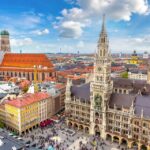
Starting out at Marienplatz (and finding your guide fast)
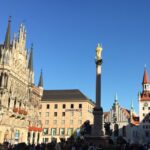
The tour meets at Marienplatz (80331 München) and ends back near the same meeting point. For many first-time visitors, Marienplatz is a perfect anchor: it’s central, easy to orient around, and it’s where Munich’s main streets start to make sense.
You also get a practical clue for meeting: the experience notes an easy meetup around Karlsplatz. If you’re arriving by transit, you’ll probably appreciate this kind of redundant reference point. The tour is near public transportation, which helps if you’re building the rest of your day around this walk.
Since it’s a mobile ticket tour, you won’t be stuck hunting for paper confirmations. You’ll just show your ticket on your phone once you’re there.
Frauenkirche: the “brick cathedral” story you’ll remember
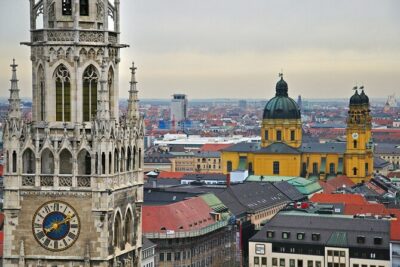
The walk begins with the Frauenkirche, a famous brick cathedral that defines Munich’s skyline. You’ll get a close-up view and a story that sticks. The tour frames it with a classic legend about the cathedral being so impressive that the devil would have been astonished.
More importantly, the guide doesn’t treat it like a random big church. You’ll hear what makes it distinctive and why Munich built such a strong visual statement in the first place. That’s the value of a guided approach here: instead of only noticing the shape, you learn what the shape meant.
This stop is listed for about 45 minutes, with admission free for the activity. That’s a good setup because it gives you time to look around before the next quick jump to the town’s civic heart.
New Town Hall (Neues Rathaus): Glockenspiel and the Scheffler dance

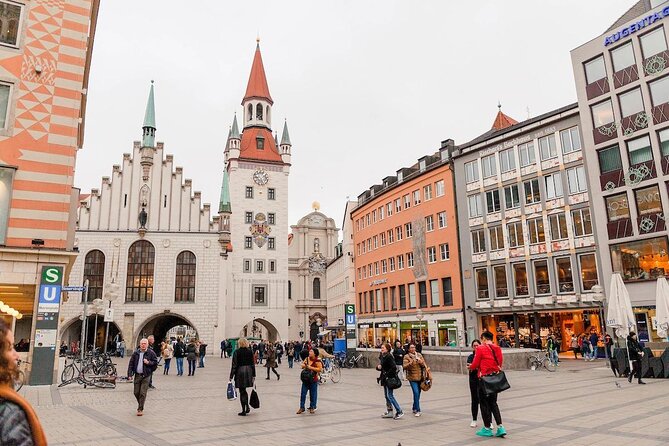
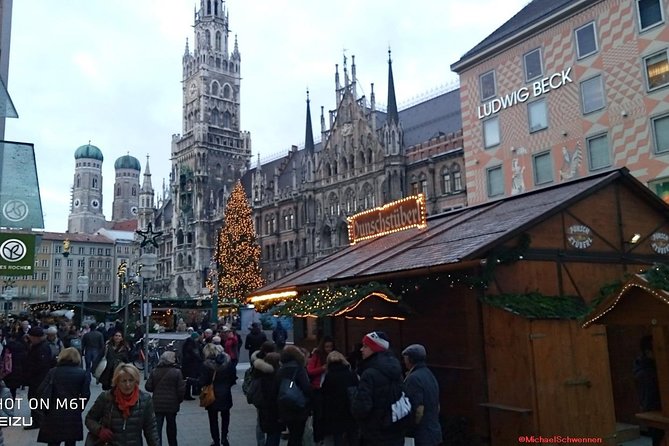
Next you’ll head to the New Town Hall (Neus Rathaus), where one part of the building does the talking. The highlight is the Glockenspiel, the clock display you can hear, see, and interpret through the guide’s explanation.
This is where the tour earns its keep for first-timers. The Glockenspiel isn’t just a moving show. You learn the story behind it—its connection to a marriage tale and the Scheffler dance, a legendary element tied to Munich’s older culture.
You’re allotted around 30 minutes here, and the stop is marked as admission ticket free. That works well because it’s central and photogenic, but it still feels structured rather than wandering and guessing when the music might happen.
Old Town Hall: broken-glass legend and a medieval dance
From the New Town Hall you move to the Old Town Hall, with two big threads to watch for.
First: the tour talks about the Night of the broken glass starting here. That’s the kind of historical reference that can be hard to place when you’re just reading a plaque on your own. A guide helps you connect the location to the story.
Second: you’ll hear about the Moriekendancer, a dance tradition associated with late Middle Ages roots. Even if you never catch a performance, the explanation makes the city feel less like monuments and more like living tradition.
This part is shorter—about 20 minutes—and the activity notes it as ticket free. Expect it to feel like a quick historical punch: you look, you learn, and you move on without stalling the day.



Viktualienmarkt: your market break with real tastes
Then comes the stop where Munich feels personal and everyday: Viktualienmarkt.
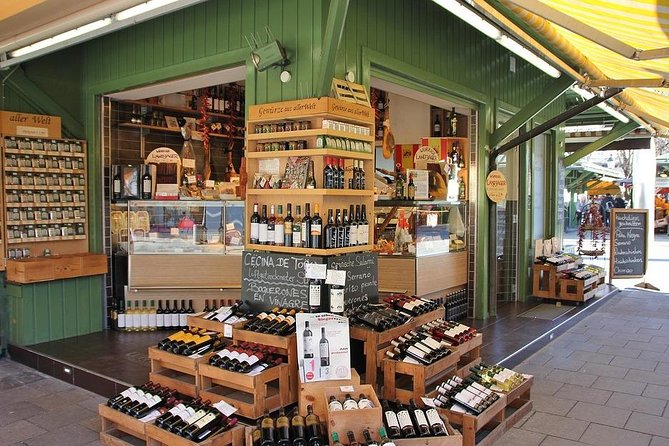
You get about an hour here, and the format isn’t just sightseeing outside stalls. The tour is built around tasting, smelling, and enjoying local products, with examples like soup, bread, coffee, and beer, plus locally sourced specialties.
This is a great midpoint. The earlier stops are mostly stone, symbolism, and civic power. The market stop flips the switch to senses: food textures, aromas, and small details you can only get when you’re around people actively buying and eating.
One practical note: since this is a food-and-drink moment, plan your rest of the day accordingly. If you’re the type who tries everything, you might be pleasantly full for a while after.
Admission is listed as ticket free, so you’re mainly paying for the guided selection and the way the guide helps you understand what you’re seeing and tasting.
St. Peter’s Church: the architecture layers and the tower view
At St. Peter’s Church, the tour shifts into a deeper building-story mode, and it’s one of the most rewarding stops.
You’ll learn how the church evolved over time: originally connected to an early Romanian style, later incorporating Gothic elements, and eventually being baroquised with major visual changes like ceiling paintings and a high altar. That kind of timeline matters because it helps you look at a single building and see many eras at once.
You also get time here for 45 minutes, and this is the only stop listed with admission included.
The payoff is the view. From the tower, you’ll have a strong look over the old city of Munich. Even if you don’t think you’ll care about church towers, this is exactly the sort of moment a walking tour should include: it resets your mental map. After the view, the earlier streets and squares feel connected rather than random.
Ohel Jakob Synagogue: a different side of Munich you won’t get on autopilot
Near Saint Jakobs Square, you’ll visit Ohel Jakob Synagogue, described as a newer synagogue built with a style that resembles the Temple in Jerusalem.
This stop is only about 15 minutes, and it’s marked as ticket free. But it’s brief in a good way. It adds variety to the day and broadens the story beyond the usual town-hall-and-church loop.
If you like your city tours to include at least one landmark that shows a different cultural layer, this one does the job without turning the schedule into an all-day marathon.
Pace, timing, and what to wear
This is a 2 to 3 hour walking tour, and the activity notes moderate physical fitness. That’s a helpful label. You’re not looking at a full day of long-distance hiking, but you are moving between several central stops.
My advice: wear shoes you’re comfortable standing in for stretches, and bring a light layer. Munich weather can swing, and since good weather is required, you’ll want to be ready for the day you’re scheduled.
The guide also builds in time for photos and questions. The pacing is part of why people come back saying the route felt well-timed rather than rushed.
Tour guide impact: what makes the stories feel usable
A good walking guide doesn’t just recite dates. The best ones connect the facts to what you’re seeing in front of you.
The guide name that comes up again and again is Michael (also referenced as Mr Schwennen). You can expect a style that’s friendly and engaging, with history explained in a way that makes the buildings feel logical. One detail I appreciate from the way the tour runs: Michael seems to provide printed materials that support the walk, and those pages can help you keep track of what you just learned while the sights are still fresh.
People also note that the guide makes room for questions and keeps the timing practical—enough time to look around and take pictures, not just quick stops where you’re sprinting from one place to another.
Price and value: when $360.42 per group makes sense
At $360.42 per group (up to 10), the math changes based on who you travel with.
- If you’re a small group, you’re essentially paying for a private guide for a half-day chunk of sightseeing.
- If you’re two, three, or four people sharing the cost, the per-person value usually lands in the sweet spot: you get a structured route, multiple major landmarks, one included paid entry, and market time with food tasting.
The value comes from the combination:
- Multiple iconic stops in central Munich
- A guided connection between them
- One included admission at St. Peter’s Church
- A market experience that’s more than just browsing stalls
It’s the kind of tour that can save time. Instead of spending the afternoon checking opening hours, guessing what to prioritize, and reading plaques with half the context missing, you walk a planned route and get the context as you go.
Who should book this tour (and who might skip it)
This is a strong fit if:
- You want a structured, easy-to-follow walk in the city center
- You prefer a private group over crowded group tours
- You like history tied to specific locations, not vague timelines
- You want at least one market stop with food and drink
You might consider a different option if:
- You hate walking between multiple landmarks
- You want a longer, slower day that includes fewer stops but more time at each
- You’re the type who prefers total DIY and doesn’t want a guide’s interpretation
Should you book the Munich essential walking tour?
If you’re trying to get oriented fast and you want your afternoon to feel meaningful, I’d book it. The structure is tight: civic Munich at the town halls, religious Munich at Frauenkirche and St. Peter’s, plus the market and a synagogue stop that adds perspective without extending the day too long.
The tour’s small-group nature, guided storytelling, and the practical included element at St. Peter’s Church make it easier to justify. And if you’re traveling with others, sharing the group price is where this becomes a real bargain.
FAQ
FAQ
How long is the Munich essential walking tour?
It runs about 2 to 3 hours.
Is this tour private?
Yes. It’s a private tour/activity, and only your group participates.
How many people can be in a group?
The price is listed per group for up to 10 people.
What language is the tour offered in?
The tour is offered in English.
Where does the tour start and end?
It starts at Marienplatz (80331 München, Germany) and ends back at the meeting point.
What time does the tour begin?
The start time is listed as 12:00 pm.
Is admission included for St. Peter’s Church?
Yes. St. Peter’s Church is listed as admission ticket included, and the tower view is part of the stop.
Are the other stops free to enter?
The other stops are listed with admission tickets free.
Is there food or drink during the market stop?
Yes. At Viktualienmarkt, the tour includes tasting and examples like soup, bread, coffee, and beer.
What should I know about weather?
The experience requires good weather. If it’s canceled due to poor weather, you’ll be offered a different date or a full refund.
Are service animals allowed?
Yes, service animals are allowed.