REVIEW · EVENING EXPERIENCES
Munich: Night Watchman Tour in English
Book on GetYourGuide →Operated by Weis(s)er Stadtvogel GmbH · Bookable on GetYourGuide
Munich turns strange after dark. This Night Watchman Tour in English uses a lantern, medieval costume, and storytelling to make the center feel like it did centuries ago. I like that it points you into small alleys and hard-to-find corners instead of only sticking to the usual viewpoints.
My favorite part is the way the guide makes the past feel human. Expect funny, theatrical history—from superstition and daily life to stories about kings, saints, monks, and even famous beer.
One thing to plan for: it’s a night walk in cooler weather, and the pace can speed up at the end when everyone is cold.
In This Review
- Key things that make this tour work
- Why Munich at Night Feels Like 800 Years Ago
- Meeting at Mary’s Column: Getting Oriented Fast
- The Night Watchman With a Lantern: More Than a Costume
- Marienplatz to Viktualienmarkt: The Streets That Feel Found, Not Faked
- Frauenkirche Area: Turning a Famous Landmark Into a Story Stop
- Comedy, Legends, and the Facts You Actually Remember
- Pace and Comfort: 1.5 Hours That Fit Real Schedules
- Price and Value: Why $22 Feels Fair for This Format
- Who Should Book This Night Watchman Tour
- Should You Book the Munich Night Watchman Tour?
- FAQ
- How long is the Munich Night Watchman Tour?
- Where do I meet for the tour?
- Is the tour in English?
- What will we do during the tour?
- Is the tour wheelchair accessible?
- How much does it cost?
- Can I cancel for a full refund?
- Can I reserve and pay later?
Key things that make this tour work
- Lantern-led storytelling that turns the dark streets into your stage
- Medieval costume and character acting, not a lecture in fancy dress
- Hidden lanes around the medieval core that you likely won’t find on your own
- English live guide with room for questions and extra detail
- Short, focused walking area that still feels like a full story (Marienplatz → nearby streets → Viktualienmarkt → Frauenkirche area)
- Strong guide performances named in reviews, including Monique and Hans, plus Heinz/Hannes
Why Munich at Night Feels Like 800 Years Ago
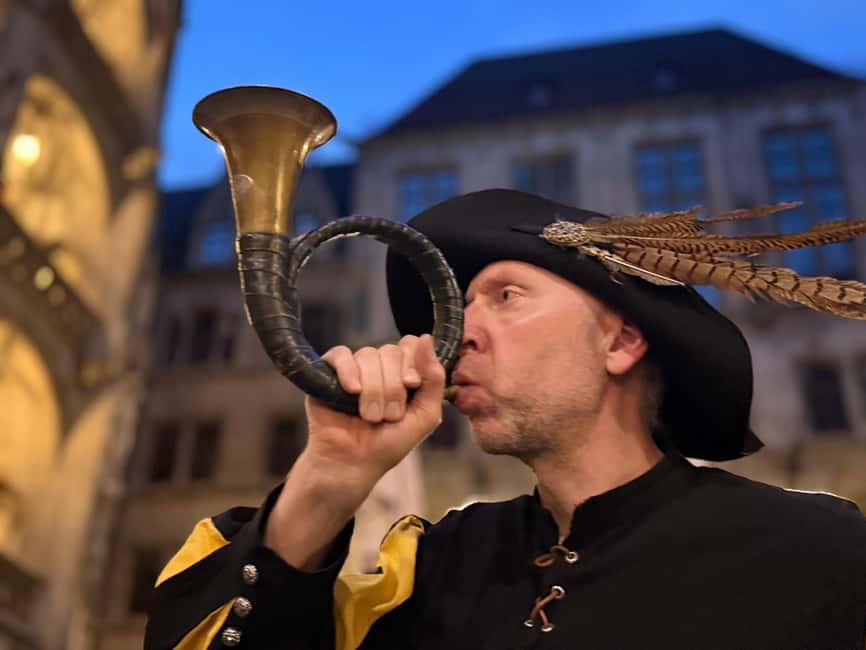
The tour doesn’t try to recreate medieval Munich with props and special effects. It does something simpler—and smarter. It gives you a character (the night watchman) with a lantern, then uses that light to guide your attention through the old streets.
The background story sets the mood fast. Medieval Munich is framed as a small walled town—about 400 meters across—with gates closed from dusk to dawn, leaving citizens to stay inside. When the lantern is the only visible light in the darkness, danger feels real and watch duty makes sense.
You also get the tour’s social context. People are described as mostly unable to read or write, so rumor spreads and superstition matters. Life is presented as governed by a kind of divine order, which helps you understand why the legends and beliefs you hear weren’t just entertainment—they shaped daily decisions.
And yes, it’s a story from cradle to grave. Not “death and gloom” only, but a wide slice of what life could feel like when the city is closed up and the night belongs to the watch.
You can also read our reviews of more evening experiences in Munich

Meeting at Mary’s Column: Getting Oriented Fast
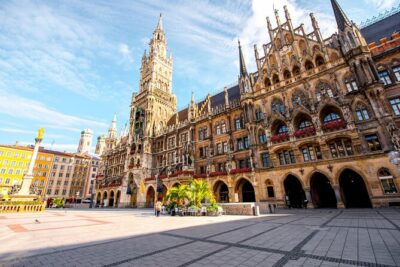
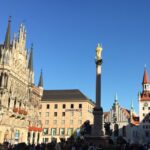
You start at a very clear landmark: Mary’s Column in the center of Marienplatz. This is one of those meeting points that makes a difference. You don’t have to hunt for a kiosk or follow a vague instruction across the square—you can line up where the action is.
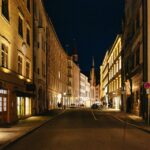
From there, the tour naturally pushes you away from big, open space and into the medieval back streets. That shift is the real magic at night. Daytime walking makes Munich look “pretty historic.” At night, those same blocks look tighter, older, and more secretive.
Marienplatz is also a smart launch pad because it’s the heart of the old center. Even if you already know Munich’s layout, the tour uses your arrival point to help you track what’s changing as you move: open squares give way to narrow lanes, and familiar buildings start to feel different under low light.
If you’re the type who likes to get oriented quickly, this start helps. You’ll understand where you are and why the route matters long before you finish the first segment.
The Night Watchman With a Lantern: More Than a Costume
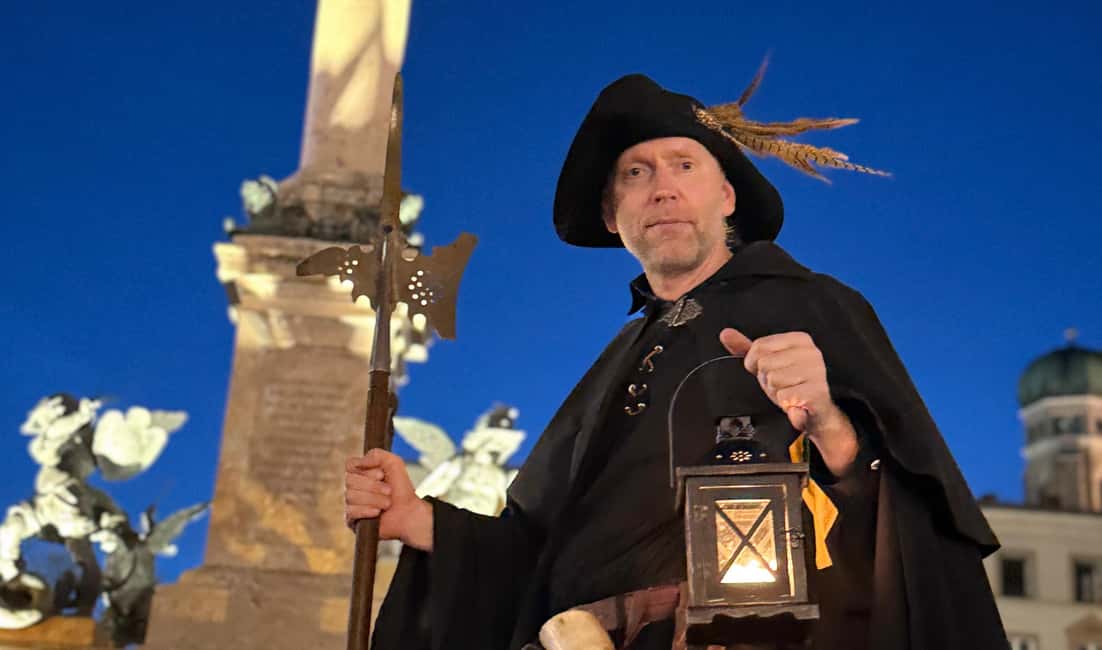
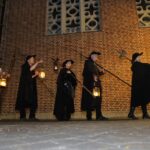
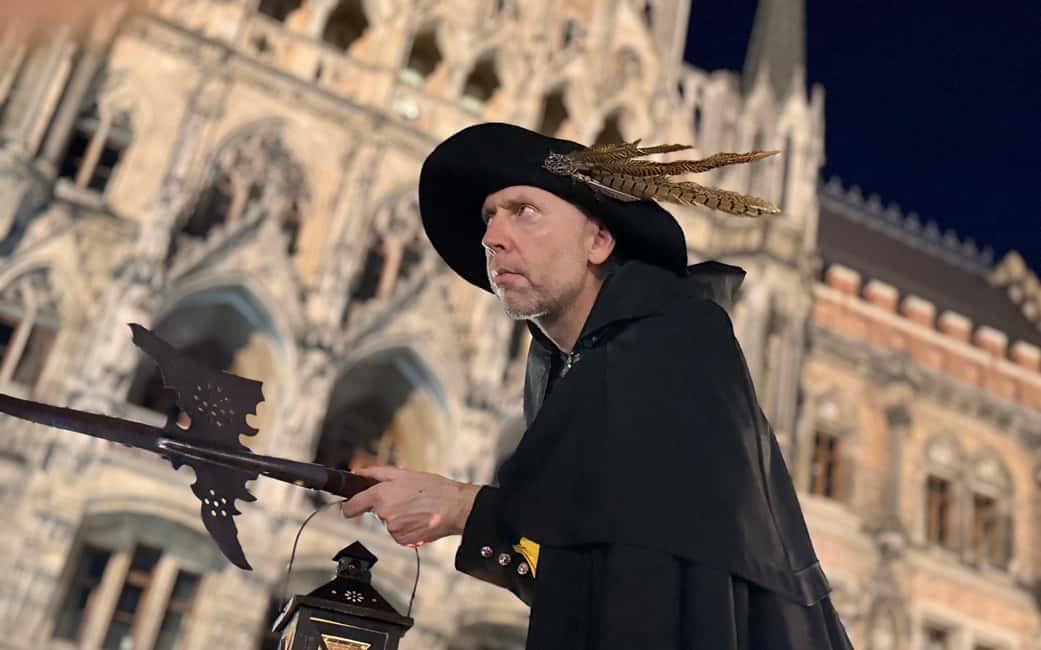
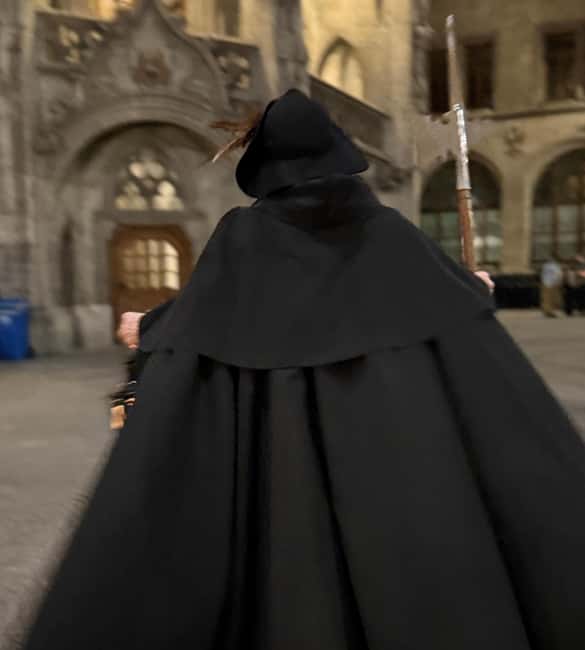
A lot of tours have costumes. This one actually builds a role around them. The guide dresses in medieval clothing and carries a lantern, then tells stories as the watchman himself.
The lantern is not just for atmosphere. It acts like a spotlight for attention. When the guide turns toward a building face, a street corner, or a symbolic detail, you naturally look where you might not otherwise look.
What stood out in the reviews is how the best guides use humor without losing the plot. Guides including Monique (from Munich), Hans, and Heinz/Hannes are praised for mixing history with jokes and showmanship. One review mentioned the guide keeping things fun while still delivering strong facts, and another pointed out how the guide’s pace stayed relaxed rather than rushing.
You’re also told why the watchman matters in the story. Gates are closed. Streets are dark. People are afraid of what they can’t explain. The watchman’s job becomes the thread connecting legends, warnings, kings, saints, monks, and the everyday people living under the same sky.
That’s the real value: you’re not just collecting information. You’re building a mental movie of medieval Munich, with the guide controlling the lighting—literally and narratively.
Marienplatz to Viktualienmarkt: The Streets That Feel Found, Not Faked
One of the most practical joys of this tour is that it stays within the historical center—close enough to feel doable even on a travel schedule. Several reviews mention the walking area as relatively short, moving through Marienplatz to Viktualienmarkt and continuing toward the Frauenkirche area.
That matters because it keeps the experience focused. You’re not trekking across town to “check off” major sights. Instead, you get repeated chances to notice how medieval life would have fit into the spaces around markets, churches, and tight neighborhood lanes.
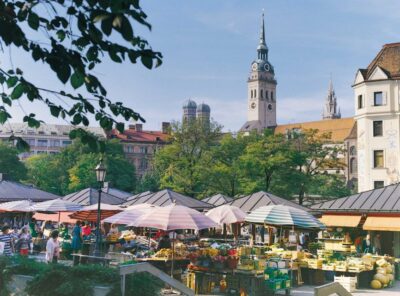
Viktualienmarkt comes up specifically, and that makes sense. Markets were the social engine of older cities. Even if the tour is theatrical rather than museum-style, using the market area helps you picture daily routines—where news traveled, where people gathered, and where someone might hear a story that later becomes a belief.
The tour also leans into what you might call street-level history. That means small alleys and details you might ignore in daylight. At night, you’re already walking slower and looking up more, so the guide can point out things that would otherwise fade into the background.
If you like seeing a city through texture—corners, proportions, hidden pathways—this is the style that works.
Frauenkirche Area: Turning a Famous Landmark Into a Story Stop
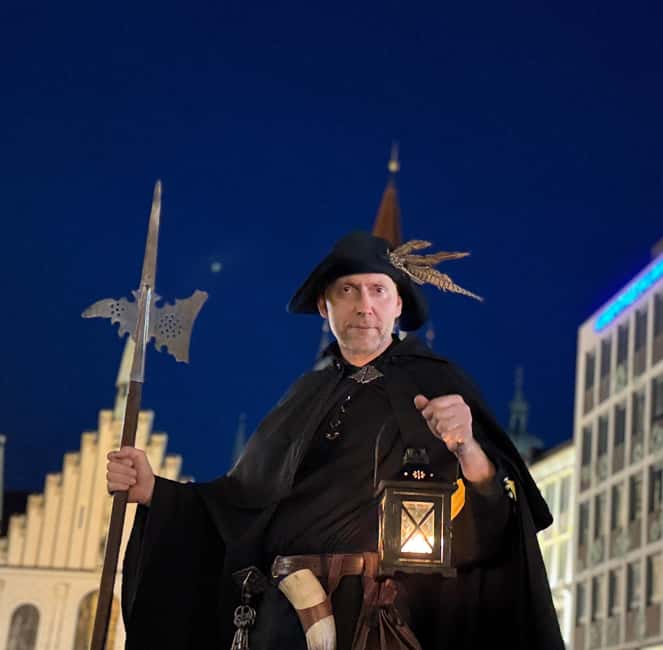
You end up moving toward the Frauenkirche area, and that’s useful. It’s a major landmark in Munich, but the tour doesn’t treat it like a photo op only. It uses the surrounding streets and the medieval framing to help you connect the famous building to the older city around it.
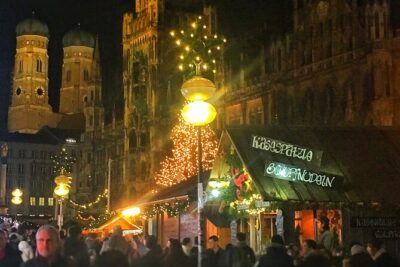
What I like about using a landmark at night is the contrast. Daytime tends to flatten details. Night tends to exaggerate them—shadows, edges, and the feeling of walking through something older than your own itinerary.
The tour’s “City of the Monks” framing also gives the area a different flavor. Even if you’re not expecting a religious lesson, the stories about monks and saints shift your attention from stone to meaning: why people built, believed, and organized life around their worldview.
From cradle to grave, that worldview includes milestones. The guide’s job is to make those milestones feel connected, not random. Reviews mention clear explanations, attention to detail, and the mix of folktales with historical facts. That combination is what keeps a single landmark from turning into a generic stop.
If your goal is to see Munich’s center as a living narrative rather than a checklist, the Frauenkirche segment helps seal that feeling.




Comedy, Legends, and the Facts You Actually Remember
Here’s where the tour earns its strong rating. It uses humor, but it’s not silly. The better guides—especially the named performers in reviews—are praised for being both entertaining and informative, with a sense of timing that keeps you engaged even while you’re standing still at corners.
The tour’s story ingredients are specific: medieval superstition, limited literacy, and the idea that people interpret the world through a divine order. Those themes explain why legends stick and why “everyone knows” can spread fast even when evidence is thin.
You’ll also hear about big figures in ways that connect them to daily life—kings, saints, monks—along with lighter references like famous beer. That’s not random. In old cities, social life and drink were part of how people coped and celebrated, and the watchman character makes those references feel like part of his night patrol report.
One review called the experience surreal, another highlighted the balance of historical facts with anecdotes, and another praised clear explanations about history, folktales, and iconography. That last detail is key: when the guide explains meaning in symbols, you stop walking past buildings like they’re wallpaper.
By the end, you’re likely to remember scenes, not just dates. And in a city like Munich, that’s the difference between sightseeing and understanding.
Pace and Comfort: 1.5 Hours That Fit Real Schedules
The tour runs 1.5 hours. That time length is a sweet spot. Long enough to feel like you did something substantial, short enough to stack it with dinner plans or a theater visit without stress.
The pace is also described as relaxed in reviews. One person specifically mentioned that the guide didn’t rush and kept an unhurried flow. Another mentioned the guide sped up at the end because the group was cold.
So plan for the reality of night weather. Wear layers. Bring shoes you can walk in comfortably for an hour and a half. If you tend to get cold easily, this tour will feel better with proper winter clothing—even if the guide keeps the energy high.
Walking at night also changes how you experience the city. You’ll spend more time noticing shadows and street shape, and less time comparing buildings in a “daylight catalog” way. For some travelers, that’s exactly what they want.
If you’re the kind of person who gets restless during passive tours, the lantern, the character, and the frequent turns in the route help break up the time.
Price and Value: Why $22 Feels Fair for This Format
At $22 per person for a live, English-language guide in medieval dress with a lantern, the value is strong—especially because the tour is exactly what it promises: a guided, theatrical walk.
The price feels fair because you’re paying for more than information. You’re paying for a performance that changes how you look at Munich: what you notice, what you connect, and how quickly you understand the medieval city’s logic.
Also, the tour is centered on a compact part of town. That reduces “wasted” time moving between far-flung sites. Instead, your money goes into story time and street time, which is what you came for.
A final value point: many of the reviews are enthusiastic about guide quality—meaning this isn’t just a scripted path where any guide will do. The named guides (Monique, Hans, Heinz/Hannes) are repeatedly described as entertaining, knowledgeable, and engaged, which is exactly where a price like this earns your trust.
Who Should Book This Night Watchman Tour
I think this is ideal for you if you want history that’s easy to follow and fun to experience. You don’t need a degree in medieval Munich. You need curiosity, a willingness to walk, and an interest in how people lived when the city gates closed and night fear mattered.
It also suits travelers who like smaller, street-level sightseeing. The tour is built around little alleys and sights that are difficult to find on your own, so it’s a good choice if you’ve already seen the big squares in daylight and want a different angle.
If you’re traveling with someone who finds museums too slow, this has a different rhythm. The character acting and humor can keep attention during the walking parts.
And if you want something that works in an evening, this fits because it’s 1.5 hours and stays in central Munich. It’s also marked as wheelchair accessible, which makes it more inclusive than many night walks.
Should you book this tour if you want only major monuments and long sightseeing stops? Maybe not. This is more story-led than monument-led. But for medieval atmosphere and local legend, it’s a practical win.
Should You Book the Munich Night Watchman Tour?
Yes, I’d book it if you want medieval Munich to feel like a place, not a slide show. Start at Marienplatz, follow the lantern into tight streets, and let a strong guide turn icons, legends, and everyday life into a walk you’ll remember.
Skip it only if you strongly dislike cold night weather or you’re expecting a “see everything important” sightseeing route. This tour is focused on the medieval center story thread, not a sweeping marathon of sights.
If you can, pick a time when you’ll feel comfortable outside for an hour and a half. Bring warm layers and wear good walking shoes. Then show up ready to listen—because the best part of this tour is how clearly the night watchman story connects.
FAQ
How long is the Munich Night Watchman Tour?
The tour lasts 1.5 hours.
Where do I meet for the tour?
Meet at Mary’s Column in the center of Marienplatz.
Is the tour in English?
Yes, it’s a live tour guide in English.
What will we do during the tour?
You’ll walk through central Munich at night with a guide dressed as a night watchman carrying a lantern, hearing immersive medieval stories about life in the city.
Is the tour wheelchair accessible?
Yes, the tour is listed as wheelchair accessible.
How much does it cost?
It costs $22 per person.
Can I cancel for a full refund?
Yes. You can cancel up to 24 hours in advance for a full refund.
Can I reserve and pay later?
Yes. You can reserve your spot and pay later to keep your plans flexible.