REVIEW · EVENING EXPERIENCES
On the road with the night watchman
Book on Viator →Operated by Weis(s)er Stadtvogel GmbH · Bookable on Viator
Follow a lantern down Munich’s backstreets. This night watchman tour is a 90-minute walk that brings the city’s legends to life after dark, with stops that match real landmarks like Old Peter and Frauenkirche and a guide who tells the stories like they matter.
I especially love the storytelling: you’re not just looking at stone and towers, you’re hearing about devils, dukes, and inheritance intrigue tied to specific corners of town. I also like the value—for about $17.44, you hit multiple iconic sights in one compact route, and the itinerary notes free admission at each stop.
One thing to consider: the tour language may not fit every expectation. If you strongly prefer English, confirm before you go, and don’t plan your evening around getting a planned drink stop.
In This Review
- Key points to know before you walk
- Why a night watchman tour makes sense in Munich
- Marienplatz meeting point and the walking rhythm to expect
- Old Peter after dark: the devil, the crooked tower, and the old cemetery
- Old Town Hall and the 12th-century moat vibe
- Alter Hof: the duke’s first castle and the tension of the past
- Frauenkirche by narrow alleys and Petronella Stromairin’s tale
- Zeughaus and the medieval armory still holding halberds
- Price and timing: what $17.44 buys you in real Munich walking time
- Who this tour fits best
- Should you book On the road with the night watchman?
- FAQ
- How long is the night watchman tour?
- Where does the tour start and end?
- Is the ticket mobile?
- How many people are in the group?
- Do I need tickets for the stops?
- Is the tour near public transportation?
- What is the cancellation window?
Key points to know before you walk
- 90 minutes, small group size (max 30), so the pace stays manageable
- Marienplatz start to Odeonsplatz finish within Munich’s old-town gate area
- Old Peter’s crooked tower gets an explain-it-now legend tied to a devil
- Alter Hof route includes passing the torture chamber and city prison
- Frauenkirche stop includes the Petronella Stromairin tombstone story
- Zeughaus (medieval armory) still holds halberds and arms today
Why a night watchman tour makes sense in Munich
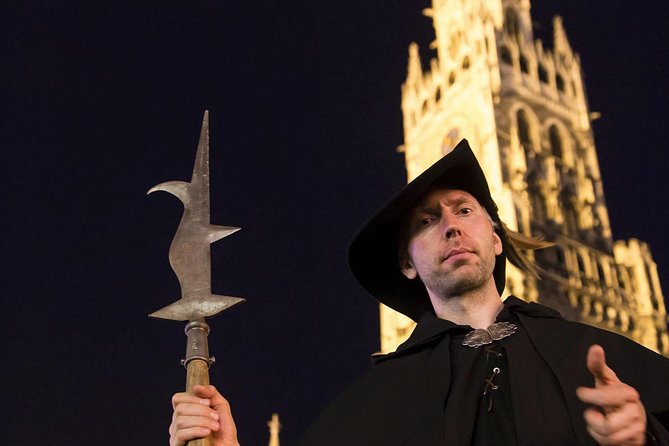
Munich at night has a different tempo. Daytime is for maps and checklists. Night is for atmosphere and angles. That’s exactly why a night watchman format works so well here: you’re walking, you’re turning corners in the dark, and your guide uses legend to connect the dots between buildings you could otherwise skim past.
This tour keeps things focused. It runs about 1 hour 30 minutes, and it stays inside Munich’s old-town core—ending within the area between Isartor, Sendlinger Tor, Karlstor, and Odeonsplatz. That means you’re not spending half your time commuting across town. You’re seeing the right places, in the right order, with just enough storytelling to make the streets feel personal.
You can also read our reviews of more evening experiences in Munich

Marienplatz meeting point and the walking rhythm to expect
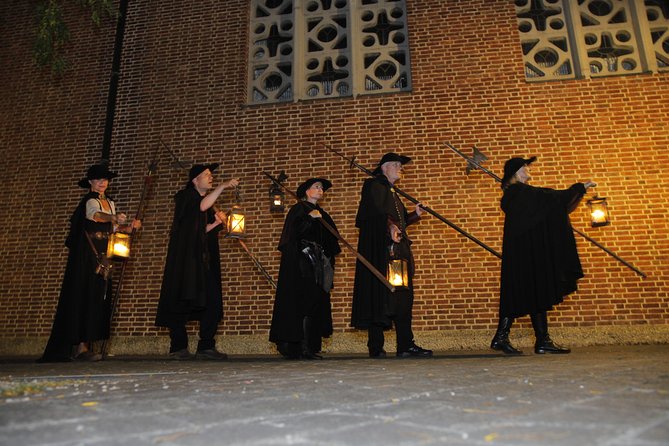
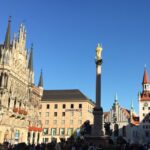
You start at Marienplatz 22 (Mariensäule) and finish at Odeonsplatz (Odeonspl.). The route is designed as a straight-line feel through the historic center, with a set stop at roughly 20 minutes each. In practice, that gives you time to do two things: listen closely while you’re moving and glance around without feeling rushed.
The tour is also built for real city logistics. It’s near public transportation, and the company uses a mobile ticket, which is helpful if you don’t want to hunt for printouts. The group size is capped at 30, so you should find it easier to hear the guide than on huge sightseeing buses.
If you’re the type who loves landmarks but hates staring at your phone, this format is a win. You get the “where am I?” and the “why does this matter?” in the same hour-and-a-half.
Old Peter after dark: the devil, the crooked tower, and the old cemetery
The first stop is St. Peter’s Church, often called Old Peter, Munich’s oldest church. This is where the tour shifts from sightseeing to storytelling fast. The guide connects a legend to the tower itself: the night watchman saw how the devil once fought with him at the top of Old Peter’s tower, and that’s why the tower is said to be slightly crooked even today.
Then you move into the old cemetery area. This part is less about architecture and more about how death and memory were handled in earlier Munich—funeral customs in the past, plus a question the tour raises about a saying that stinks to heaven. Even if you don’t know the origin already, you’ll leave with a better sense of how folk explanations attach themselves to the everyday realities of city life.
What I like here: Old Peter is a huge sight in Munich, but the legend makes it feel local. You’re not learning history in the abstract. You’re learning why people pointed at this tower and told stories about what happened there.
A possible drawback: this stop can feel more “talk” than “look.” If you’re hoping for lots of independent wandering, you may want to add extra time nearby on your own after the tour ends.
Old Town Hall and the 12th-century moat vibe
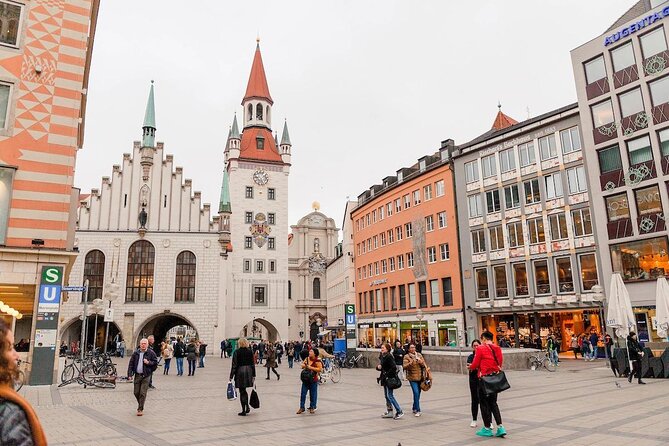
Next up is Old Town Hall. Before you reach the big landmark, you cross an old city moat from the 12th century and go toward the old city gate at the town hall area. That’s a clever way to get you thinking like a medieval person: city walls weren’t just scenery. They were boundaries, defenses, and daily reality.
The tour also adds one more legend layer here—mentioning a bean counter as an acquaintance of the night watchman. It’s the kind of story detail that nudges you to look at civic buildings with more imagination. You start thinking about who had power, who collected what, and how the city ran when it wasn’t focused on tourism.
Practical note: this segment is short—about 20 minutes—so you won’t get a slow-photo tour. You’ll likely hear the main story beats, then move on. If you’re a slow walker, keep the pace in mind and don’t plan to linger at every doorway.
Alter Hof: the duke’s first castle and the tension of the past
At Alter Hof, the tour takes you along the old city wall into Burgstraße. This is where the history label becomes more than a label: Alter Hof is described as the first castle of the Bavarian dukes in Munich.
Before you reach the main feel of the place, you pass sites linked to repression—the torture chamber and city prison. The tour doesn’t linger in a creepy way. Instead, it uses these passing moments to frame what power looked like during earlier rule. City centers weren’t neutral. They were control points.
Then the night watchman story escalates. The guide says he was present at the Impler uprising—and that the citizens managed to chase the duke out of his castle on short notice. This is one of those narratives that makes you think about ordinary people as drivers of change, not just spectators to rulers.
What you’ll enjoy most: walking a wall line while a guide connects it to a specific political conflict. It helps your brain map the city in layers—street, wall, palace, and uprising—all in one short stretch.





Frauenkirche by narrow alleys and Petronella Stromairin’s tale
Now the tour shifts into a classic “wait for it” moment. The guide leads you through narrow dark alleys and you suddenly find yourself standing directly at Frauenkirche, Munich’s cathedral.
Here the story lands on a weathered tombstone tied to Petronella Stromairin, described as an old but rich widow. The tour connects her tombstone to a specific moral drama: she didn’t let the young men who pursued her inheritance cheat her out of it.
Even if you’re not usually moved by tombstone legends, this one tends to click because it mixes a personal figure with money and trust—things that feel modern even when the setting is centuries old. It also gives you a reason to slow down at a cathedral that you might otherwise admire from the outside and keep moving.
The key trade-off: you’ll likely spend less time in “independent” mode at Frauenkirche, because the story thread is doing the heavy lifting. So if you want cathedral photos, plan to come back later, or be ready to capture your favorite angle quickly before the group moves on.
Zeughaus and the medieval armory still holding halberds
For the final stretch, you follow the Dultstraße to Dultplatz, which is noted as today’s Jakobsplatz. Then you reach Zeughaus, the medieval armory of Munich. This stop is practical in a great way: it’s not just a legend stop. The tour points out that halberds and other armaments are kept there to this day.
So you get two experiences in one: the night watchman storyline, plus a real anchor object that matches the medieval theme. Your brain links the “why were people afraid?” to the existence of actual weapons stored in a city facility. That kind of grounding makes the whole night watchman concept feel less like pure theater and more like guided framing.
To close, the night watchman sings a farewell song with a promise of safety and a wish for a long sleep. The words go along the lines of people being safe, going home without worries, and the watch continuing through the dear long night.
Price and timing: what $17.44 buys you in real Munich walking time
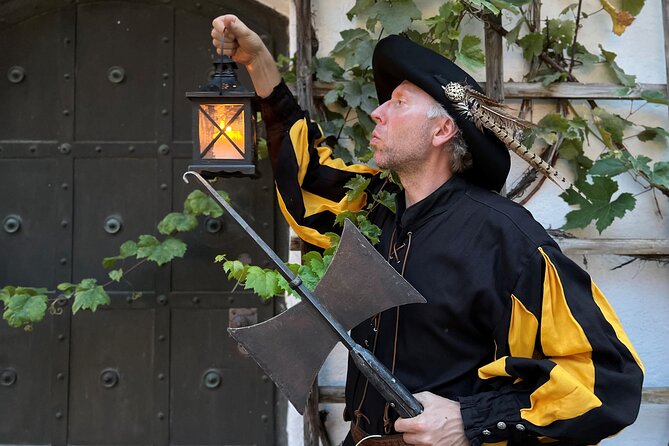
At $17.44 per person for about 1.5 hours, this tour is priced like a small, focused experience rather than a full-day sightseeing plan. The big value isn’t only the price tag—it’s the routing. You stack multiple major landmarks into one continuous walk, starting at Marienplatz and finishing at Odeonsplatz, without making you zigzag across town.
The itinerary also marks each stop as admission ticket free. That matters because the true cost of sightseeing in a city can balloon once you add ticket after ticket. Here, you’re mostly paying for the walk and the stories, while the stops themselves are presented as free.
It’s also a tour you can realistically fit on a first evening. Being listed as something many people book about 16 days in advance suggests it’s popular enough that planning ahead helps. If you’re going in peak season or on a weekend, I’d treat it like a “book it when you decide Munich is your plan” situation.
Who this tour fits best
This tour suits you if you like:
- walking and listening more than museum-hopping
- legend-driven sightseeing tied to exact places
- a tight group that stays under 30 people
- a night plan that starts and ends in a convenient old-town area
It may be less ideal if you:
- only want English without any uncertainty (double-check the language before you pay)
- expect a food or drink stop as part of the itinerary
- need lots of time to wander alone at each landmark
Should you book On the road with the night watchman?
I think it’s a solid choice for first-timers who want Munich to feel more like a city with stories and less like a list of buildings. The time is right, the route is efficient, and the stops are chosen for maximum “oh, that’s what I’m seeing” moments—especially Old Peter’s crooked-tower legend and the Frauenkirche stop with Petronella Stromairin’s tombstone.
If you can’t handle language uncertainty, confirm what language the guide uses before booking. And if you love warm winter drinks, don’t rely on the tour for that. Plan your glühwein or hot drink on your own nearby before or after.
If those two points don’t bother you, this is an easy yes for an evening in Munich’s old town.
FAQ
How long is the night watchman tour?
It lasts about 1 hour 30 minutes.
Where does the tour start and end?
It starts at Mariensäule, Marienplatz 22, 80331 München and ends at Odeonsplatz (Odeonspl.), 80333 München.
Is the ticket mobile?
Yes. The tour uses a mobile ticket.
How many people are in the group?
The tour has a maximum of 30 travelers.
Do I need tickets for the stops?
The itinerary indicates admission ticket free at the listed stops.
Is the tour near public transportation?
Yes, it’s near public transportation.
What is the cancellation window?
Free cancellation is available up to 24 hours before the experience’s start time for a full refund.