REVIEW · BEER HALL & BREWERY TOURS
Munich: Bike Tour with Beer Garden Break
Book on GetYourGuide →Operated by Fat Tire Tours - Munich · Bookable on GetYourGuide
Four hours, a bike, and beer history. This guided Munich ride stitches together big sights, river views, and a beer garden break—plus stops tied to the city’s darker WWII-era past. You’ll glide through wide streets, pause for photos, and hear how Munich became what it is today, from grand squares to the Isar’s legendary river surfers at Eisbachwelle.
Two things I really like: the easy riding (comfortable bikes, flat-feeling route, beginner-friendly pace) and the storytelling from guides like Dan, Karl, Rob, Ludwig, Arthur, and Kevin—each one turning landmarks into real context. One potential drawback: the tour runs rain or shine, and in colder months the beer garden-style stop can shift, with some groups ending up with an alternative food option when the usual setup isn’t fully operating.
In This Review
- Why a Munich bike tour feels like the smart way to see the city
- Key highlights you’ll remember from the ride
- Getting started at Fat Tire Tours, Karlsplatz 4
- The first photo-stop loop: squares, museums, and quick “yes, that’s the place”
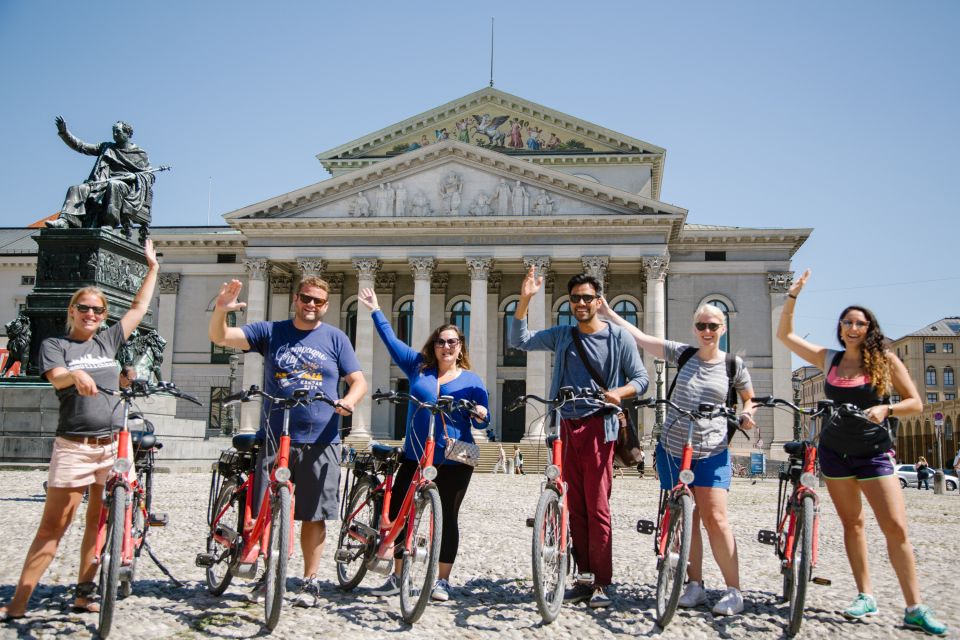
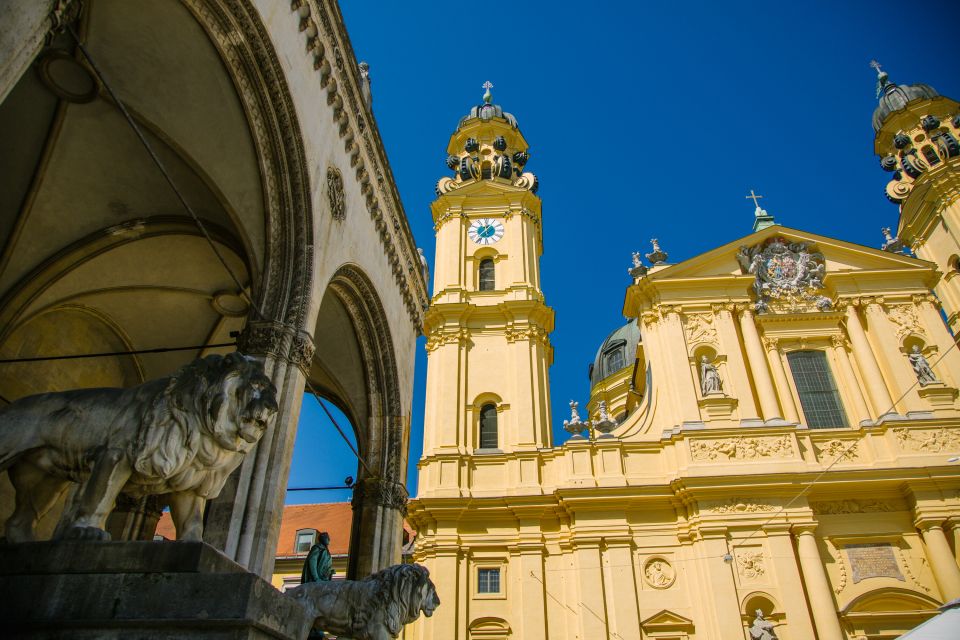
- Odeonsplatz and the Munich Residenz zone: grandeur with a hard edge
- Hofgarten pauses: a quieter reset between busy stretches
- The English Garden beer break by the Chinese Tower
- Eisbachwelle: where surfers ride a city wave
- Maximilianeum, Viktualienmarkt, and the everyday Munich stops
- Ohel Jakob Synagogue: a quick look that adds important context
- Bikes, pace, and guide style: what you’re really paying for
- What to bring (and what can ruin your day)
- Who this Munich tour is best for
- Should you book this Munich beer garden bike tour?
- FAQ
- How long is the Munich bike tour with a beer garden break?
- Where do I meet for the tour?
- What’s included in the price?
- Is the beer and food cost included?
- What language is the tour guide?
- Does the tour run in rain?
- Is this tour suitable for everyone?
Why a Munich bike tour feels like the smart way to see the city
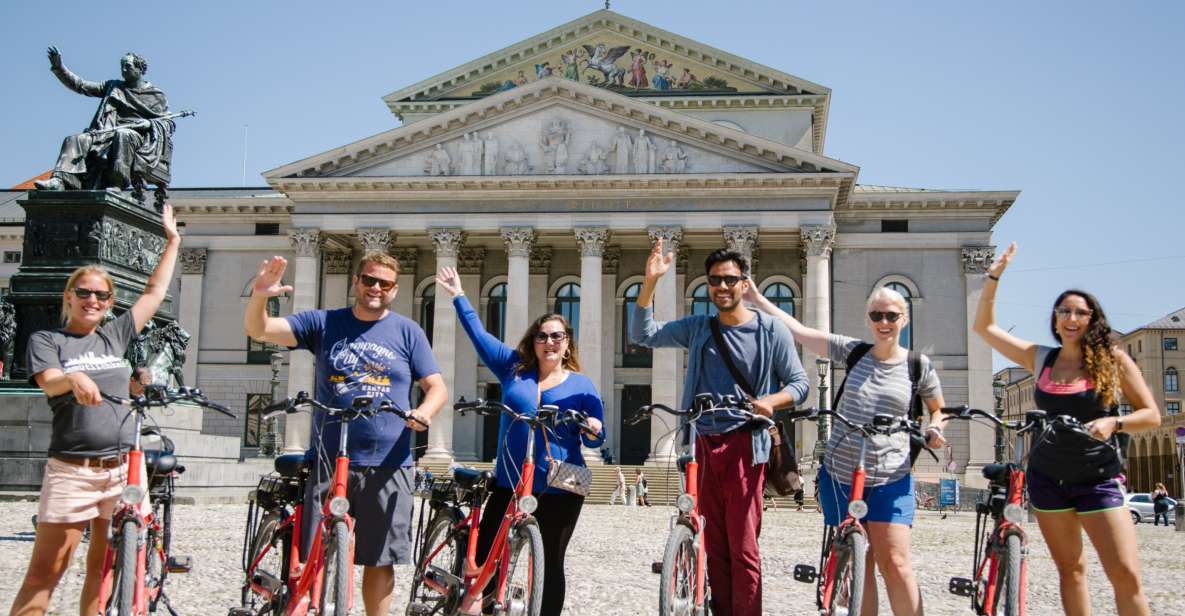
Munich is one of those places where it’s easy to “collect” sights—but harder to understand them. This tour works because it’s built for flow: short photo stops, real talking time with your guide, and then back on the bike before your legs (or attention span) get bored.
What you’re really buying for your $47 price is time, guidance, and coherence. In four hours you get pulled through major areas you’d otherwise slice up across different days. And because the pacing is relaxed, you can focus on what matters: how places look now, and why they mattered then. Expect both the classic Munich vibe and harder historical layers, without it turning into a lecture marathon.
If you’re the type who likes to connect dots—art to architecture, squares to power, parks to local culture—this format fits you.
Key highlights you’ll remember from the ride
- English Garden and the Chinese Tower area: a long enough break to actually eat, drink, and breathe
- Eisbachwelle (river surfers): see the Isar’s famous wave in a way that walking tours usually miss
- Odeonsplatz to Bavaria’s political center: quick stops that are built for stories, not just selfies
- Museum stretch along Königsplatz: a mix of classic collections and modern contrast
- Viktualienmarkt stop: a food-market moment that makes the whole tour feel local
You can also read our reviews of more food & drink experiences in Munich

Getting started at Fat Tire Tours, Karlsplatz 4
You meet at Fat Tire Tours at Karlsplatz 4, near the Karlsplatz (Stachus) area. From the Stachus McDonald’s with your back to the city gate, turn right along Sonnenstraße. After about 50 meters, you’ll see the shop on the right-hand side in the courtyard of Karlsplatz 4.
This part matters more than it sounds. A bike tour lives or dies on a smooth start: if you’re late, you’ll scramble. If you arrive early, you’ll usually have time to get kitted up—bike, helmet, and any rainy extras from the shop if needed. One guide team even noted the process can take a short moment while everything is sorted, so give yourself a little buffer.
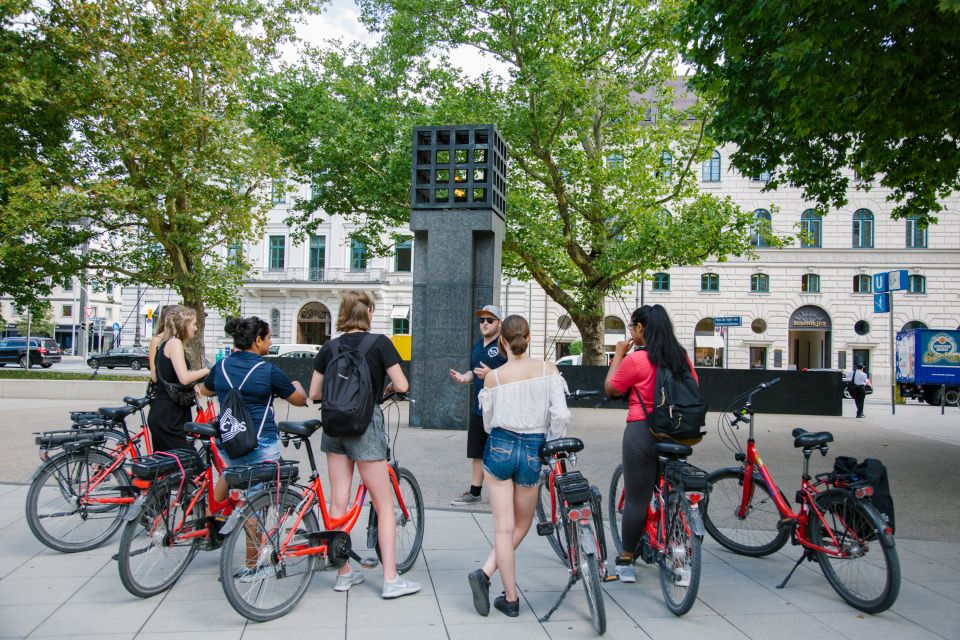
Once you’re moving, the group stays together and your guide keeps you pointed the right way through Munich’s mix of quieter lanes and busier streets.
The first photo-stop loop: squares, museums, and quick “yes, that’s the place”
The opening stretch is all about orientation. You’ll make short stops for photos and context, so you leave with the sense that you know where you are—even if you’re seeing a lot.
Expect to pass by and briefly stop at:
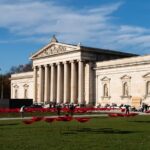
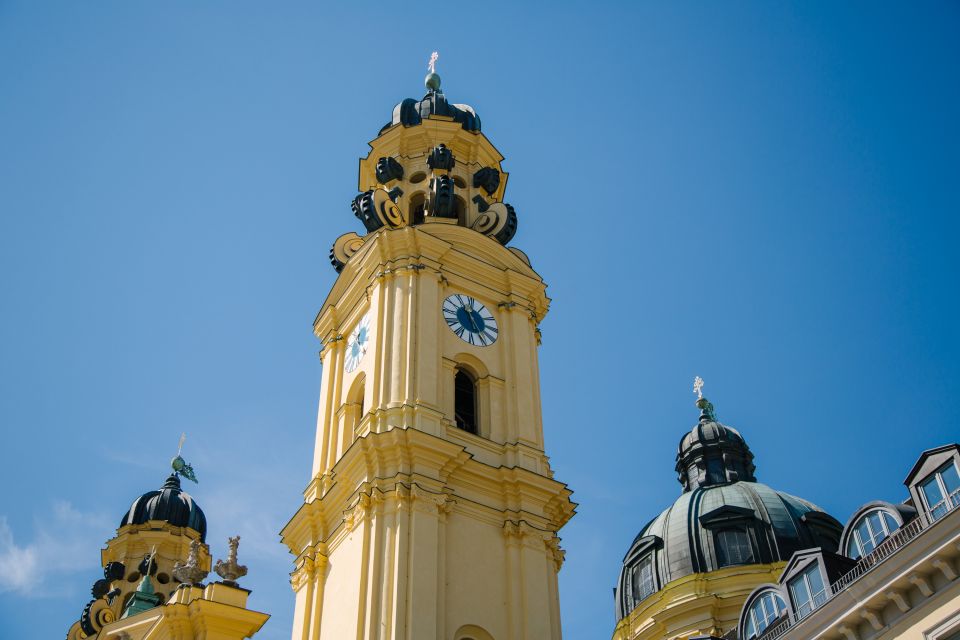
- Karolinenplatz and Königsplatz (classic urban squares with strong visual character)
- Alte Pinakothek and Pinakothek der Moderne (art-world landmarks that help you understand Munich’s cultural balance)
- Siegestor and then onward toward the big central squares
These stops are short—think five minutes kind of short. The upside is you won’t spend half the tour parked while everyone else waits. The downside is that if you wanted to go inside museums, this isn’t that kind of tour. This is about seeing the city’s “greatest hits” from the street and learning what makes each location matter.
And since Munich is generally flat in the areas you’ll cover, your energy stays where it should: for the stories and the food break later.
Odeonsplatz and the Munich Residenz zone: grandeur with a hard edge
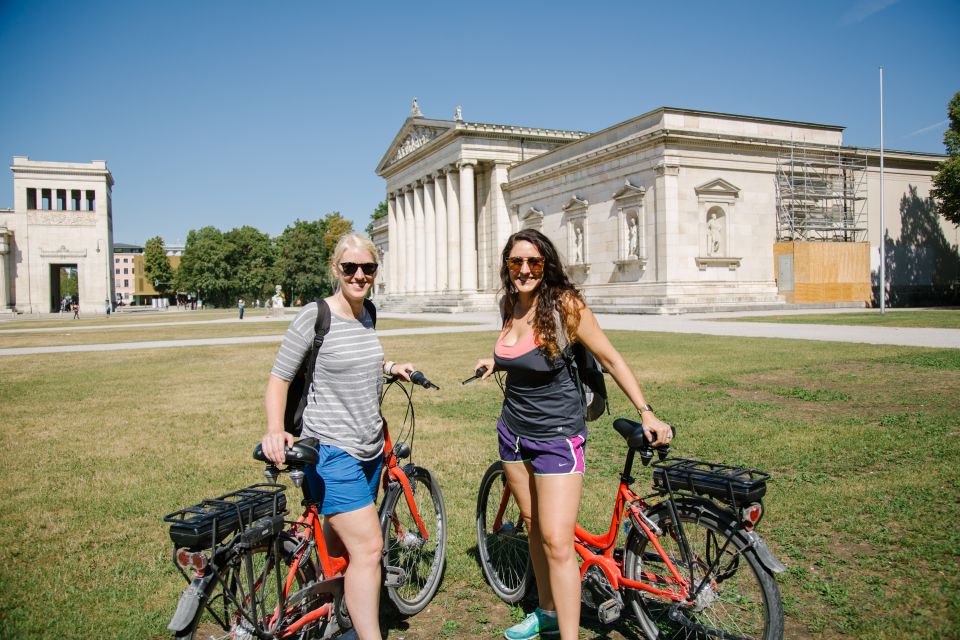
From the museum-and-squares zone, the tour heads toward central Munich. Stops here are memorable because they’re not only pretty; they connect to the city’s power structures and political eras.
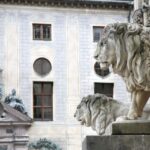
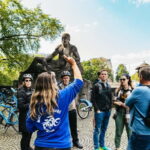
You’ll reach places like Odeonsplatz, and you’ll also be shown the area around the Munich Residenz and nearby Hofgarten. These are the kinds of locations where Munich’s official face shows up clearly in architecture—then your guide adds the uncomfortable layers.
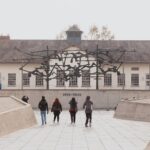
The tour specifically includes time for Munich’s darker past. That means you’ll hear about the origins of the Nazi party and you’ll see original-era architecture tied to that history. Guides also discuss resistance and explain how different parts of society responded. It’s not presented as shock value. It’s presented as “this is how places get used by whoever controls the story.”
If you prefer history to stay in museums, this may feel like a lot. If you want history tied to real streets, it’s a strong reason to book.
Hofgarten pauses: a quieter reset between busy stretches
Hofgarten shows up as a photo-stop moment before you head toward the big park area. This is a small thing that actually helps your day.
In a city bike tour, a little breathing room is gold. Hofgarten is the kind of place where the scenery gives your brain a break after central streets and political narratives. It’s also where you’re reminded that Munich isn’t only monuments—it’s greenspace and daily life, too.
You won’t have time to wander for hours here. But you’ll feel the shift: from “big landmarks” mode to “Munich lifestyle” mode.
You can also read our reviews of more cycling tours in Munich
The English Garden beer break by the Chinese Tower
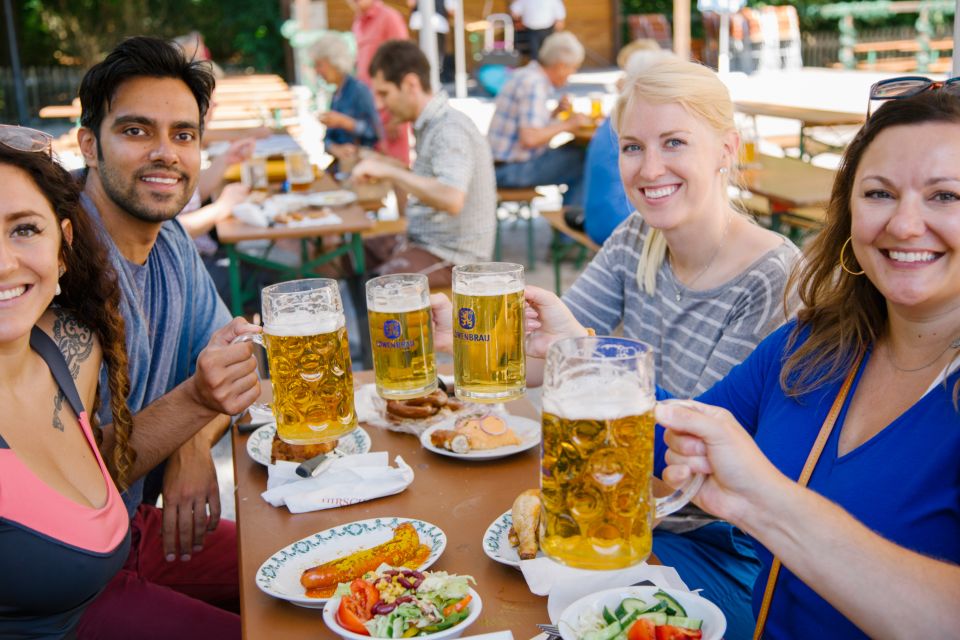
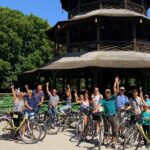
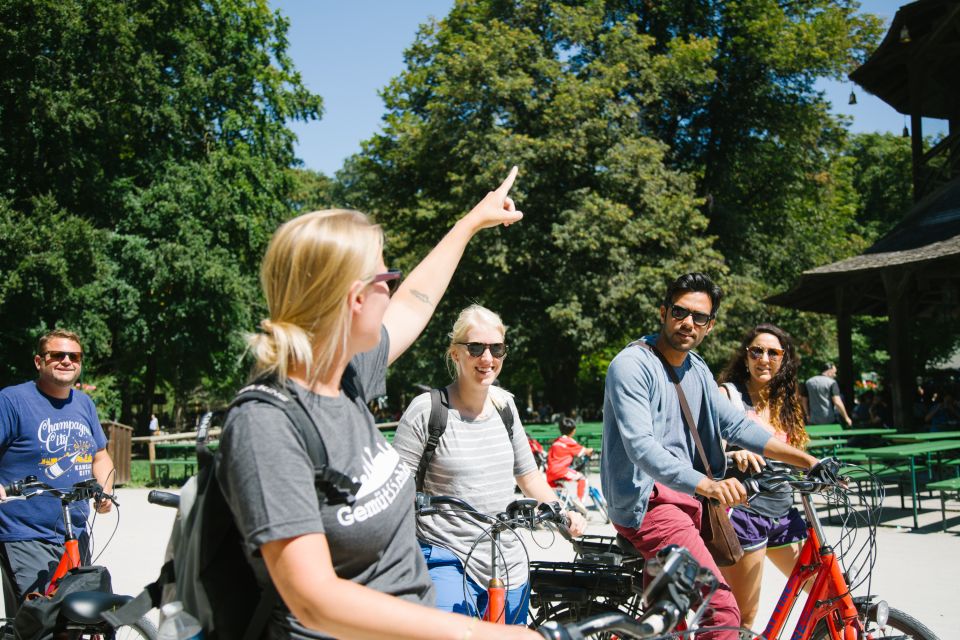
If you came for the classic Munich experience, this is where it happens. The tour makes a break time in the English Garden area near the Chinese Tower. This is the long stop, with time for beer and snacks, street food, and a bit of free time.
A few practical notes:
- The stop is designed for eating and drinking, but the cost of drinks and food isn’t included. Plan on paying for your own beer/snacks.
- In colder or off-season weather, the vibe can change. One group reported that the beer garden option wasn’t available the way it is in warmer months, and they continued using an alternative setup nearby when the usual one wasn’t open yet.
Even so, the English Garden stop is still a highlight because you’re not just consuming. You’re watching Munich slow down. If you’ve never seen the scale of Munich’s public park life, this stop makes it obvious.
Eisbachwelle: where surfers ride a city wave
Next up is Eisbachwelle, the famous spot where surfers ride the river wave in the middle of the park. You’ll stop here and watch, which is a lot more fun than it sounds.
The reason this works on a bike tour: you arrive with momentum, and you don’t feel stuck. You get a proper viewing moment, then you’re back on the bike before your “waiting” tolerance runs out.
For first-timers, it’s also one of those “only Munich” scenes. People gather, the wave keeps doing its thing, and you get to see how Munich turns even a utilitarian river into something playful.
If you’re taking this tour in winter, expect different energy than in summer. But the point remains: this is a real local spectacle.
Maximilianeum, Viktualienmarkt, and the everyday Munich stops
After the park and surfers, the tour shifts again into city texture—major buildings mixed with market life.
You’ll see Angel of Peace (another short photo stop), and then Maximilianeum. This keeps the tour from becoming one long park day. You get monument-scale architecture, but still within the easy rhythm of the bike route.
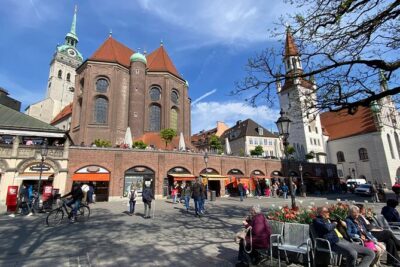
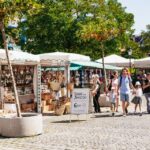
Then comes Viktualienmarkt, the stop built around food-market energy. This is where the tour starts to feel like you’re not just sightseeing—you’re sampling how people actually live and eat in Munich.
A couple reasons this market stop is smart:
- It breaks up the historical weight with something sensory and immediate.
- Even if you don’t buy much, you’ll leave with better instincts for where to go on your own later.
Ohel Jakob Synagogue: a quick look that adds important context
The tour includes a photo stop at Ohel Jakob Synagogue. This matters because it broadens Munich beyond the most obvious narratives.
You get a visual moment, and your guide includes context appropriate to the day’s theme. The stop is brief, so don’t expect a full building tour. But as part of a four-hour overview, it helps the city feel more complete.
Bikes, pace, and guide style: what you’re really paying for
At $47 per person for about four hours, the value is mostly about what’s included and what you don’t have to figure out.
Included items:
- Guided bike tour
- Bike and helmet
- Sunscreen
- Optional children’s bikes are available if you check availability after booking
- A stop for beer and snacks (with costs not included)
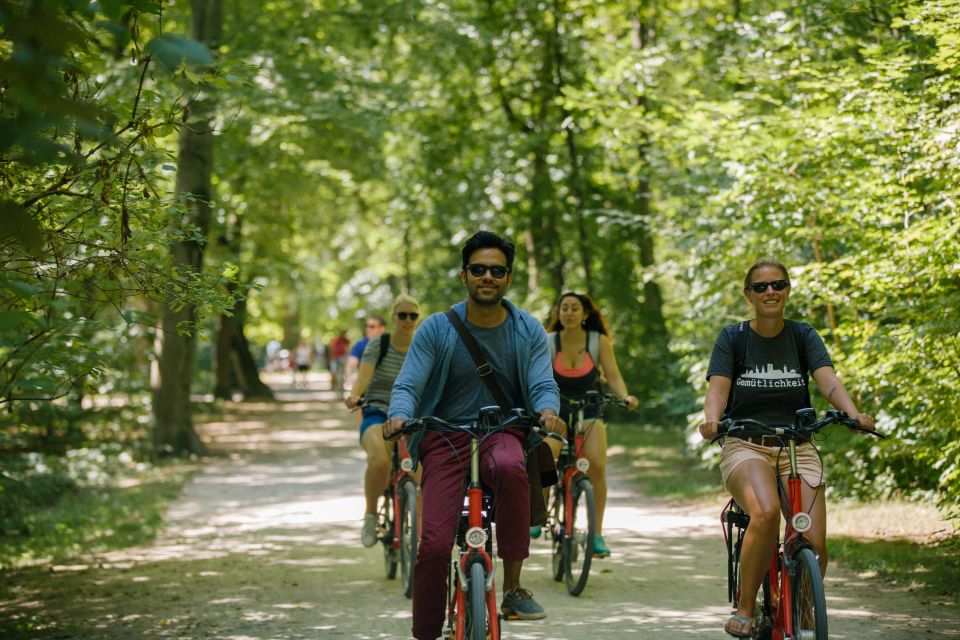
The bigger value is how the guide runs the day. Many guides in this tour series are praised for being friendly, relaxed with timing, and able to keep the history engaging. I also like that guides can adapt if weather changes—one group described deciding how many stops to make due to rain, and even cutting the route short to warm up and get back early.
On the bike setup side: you might see all-terrain tires and practical rain protection like splash guards, based on how the tour handled cold wet days. And while e-bikes are available, the city route is generally flat enough that non-electric bikes can feel fine for most people who aren’t afraid of normal urban cycling.
One last pace note from real experience: because the tour checks everyone in and sorts out the guide/lead pairing, the first few minutes can feel a little slow. That’s normal for a well-run outfit, not a red flag. Once you’re rolling, things usually feel smooth.
What to bring (and what can ruin your day)
Bring:
- Comfortable, closed-toe shoes
- Rain gear (the tour runs rain or shine)
- Anything you need for comfort in cool weather
Why this matters: bike tours punish poor footwear fast. And if the weather turns, you’ll want to stay warm enough to enjoy the English Garden break, not just endure it.
One helpful detail: on rainy days, some visitors have been able to buy rain ponchos in the shop before the tour. Even so, don’t rely on that being your plan—show up with your own rain layer.
Who this Munich tour is best for
This is a strong fit if you:
- Want a short, high-sight-density day in Munich
- Like history tied to streets, not just inside walls
- Feel comfortable riding a bike in a city environment
- Want the English Garden experience without planning it all day yourself
It’s less ideal if:
- You’re pregnant (the tour isn’t suitable)
- Your fitness level is low (the tour isn’t suitable for low fitness)
- You hate any kind of road cycling—even when routes feel manageable and safe with guides
It can work well for mixed groups, including families with kids, as long as everyone is comfortable on the route. But if you’re worried about traffic stress, be honest with yourself and plan accordingly.
Should you book this Munich beer garden bike tour?
I think you should book if you want a four-hour overview that hits the places you’ll keep hearing about—Odeonsplatz, Munich’s major art landmarks, English Garden, and Eisbachwelle surfers—while also getting the harder historical context in a way that stays readable.
Skip it if you’re only interested in one thing (like museums only, or beer gardens only) or if weather extremes will ruin your mood. The tour runs rain or shine, and the food-and-drink setup can shift depending on season.
If you’ve got one day in Munich and you want to get your bearings fast while still learning something real, this is an efficient, fun choice—and the beer garden break is a good reward at the point where you’ll actually appreciate it.
FAQ
How long is the Munich bike tour with a beer garden break?
It runs for about 4 hours.
Where do I meet for the tour?
Meet at Fat Tire Tours, Karlsplatz 4. It’s near the Karlsplatz (Stachus) McDonald’s; from there, turn right on Sonnenstraße and go about 50 meters into the courtyard area for Karlsplatz 4.
What’s included in the price?
The tour includes a guided bike tour, a bike and helmet, and a sunscreen item. It also includes a beer and snacks stop, but the cost of drinks and food is not included.
Is the beer and food cost included?
No. The tour includes a stop for beer and snacks, but drinks and food cost extra.
What language is the tour guide?
The live tour guide speaks English.
Does the tour run in rain?
Yes. The tour runs rain or shine, so bring rain gear and dress comfortably for the weather.
Is this tour suitable for everyone?
It is not suitable for pregnant women or people with low level of fitness. Closed-toed shoes and comfortable clothing are recommended.