REVIEW · GHOST & TRUE CRIME TOURS
Munich: Raven Black Witches and Executioners Walking Tour
Book on GetYourGuide →Operated by DIE STADTSPÜRER® · Bookable on GetYourGuide
Witches and hatchets in central Munich. This walking tour tracks Munich’s darker threads through the southern old town, using real streets and landmark corners as the backdrop for stories about witches, executioners, and the people society tried to forget. I like the tight 105-minute pace, and I like that it’s anchored at famous stops like the Frauenkirche and Sendlinger Tor. One thing to consider: it’s tour in German, so you’ll want to be comfortable with that.
The tone is spooky-history without getting academic-heavy. You’ll hear about grim jobs from the middle ages, lost souls tied to executions and witchcraft, and the kind of fear that was part of everyday life when death wasn’t something you scheduled around. There’s also a small gift included, which is a nice touch for a short tour like this.
The route also loops back to the start, so you don’t have to worry about ending somewhere far from where you began. And it’s marked wheelchair accessible, which matters in a city where some walks get awkward fast.
In This Review
- Key things I’d watch for on this walk
- Walking from Frauenkirche to Sendlinger Tor in a 105-minute thriller
- What makes the stories different: witches, executioners, and the everyday fear of death
- Hackenviertel and Hofstatt: the neighborhood tied to shady trades
- Angers quarter and cursed places you’ll hear about at street level
- German-language tour: how you’ll handle it (and why it can still work)
- Price and value for $25 in Munich’s old town
- Who should book Raven Black Witches and Executioners
- Should you book this witch-and-hangman walk
- FAQ
- What language is the tour in?
- How long is the Munich Raven Black Witches and Executioners walking tour?
- Where does the tour start?
- Where does the tour end?
- How much does it cost?
- What’s included in the ticket price?
- Is the tour suitable for children?
- Is the walking tour wheelchair accessible?
- Can I cancel for a full refund?
- How do I know what time the tour runs?
Key things I’d watch for on this walk
- Frauenkirche starting point: You meet at the main entrance on Frauenplatz, between the two towers.
- 105 minutes on your feet: Short enough to fit your day, long enough for a real story arc.
- Hackenviertel + Hofstatt focus: The shady inner-city areas tied to the sort of work respectable people avoided.
- Executioners, grave-diggers, and ravens: The tour uses those images to shape the mood at specific street-level locations.
- German-language tour: It’s not translated live; your comprehension will shape how much you enjoy it.
- Back to the meeting point: Easy logistics if you’re hopping between sights.
Walking from Frauenkirche to Sendlinger Tor in a 105-minute thriller
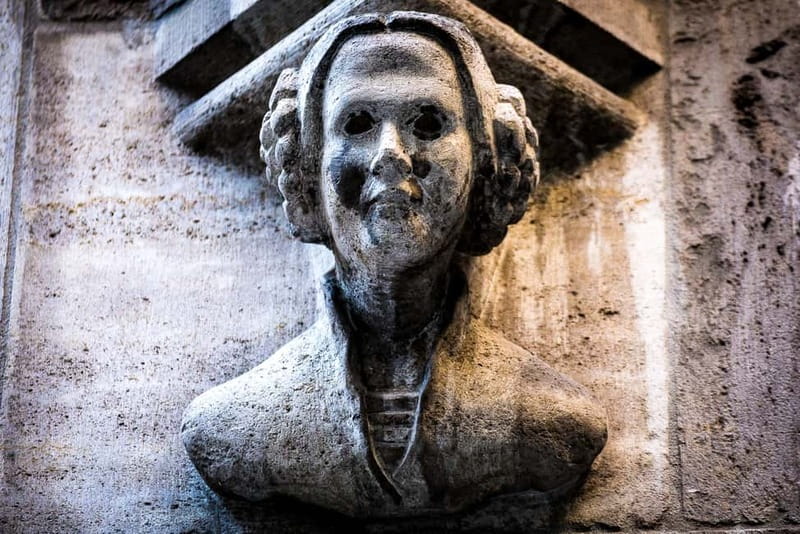
This is a short tour by design. At about 105 minutes, you get enough time to cover a meaningful stretch of the southern old town without turning into an all-afternoon ordeal. That matters for a walking tour with dark subject matter—if it dragged on, the mood would likely flatten. Here, the pacing stays sharp.
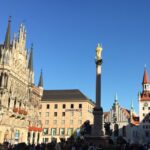
The route starts in front of the Frauenkirche (Frauenplatz), right at the main entrance between the two towers. That’s a good choice because it’s a recognizable, central meeting point—easy to find, and easy to orient yourself around afterward. Expect to move through the city center streets, guided from stop to stop with the theme of fear, punishment, and the characters who lived on the edge of respectability.
You’ll also end back at the meeting point. I really like that for practical reasons. You can plan a quick coffee or dinner right after, without trying to figure out how to reach your next place from an unknown corner.
One caution: you’re out for more than an hour, and the tour is themed around executions, witches, and the damned. It isn’t explicit about graphic details in the information you’re given, but it is built to lean into grim imagery and “dark secrets.” If that kind of atmosphere doesn’t sit well with you, you’ll want to check your own tolerance.
You can also read our reviews of more walking tours in Munich



What makes the stories different: witches, executioners, and the everyday fear of death
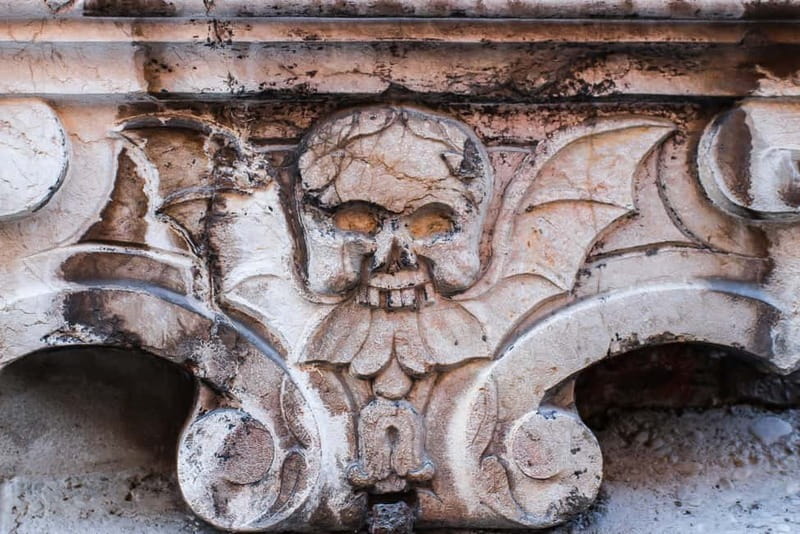
This tour isn’t just “here’s a creepy legend.” It’s a guided walk that frames death as part of daily life in earlier eras, then shows how that shaped society’s attitudes toward the people blamed, feared, or punished. You’ll hear stories about lost souls of witches and executioners and about other figures pushed to the margins.
The highlights describe a parade of characters: devils, sorcerers, and the damned. That’s not random Halloween flavor. The theme is that fear created roles and reputations—people got labeled, jobs got associated with shame, and justice could turn into spectacle. As you move through the old town, the guide connects those ideas to the streets you’re standing on.
Another angle I appreciate is the focus on “dishonest jobs” from the middle ages. That’s a reminder that history isn’t only kings and churches. It also includes the daily economy of fear: people who were employed in tasks society would rather not talk about, and people who got accused because the world needed someone to blame.
You’ll also get specific imagery used as storytelling anchors—where a grave-digger “shouldered his spade,” where ravens circled, and where executioners “whipped their hatchets.” Those details are exactly the kind of thing that makes a tour feel like a story instead of a list of plaques. You might find that once you hear those images tied to a location, the city feels more like a stage set than a postcard.
Hackenviertel and Hofstatt: the neighborhood tied to shady trades
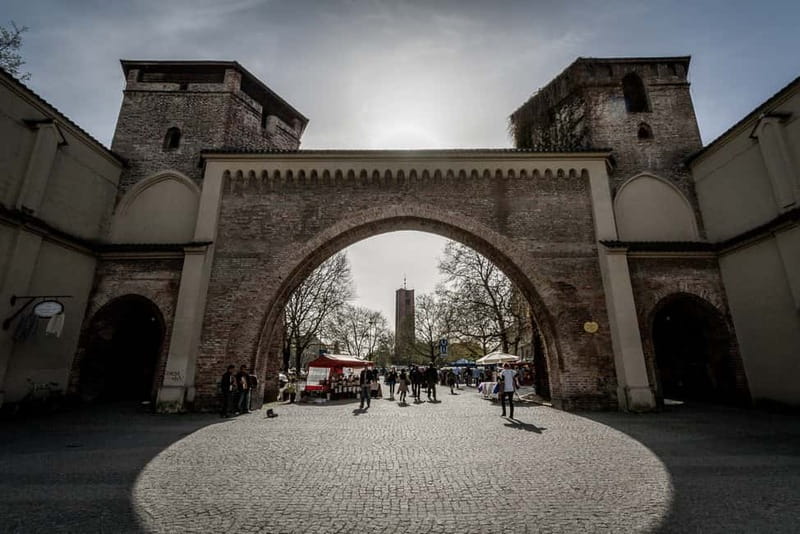
The heart of the walk is the Hackenviertel area and nearby Hofstatt. You’ll pass through the lively Angers quarter too, but the tour’s “shady characters” theme repeatedly comes back to Hackenviertel. That’s where the guide ties together the idea that some people remained on the fringes—socially, morally, or both.
What I like about this choice is that it connects theme to place. Hackenviertel isn’t presented as a generic spooky backdrop. Instead, it’s treated like a real slice of old Munich where unsafe streets and “rogue rabble” are part of the story. You’ll hear about times when “good citizens” retired for the night—an old-school way of explaining why the city’s inner lanes carried a reputation.
Hofstatt is mentioned as part of this same weaving route. Even if you don’t know the area beforehand, you’ll feel how the guide uses the street-level texture of these districts to explain why certain jobs and accusations became linked to specific corners of town.
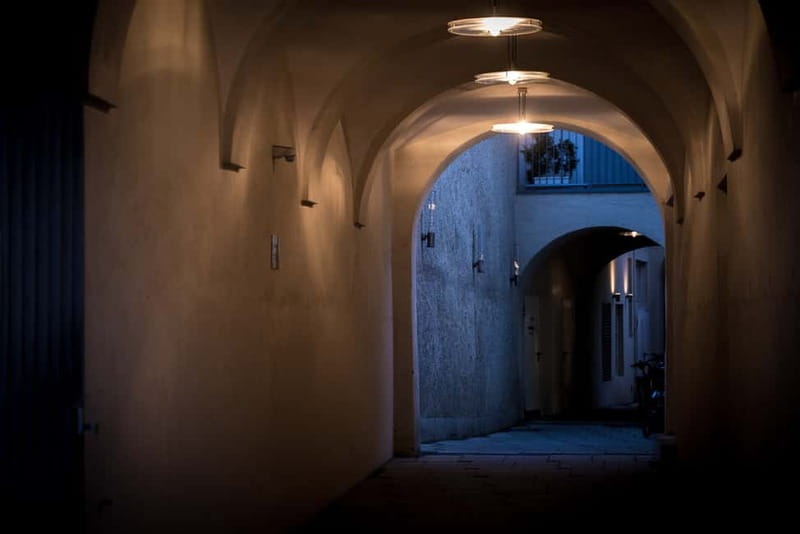
Practical note: this kind of neighborhood-focused tour can mean more turning and walking through smaller lanes rather than only wide, open squares. That’s fine, and it’s usually what makes these tours feel authentic. Just remember you’re on a schedule: it’s about 105 minutes total, so the guide can’t slow down for long photo breaks at every corner.
Angers quarter and cursed places you’ll hear about at street level
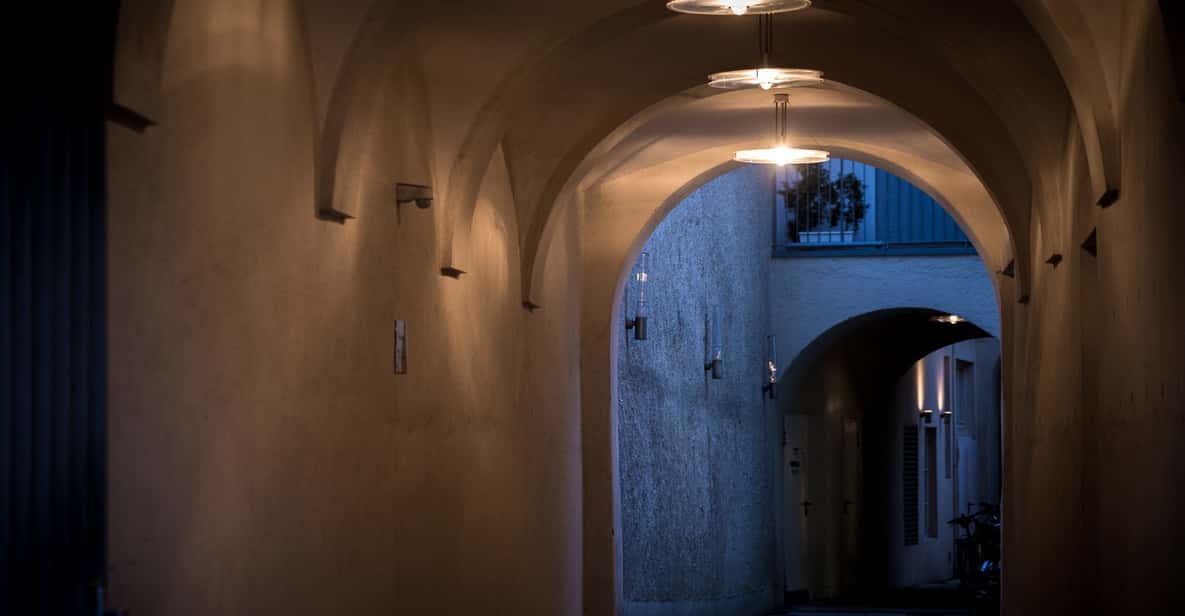
The tour includes the southern old town, and that’s where the mood does its work. The information you’re given mentions that you’ll “visit cursed places” and learn about the scary events connected to them. In other words, the guide is building a narrative of the city as a place where bad things happened—and where those memories linger in stories.
Angers quarter is specifically called out. I like that it’s not only about grim workplaces (executioners and grave-diggers). It also brings in a more “alive city at night” feel, where the streets could feel unsafe and the social boundary between respectable people and the rest of society felt hard.
You’ll likely notice how the tour’s structure supports that. You’re not told to stare at one object and move on; you’re walked from Frauenkirche toward Sendlinger Tor while criss-crossing Hackenviertel. That “moving through” is key. Cursed-place stories land better when you’re actively in the part of town being described.
And because the theme includes witches and executioners, you should expect supernatural language and dark character imagery as part of the guide’s storytelling approach. If you’re the type who likes history explained through human behavior—fear, rumor, punishment—this style tends to work well.
German-language tour: how you’ll handle it (and why it can still work)
Here’s the big practical reality: this is a German-language walking tour. The info clearly says the tour is in German with an experienced local guide.
If you only speak English, you’ll likely feel the gap at first. Still, two things you can take from the experience description and guide feedback you’re given: the guide is described as speaking clearly enough for people to understand even when German isn’t their mother language. And there’s mention of a guide named Dhruv who explained everything and answered questions.
So what should you do?
- If you can follow some German, even basics, you’ll probably enjoy it more.
- If you can’t, go with the attitude of listening for story beats, not just every word. Dark tours often have a strong visual rhythm—names, actions, places—so you can catch the meaning even when vocabulary slips.
- Bring questions. Q&A helps, because it gives you targeted moments where the guide can clarify what you missed.
One more consideration: it’s not suitable for children under 14. That’s partly because the theme is grim, and partly because the tour style is built for teens and adults who can handle the darker subject matter.



Price and value for $25 in Munich’s old town
At $25 per person for about 105 minutes, this is priced like a focused specialty tour rather than a full-day program. That’s not a bargain price in the “cheapest tour in town” sense. But it is a value price if you like story-driven city walking and you want a concentrated slice of Munich beyond the standard sights.
Why it can feel worth it:
- You’re paying for an experienced local guide and live storytelling tied to specific places in the city center.
- You get a small gift included, which is a nice bonus for a short tour.
- You don’t need extra transport—this is a walk that stays centralized, starting at Frauenkirche and returning to the same point.
Also, because it loops back to the meeting place, it fits easily into a day plan. You can pair it with other Munich stops without losing time to transit logistics.
The only true “value risk” is language. If German-only tours usually don’t work for you, you may feel like you’re paying for a story you can’t fully access. If that’s you, consider budgeting this tour as more of a mood experience than an information experience.
Who should book Raven Black Witches and Executioners
This walk fits best if you want:
- A darker, character-driven way to see Munich’s center
- A guided walk that moves from major landmarks into specific older districts (Frauenkirche to Sendlinger Tor via Hackenviertel and nearby Hofstatt)
- Stories about witches, executioners, grave-diggers, and the “dishonest jobs” tied to the middle ages—presented as human stories and social fear
It also works well if you like asking questions. The tour information emphasizes that the guide answers questions, and that interactive element is especially valuable on a German-language tour.
You might skip it if:
- You dislike horror-style storytelling or grim themes
- You strongly prefer tours in English (because the language here is German)
- You’re traveling with kids under 14
Wheelchair accessible is a plus, but you should still plan for a continuous walking schedule—about 105 minutes out in the streets.
Should you book this witch-and-hangman walk
If you’re the type of traveler who likes your destination with edges—streets that come with stories, not just views—this tour is a solid fit. The route is compact, the pacing is built for a short arc, and the theme is specific: witches, executioners, cursed places, and the social shadows of medieval Munich.
Book it if German storytelling works for you, even partially. And consider bringing a little curiosity about how rumors, fear, and punishment shaped real city life. At $25 for a 105-minute guided walk starting and ending at a major landmark, it’s an easy choice to add to a Munich day.
FAQ

What language is the tour in?
The tour is in German.
How long is the Munich Raven Black Witches and Executioners walking tour?
It lasts about 105 minutes.
Where does the tour start?
You meet in front of the main entrance to the Frauenkirche on Frauenplatz, between the two towers.
Where does the tour end?
It ends back at the meeting point.
How much does it cost?
The price is $25 per person.
What’s included in the ticket price?
You get a 1.75-hour guided tour with an experienced local guide (in German) and a small gift.
Is the tour suitable for children?
No. It’s not suitable for children under 14.
Is the walking tour wheelchair accessible?
Yes, it’s listed as wheelchair accessible.
Can I cancel for a full refund?
Yes. You can cancel up to 24 hours in advance for a full refund.
How do I know what time the tour runs?
Starting times vary, so you’ll need to check availability to see the specific start times offered.