REVIEW · DACHAU MEMORIAL TOURS
In Depth Dachau Concentration Camp Tour (Private Tour)
Book on Viator →Operated by Big Hat Tours · Bookable on Viator
Dachau demands care and clear context. This private English tour takes you through the original camp structures with scholarly WWII explanations, in a small group that feels personal. The main drawback is the site includes graphic, disturbing images, and it is recommended that children be 12 and older.
If you’re looking for a guided experience that respects the subject while still making the details make sense, this fits well. It runs about 5 to 6 hours total from Munich, with a large chunk of that time spent inside the Dachau memorial area, and you’ll meet at Marienplatz 18 near public transit.
In This Review
- Key things to know before you go
- The value of a private Dachau tour in Munich
- Getting from Marienplatz to Dachau: timing and the XXL ticket
- Who Curt Milburn is and why his approach matters
- The Dachau memorial walk: what you’ll actually see and why it’s structured
- The iPad history support: using visuals without turning it into a show
- Is 5 hours enough for Dachau?
- Price and value: what $252.31 per group really buys you
- Who this tour suits best
- Quick practical planning notes (without the boring stuff)
- Should you book this private In Depth Dachau tour?
- FAQ
- How long is the In Depth Dachau Concentration Camp private tour?
- What time does the tour start and where is the meeting point?
- Is the tour private?
- What language is the tour offered in?
- What is the price for this tour?
- Is admission to the Dachau memorial included?
- Do I need to buy an XXL partner ticket?
- Is mobile ticketing available?
- Is free cancellation available?
- Is the memorial visit suitable for children?
- Are service animals allowed?
Key things to know before you go
- Private tour, only your group: up to 15 people, so the pace can stay human.
- Original structures on the walk: you’ll see the bunker, crematorium, and gas chamber areas as part of the tour.
- Careful WWII context: the guide focuses on how and why the camp was created, how it operated, and the story of liberation.
- About 4 hours at the memorial: most of the time is spent on-site rather than rushed transit.
- English guide, mobile ticket: easy to plan around, and the ticket is digital.
- Free memorial admission, but transport ticket may apply: the Dachau memorial admission is free; an XXL partner ticket covers a short train ride and bus ride.
The value of a private Dachau tour in Munich
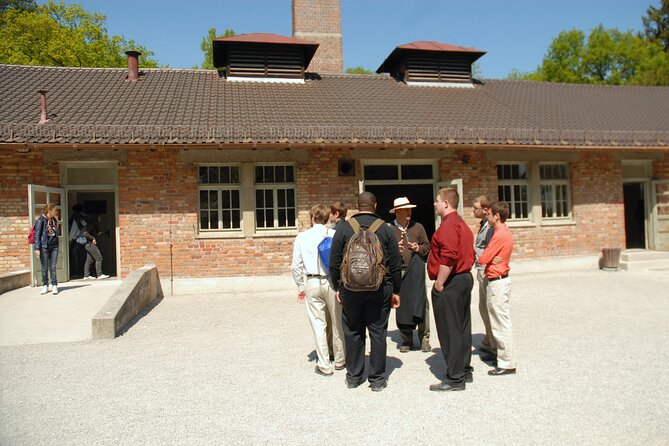
Dachau is not the kind of place where you want to be figuring things out on your own. What I like about this tour model is the private setup: only your group participates, rather than you being one of many faces in a larger crowd. With up to 15 people, you still get a shared experience, but the guide can keep your questions, pace, and attention where they belong.
The second big win is the tone. The guide is described as providing scholarly information about WWII history, and that matters here because the facts are heavy. You’re there to understand the how and why, not just to see buildings. The experience is framed around careful explanation and a professional, respectful approach, which helps you process what you’re seeing without turning it into a checklist.
The one thing to keep in mind is the subject matter itself. This memorial site includes graphic, disturbing images. If you’re bringing younger kids, the tour data recommends children be 12 and older, and it’s also suggested that young people should have some prior exposure to Holocaust history and imagery before visiting.
You can also read our reviews of more private tours in Munich


Getting from Marienplatz to Dachau: timing and the XXL ticket
This tour starts at 10:30 am at Marienplatz 18, 80331 München and returns back to the meeting point. That matters because you can anchor your day in central Munich and then plan meals and other stops around a clear end time.
Expect roughly 5 to 6 hours total, with about 4 hours at the Dachau memorial site. The remaining time is typically for getting there and back, plus a bit of guide-led orientation.
One practical detail: Dachau memorial admission is free, but you should plan for an additional XXL partner ticket (about €17) that includes a short train ride and bus ride. Admission being free is a nice cost saver, but the transport ticket is what controls your access to the final leg of the journey. If you budget for the partner ticket up front, the day stays smooth.
You’ll also use a mobile ticket, and confirmation is received at the time of booking. The tour is near public transportation, which makes the meeting point easier to reach from across Munich.
Who Curt Milburn is and why his approach matters
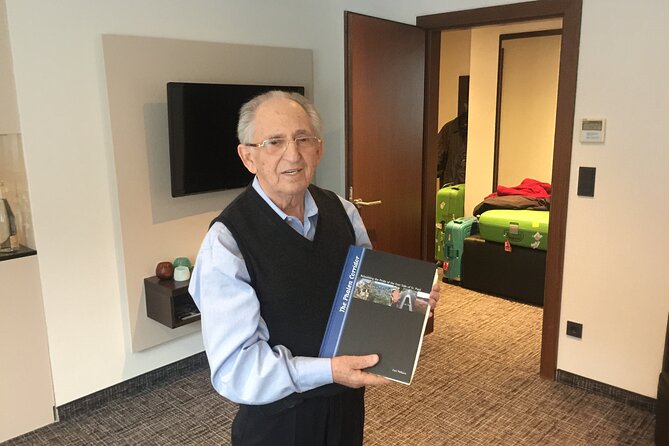
This tour is led by Curt Milburn, who’s described as having 10+ years of experience and being rated as the #1 tour guide in Munich, with 700+ glowing reviews. That kind of track record doesn’t automatically mean a better day for everyone—but for a site like Dachau, it does hint at a guide who has been doing the careful work for a long time.
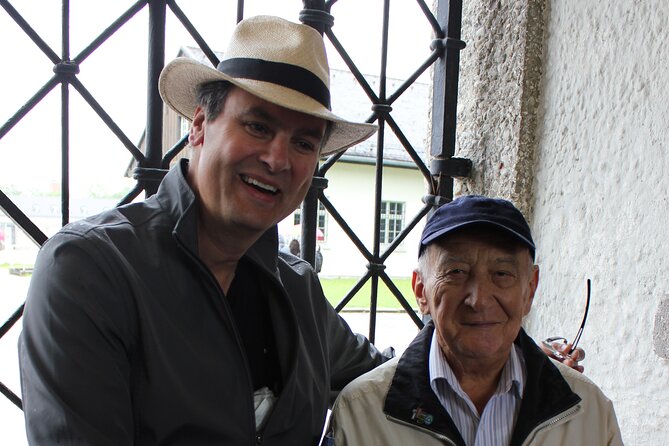
What stood out in the strongest praise is not just knowledge, but how the guide communicates it. People specifically highlighted that Curt explains Dachau’s history with clarity and respect, handling the sensitivity of the place with professionalism. That is the difference between hearing information and feeling guided through an experience that has real emotional weight.
One review also emphasized that Curt raised interesting points about Hitler’s rise to power, which can be crucial context if you want the camp’s existence to connect to the broader story. Another mentioned that Curt helped them and their family process what they were absorbing, including guiding a short Munich orientation afterward and sharing material digitally. That kind of pacing support can make the end of the day feel less like a crash into silence.
The Dachau memorial walk: what you’ll actually see and why it’s structured
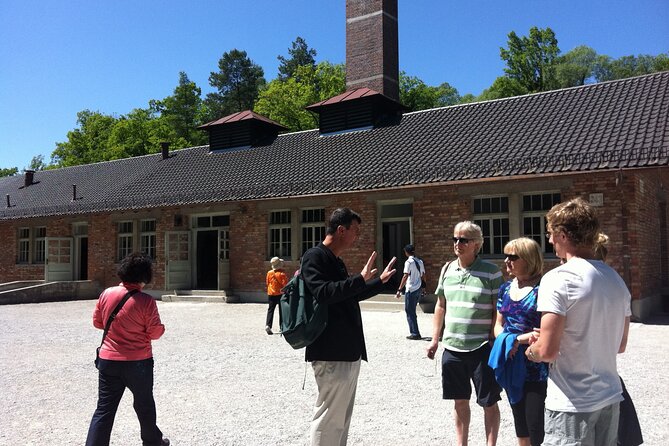
At the core of this day is the Dachau Concentration Camp Memorial Site, where the tour focuses on helping you understand how and why the camp was created, how it operated, and what happened at liberation. The experience is chilling by nature, but the structure of the tour helps you make sense of the space.
You’ll walk through original camp structures, including areas identified as the bunker, crematorium, and gas chamber. Seeing these on foot is often what turns facts into understanding. A screen can show you images, but standing in the place where the systems were carried out gives the information a different weight.
The memorial visit is scheduled for about 4 hours, which is important. Too-short visits can turn into rapid scanning. Too-long visits can become tiring in a way that stops you from absorbing. This balance gives time for explanation while still respecting the reality that the site is psychologically heavy.
A practical consideration: because the content is disturbing, you should go in ready to slow down. If you’re someone who processes better with pause moments, a private group setup can support that. If you get overwhelmed quickly, consider going mentally prepared for that possibility, especially at the structures connected with atrocities.
The iPad history support: using visuals without turning it into a show
Before you reach the memorial area, you’ll get an iPad as part of the tour experience. The description says the guide will put an iPad in your hands with hundreds of films and images covering over 1,000 years of European history.
That might sound like a lot, but the point seems to be context and contrast. When you’re staring at 20th-century horrors, it helps to understand the longer arc around the era without losing your focus on the main event of the day. The iPad can also help if you want something you can refer back to when the emotional intensity starts to blur details.
One more way this can help: an iPad tool can make the explanations feel less abstract. Instead of only hearing, you may be able to connect what the guide says to visuals in real time. And because the content is digital, it also suggests a more flexible learning experience than a standard lecture.





Is 5 hours enough for Dachau?
For a place as large and emotionally charged as Dachau, “enough” depends on what kind of visitor you are. This tour is designed around a 5-hour camp experience within a 5 to 6-hour total day. That gives you a guided route through the memorial structures without leaving you in a situation where you’re wandering and missing key interpretive stops.
If you’re the type who likes to read, reflect, and then re-read, you might find yourself wanting more time after the tour. But the guided structure usually helps you avoid the common problem of spending energy trying to understand what you’re looking at while you’re already emotionally affected.
On the flip side, if you’re the type who wants to get in, see the essentials, and leave with a framework for understanding, this duration is a realistic match. The memorial segment being about 4 hours signals that the tour isn’t just a quick pass-by.
My advice: plan a calm day around it. Dachau doesn’t end when the tour ends. The memorial experience has a way of staying with you, and having a clear meeting-and-return plan helps you manage that without scrambling for the rest of your afternoon.
Price and value: what $252.31 per group really buys you
The price is listed as $252.31 per group for up to 15 people, and the tour lasts about 5 to 6 hours. That pricing can feel like a lot at first glance, but it’s better to think about what’s included and what’s not.
Included: the tour guide. Admission to the memorial site is also free, which is a significant savings compared with paid-entry attractions. Not included: the XXL partner ticket (about €17) for the short train and bus ride segment.
The real value comes from the guide’s role. Dachau works best with interpretation, because it’s easy to see structures without grasping how they functioned and why they were built. This is where Curt Milburn’s education-style approach—communicating WWII history with care—turns the day from sightseeing into understanding.
Also, the fact that it’s private to your group matters. With a normal bus tour, you often get one pace and one voice. Here, the structure aims for a more personal feel, which can be especially useful when the subject is emotionally intense.
One more planning tip: the tour is described as being booked about 140 days in advance on average. If Dachau is high on your list, book early so you’re not left hunting for the right time slot.
Who this tour suits best
This tour is a strong fit if you want a guided Dachau visit with a focus on explanation and careful pacing. If you’re someone who prefers to ask questions, or you like having context before you face sites tied to WWII, this works well.
It can also suit families, with a careful note. The tour info recommends children be 12 and older due to graphic and disturbing images. Still, one family with grandchildren ages 11 and 13 found the tour meaningful when guided with care. If you’re considering bringing a child, don’t just weigh age—also weigh your child’s readiness for difficult history and imagery.
You should also consider this tour if:
- you’re visiting Munich and want a complete, guided Dachau day without piecing together multiple parts
- you prefer a small-group feel even though the group can be up to 15
- you want English commentary and a structured route through key original structures
If you’re looking for a mostly self-guided experience where you only watch and wander at your own speed, you might feel the schedule is too structured. But for most people, the structure is the point.
Quick practical planning notes (without the boring stuff)
- Start time is 10:30 am, meeting at Marienplatz 18.
- The memorial visit takes about 4 hours of the day.
- The tour is English and uses a mobile ticket.
- Service animals are allowed.
- The memorial site contains disturbing images, and the recommendation is 12+ for children.
And one booking mindset that helps: because this tour is emotionally demanding, choose a day when you can stay present afterward instead of rushing into another big activity.
Should you book this private In Depth Dachau tour?
I’d book this if you want Dachau explained with care, not just toured. The standout qualities are the respectful, clear guidance, the focus on how and why the camp functioned, and the fact that you walk through original structures rather than treating the day like an overview.
It’s also a good option if you value a private group experience. For a place like this, feeling less lost in a crowd can make the whole day easier to hold emotionally.
The only real “don’t book” situation here is if graphic images and difficult WWII material would be a mismatch for your group—especially for children who aren’t prepared. If you can meet that readiness requirement, this tour offers strong value: free memorial admission, a careful guide-led route, and enough time to absorb what you’re seeing.
FAQ
How long is the In Depth Dachau Concentration Camp private tour?
The tour runs about 5 to 6 hours total, with roughly 4 hours at the Dachau memorial site.
What time does the tour start and where is the meeting point?
It starts at 10:30 am and the meeting point is Marienplatz 18, 80331 München, Germany.
Is the tour private?
Yes. It’s a private tour/activity where only your group participates.
What language is the tour offered in?
The tour is offered in English.
What is the price for this tour?
The price is listed as $252.31 per group (up to 15).
Is admission to the Dachau memorial included?
Admission ticket for the memorial site is free.
Do I need to buy an XXL partner ticket?
An XXL partner ticket is not included and is approximately €17. It includes a short train ride and bus ride.
Is mobile ticketing available?
Yes, a mobile ticket is included.
Is free cancellation available?
Yes. You can cancel up to 24 hours in advance for a full refund.
Is the memorial visit suitable for children?
The memorial site includes graphic and disturbing images. The tour data recommends children must be 12 years and older. It also suggests young people should have some prior exposure to Holocaust history and images.
Are service animals allowed?
Yes, service animals are allowed.