REVIEW · CYCLING TOURS
Best of Munich Electric Bike Tour
Book on Viator →Operated by Fat Tire Tours Munich · Bookable on Viator
Munich is best seen at bike speed.
This 4-hour electric bike tour is a smart way to get oriented in central Munich, because you cover major sights without getting worn out, and your guide ties the buildings together into a story you can remember.
I like two things most: first, you get a real live guide who sets a clear pace and points out details you’d miss from the sidewalk. Second, the route moves through classic landmarks (royal palaces, museum quarter, big squares) plus a proper Bavarian break at a beer garden by the Chinesischen Turm.
One thing to consider: the tour caps at 20 travelers, and you may share the ride with non-e-bikes, so in busier traffic moments you’ll want to stay alert and follow your guide’s instructions closely.
In This Review
- Key things to know before you go
- Why an electric bike makes Munich click
- From Wittelsbacherbrunnen to Karolinenplatz: classic Munich in 5-minute bites
- Königsplatz and the museum quarter: where architecture becomes a map
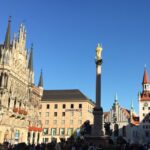
- Siegestor to Odeonsplatz: monuments that tell two stories
- Residenz, Hofgarten, and the Staatskanzlei: royal power meets modern governance
- English Garden and Chinesischen Turm: the Munich pause you’ll remember
- Eisbachwelle and Friedensengel: the city goes sporty and symbolic fast
- Maximilianeum and the Deutsches Museum: where politics and science share a route
- Viktualienmarkt and Ohel Jakob Synagogue: the food-and-faith side of Munich
- Price, pace, and what you should pack for a smooth ride
- Should you book the Best of Munich Electric Bike Tour?
- FAQ
- How long is the electric bike tour?
- What’s included in the price?
- Are food and drinks included?
- Where does the tour start and end?
- Is the tour offered in English?
- Can I cancel for a full refund?
Key things to know before you go

- Electric bike support helps you keep energy for the last stops, not just the first hill-free stretch
- Short, timed photo-and-look breaks keep you seeing a lot without turning the day into museum lines
- A guide-led route means you spend less time figuring out where to go next
- Beer garden stop (food and drinks cost extra) gives you a classic Munich pause with lots of seating
- Major architecture variety: neo-classical squares, royal palace views, and WWII-era history all in one loop
Why an electric bike makes Munich click
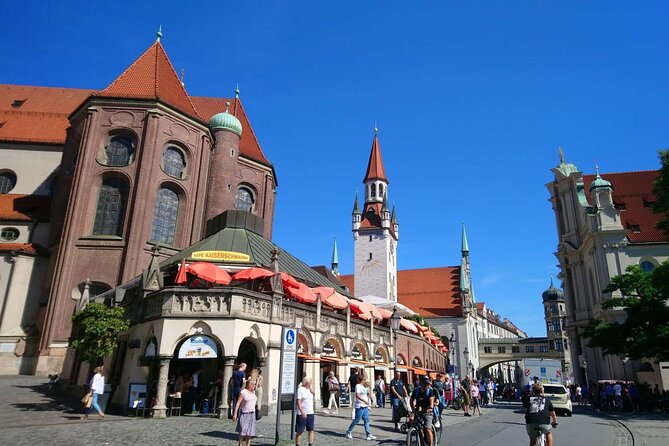
Munich rewards slow wandering, but it can also punish you with “I’ll see it all” fatigue. With an electric bike, you still feel like you’re moving through neighborhoods, yet you don’t arrive late to the best viewpoints. The helmet and the simple fact that the ride is guided make it easier to relax and look up.
This is also a tour built for your decision-making. In a few hours, you get a strong sense of where you want to come back: museums in the Kunstareal area, the Residenz zone, the English Garden edge, and the riverfront energy around Eisbach. If you’re the type who hates duplicating effort, this route helps you pick the right follow-up.
And yes, it’s fun. You’re “whooshing around,” but it’s not chaos—your guide keeps the group together and calls out safety basics when roads get busier.
You can also read our reviews of more cycling tours in Munich
From Wittelsbacherbrunnen to Karolinenplatz: classic Munich in 5-minute bites
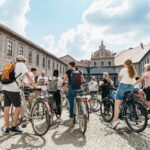
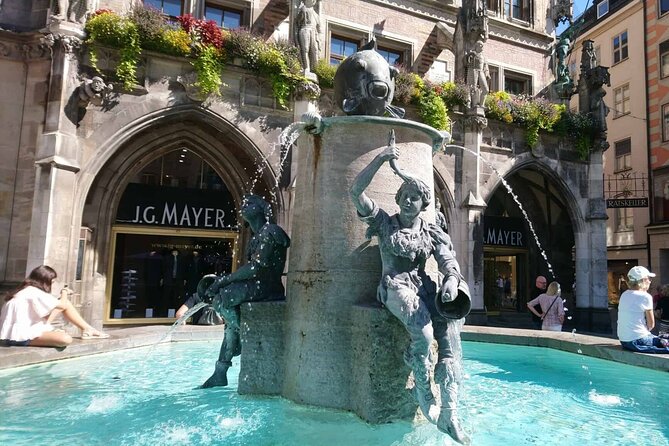
The ride starts near Karlsplatz 4, and one of the first standout moments is the Wittelsbacherbrunnen, a monumental fountain at the city-center transition between Lenbachplatz and Maximiliansplatz. Built between 1893 and 1895 in a Neo-Classicist style and designed by sculptor Adolf von Hildebrand, it’s meant as an allegory for the primal forces of water. It’s the kind of detail that makes the city feel intentional, not random.
Next you roll into Karolinenplatz, in Munich’s Maxvorstadt district. The square is linked to Bavaria’s early 19th-century relationship with France, and it’s named for Queen Caroline of Bavaria. It’s also the first Munich square tied to the Strahlenplatz motif—small design clues that matter once you start looking for patterns.
These first stops are short by design (about 5 minutes each). That’s a plus if you like momentum. If you hate feeling rushed, keep in mind this tour is about orientation and highlights, not deep museum time.
Königsplatz and the museum quarter: where architecture becomes a map
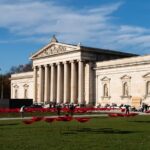
At Königsplatz, you’re in a neo-classical setting designed in the 19th century, with the Propyläen Gate as the headline. Across the open space, you see major cultural buildings facing each other: the Glyptothek and the Staatliche Antikensammlungen. This is also the heart of the Kunstareal, Munich’s museum quarter—so your bike route doubles as a map of what you’ll want later.
Then it’s into a stretch where art and history share the same air. The ride pauses by the Führerbau (Führer’s building), built between 1933 and 1937 during the Nazi period and used extensively by Adolf Hitler. What’s important here is how it’s handled today: the building still stands and currently houses the University of Music and Performing Arts Munich. It’s sobering, but it’s also a reminder that cities repurpose space over time—and your guide helps you read that layer properly.
From there, you get a quick look at the Alte Pinakothek, one of the oldest galleries in the world, known for its Old Master paintings. You also pass the Pinakothek der Moderne, which brings several modern and contemporary collections together under one roof. If modern art is your thing, you’ll likely want a follow-up visit on your own—this stop gives you the “where” and the “what kind of museum” so you can make that call fast.
These museum stops are brief (again, around 5 minutes), so plan to use your time after the tour. Think of this as the part where you decide what’s worth your ticket money.
Siegestor to Odeonsplatz: monuments that tell two stories
Munich’s commemorations can be complicated, and two stops show that clearly. At Siegestor (Victory Gate), you see a three-arched memorial arch crowned with a statue of Bavaria with a lion-quadriga. The monument originally celebrated the glory of the Bavarian army, and after World War II restoration it became a reminder to peace. Your guide’s job here is to connect the art, the symbolism, and the changing meaning.
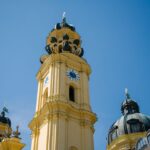
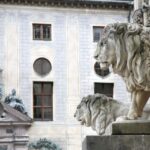
Then you reach Odeonsplatz, a large central square developed in the early 19th century by Leo von Klenze. It’s tied to the former concert hall called the Odeon, and the area’s name also extends to forecourt space in front of the Theatine Church and toward the Feldherrnhalle. This square is historically tied to a fatal gun battle during the 1923 Beer Hall Putsch—which means you’re looking at beauty with sharp edges in the background.
This is one of the reasons I like a guide-led format. Even if you’re just here for the scenery, history lands harder when someone explains the why behind the stonework.
Residenz, Hofgarten, and the Staatskanzlei: royal power meets modern governance
The tour moves into the Residenz area, where you get a feel for the sheer scale of Bavarian rule. The Residenz was the former royal palace of the Wittelsbach monarchs and is described as the largest city palace in Germany. Today it’s open for visitors to explore architecture, room decorations, and displays from the royal collections. You’re not required to go inside on this ride, but the viewpoint and the exterior context make it much easier to decide later whether you want to book entry time.
Just nearby, you stop at the Hofgarten, built from 1613 to 1617 by Maximilian I, Elector of Bavaria, in an Italian Renaissance garden style. In the center is a pavilion for the goddess Diana, built in 1615. It’s quick (about 5 minutes), but it helps you understand why the area feels like a “breathing space” between formal power and everyday life.
Then you see Bayerische Staatskanzlei, the state chancellery building complex. It was erected from 1989 to 1993 around the central dome of an older Bavarian Army Museum site (built in 1905, demolished in World War II). This is a great example of Munich’s layered rebuilding: old structures echo through newer ones.
You can also read our reviews of more tours and experiences in Munich
English Garden and Chinesischen Turm: the Munich pause you’ll remember
No modern “highlights” tour is complete without a breath of green. The ride takes you by the English Garden, one of the world’s largest urban public parks. The tour gives you the basics—its size and its English garden style concept—without turning it into a long detour.
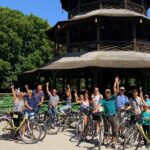
Then comes the big break: Biergarten am Chinesischen Turm. This is a true Bavarian beer garden, shaded and outdoor, with shared-table energy. Beer gardens began in Bavaria in the 19th century, and Munich still treats them like a daily ritual, not a tourist add-on. This specific one is run by Antje Schneider since 1974, with about 7,000 seating places—making it the second largest beer garden in Munich after Hirschgarten. It sells Hofbräu beer.
A practical note: beer gardens are not the place to expect your tour price to cover meals. The tour explicitly doesn’t include food or drinks, so bring cash/card for your order. Still, even if you skip alcohol, the setting alone is worth the pause.
Eisbachwelle and Friedensengel: the city goes sporty and symbolic fast
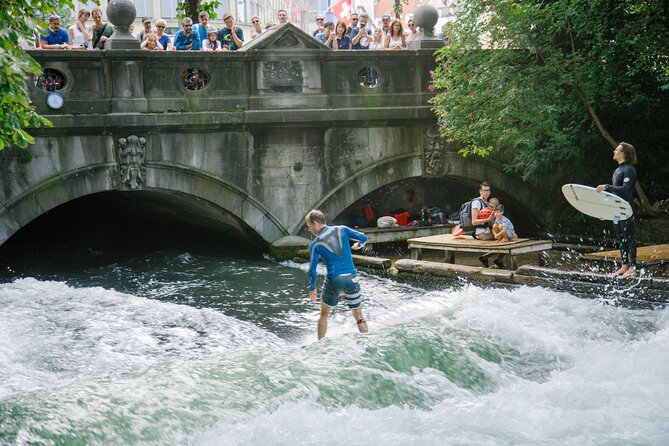
After the beer garden, you’re back on the move, with the riverfront adding a modern twist. Near the Haus der Kunst area, you see Eisbachwelle, where a standing wave about one meter high forms in the river. It’s a popular river surfing spot, but the water is cold and shallow—sometimes around 40 cm—so it’s only for experienced surfers. If you’re not surfing, you’ll still feel the live-energy vibe from watching.
From there, the tour points you to Friedensengel (Angel of Peace) in Maximilian Park, a viewpoint at the end of a sightline along Prinzregentenstrasse. There’s an open space with a fountain setup that includes a dolphin waterspout plus four smaller waterspouts, and two staircases lead to an observation deck. The column is 38 meters tall in Corinthian style with a six-meter statue of the Angel of Peace on top—described as a replica of the Nike of Paeonius.
These stops are short, but they’re a reminder that Munich isn’t just “old buildings.” It’s also movement, viewpoints, and public art people actually use.
Maximilianeum and the Deutsches Museum: where politics and science share a route
The tour includes Maximilianeum, a palatial building that was originally built for a foundation housing gifted students. Since 1949, it’s housed the Bavarian State Parliament. That’s an interesting switch: one moment you’re staring at a grand façade; the next, it’s tied directly to regional governance.
Then you pass by Deutsches Museum, described as the world’s largest museum of science and technology. It holds about 125,000 exhibited objects across 50 fields, and it draws around 1.5 million visitors per year. This is a “worth a whole day” place, so you’re not doing it justice on a bike tour stop—what you’re getting is a strong hit of context that makes a return visit feel targeted.
If you love science, this is where your mental to-do list should start forming. If science isn’t your thing, you can still enjoy the scale and the sense that Munich invests in public knowledge.
Viktualienmarkt and Ohel Jakob Synagogue: the food-and-faith side of Munich
The route ends with a couple of stops that feel more everyday. At Viktualienmarkt, you get a market that evolved from a farmers’ market into a gourmet hub with about 140 stalls and shops. You can find flowers, exotic fruit, game, poultry, spices, cheese, fish, and juices. Even if you’re not shopping, it’s a great place to absorb the “how Munich eats” part of the culture.
Finally, you see the Ohel Jakob Synagogue, a Jewish congregation and synagogue built between 2004 and 2006 as the new main synagogue for Munich’s Jewish community. It was inaugurated on November 9, 2006, on the 68th anniversary of Kristallnacht. This stop adds depth and context beyond the typical postcard loop.
When a tour includes a place like this, it’s often because your guide is using the bike route to show Munich as a real city with real communities—not just a set of photo backdrops.
Price, pace, and what you should pack for a smooth ride
The price is $71.90 per person for about 4 hours, with a live guide plus an electric bike and helmet included. What you’re paying for isn’t just transportation—it’s the planning and the interpretation. Instead of spending your energy on route-finding and figuring out which buildings matter, you’re getting a guided scan that helps you build your own itinerary after.
Pace is frequent stops, many around 5 minutes, plus a few longer ones like the beer garden. That keeps things moving and helps you avoid getting “museum brain.” It also means you won’t get exhausted in one continuous slog, especially with e-bike support.
From reviews, rain and cold didn’t stop the fun, but it does change how comfortable you’ll feel on the ride. Pack a light rain layer and dress in warm basics if you’re going in cooler months. Also bring a small amount of cash for drinks and snacks, since food is not included and beer-related stops have extra costs.
Group size is max 20, and you may ride alongside non-e-bikes. If you’re nervous about traffic or tight space, tell yourself up front that you’re doing a guided group activity, not a private countryside tour.
Should you book the Best of Munich Electric Bike Tour?
Book it if you want a high-yield orientation to Munich in one go: royal palaces, neo-classical squares, museum-area context, a real beer garden break, riverfront energy, and a finish that goes beyond the obvious.
Skip it (or consider a different style of tour) if you hate group settings. Even with strong guiding and safety awareness, a city-center bike ride with up to 20 people can feel busy in the same way any guided street activity does.
If you’re the kind of traveler who plans a few days in advance and then decides on the rest later, this tour is a great first move. It helps you see enough to choose where your next hours (and money) should go.
FAQ
How long is the electric bike tour?
The tour runs for about 4 hours.
What’s included in the price?
You get a live guide plus an electric bike and a helmet.
Are food and drinks included?
No. The tour price doesn’t include food or drinks, and the traditional German beer sample at the legendary beer hall is listed as an extra expense.
Where does the tour start and end?
The tour starts at Karlsplatz 4, 80335 München, Germany, and ends back at the meeting point.
Is the tour offered in English?
Yes, it’s offered in English.
Can I cancel for a full refund?
Yes. You can cancel for free up to 24 hours in advance for a full refund. If you cancel less than 24 hours before the start time, the amount paid isn’t refunded.