REVIEW · 3-HOUR EXPERIENCES
3H Best of München Sightseeings Tour
Book on GetYourGuide →Operated by Seg-to-rent Segway München · Bookable on GetYourGuide
Munich moves fast, but this tour moves faster. You’ll get a smart Segway setup and then glide through old Schwabing to classic highlights like Marienplatz and the New Town Hall. My favorite part is how you cover real ground in a short time without feeling rushed. One drawback to think about: it’s weather-dependent in the sense that extreme conditions can pause the tour.
I also like the small-group feel, limited to 10 participants, which means you’re not lost in the crowd. The headset helps you catch the guide’s explanations as you roll past the sights, not just while you stop. If you’re someone who freezes easily in cool weather, bring proper layers, because you’ll be outside for the whole circuit—even when it’s just short stops.
In This Review
- Key Points You’ll Care About
- Segway Training at Artur-Kutscher-Platz: What “Easy” Really Means
- Rolling Toward Isartor: A Different Way to See Schwabing’s Edge
- Tal to Viktualienmarket and Marienplatz: Old Town Center, Covered Fast
- Königsplatz: Neo-Classical Buildings You Can Actually Compare
- New Town Hall, Feldherrnhalle, and Theatine Church: One Circuit, Many Looks
- 3 Hours on the Clock: What the Timing Includes and How Pace Feels
- Price and Value: Does $95 Make Sense for Munich?
- Finding Artur-Kutscher-Platz: Simple Transit, Easy Parking
- Should You Book This 3H Munich Segway Tour?
- FAQ
- How long is the Segway sightseeing tour?
- What’s included in the price?
- Where does the tour start and end?
- What sights will I see?
- Do I need a driver’s license?
- What languages are offered?
- Is the tour affected by weather?
- Are there any restrictions during the tour?
Key Points You’ll Care About
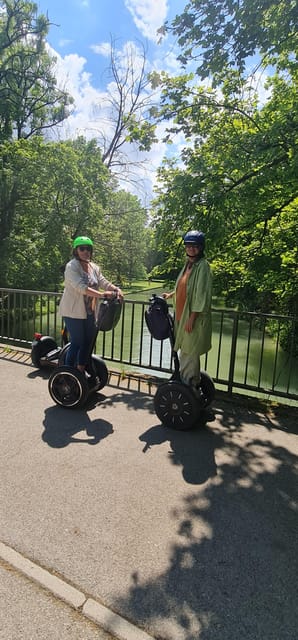
- Segway training is built in so you’re not left figuring it out on your own
- Small group size (max 10) makes it easier to get coaching and keep the pace comfortable
- Top old-town stops include Isartor, Viktualienmarket, Marienplatz, and St. Peter’s Church
- Architectural variety on one route: neoclassical Königsplatz and neo-gothic New Town Hall
- Headset included so you can actually hear the live guide while moving between stops
- Ends where you start at Artur-Kutscher-Platz, keeping logistics simple
Segway Training at Artur-Kutscher-Platz: What “Easy” Really Means

The tour starts in Schwabing at Artur-Kutscher-Platz 2a (80802), and before you cover any big distances, you’ll do instruction and practice. The big advantage here is that you’re given helmets and a headset, so you can focus on learning the Segway without juggling gear.
You don’t need a driver’s license, and the minimum age is 14, but there are body-size limits (between 45 kg and 118 kg). That matters because Segways behave differently based on weight and stance, and the operator is trying to keep the ride safe and smooth for everyone.
Also, this is rain or shine. They’ll run the experience in normal weather, and only suspend it during extreme conditions. Translation: you should dress for wet or cold air, not just for “daytime looks.”
You can also read our reviews of more tours and experiences in Munich



Rolling Toward Isartor: A Different Way to See Schwabing’s Edge
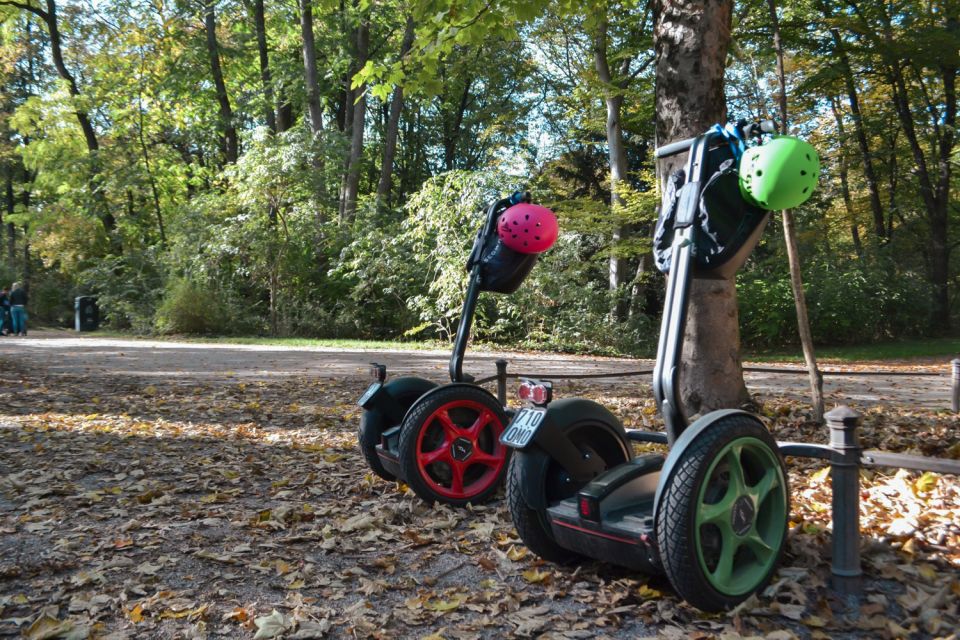
Once training is done, the route heads out from the meeting point and moves toward Isartor. This is where you start to feel the real value of doing Munich by Segway instead of foot: you’re not just looking at landmarks, you’re moving through the streets that connect them.
Isartor is a clear early anchor in the old-town flow. Being on a Segway means you can keep a steady pace while the guide sets context at stop points. And because your group is capped at 10 people, you’re less likely to get stuck waiting behind a long chain of walkers.
One small detail I like: the route rides through Tal on the way to the next center-square area. That kind of street-level movement helps you understand the city’s layout more than a “stand and stare” walk does.
Tal to Viktualienmarket and Marienplatz: Old Town Center, Covered Fast
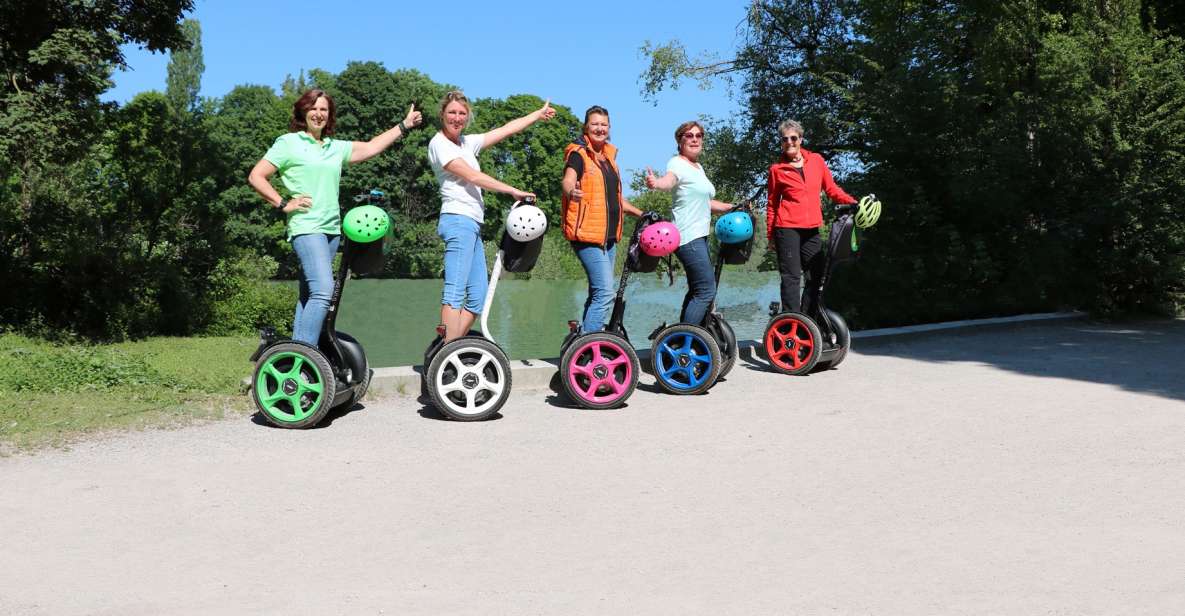
From Tal, you head toward Viktualienmarket and then Marienplatz, two of the most recognizable names on a Munich sightseeing map. The benefit of arriving by Segway is that you’re already in the right zone. You’re not spending your energy doing repeated back-and-forth walking just to connect squares.
Viktualienmarket is the kind of place you can spend a lot of time in if you’re shopping or just people-watching. In this tour, the goal is different: you get there as a highlight on the circuit, you take in what’s around it, and then you move on with the group. If you want more time for shopping, you’ll likely use the tour as your launch pad for later.
Marienplatz brings the route’s “center feeling” into focus. You’ll be in the thick of the old-town core, and the guide’s live commentary (delivered in English or German) is designed to keep you understanding what you’re seeing instead of just collecting photos.
A neat bonus from the experience: one guide on a tour included pointers to a surfers spot, which tells me the route sometimes includes fun, local-style “look there” moments—not only textbook stops.
Königsplatz: Neo-Classical Buildings You Can Actually Compare
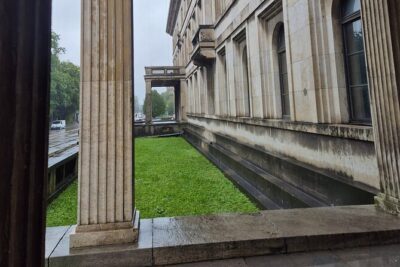
Next up is Königsplatz, highlighted for its neo-classical buildings. This stop is especially good for Segway touring because it gives you a clean, architectural “frame” while you’re moving at a pace that doesn’t drain you.
When you travel by foot, you often miss those subtle contrasts: the way buildings line up, the way open areas feel, and how different styles sit next to each other. On the Segway, you can slow down at the right points and then glide onward without the long gaps that happen when everyone is walking independently.
This is also a good moment to reset your brain. You’ve already seen the market-and-square side of old town. Now you’re getting the more formal, planned visual rhythm of Königsplatz, which makes it easier to understand how Munich layers different eras in the same general area.
New Town Hall, Feldherrnhalle, and Theatine Church: One Circuit, Many Looks
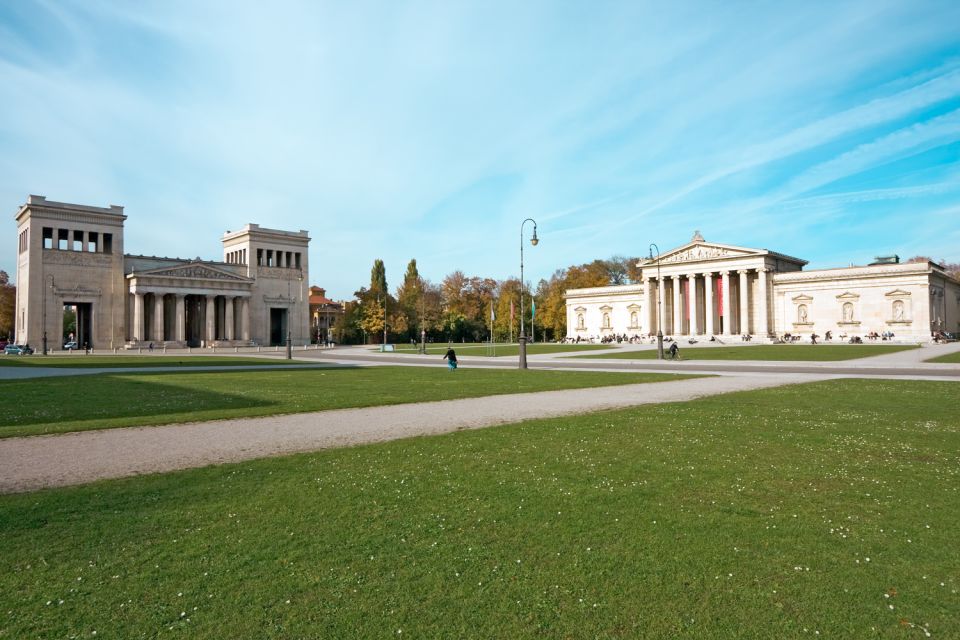
After Königsplatz, the tour shifts toward some of Munich’s most photo-friendly landmarks, including the impressive neo-gothic New Town Hall. The “why this works” is practical: you’re seeing it from a position of movement, then you slow into the stop where the guide points out what matters.
Then you roll past Feldherrnhalle and the Theatine Church. Even without getting stuck in long explanations, you’ll feel how the route stitches together big civic and religious landmarks in a connected loop. It’s the kind of itinerary design that saves you from the common problem of Munich walking tours: you spend half your time relocating between distant points.
If you’re lucky, you might get a guide like Wolfgang, who was specifically named in feedback and known for sharing lots of details during the ride. That’s a big deal on a Segway tour, because you want explanations that stay clear while you’re moving between stops.






3 Hours on the Clock: What the Timing Includes and How Pace Feels
The total duration is 3 hours, and the time includes the introduction and training. That means you’re not getting a token ride. You’ll have time to learn the basics, then actually enjoy the circuit.
The pace also depends on two things the operator mentions: group size and individual driving skills. In practice, this usually means slower riders get supported, and faster riders don’t get left behind. Since the group is limited to 10, the pacing stays controlled instead of turning into a slow-motion traffic jam.
You’ll be outside the whole time, so your comfort matters. If it’s cold, bring gloves and a scarf—that advice came up from a top rating, and it’s exactly the kind of real-world detail that keeps a good tour from becoming a shivery one.
Your guide will run the tour in English and German, and you’ll have the helmet and headset the whole way. That headset detail is underrated: it’s easier to stay focused on the street-level stories and not feel like you’re straining to hear while standing still.
Price and Value: Does $95 Make Sense for Munich?
At $95 per person for about 3 hours, the question isn’t whether it’s cheap. It’s whether you’re getting real value for your time and energy.
Here’s what you’re paying for that you’d normally have to assemble yourself:
- Segway rental
- Instruction
- Helmet
- Headset
- A live guide covering multiple central sights
Because the tour covers a tight cluster of old-town highlights—Isartor, Viktualienmarket, Marienplatz, Königsplatz, New Town Hall, Feldherrnhalle, and Theatine Church—you’re not doing a long series of separate guided walks or struggling to stitch together routes on your own.
If you like sightseeing that blends movement with explanation, it’s a strong deal. If you only want one or two famous stops, then paying for a guided Segway circuit might feel like overkill. But if you want broad coverage without spending the day walking, $95 for a guided, equipped, small-group ride is a pretty practical choice.
Finding Artur-Kutscher-Platz: Simple Transit, Easy Parking
Meeting point: Artur-Kutscher-Platz 2a, 80802 Schwabing.
If you’re using public transit, get to Münchner Freiheit station via tram line 23, bus lines 53/54/144, or metro lines U3 or U6. From there:
- Exit toward Feilitzstraße/Leopoldstraße
- Walk down Feilitzstraße
- Turn left onto Occamstraße
- Walk about 5 minutes to reach Artur-Kutscher-Platz at the end of Occamstraße
If you’re driving, there’s parking available at Artur-Kutscher-Platz (parking meter). If you can’t find a space, there’s a parking lot on Occamstraße.
Should You Book This 3H Munich Segway Tour?
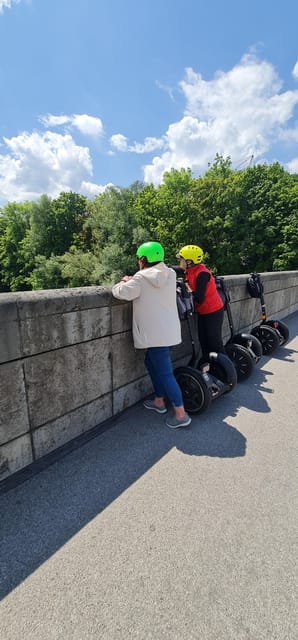
Book it if you want to see a lot of Munich’s old-town highlights in one tidy loop, and you like the idea of getting trained and cruising rather than doing everything on foot. The small group limit (10 people) and headset make it feel organized, not chaotic.
Skip it if you’re not into outdoor time for 3 hours, or if you don’t do well with the basic physical demands of riding. And pay attention to the limits: it’s for ages 14+ and weight range 45 kg–118 kg.
If you’re deciding between a quick overview and a deep personal wandering session, think of this Segway tour as your fast, guided framework. It helps you understand where things are and how the old-town area connects—then you can decide what to explore longer on your own.
FAQ
How long is the Segway sightseeing tour?
The tour lasts 3 hours, and that total includes the introduction and training before you start riding.
What’s included in the price?
The price includes Segway rental, instruction, a helmet, and a headset.
Where does the tour start and end?
It starts and ends back at the meeting point at Artur-Kutscher-Platz 2a, 80802 Schwabing, Munich.
What sights will I see?
You’ll ride past or visit Isartor, Viktualienmarket, Marienplatz, Königsplatz, the New Town Hall (neo-gothic), Feldherrnhalle, and the Theatine Church, plus St. Peters Church.
Do I need a driver’s license?
No driver’s license is required. You must be at least 14 years old and meet the weight limits.
What languages are offered?
The live guide speaks English and German.
Is the tour affected by weather?
It runs rain or shine, but it will be suspended in the event of extreme weather conditions.
Are there any restrictions during the tour?
Yes. Alcohol and drugs are not allowed.