REVIEW · MUNICH OLD TOWN WALKING TOURS
Private Munich Old Town Walking Tour – with optional Breakfast
Book on Viator →Operated by Sepp, The Bavarian Guide · Bookable on Viator
Munich on foot can feel like someone turned on the lights. This private Old Town walking tour with Sepp shows you the center landmarks fast, so you’re not stuck decoding streets or maps while you’re trying to enjoy the city.
You’ll hit major sights like Marienplatz and the Frauenkirche, and you can add an optional Bavarian breakfast with drinks.
I like two things right away: you get a real back-and-forth with your guide (not just hearing bullet points), and the tour mixes big-name sights with food-and-beer stops that actually fit Munich life.
I also like that the experience is set up for convenience: free admission at the listed stops, English guidance, and a mobile ticket.
One possible drawback: the route is tight for about two hours, so it’s more about quick, smart stops and great viewpoints than slow pacing or long sits. If you want museum time or deep church interiors, you’ll likely need extra time on your own.
In This Review
- Key highlights you’ll feel right away
- Why this 2-hour Munich Old Town walk is such good value
- Starting at Marienplatz: the quickest way to understand Munich’s layout
- Rathaus-Glockenspiel: what you’re actually looking at
- Viktualienmarkt and the food-market reality check
- Hofbräuhaus and the story behind the beer hall
- Platzl and Alter Hof: the Old Town you can feel on your feet
- Maximilianstraße: royal avenue energy with fashion storefronts
- Bayerische Staatsoper: noticing the scale
- Residenz München and the Wittelsbach connection
- Feldherrnhalle on Odeonsplatz: monumental and symbolic
- Theatinerkirche St. Kajetan and Frauenkirche: church stops that actually teach
- The included drinks: why it changes the feel of the walk
- Optional Weißwurst breakfast: a classic start with drinks
- Logistics that matter: private pacing, tickets, and time pressure
- Who this tour is best for
- Tips to make it even better (and get more out of Sepp)
- Should you book this private Old Town tour with optional breakfast?
- FAQ
- Where is the tour starting point?
- How long is the private tour?
- Is this tour private?
- What language is the tour offered in?
- Is an admission ticket required for the stops?
- What’s included in the optional breakfast?
- What drinks are included during the tour?
- Is Viktualienmarkt open every day?
- What happens after the tour ends?
- How does cancellation work?
- When will I get confirmation after booking?
Key highlights you’ll feel right away
- Private, English-speaking guidance with Sepp, built for questions while you walk
- Landmark-heavy route in about two hours, starting at Marienplatz and working outward
- Free-entry stops listed along the way, so you’re not hunting for ticket rules
- Munich food and drink included, including beer, wine, or even Prosecco depending on your choices
- Optional Weißwurst breakfast with drinks, a classic start to a classic city
- Sunday note for Viktualienmarkt, so you can plan around closures
Why this 2-hour Munich Old Town walk is such good value
Two hours in Munich can disappear fast. This tour’s big strength is that it’s designed around getting your bearings and seeing the core sights without wasting time. You start at Marienplatz, Munich’s central square, and you move from there like you’re following a local map—except you’re not holding the map.
At $249 per person, it’s not a bargain-basement deal. But it’s closer to what you’d pay for a guided experience where you’re actually getting attention. It’s private, so you’re not listening to a crowd shuffle behind you. And the package includes a guide plus drinks (yes, including beer or wine, and even Prosecco as an option), along with all fees and taxes. That matters in a city where you can easily end up paying extra just to keep moving.
The other value piece: Munich is visual. Even if you’re not a history nerd, you’ll want help reading what you’re seeing. The tour is structured so you get context for the buildings and squares as you pass them, rather than trying to memorize facts later.
You can also read our reviews of more walking tours in Munich
Starting at Marienplatz: the quickest way to understand Munich’s layout
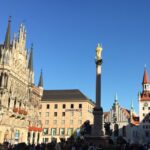
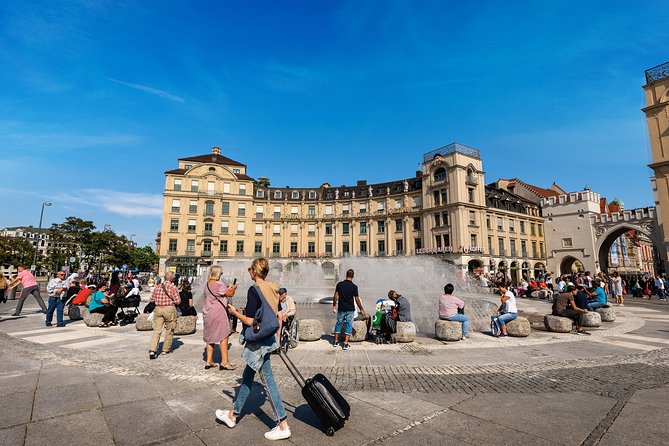
Most first-time walks start with good intentions and end with confusion. This one starts clean. Your meeting point is Marienplatz (80331 München-Altstadt-Lehel), and you loop through the Old Town landmarks from there.
Marienplatz isn’t just a spot on a map. It’s where Munich’s identity shows up in public space. You get an overview of the city center and you see the kind of civic architecture that makes the area feel both grand and lived-in. Since your guide is with you from the start, you can ask whatever you’re wondering right then—how the center works, what’s worth prioritizing, or what to skip.
Also, you’re not dealing with strict crowd timing. Since it’s private, your pace can adjust a bit for questions and photos.
Rathaus-Glockenspiel: what you’re actually looking at
Next up is the Rathaus-Glockenspiel, Munich’s famous carillon. You’ll hear about how it relates to events going back to the 1500s. Even if you’ve seen photos before, it lands differently in person—because you’re standing where the sound and symbolism would connect to daily life.
Practical tip: don’t just stare up like it’s a monument. Ask your guide what you should notice besides the obvious. That’s where a private format helps. You walk away understanding it, not just looking at it.
Viktualienmarkt and the food-market reality check
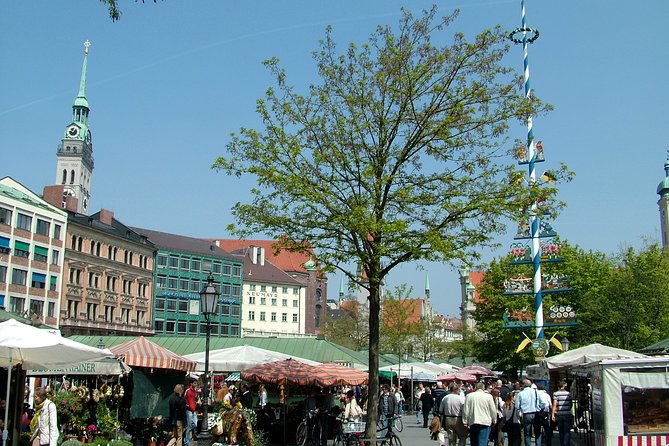
Then it’s on to Viktualienmarkt, the well-known food market. This is one of those places where Munich shows its routine: buying, snacking, chatting, and wandering. You’ll have a short stop that’s enough to take in the atmosphere and try to orient yourself for later food plans.
There’s one key thing you must know: the market is closed on Sundays. So if your visit lands on a Sunday, you’ll want a plan B day or be ready for your guide to steer you toward what’s open around that time.
Even with a quick stop, a market visit works because it gives you more than photos. It helps you understand what locals treat as normal. You’ll get better at spotting the kind of places worth your time afterward.
Hofbräuhaus and the story behind the beer hall
Next is Hofbräuhaus München, one of the most famous beer halls in the city. You’ll learn history behind it—how it became part of Munich’s public identity. This matters because you’ll probably see plenty of beer-hall facades in Europe, but Munich’s reputation is specific. The guide helps you connect the name to the place.
A quick stop here is also smart for first timers. If you’re just arriving and you’re trying to keep energy levels up, you don’t want your day to become a two-hour sit-down. This is more like a taste of the story and the vibe.
You can also read our reviews of more private tours in Munich




Platzl and Alter Hof: the Old Town you can feel on your feet
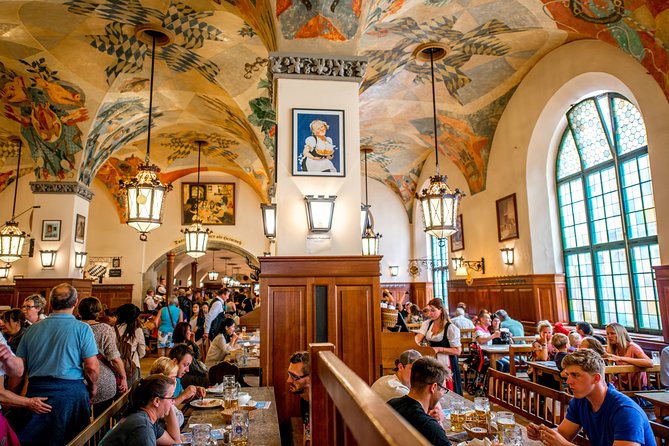
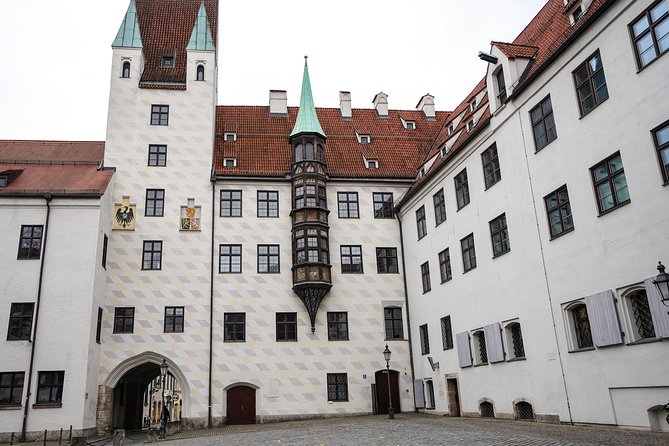
From there, you move through smaller squares and older pockets of the center: Platzl and Alter Hof.
Platzl is the kind of square where you can start to feel the rhythm of the area—where people pause, where streets funnel toward something important, where sightlines matter. Alter Hof is a historical sight you’ll discover by walking through the area and learning what it represents in Munich’s development.
These stops are valuable because they bridge the gap between the major icons (like the big churches) and the everyday street life. They also help you understand that Old Town isn’t one neat postcard—it’s layers.
Maximilianstraße: royal avenue energy with fashion storefronts
You’ll also pass by Maximilianstraße, one of Munich’s four royal avenues. It’s famous for high-street fashion brand shops.
This stop is useful even if you don’t care about shopping. It explains why Munich looks the way it does in certain stretches: this is where grandeur and commerce meet. And it’s a nice break from the density of older civic buildings.
Bayerische Staatsoper: noticing the scale
You’ll reach Bayerische Staatsoper, the National Theatre of Munich. It can hold up to 2,100 people, and you’ll learn about the theatre as part of the city’s cultural footprint.
If you’ve never been inside a major opera house, the outside can feel underwhelming. The guide’s job here is to shift your perspective: it’s not just a building. It’s a statement about what Munich values.
Residenz München and the Wittelsbach connection
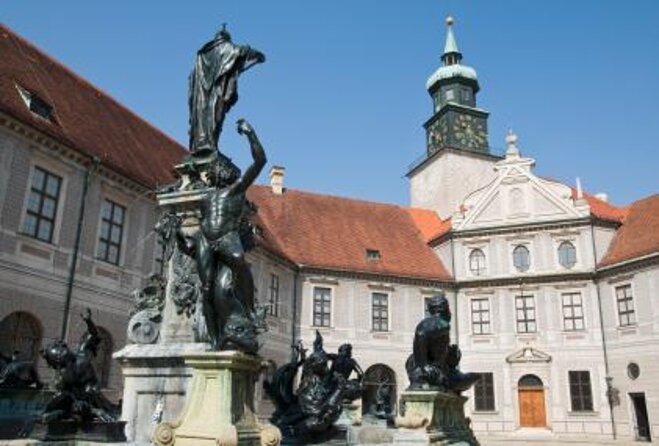
Then comes Residenz München, the former royal palace of the Wittelsbach family. Even if you don’t go deep into rooms, learning the palace role changes how you see the surrounding streets and buildings.
A palace like this also helps you understand power layout. You start thinking about who lived here, how decisions flowed, and how the city organized itself around its rulers. That context makes later stops—like major squares and monuments—feel less random.
Feldherrnhalle on Odeonsplatz: monumental and symbolic
Next is Feldherrnhalle, a monumental loggia on Odeonsplatz. It’s built to communicate scale and authority, not comfort. This is one of those stops where you’ll get a better sense of Munich’s political storytelling in stone.
The quick format still works because your guide can point out the “why” behind the shape and placement. You’re not just walking past something. You’re learning what it was meant to communicate.
Theatinerkirche St. Kajetan and Frauenkirche: church stops that actually teach
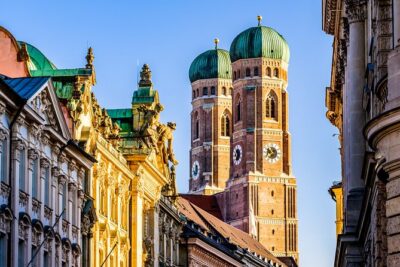
You’ll visit Theatinerkirche St. Kajetan, and you’ll learn its history. Then you’ll end with Frauenkirche, one of Munich’s most famous churches.
Church stops can become “look up, take photo, move on.” Here, the goal is different: you’re supposed to leave knowing what you’re seeing and why it matters. With a private guide, you can ask follow-ups when the design or story sparks a question.
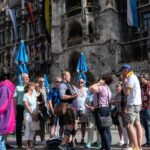
Frauenkirche is a prime example of why the route matters. When you reach it, you’re no longer seeing it alone. You’ve already seen squares, power sites, and the civic center. So the church lands as part of a larger city picture.
The included drinks: why it changes the feel of the walk
This tour includes mineral water, soft drinks, energy drink, juice, plus beer and wine, with Prosecco also listed as an option. That’s a lot of drink coverage for a walking tour, and it’s not just a gimmick.
Here’s what it does for your day: it keeps energy steady. Old Town walking includes frequent standing, turning corners, and short pauses. Having drinks ready reduces decision fatigue, especially if you’re trying to avoid wasting time finding a café mid-route.
It also signals something important about the guide’s approach. The tour isn’t pretending to be only academic. It’s built to feel like a Munich day—meaning food, drink, and city stories together.
Optional Weißwurst breakfast: a classic start with drinks
If you choose the optional add-on, you’ll get a typical Bavarian Weißwurst breakfast with drinks of your choice.
This is the part that can make the tour feel extra local. Weißwurst is more than a dish; it’s a ritual. And the drinks inclusion is practical: breakfast doesn’t have to turn into a separate plan with separate stops.
Some people also describe the breakfast as delicious and served with beer, and one account mentioned a beautiful view above the city. That doesn’t mean it’s guaranteed in the exact same way every time, but it points to the kind of comfort and setting you can hope for when breakfast is included.
Logistics that matter: private pacing, tickets, and time pressure
A few practical points keep this tour from feeling stressful:
- You’re on a private tour, so the guide works for your group, not around other groups.
- The listed attractions show free admission for the stops included in the tour.
- It’s about 2 hours, so you’ll feel the “great hits” format rather than a slow wander.
- It’s offered in English, and your guide can adapt based on what you ask.
- It’s close to public transportation, which helps if you want to combine it with other plans afterward.
And yes, you should expect some days to move faster than planned. If you’re cutting it close with train times or a layover, it can still work well because the whole tour is built around walking and stopping rather than waiting in long lines.
Who this tour is best for
This experience fits best if you want:
- A short, organized Old Town orientation in Munich
- A way to see key sights like Marienplatz and Frauenkirche without getting lost
- An English guide you can ask real questions to
- A day that mixes history talk with Munich-style food and drink
- A comfortable option right after you arrive—especially if you’d like help settling into the city fast
If you’re the type who wants museums, long church interiors, or deep dives into single buildings for hours, you’ll probably want extra time on your own after this.
Tips to make it even better (and get more out of Sepp)
This kind of private tour works best when you give your guide something to work with. Even simple questions sharpen the experience:
- Ask what you should see next if you have limited time after the tour.
- Ask what areas are worth revisiting later for photos or a slower walk.
- If you’re traveling onward the same day, you can ask for practical help getting train tickets sorted.
Sepp’s style, as reflected in multiple experiences, comes across as warm and responsive, with the ability to tailor the feel for different ages in a mixed group. If you’re traveling with kids or multiple generations, that matters, because it keeps the pace from becoming boring or exhausting.
Should you book this private Old Town tour with optional breakfast?
I’d book it if you want an efficient, friendly way to get your bearings in Munich Old Town, see the top landmarks like Rathaus-Glockenspiel and Frauenkirche, and still enjoy real Munich touches like the market, the beer hall, and included drinks.
I’d think twice if your priority is slow wandering, museum time, or long stays in churches. This tour is built for momentum—and that’s a strength, as long as you’re okay moving at a city-walk pace.
If you want a smooth first impression of Munich without map stress, this one makes sense.
FAQ
Where is the tour starting point?
The tour starts at Marienplatz, 80331 München-Altstadt-Lehel, Germany.
How long is the private tour?
The tour lasts about 2 hours.
Is this tour private?
Yes. It’s a private tour, meaning only your group participates.
What language is the tour offered in?
The tour is offered in English.
Is an admission ticket required for the stops?
The listed stops show admission ticket free, so you’re not adding paid entries at these points.
What’s included in the optional breakfast?
The optional breakfast includes typical Bavarian Weißwurst and drinks of your choice.
What drinks are included during the tour?
Included drinks are mineral water, soft drinks, energy drink, juice, and also beer, wine, or even Prosecco.
Is Viktualienmarkt open every day?
No. The market is closed on Sundays.
What happens after the tour ends?
The tour ends back at the meeting point (Marienplatz).
How does cancellation work?
Free cancellation is available up to 24 hours before the experience starts for a full refund.
When will I get confirmation after booking?
Confirmation is received within 48 hours of booking, subject to availability.