REVIEW · MUNICH OLD TOWN WALKING TOURS
Munich: Highlights Walking Tour with a Guide
Book on GetYourGuide →Operated by Guydeez Tours · Bookable on GetYourGuide
Munich’s center clicks into focus fast. I love how this Munich Old Town walking tour ties major sights together with local context, and I love the practical city tips you can use right away after you finish. One possible drawback: if your guide leans hard into church interiors and war-damage stories, you may want to steer the pacing so you still get enough time for the palace and the fun stops.
You’ll meet at Marienplatz 15 (in front of the Julia-Capulet-Statue) and walk a tight route designed for a 3-hour sightseeing hit. If you choose the private option, the tour can feel more like a guided stroll with a plan than a rigid checklist.
Timing matters here because the Glockenspiel at the Rathaus plays at 11:00, 12:00, and 5:00 from March through October. If you’re trying to catch one exact show time, keep an eye on where you’re positioned and when your group is moving.
In This Review
- Key takeaways before you go
- Entering Munich’s Old Town at Marienplatz 15
- Marienplatz and the Glockenspiel: Plan your timing, not just your camera
- Frauenkirche: Munich’s landmark church, seen the useful way
- Rathaus-Glockenspiel: Why the second clock matters
- Hofbräuhaus and beer history: More than a tourist photo stop
- Odeonsplatz: Beautiful square with a hard layer of history
- The Residenz: Wittelsbach power, up close in one stop
- Viktualienmarkt: A quick food-market pass for real Munich flavor
- Private and customizable: How to get the tour you want
- Price and logistics: What $53 gets you in real terms
- Who should book this Munich highlights walk
- Final verdict: Book it if you want a guided backbone
- FAQ
- FAQ
- Where do we meet for the tour?
- How long is the Munich highlights walking tour?
- What does the tour cost?
- Is the tour private?
- What languages are offered?
- When does the Glockenspiel perform at the Rathaus?
- Which main sights are included in the walking route?
- What’s included in the price?
- Are food or drinks included?
- What’s the cancellation policy?
Key takeaways before you go
- Marienplatz 15 start point makes it easy to plug this into your day
- Rathaus-Glockenspiel timing (11:00, 12:00, 5:00 March–October) helps you plan photos
- Frauenkirche + town-hall sights balance big landmarks with street-level storytelling
- Hofbräuhaus stop brings beer culture into the tour, not just architecture
- Odeonsplatz history adds a sobering layer to a gorgeous square
- Residenz scale gives you a sense of Bavarian power without rushing
Entering Munich’s Old Town at Marienplatz 15
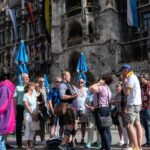
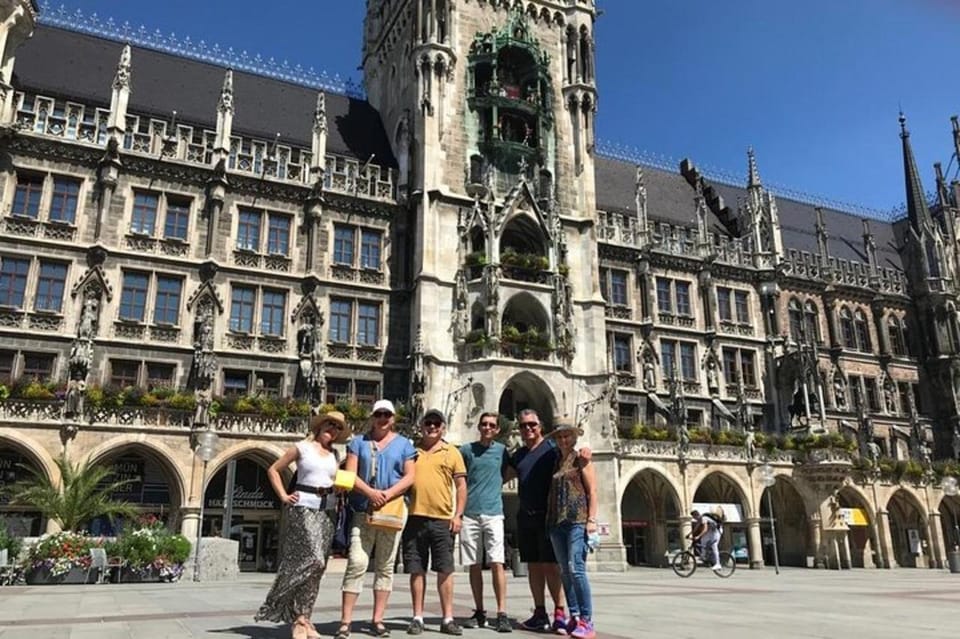
The tour kicks off in the thick of it: Marienplatz, right by the Julia-Capulet-Statue at Marienplatz 15. This is a smart choice. You start where Munich’s foot traffic, landmark density, and snack options all meet. Even if you’re only in town for a short stay, this area is where you’ll constantly reappear later.
You’re also starting with a guide, not with guesswork. A local can help you read what you’re seeing: why the buildings are here, what changed over time, and what’s worth lingering over versus what’s just a quick glance from the sidewalk. That’s the real value of a guided walk—less wandering, more meaning.
Since it’s a walking tour, go in with comfortable shoes. Old Town streets are fine to walk, but you’re still on pavement for a few hours. The route is designed to cover several top sights without feeling like you’re running a marathon—though you will be walking.
You can also read our reviews of more walking tours in Munich

Marienplatz and the Glockenspiel: Plan your timing, not just your camera
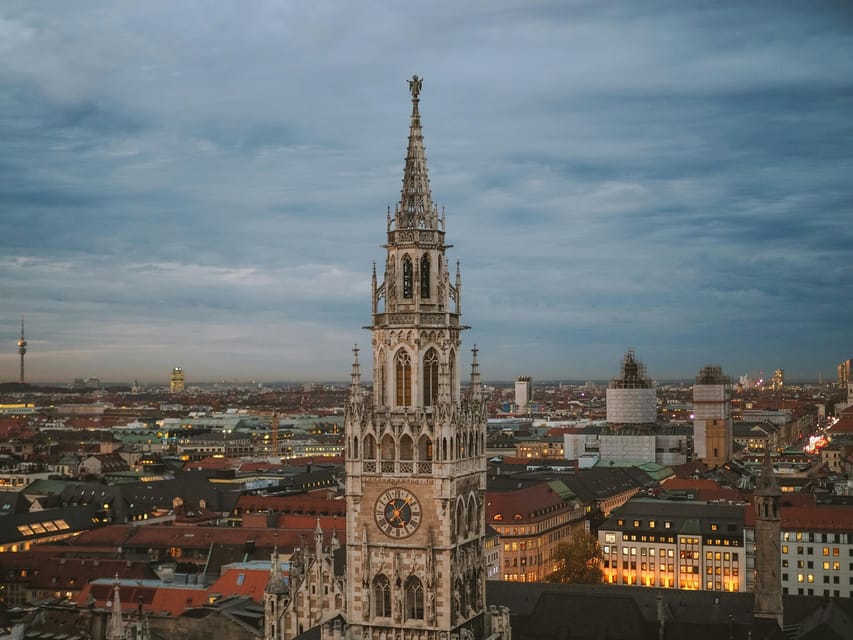
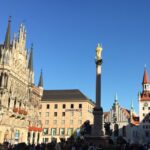
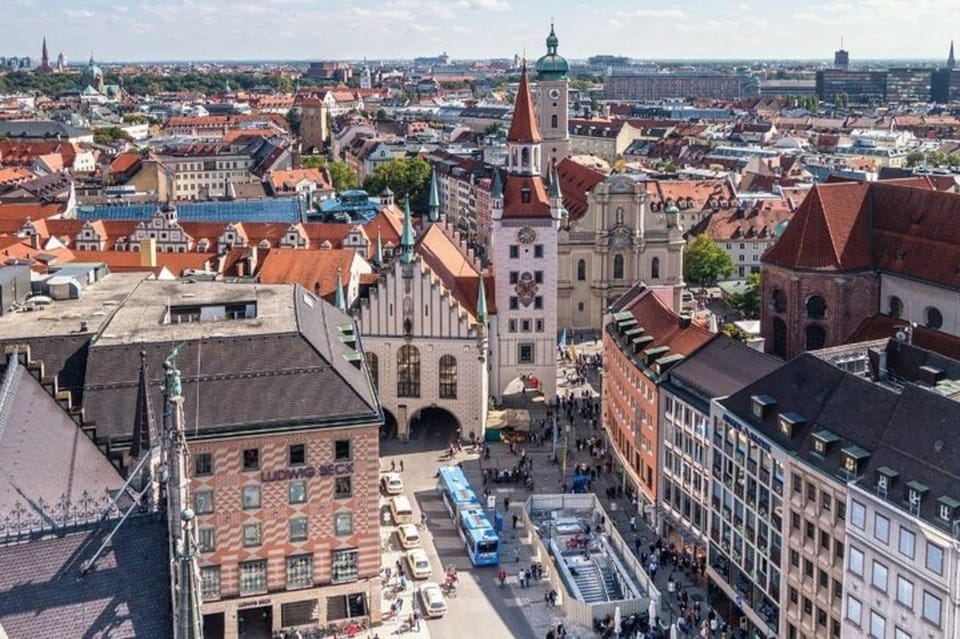
Marienplatz is Munich’s main square, and it’s the perfect starting point for orientation. You’ll get the vibe of the city instantly: the open sightlines, the crowd energy, and the sense that this is the place people aim for.
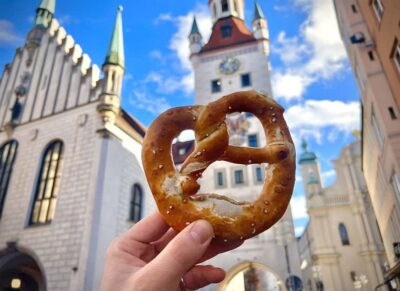
Then comes the Glockenspiel at the Rathaus. From March until October, it performs at 11:00 am, 12:00 pm, and 5:00 pm. If your tour time lines up with one of those shows, great. If not, you’ll still get plenty of context for what the clock is, why people gather, and why it matters culturally.
A practical tip: treat the show like a small event. People move in and out fast. If you want a good view, don’t wait until the last minute. Get your position a few minutes before the hour so you’re not craning your neck while the clock starts.
Also, if you have one strict goal—like catching the 12:00 show—ask your guide about the pacing early on. This tour is intended to loop back to Marienplatz, but you’ll be happier if you confirm the timing that day so you’re not stressed.
Frauenkirche: Munich’s landmark church, seen the useful way
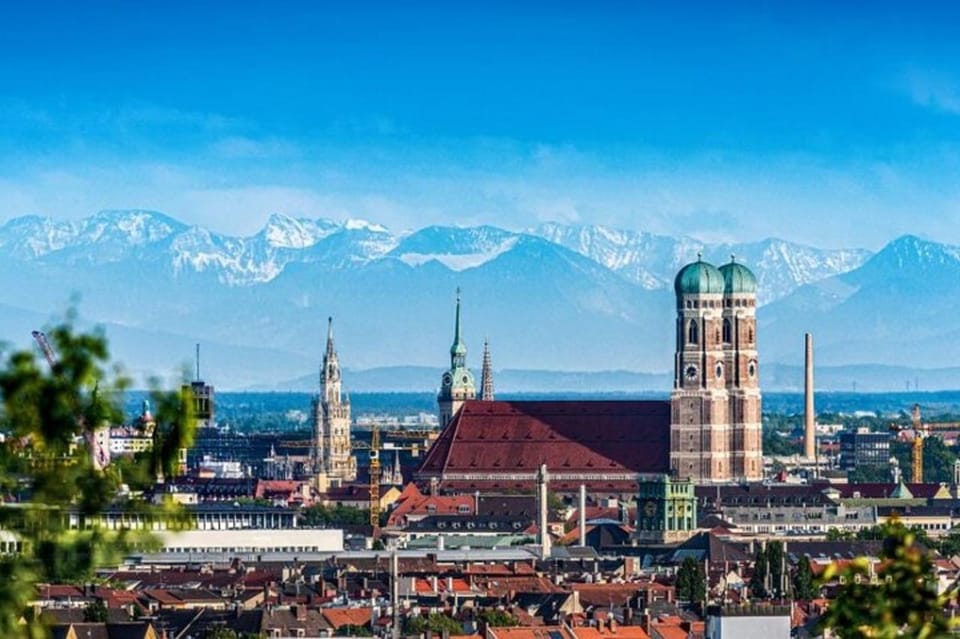
Next up is the Frauenkirche (St. Mary’s Church), Munich’s largest church and a major cathedral in the city. Even if you’re not a big church person, you’ll still get something out of it. It’s not just a stop—it’s a reference point. When you can visually place it in your mental map, the rest of the Old Town starts to make sense.
A good guide helps you notice details you’d normally miss from street level. You’ll learn what makes the Frauenkirche significant and how it fits into Munich’s story. This stop can be one of the highlights for architecture and landmark lovers, but it can also be a sticking point if you prefer fewer religious stops.
So here’s my advice: at the beginning, tell the guide what you want most. If you’d rather spend your energy on the palace, the beer hall, or the squares, say so. A private tour works best when you set expectations early.
Rathaus-Glockenspiel: Why the second clock matters
Munich has more than one attention magnet, and the Rathaus-Glockenspiel is a big one. You’ll see it as part of the town-hall area experience, and you’ll also get the history and significance behind it.
This is one of those places where a guide adds more than trivia. Without context, it’s just a clockwork show. With context, it becomes a window into civic pride and traditions—why the city built this kind of spectacle into the daily rhythm.
If you’re timing your day around performances, this is also where you’ll feel the tour’s schedule most. The clock’s show times are fixed, and your walking pace will be adjusted around them. If you’re hoping to hit the show at a specific time, keep that goal in mind as you walk.
Hofbräuhaus and beer history: More than a tourist photo stop
Then you’ll head to the Staatliches Hofbräuhaus in München, the world-famous beer hall. Even if you don’t plan to sit down for a drink, it’s worth seeing. This isn’t just a building; it’s part of Munich’s drinking-and-social tradition.
The tour also adds beer facts that help you understand the cultural backdrop. You’ll hear fun information about the beer purity law and the annual Oktoberfest. That matters, because those topics show up everywhere in Munich—but people often encounter them as slogans. Here, you get them tied to place.
One practical point: this stop is listed with guided touring, but food and drinks aren’t included. So if you want a beer hall moment, budget extra time and money. If you don’t, you can still enjoy the atmosphere from outside or inside depending on what the guide is doing that day.
You can also read our reviews of more guided tours in Munich


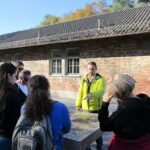

Odeonsplatz: Beautiful square with a hard layer of history
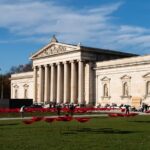
Odeonsplatz is one of Munich’s most beautiful squares. You’ll walk in, look around, and learn the historical use of the space, including its use for Nazi rallies in the 1930s and 1940s.
This is where the tour becomes more than sightseeing. It doesn’t treat the square as decoration. Instead, it connects the look of the place to the heavier parts of Germany’s twentieth-century story. A good guide keeps it clear and respectful, not sensational.
If you’re sensitive to heavy history, you might want to mentally prepare for this segment. It’s brief enough to keep the tour moving, but it’s significant enough to change how you see the square.
And yes—after hearing that context, you’ll also notice how the square’s grandeur was part of what made it useful for large gatherings. That’s the kind of perspective you can’t get from a quick photo.
The Residenz: Wittelsbach power, up close in one stop
After Odeonsplatz, the route heads toward the Residenz, described as the largest inner-city palace in Germany and the ancestral home of the Wittelsbach Royal family of Bavaria.
Even if you don’t go deep inside, the palace connection matters. It explains why Munich looks the way it does. The Residenz is where you can sense how power was displayed in everyday space—court life, architecture, and status all tangled together.
In a perfect world, you’d have time to linger here. But pacing is the only real variable in walking tours: how long people stop for photos, how long the Glockenspiel crowds take, and how your group’s interests line up.
If you care a lot about the Residenz—its exterior presence or any interior access you might plan—tell your guide early. One downside that can happen is that certain guides may spend extra time on church commentary and history. You’ll enjoy the tour more if you nudge the focus toward your priorities.
Viktualienmarkt: A quick food-market pass for real Munich flavor
Near the end, you’ll pass by Viktualienmarkt, the largest inner-city fresh food market in Germany. This is one of those places that’s not just for tourists, even if visitors wander through it. It’s a practical stop that gives Munich a living, everyday feel.
Because it’s included as a pass-by rather than the central activity, treat it like a preview. If you want to come back later for lunch, snacks, or just market-watching, you’ll now know you were near the right spot.
If your tour timing means you’re hungry, keep your expectations realistic: this is part of the stroll, not a full food tour. But it’s enough to point you toward something you can handle on your own afterward.
Private and customizable: How to get the tour you want
This is billed as a private and customizable walking tour, and there’s also a private group option. That’s important because Munich is full of competing interests: church architecture, royal palaces, civic clocks, beer hall culture, and squares with heavy political history.
When the guide can tailor the walk, you get a better match for your style. Some guides you might meet—like Elettra and Roberto, who have been praised for being friendly and well-prepared—tend to bring energy and lots of useful city context.
To make it work, communicate what you want at the start:
- If you’re not into religious interiors, say so and ask for more time on Residenz and squares.
- If you love clockwork details or civic landmarks, tell them you want extra time around the Rathaus area.
- If you have a strict Glockenspiel goal, ask about when the group will be at the Rathaus side.
A good private guide won’t just follow a script. They’ll adjust while keeping the tour’s core route intact.
Price and logistics: What $53 gets you in real terms
At $53 per person for a 3-hour guided walking tour, you’re paying for four things:
1) expert guidance across multiple top sights in one organized route
2) a format that saves you from mapping and figuring out the order
3) a chance to ask questions as you go
4) help from the team to book tickets for visits you want
The tour’s included items are mainly the guide and the guided walking experience, and you’re not paying extra for food or drink since those are not included. That’s a fair setup. You can decide whether you want to spend your own money on a beer hall moment or just enjoy the sights.
Value-wise, the price makes the most sense if you want structure and a local voice rather than using guidebooks and hoping you pick the right order. It also tends to work well for couples or small groups who can ask questions and adjust the pacing without feeling stuck behind other people.
One note to keep your day smooth: if you’re visiting in the March–October Glockenspiel season, plan your schedule around the show times (11:00, 12:00, 5:00). If your tour lands at a different hour, the guide’s context still helps, but you won’t be catching the performance by default.
Who should book this Munich highlights walk
You should consider booking if you:
- are seeing Munich for the first time and want an efficient route through the key Old Town anchors
- like getting practical advice alongside landmark facts (so you can plan the rest of your trip)
- want a mix of civic Munich (Marienplatz/Rathaus), religious landmarks (Frauenkirche), royal power (Residenz), beer culture (Hofbräuhaus), and a major square with hard historical context (Odeonsplatz)
You might skip it (or at least message the operator in advance) if:
- you want almost no time spent on church-focused discussion
- you have a tight schedule built around one exact Glockenspiel performance and don’t want any room for delay
- you’re looking for a very artsy or modern-Munich itinerary, because this walk is squarely Old Town and landmark driven
Final verdict: Book it if you want a guided backbone
For most first-time visitors, I think this tour is a solid way to get oriented fast. You get the Munich hits—Marienplatz, Frauenkirche, the Rathaus-Glockenspiel, Hofbräuhaus, Odeonsplatz, and the Residenz—plus the kind of guide guidance that helps you turn sightseeing into a real plan.
Book it if you’ll use the advice afterward and you’re open to history being part of the conversation. Skip or customize more aggressively if you strongly dislike church interiors or you need a guaranteed end timing for a specific Glockenspiel show. Either way, the private nature means you can steer the experience—if you ask early.
FAQ
FAQ
Where do we meet for the tour?
Meet your guide in front of the Julia-Capulet-Statue.
How long is the Munich highlights walking tour?
It lasts 3 hours.
What does the tour cost?
The price is $53 per person.
Is the tour private?
It’s described as a private and customizable walking tour, and private group options are available.
What languages are offered?
Live guides are available in English, French, Spanish, Italian, and German.
When does the Glockenspiel perform at the Rathaus?
From March until October, it plays at 11:00 am, 12:00 pm, and 5:00 pm.
Which main sights are included in the walking route?
You’ll visit Marienplatz, Frauenkirche, the Rathaus-Glockenspiel area, the Staatliches Hofbräuhaus, Odeonsplatz, and the Residenz, with a pass by Viktualienmarkt.
What’s included in the price?
The guide, the walking tour, and private/exclusive tour access if that option is selected are included. Help from the team is also provided to book tickets for desired visits.
Are food or drinks included?
No. Drink or food isn’t included.
What’s the cancellation policy?
You can cancel up to 24 hours in advance for a full refund.