REVIEW · MUNICH
Munich: Eisbachwelle River Surfing Experience
Book on GetYourGuide →Operated by Travel Costa Rica -Worldwide Experiences · Bookable on GetYourGuide
Surfing in Munich is real, and it is a blast. The Eisbachwelle turns the Eisbach River into a year-round wave spot right in the middle of the Englischer Garten, and the lesson-style setup makes it doable even if you’re new to river surfing. You get your equipment, a wetsuit built for cold water, and clear coaching from the guide team, including Max.
What I like most is the combination of full equipment included (soft boards, 5 mm hooded wetsuit, booties, leash, fins) and the focus on technique and safety at a very real city-wave. The coaching style is patient and practical, and you also get drinks and photos to help you remember the session without worrying about timing or gear. The main thing to consider is that this is technical river surfing in icy conditions, and it’s tolerated in Munich but still carries real risk—so you need to be comfortable following instructions and getting in cold water.
In This Review
- Key things to know before you hit the Eisbachwelle
- Eisbachwelle in Munich: what makes this river wave so special
- Why Munich’s location is such good value for a surfing trip
- The 3-hour session: how your time on the water usually plays out
- Gear up quickly and get warm the right way
- Coaching that focuses on technique, not bravado
- Your safety briefing is part of the actual sport
- Riding the wave(s) and practicing exits
- What’s included in the price—and why $170 can make sense
- The Eisbachwelle reality check: who it’s good for (and who should skip it)
- Max and the guide team: what good instruction looks like here
- Equipment choices that help beginners: soft tops and 5 mm hooded wetsuits
- Soft-top boards (7’0”) for stability
- Thick wetsuit + booties for the real river temperature
- Drinks, photos, and the small-group feel
- Practical tips so you’re comfortable from the first minute
- Should you book the Munich Eisbachwelle surfing experience?
- FAQ
- How long is the Munich Eisbachwelle surf experience?
- What is the price per person?
- What’s included with the session?
- What time do sessions start?
- Who is this experience for?
- Does the experience run all year?
- What should I bring with me?
- Is it safe for everyone?
Key things to know before you hit the Eisbachwelle
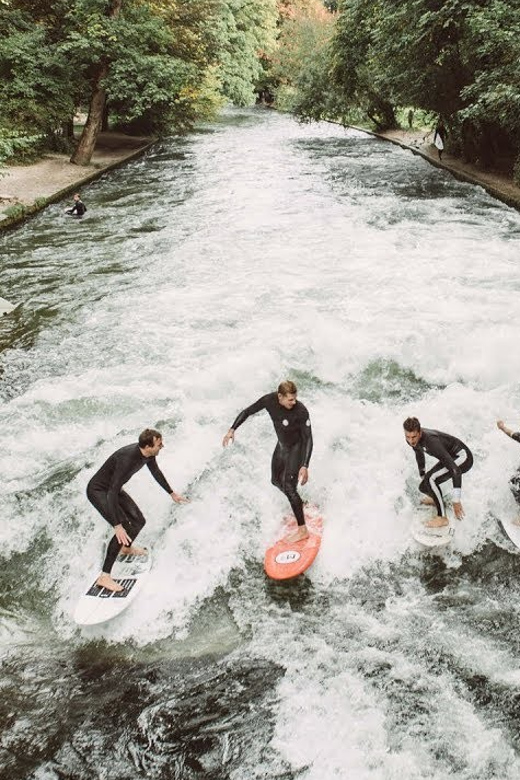
- It’s a city wave, not a beach setup: waves are spread across Munich’s river areas, so technique matters.
- Soft-top boards help you learn faster: they use stable 7’0 foam boards designed to reduce injury risk.
- Safety rules are part of the lesson: check for swimmers approaching from upstream.
- Cold-water gear is included: you get a 5 mm full one-piece neoprene wetsuit with an integrated hood.
- There’s an easier exit option: if climbing out is tricky, there’s a ramp-like exit about 100 meters downstream on the left (looking downstream).
Eisbachwelle in Munich: what makes this river wave so special
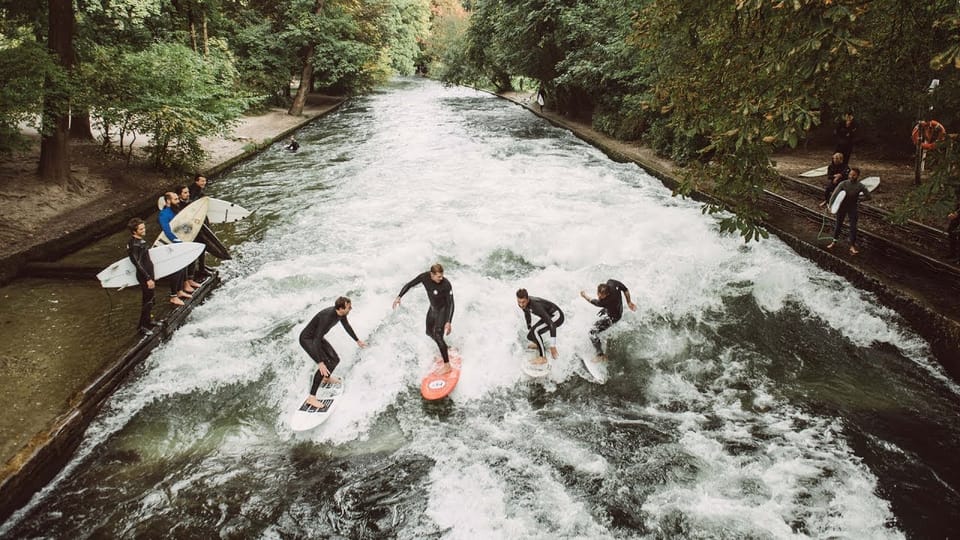
The Eisbachwelle is the famous standing wave you see people surfing in the middle of Munich. It’s on the small man-made Eisbach River, a side arm of the Isar. The best part is that you’re not driving out into nowhere-you-won’t-see-anything. You’re right near the park and the city life—so before and after your session, you’re surrounded by the Englischer Garten atmosphere.
This is river surfing with a twist: the wave isn’t a simple one-note setup. The standing waves can feel different depending on where you drop in, how the water moves, and what your equipment does. The instruction you get helps you read what your board needs and how to position yourself so you’re not just fighting the wave.
You can also read our reviews of more tours and experiences in Munich.



Why Munich’s location is such good value for a surfing trip
If you’ve ever tried ocean surfing, you know how much the schedule can depend on weather and tides. Here, the experience is designed for consistency. Surfing is available 24/7 and all year round, and you’ll meet cyclists carrying boards—because this has become part of Munich’s daily rhythm, not a once-in-a-while novelty.
That matters for planning. You’re booking a 3-hour block, and the wave spot is central enough that you can pair the surfing with museums, parks, and Bavarian food without turning your trip into a logistics puzzle.
The 3-hour session: how your time on the water usually plays out
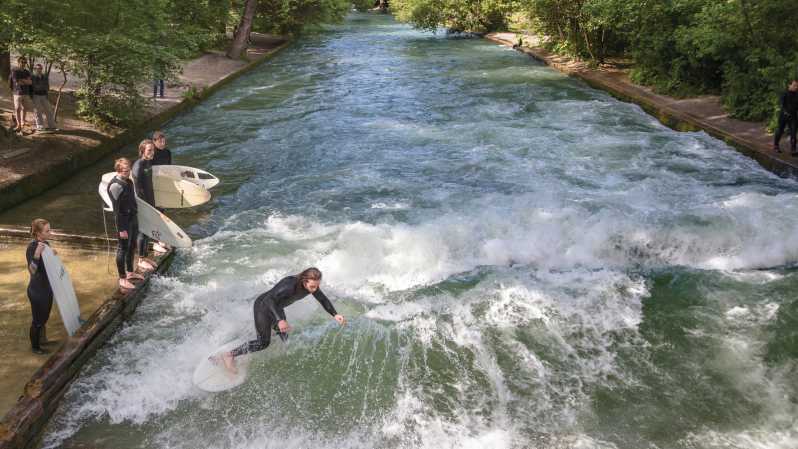
You’ll typically start at one of the set times: 8am, 12pm, or 3pm. Sessions run for about 3 hours, with the group kept small (limited to 10 participants). That small-group size is a big deal on a technical spot like this, because you want coaching when your timing or stance needs fixing.
Here’s the flow I’d expect you to plan around:
Gear up quickly and get warm the right way
You’ll be provided with wetsuits and cold-water footwear before you enter the water. The setup includes:
- 5 mm full one-piece neoprene wetsuit with an integrated hood
- 4 mm neoprene surfing booties
- Soft-top surfboard (7’0”) plus leash and fins
- Surf wax
- A bodyboard (42″) you can try
This is more than comfort. Foam boards are easier to learn on because they’re stable and have volume, which helps you stay upright while you build timing. They also reduce injury risk if you get hit by your board. Add the thick wetsuit and hood, and you’re not just jumping in to suffer—you’re set up to actually practice.
Coaching that focuses on technique, not bravado
Eisbachwelle surfing is technical. The instructors emphasize the fundamentals you need for river waves:
- how to position your body as you approach the wave
- how to maintain control as the wave takes you
- how to adjust your approach when the wave feels different session to session
Max’s coaching style (from what’s been shared) is patient and professional. That’s exactly what you want here. There’s no point pretending the wave is easy. Your progress comes from small corrections and repeat attempts while the group stays safe.



Your safety briefing is part of the actual sport
Before you drop in, you’re asked to actively check what’s happening upstream. This is not a casual instruction; it’s essential here because:
- Anyone coming from upstream has right of way
- In summer, you can find swimmers moving down the river frequently
- You also need to be aware of objects underwater
If you notice a swimmer needing help getting out, you’re encouraged not to ignore it. You don’t need to be a hero; you just need to treat safety as shared responsibility.
Riding the wave(s) and practicing exits
The Eisbach area is centrally located near the park, and the wave is the headline act. You’ll get help to help you climb out, too. If you ever have trouble getting out of the canal due to injury, there’s an easy exit (a ramp) about 100 meters downstream on the left side (looking downstream).
That detail is worth remembering because the hardest part for many first-timers isn’t the ride—it’s the moment after, when you’re cold, tired, and trying to get upright safely.
What’s included in the price—and why $170 can make sense
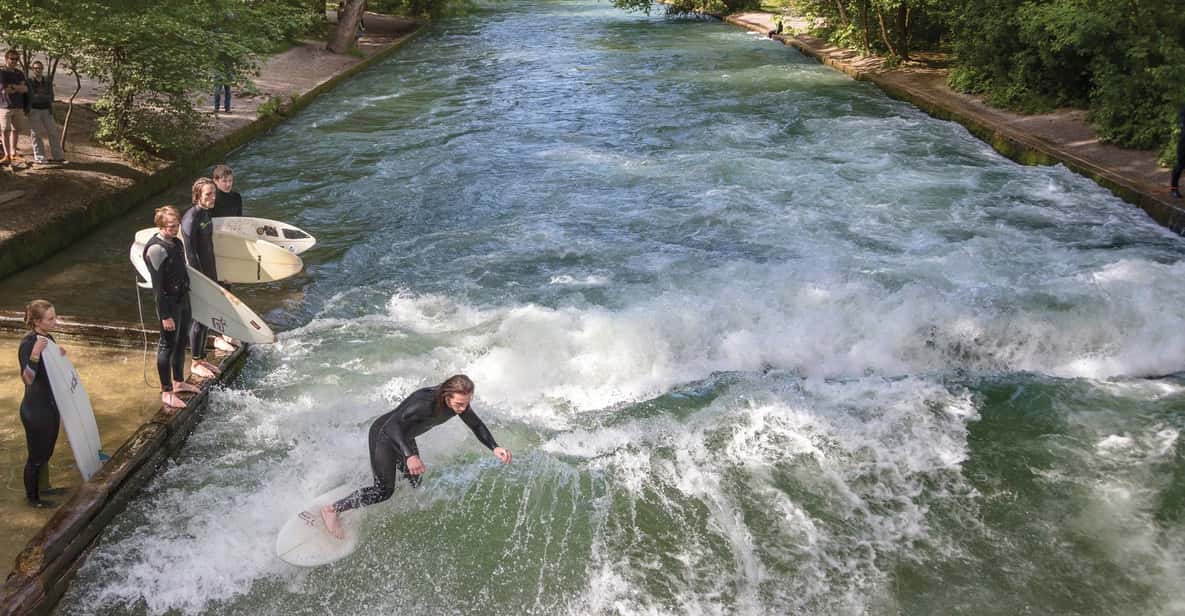
The price is listed at $170 per person for the roughly 3-hour experience. On paper, that can sound pricey. In practice, it’s easier to justify when you see what’s covered.
You’re not just paying for “a ride on a wave.” You’re paying for:
- A tour guide and instructor-style coaching
- Full surfing gear (board, leash, fins, wax)
- Cold-water wetsuit + booties
- Extra options like a bodyboard to try
- Drinks
- Assistance during the session
If you’ve ever tried to assemble wetsuits, boards, and local instruction yourself in a place you don’t know, the cost can climb fast. Here, the gear is handled, and the group is small enough that coaching has a real chance of affecting what you can do in one session.
And because the wave is centrally located, you’re also saving time. You’re not spending your day commuting to a remote surf spot.
The Eisbachwelle reality check: who it’s good for (and who should skip it)
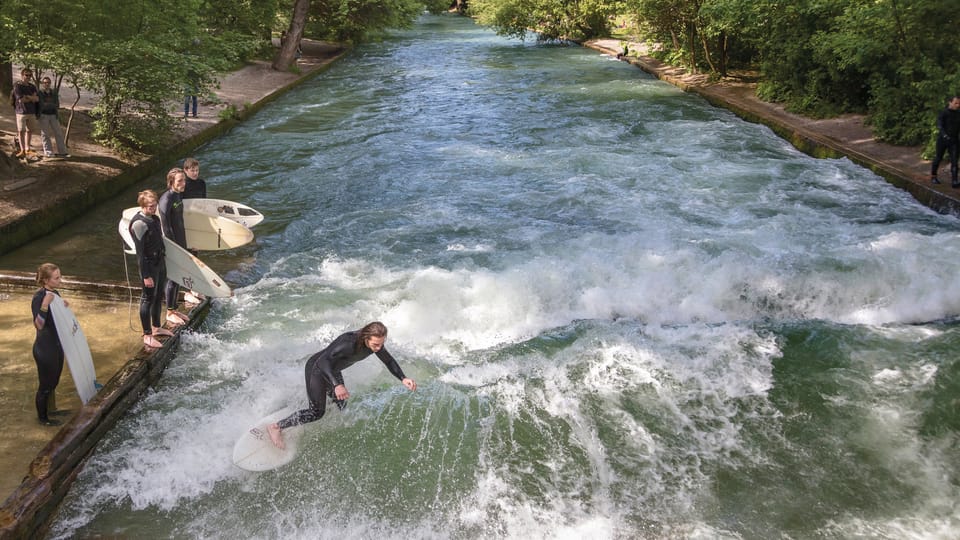
This experience is aimed at beginners and intermediates, and it also works for advanced surfers because river waves have multiple demands and setups. The key is that you’re learning a technical skill, in cold water, in an environment with swimmers and equipment nearby.
That means it’s a great fit if:
- You can handle cold water and follow instruction
- You can swim (it’s not suitable for non-swimmers)
- You want structured coaching in a famous city wave
It’s not suitable if:
- you’re pregnant
- you have mobility impairments
- you have epilepsy
- you’re under 18
- you’re under 4 ft 9 in (150 cm)
- you’re over 275 lbs (125 kg)
- you’re unable or unwilling to accept the recreational nature and inherent risk
You should also know that the activity is tolerated in Munich but is at your own risk. The instructor guidance helps, but this isn’t a risk-free pool lesson.
Max and the guide team: what good instruction looks like here
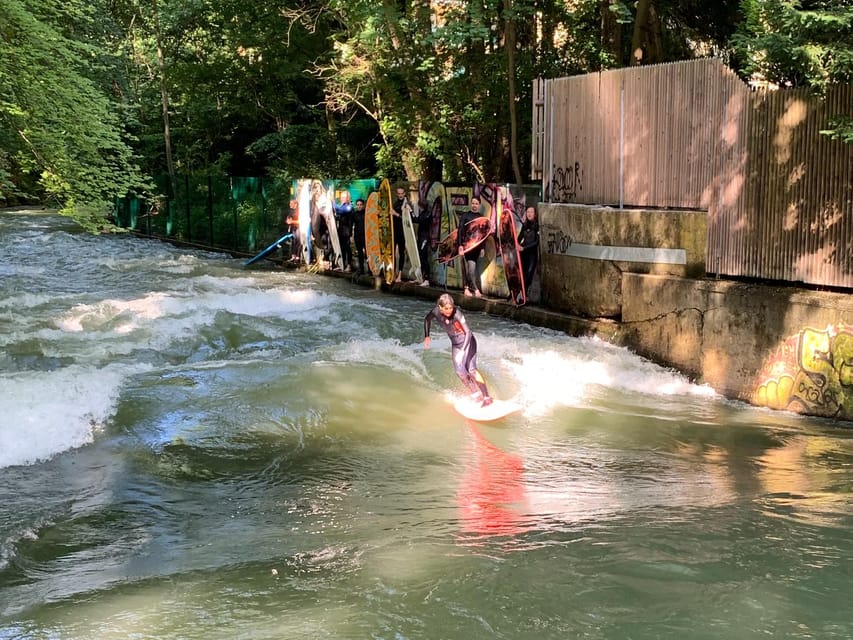
If you’re paying for a guided surfing session, you want a coach who can see what you’re doing wrong quickly. From the information shared, Max is praised for being kind, down to earth, understanding, and very professional.
That combination matters on a wave like Eisbachwelle. River surfing can be humbling fast: you may fall repeatedly, you’ll fight cold-water stiffness, and the wave’s timing can feel slightly different each attempt. A patient guide helps you keep trying without turning the day into frustration.
You’ll also get help with practical stuff:
- how to use the equipment you’re given
- how to focus on the ride so you’re not wrestling gear
- photos and assistance so you can enjoy the moment and not just survive it
Equipment choices that help beginners: soft tops and 5 mm hooded wetsuits
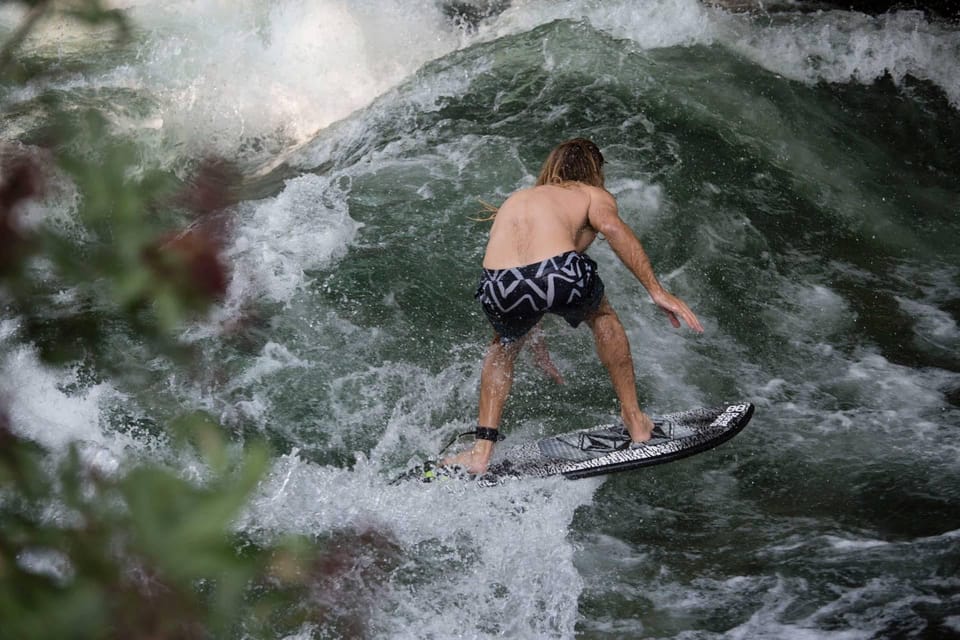
One of the smart things about this setup is the equipment selection.
Soft-top boards (7’0”) for stability
They use soft-top surfboards of at least 6’–7’ length, and specifically a 7’0” board for this spot. That extra length and foam volume help you:
- stay more stable while you learn stance and timing
- avoid sharp-impact injury risks if you fall or get clipped
- reduce damage compared to harder boards
Thick wetsuit + booties for the real river temperature
The wetsuit is 5 mm neoprene with an integrated hood, plus 4 mm neoprene booties. Cold water is part of the Eisbach experience, and the goal is to keep you in the water long enough to improve.
If you tend to get cold quickly, this gear is still thick—but you should expect you’ll feel the cold. The best mindset is to focus on technique and let the wetsuit do its job.
Drinks, photos, and the small-group feel
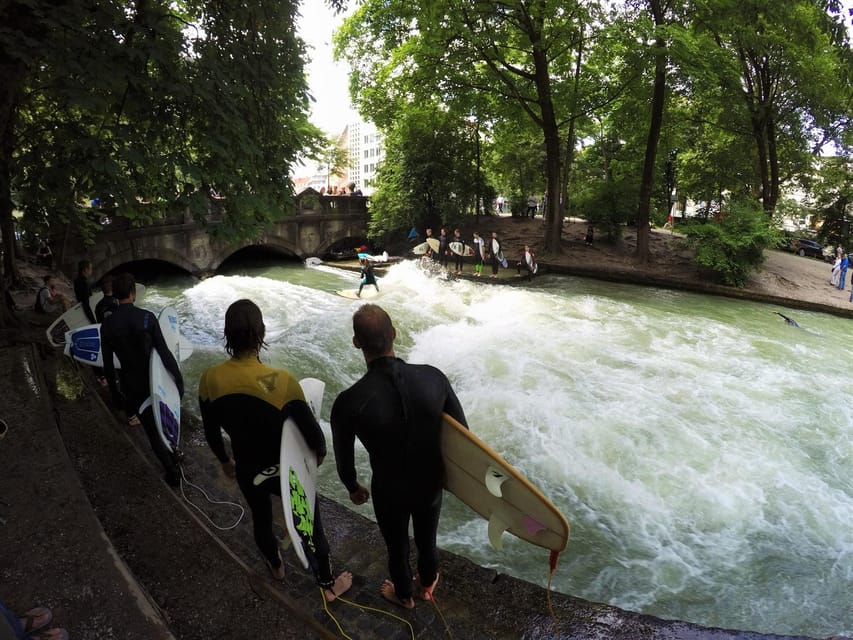
This session isn’t just about the wave. It’s also about pacing and support. You get:
- drinks as part of the experience
- photo support so you can capture your ride without managing your own camera while cold and focused
- assistance throughout the session
The small group size (up to 10) helps in real ways. It makes it easier for the instructor to check your progress and keep an eye on the water around you.
Also, you’re doing this in Munich. After your surf session, you’re only minutes away from the park and city center energy, which makes the day feel full instead of one-note.
Practical tips so you’re comfortable from the first minute
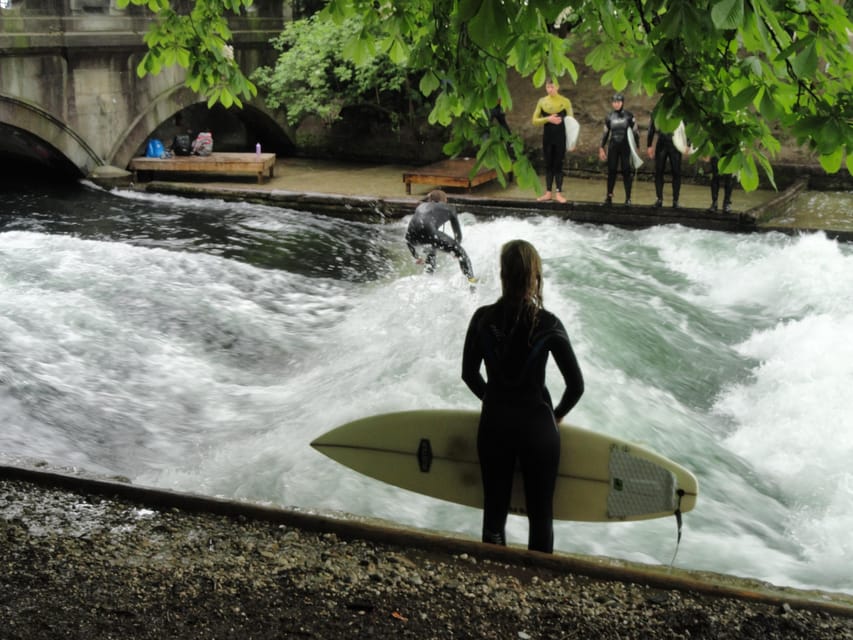
Here’s how to set yourself up for a smoother session using only what’s required and what helps you make the most of the time.
- Bring passport or ID card
- Pack change of clothes (you’ll be getting cold and wet)
- Wear outdoor clothing appropriate for the day
- Have your phone with you
- Be honest about your comfort level with cold water and getting in and out of the canal
The instructors give safety guidance for the wave spot, but you still own your choices. Follow the upstream right-of-way rule, watch for swimmers, and pay attention to what’s underwater. That’s how you keep learning fun instead of scary.
Should you book the Munich Eisbachwelle surfing experience?
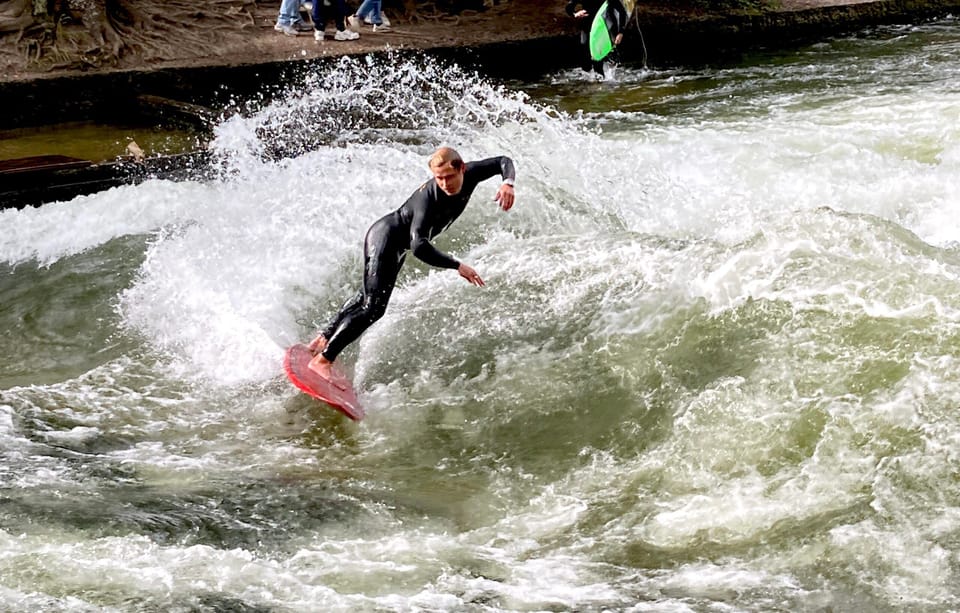
Book it if you want:
- a famous Munich activity that feels local, not touristy
- real instruction for beginners and intermediates
- included gear that makes cold-water surfing manageable
- a short 3-hour session that fits into a city itinerary
Skip it if:
- you’re not comfortable swimming or managing cold water
- you’re looking for a casual, low-skill activity
- you fall into any of the listed non-suitable categories (including epilepsy, pregnancy, mobility limits, age limits, and height/weight constraints)
If you match the conditions and you like learning a technical sport with a small, supportive group, this is one of the more memorable ways to experience Munich beyond beer halls and museums. The Eisbachwelle is a simple idea—standing waves right in town—but the coaching and gear make it something you can actually work on, not just watch.
FAQ
How long is the Munich Eisbachwelle surf experience?
It runs for about 3 hours. You can check availability to see the starting times.
What is the price per person?
The price listed is $170 per person.
What’s included with the session?
You get the tour guide, assistance, drinks, surfboards (including a 7’0” soft-top), leash and fins, surf wax, a wetsuit (5 mm one-piece with integrated hood), 4 mm neoprene booties, and you can also try a 42″ bodyboard.
What time do sessions start?
The meeting times are 8am, 12pm, or 3pm. Availability determines the exact start you can book.
Who is this experience for?
It’s for beginners and intermediates (and it can also work for advanced surfers). It also requires that you are able to swim.
Does the experience run all year?
Yes. It’s offered 24/7 and all year round.
What should I bring with me?
Bring your passport or ID card, change of clothes, outdoor clothing, and you should have a phone with you.
Is it safe for everyone?
It’s not suitable for pregnant women, people with mobility impairments, children under 18, non-swimmers, people with epilepsy, people under 150 cm, or people over 125 kg. Surfing is tolerated in Munich but is at your own risk, so you must accept the recreational nature of the activity.