Munich can look familiar fast, then this tour flips the angle. I really like the focus on Giesing’s lived-in winter mood, and I also love how the route turns architecture into something you can actually see and understand. One thing to consider: it is a lot of winter walking on uneven streets, so comfortable shoes matter.
Philipp (a professional architect) keeps the pace friendly and the explanations clear, so you stop noticing only big sights and start spotting how the city is built and why. You’ll also get a very practical win: a handful of fresh places to revisit after the tour, including Christmas-market stops and photo-worthy spots by the Isar. The main drawback is that it’s not for people with mobility issues or wheelchair users.
If you like street art, design details, and winter lights without spending the whole day in crowds, this is a smart choice for a short window in Munich.
In This Review
- Key highlights at a glance
- Munich’s south side in winter: Giesing, street art, and the Isar at night
- The “boat on the bridge” factor
- Piazza Zenetti and the easiest way to spot your guide
- Münchner Volkstheater and Bahnwärter Thiel: learning to read Munich’s built world
- Stop 2: Münchner Volkstheater (guided)
- Stop 3: Bahnwärter Thiel (guided)
- MS Utting, Lagerhausstrasse, and the Isar: the bridge moment that clicks
- Stop 4: MS Utting on the bridge at Lagerhausstrasse (guided)
- Stop 5: Dreimühlenstraße (guided)
- Stop 6: Wittelsbacherbrücke (guided)
- Claude-Lorrain-Straße: street art and the human scale of “alternative” Munich
- Stop 7: Claude-Lorrain-Straße (guided)
- Where the Christmas markets fit
- Little Venice and Gans Woanders: ending with a photo-friendly winter mood
- Stop 8: Little Venice (guided)
- Stop 9: Finish at Gans Woanders
- Price and timing: is $36 worth it for only 2 hours?
- Who this tour suits best (and who should skip it)
- Should you book? My honest take
- FAQ
- How long is Munich’s Hidden Architecture Guided Tour?
- What languages are available for the tour?
- Is the price $36 per person, and what’s included?
- Where do I meet the guide?
- How do I get to the meeting point by subway?
- Is this tour suitable for wheelchair users or limited mobility?
Key highlights at a glance
- Piazza Zenetti meet-up that’s easy to find, plus a clear visual cue for Philipp’s colorful outfit.
- The Isar River at night, including nature views tied to a willow island.
- MS Utting on the bridge (a NYT-noted moment) that reframes Munich’s waterfront.
- Street art and cultural hubs created with shipping containers and wood.
- Three alternative Christmas markets built into a compact 2-hour walk.
- A guided route through 700+ years of history, focused on the south districts.
Munich’s south side in winter: Giesing, street art, and the Isar at night
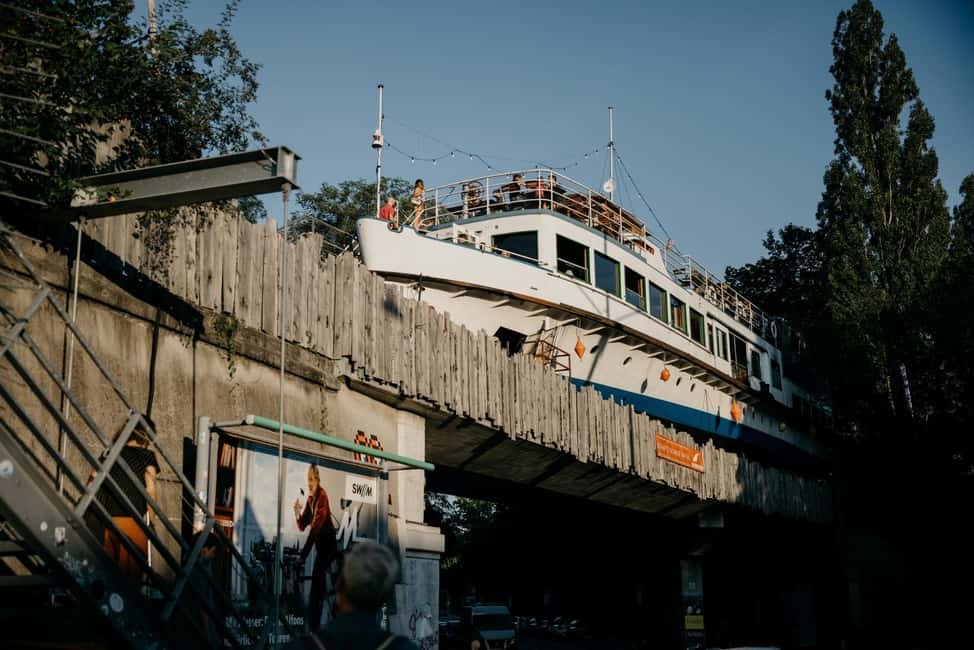
Winter changes Munich’s personality. The center can feel polished and busy, but the south side has a more everyday rhythm, especially around Giesing. This tour leans into that. Instead of treating the city like a set of famous postcards, I like the way the walk connects neighborhoods, buildings, and people’s creative spaces into one coherent story.
You also get the best kind of Christmas-market experience: not just stalls and lights, but the surrounding setting. Part of what makes the markets special here is that they feel tied to the street, not separated from it. You’ll pass through areas where local culture shows up in the details—like street art and community-built hangouts made from shipping containers and wood structures.
You can also read our reviews of more guided tours in Munich


The “boat on the bridge” factor
A major reason to join this tour is the route’s payoff at the Isar. There’s a particular moment featuring MS Utting that even the New York Times used as a prompt: look for the boat on the bridge. That line matters because it tells you this isn’t only a historical commentary. It’s also a visual check-and-see moment—something you can frame, photograph, and remember.
Piazza Zenetti and the easiest way to spot your guide
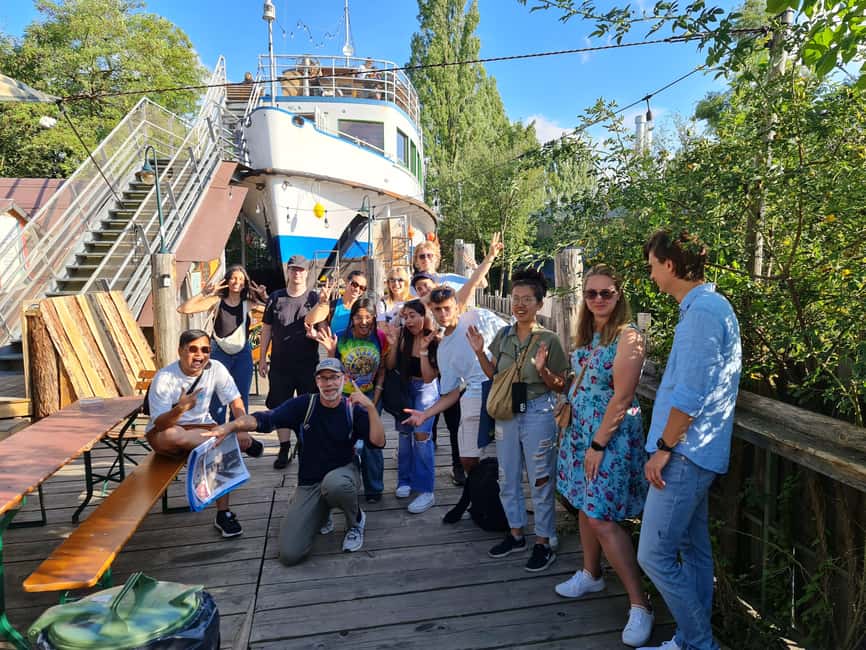
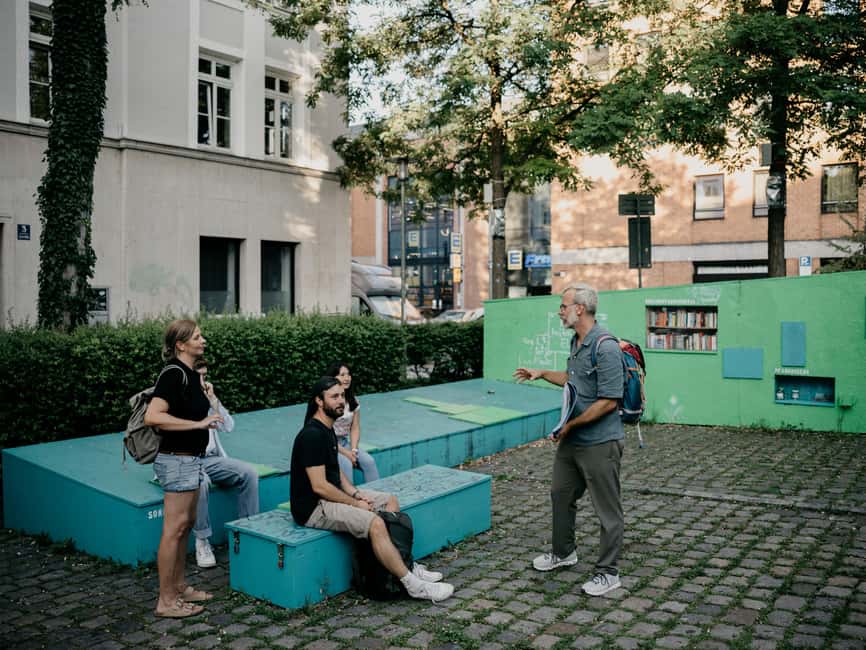
The tour starts at Piazza Zenetti, at the intersection of Tumblingerstrasse and Zenettistrasse. If you’ve never been, you can still find it quickly: the meeting point has turquoise and green outdoor furniture and small trees in boxes.
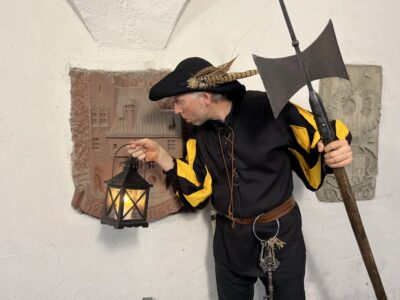
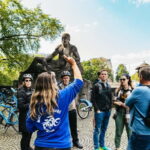
Philipp’s easy to identify. He’ll be wearing a colorful backpack and holding a blue folder. That tiny detail saves time if you arrive a little early (and in winter, every minute counts).
How to get there: the simplest subway approach is to get off at U3/U6 Goetheplatz and then walk about 10 minutes to Zenettiplatz. If you’re coming from farther away, this is usually faster than trying to time another connection late in the day.
What to bring for the start: warm layers, comfortable walking shoes, and a camera. You’ll want it—some of the best scenes are at dusk and after.
Münchner Volkstheater and Bahnwärter Thiel: learning to read Munich’s built world
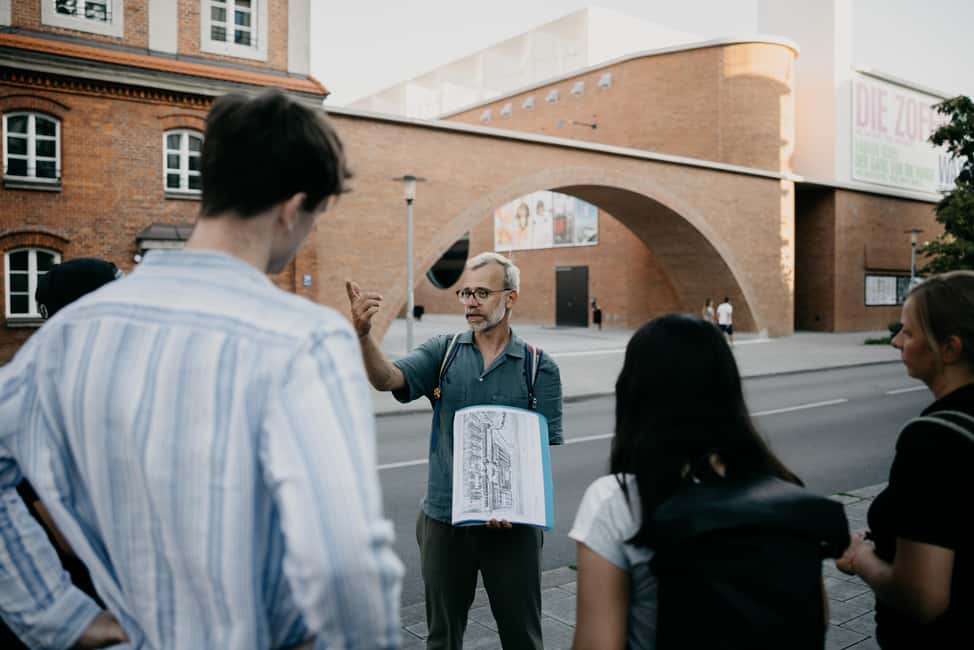
Your first stops set the tone: Munich’s culture isn’t only in museums. It’s also in theaters, streets, and the way people move through spaces.
Stop 2: Münchner Volkstheater (guided)
At Münchner Volkstheater, the guide keeps the focus on what you can see and how to interpret it. A theatre building is often a clue to the city’s values—how art is presented, how architecture supports public life, and how a neighborhood forms around institutions. Even if you’ve walked past similar buildings before, this kind of guided walk helps you notice the relationships: street → facade → entrance → crowd flow.
If you’re the type who likes to understand a place quickly, this first segment is useful. You start building a mental map instead of just collecting photos.


Stop 3: Bahnwärter Thiel (guided)
Next comes Bahnwärter Thiel, another stop where the guide’s architectural lens pays off. Rather than treating it like a quick snapshot stop, you get a guided explanation of what matters here—so your eye doesn’t stay stuck on surface appearance.
The practical value: you’ll likely start recognizing patterns by the time the tour reaches the river crossings. That makes the later highlights feel less random and more earned.
MS Utting, Lagerhausstrasse, and the Isar: the bridge moment that clicks
After the early cultural stops, the route moves toward the Isar, and the energy shifts. The city feels more cinematic when water enters the picture, and this tour uses that timing on purpose.
Stop 4: MS Utting on the bridge at Lagerhausstrasse (guided)
This is the signature moment. MS Utting is seen from the bridge, and the framing is the point. The New York Times mention is not just name-dropping—it signals that the boat-on-bridge view is the kind of detail you’d miss if you weren’t told to look.
When you’re there, watch how the bridge and the river work together. The scene looks different as you change your angle by a few steps. That’s exactly why guided walking helps: you learn where to stand and why.
Stop 5: Dreimühlenstraße (guided)
Dreimühlenstraße is part of the “slow down and look” stretch. The guided stop helps connect what you saw on the bridge with the feel of the nearby streets. This is where you can start spotting how the Isar corridor influences the surrounding neighborhood—people, paths, and the way buildings relate to water.
Stop 6: Wittelsbacherbrücke (guided)
From Wittelsbacherbrücke, you get another vantage that ties everything together. Bridges are great because they show the city from two directions at once: what’s behind you and what’s ahead. In winter, the light often makes water look darker and more dramatic, which helps those long views feel worth the cold.
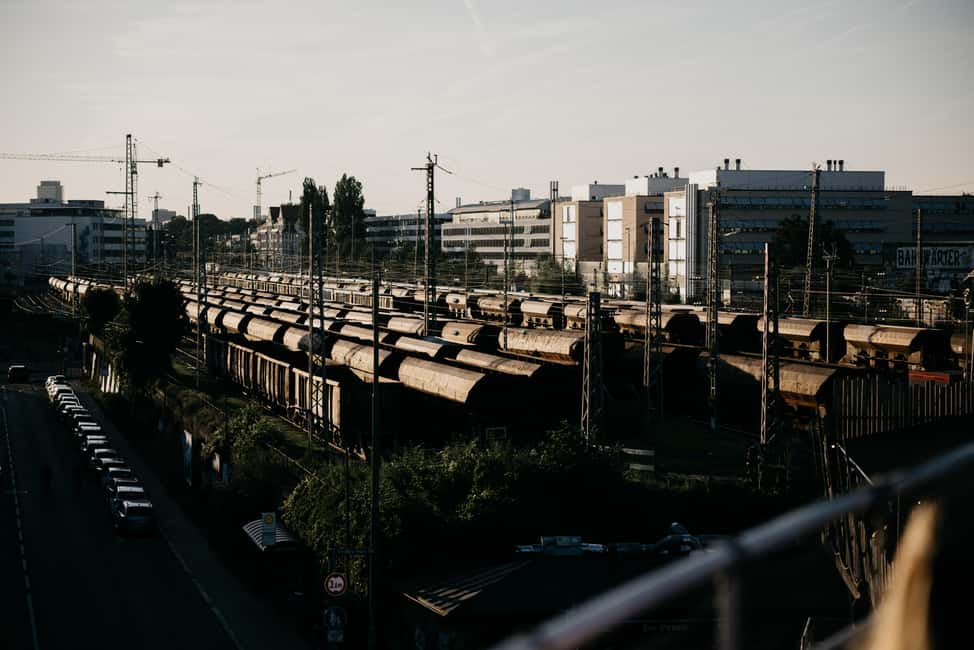
This is also where the tour’s nature element comes through. The highlights mention views of the Isar and a willow island. Even if you only catch part of it in the evening light, it changes the whole feel of the walk—from urban design to living landscape along the river.
Claude-Lorrain-Straße: street art and the human scale of “alternative” Munich
Once you’ve spent time with river geometry and bridge views, you’ll be ready for something more human and expressive. This part of the tour leans into street art and cultural spaces that feel made by people, not only by planners.
Stop 7: Claude-Lorrain-Straße (guided)
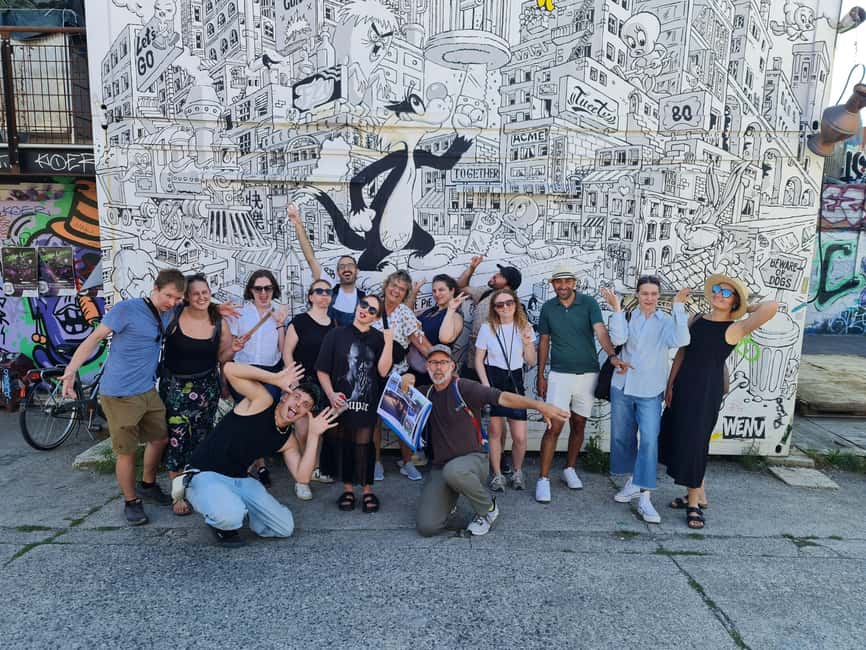
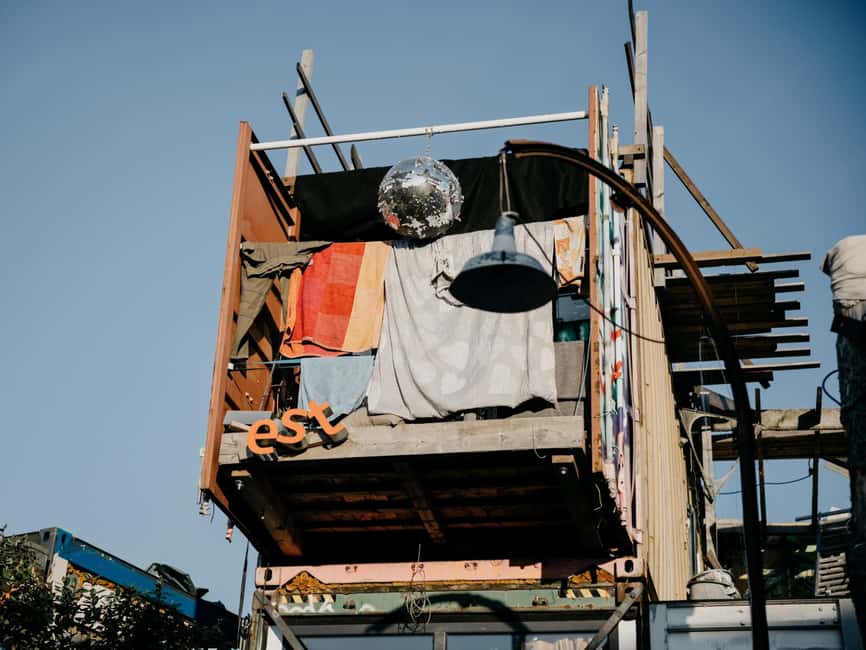
Claude-Lorrain-Straße is where the tour’s alternative identity becomes more obvious. The route highlights street art and cultural hubs built from shipping containers and wood. Even if you don’t consider yourself a street-art person, this is still worthwhile. The guide helps you look at art as information: style, location choices, and what a space says about the community using it.
A small but real benefit here: you stop guessing what you’re looking at. You learn how to interpret what you’d otherwise treat as background decoration.
Where the Christmas markets fit
The tour includes visits to three Christmas markets described as cool and alternative. In a short 2-hour window, that means the markets aren’t treated as destinations you park beside for long meals. Instead, they act like changing scenes: you walk in, you get context, you see the stalls and lights, then you move on while the night air keeps everything energetic.
Because food and drinks aren’t included, you can decide how much warming-up you want. If you want tea or Glühwein, plan to buy it on your own at the stalls that fit your taste.
Little Venice and Gans Woanders: ending with a photo-friendly winter mood
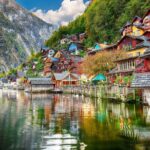
The last stretch takes you toward the Isar-side nickname locals use: Little Venice.
Stop 8: Little Venice (guided)
Little Venice is the kind of name that gives you expectations, but the real value is how the guide helps you interpret the setting. At this point in the walk, you’ve already trained your eye on the river corridor. That makes it easier to spot what makes this pocket feel different—its position near the water and the way the neighborhood looks when you’re not staring straight down major avenues.
In winter, this is often where photos turn out better than you expect, because the river reflections and darker sky make lights and textures stand out.
Stop 9: Finish at Gans Woanders
The tour finishes at Gans Woanders. It’s a good handoff point: you can stop there for a snack if you want to keep the evening going, or simply use it as a way to reset your route back through Munich.
One detail that matters for planning: the activity notes say it ends back at the meeting point, but your itinerary also specifies Gans Woanders as the finish marker. Either way, the tour is designed to bring you back into an easy re-entry situation. If you’re planning a later dinner, keep it flexible and give yourself time to warm up after the walk.
Price and timing: is $36 worth it for only 2 hours?
At $36 per person for about 2 hours, the value is strongest if you want guidance and context more than a long shopping spree. Food isn’t included, and transportation to the meeting point isn’t included either. So this isn’t a “free dinner and a show” deal.
What you are paying for is the exact thing many independent walks lack: a structured route with a professional architect’s eye. Philipp doesn’t just point at buildings. He helps you notice small details and understand how the south districts fit into Munich’s bigger story—700+ years of history without turning the tour into a lecture.
This format also works well for winter. You don’t need all afternoon. You get highlights—street art, three alternative Christmas markets, and the Isar scenes—before the night gets too late.
If you’re short on time, this tour can be a smart first-or-second evening activity. It gives you enough orientation that you’ll know where to return for photos or markets on another day.
Who this tour suits best (and who should skip it)
I’d send you on this tour if you:
- Like seeing Munich beyond the usual center loop
- Enjoy architecture talks that stay connected to what you see on the street
- Want Christmas markets, but in settings that feel local and less staged
- Prefer a guided walk where the guide answers questions as you go
I’d think twice if you:
- Need wheelchair-friendly routing. This one isn’t suitable for wheelchair users or people with mobility impairments.
- Hate cold-weather walking. You’ll be outside for the full duration, so wear layers and accept that winter air is part of the experience.
This is also a good fit for mixed interests—architecture people will get their details, and design-curious visitors will still enjoy the street art and market atmosphere.
Should you book? My honest take
If your Munich plan includes one winter walk where you’ll learn something real and also see the city from a different angle, book it. The best reason is the combination: MS Utting on the bridge, Isar views (including the willow island area), and street art/cultural stops, all capped with three alternative Christmas markets.
Where it may not match your goals is if you want a relaxing sit-down food tour or a fully accessible route. This is a walking tour, guided and structured, with enough winter effort to earn its photos.
If you’re choosing between “just wander” and a guided route, the guidance here is the point. It turns small details into a payoff—and it gets you into corners of Munich you’d likely miss on your own.
FAQ
How long is Munich’s Hidden Architecture Guided Tour?
It lasts about 2 hours. Exact starting times depend on availability when you book.
What languages are available for the tour?
The live guide offers tours in English and German.
Is the price $36 per person, and what’s included?
The tour is $36 per person. It includes a guided walk in Munich’s south district, plus visits tied to three alternative Christmas markets, and time to see the city and the Isar by night. Food and drinks are not included.
Where do I meet the guide?
You meet at Piazza Zenetti, at the street intersection of Tumblingerstrasse and Zenettistrasse. The meeting spot has turquoise and green outdoor furniture and small trees in boxes.
How do I get to the meeting point by subway?
It’s best to get off at the subway station U3/U6 Goetheplatz, then walk about 10 minutes to Zenettiplatz.
Is this tour suitable for wheelchair users or limited mobility?
No. It is not suitable for wheelchair users or people with mobility impairments.