REVIEW · DACHAU MEMORIAL TOURS
Dachau Small-Group Half-Day Tour from Munich By Train
Book on Viator →Operated by In Their Shoes Dachau Memorial Tours · Bookable on Viator
Dachau hits fast, and then stays. This small-group half-day tour from Munich brings you to the Dachau Concentration Camp Memorial Site with a licensed guide who frames what you’re seeing in clear, chronological context.
I especially like the guided walk through the parts open to the public, not just a quick look-and-go. I also like the built-in train connection from Marienplatz, which keeps the day from turning into transit stress. One drawback to know up front: the subject matter is heavy, and the tour moves at a pace that can leave you wanting a little more quiet time in the museum rooms.
In This Review
- Key points at a glance
- A Somber Half-Day With a Licensed Guide
- Train Straight from Marienplatz: How the Transport Works
- First Moments at the Memorial: Getting Oriented Fast
- The Story on Foot: From Nazi Power to Dachau’s Role
- Key Places You’ll See: Gate, Camp Areas, and Prisoner Life
- Liberation, Aftermath, and the 1945–1965 Gap
- Museum Time: Enough to Learn, Not Enough to Wander
- Comfort and Timing: Shoes Matter and Weather Changes Everything
- Price and Value: Why This $60.46 Makes Sense
- Who Should Book This Tour from Munich (and Who Might Skip It)
- Should You Book This Dachau Tour from Munich?
Key points at a glance
- Train-and-bus routing from Munich keeps you moving with fewer delays
- Small groups (max 20) means your guide can keep track of everyone
- A structured historical storyline covering the rise of the Nazis to Dachau’s aftermath
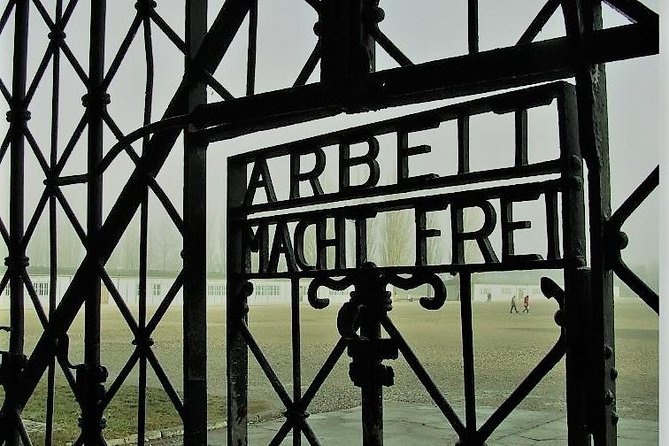
- Time on key memorial areas including the main gate house with the ARBEIT MACHT FREI slogan
- Respectful, practical guidance for a place where getting lost is easy
A Somber Half-Day With a Licensed Guide
This is not a light sightseeing stop. Dachau is a memorial site, and the atmosphere changes the moment you pass through the gates. The value of this tour is that it gives you a map of meaning—what you’re looking at, why it mattered, and how Dachau fit into the wider Nazi system of repression.
I like that the tour is led by a fully licensed professional guide. When a place is this emotionally intense, you don’t need trivia; you need structure. A good guide helps you hold the details together: the timeline, the camp system, and the human consequences.
One reason the ratings are so high is the kind of leading you get. Guides such as James and Samuel (seen in past groups) are praised for staying respectful while still answering the big questions, and for managing the flow of a group through crowded moments without turning the site into a bottleneck.
You can also read our reviews of more tours and experiences in Munich


Train Straight from Marienplatz: How the Transport Works
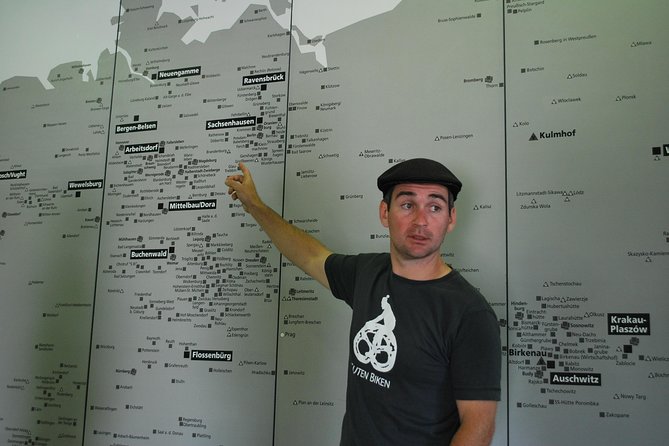
Your day starts in Munich at Marienplatz 15. The meeting time is tight: arrive by 8:45 am, because the tour leaves 9:00 am sharp. If you’re the type who likes a buffer, plan for it. This isn’t a slow roll—it’s a scheduled half-day that runs on transit timing.
The tour includes round-trip public transport costs, so you’re not juggling tickets and connections while thinking about where you’ll be standing later. In practice, the route is straightforward: you take a train from central Munich with your guide, then you connect onward by bus to reach the memorial area. One review highlights that the guide can steer you to the best end of the platform to wait on, which is a small thing—but those small things can save real time.
The tour also gives you a mobile ticket, which is handy on busy travel days. And since this is offered in English, you can focus on the content without worrying about language gaps.
First Moments at the Memorial: Getting Oriented Fast
When you arrive, you’ll want two things right away: orientation and pace. This tour is designed to deliver both. You cover the areas accessible to the public, but you’re not left to interpret everything alone—your guide points out what’s easy to miss and explains what each part means.
The memorial isn’t set up like a casual museum with a single route. You can walk around and still not understand the sequence. That’s where a guide earns their fee. The tour keeps you moving through the grounds while providing the “why” behind what you see.
Also, go in knowing the site mixes indoors and outdoors. Weather can absolutely shape your comfort. If it’s rainy or cold, you’ll still be outside at times, and the ability to move smartly matters.
The Story on Foot: From Nazi Power to Dachau’s Role
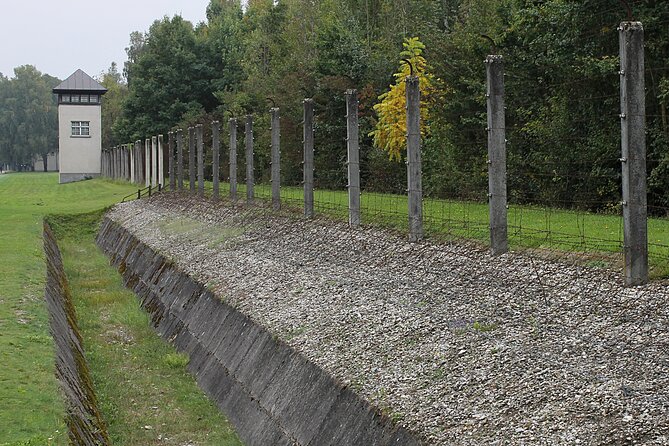
What makes this tour more than a list of sites is the way it explains Dachau in the wider Nazi machine. You’ll cover major turning points that lead into the camp system, including:
- the rise of the Nazi Party in the 1920s, up to Hitler’s appointment as Chancellor in 1933
- the burning of the Reichstag and how concentration camps formed afterward
- Dachau’s function as a model for other camps
- the three major phases of the camp system
- the role of the SS training facility
The most valuable part for many visitors is how your guide connects the physical space to historical intent. You’re not just looking at buildings; you’re looking at a system designed for control, terror, and exploitation.
There’s also explicit coverage of how Dachau fits into the larger concentration camp framework, including references to the wider camp system—ghettos and extermination camps—so the story isn’t trapped inside one location.
Key Places You’ll See: Gate, Camp Areas, and Prisoner Life
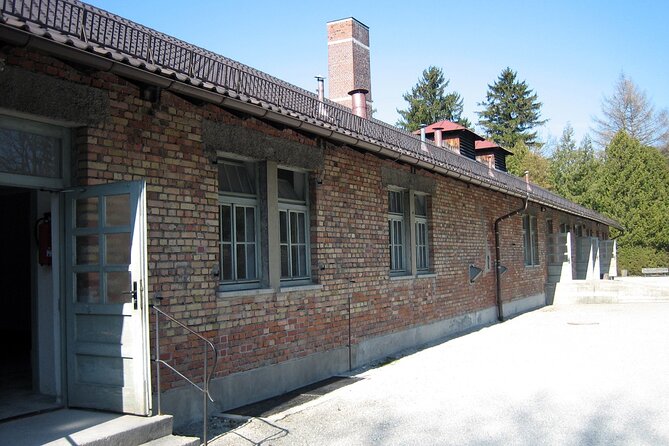
The tour takes you through the memorial areas that visitors can access. Expect to spend time at major points tied to camp operations and the daily mechanics of imprisonment.
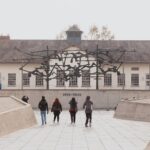
One highlight that sticks in your mind is the Jourhaus (main gate house) and the infamous slogan ARBEIT MACHT FREI. Even if you already know the phrase, seeing it as part of the memorial layout hits differently. Your guide uses that moment to explain the psychology of the regime—how propaganda and cruelty are linked.
You’ll also hear about:
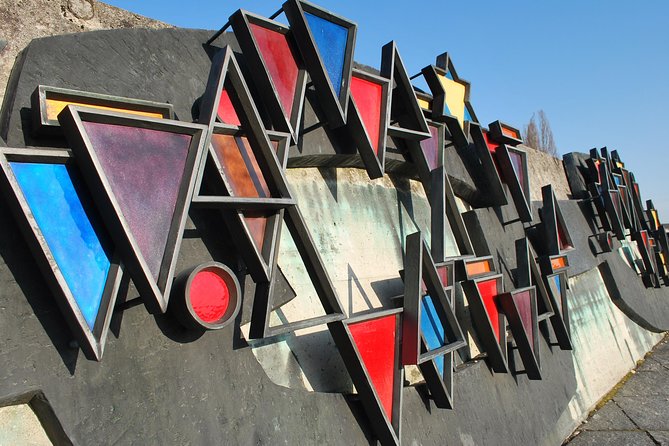
- how prisoners were registered and sorted into different categories
- how those categories were shown on uniforms (including the color of stars mentioned in past accounts)
- how the camp evolved over time, rather than staying frozen in one snapshot
In plain terms: you’re learning that the camp system was organized. It had steps. It had paperwork. It had classification. It had training. That matters because it shows how atrocity scales when a society turns bureaucracy into a weapon.




Liberation, Aftermath, and the 1945–1965 Gap
A lot of people expect the story to jump from camp operations straight to the liberation point. This tour does cover liberation and aftermath, but it also slows down for the period that many visitors don’t think about much: what happened at Dachau between 1945 and the unveiling of the Documentation center in 1965.
That middle stretch is crucial. It helps you understand how sites of mass suffering are handled after the war—how evidence is preserved, how history is communicated, and how memory is built over time. It’s not just grief. It’s also documentation.
Then the guide connects events that fed the camp system earlier on, including Kristallnacht (1938)—the pogrom against Jews—and the first major influx of Jewish prisoners at Dachau. That part gives context for how quickly persecution escalates from policy and propaganda into imprisonment and mass violence.
Museum Time: Enough to Learn, Not Enough to Wander
This is where you should calibrate expectations. One review notes that the pace is strong and that it can feel like there’s a bit less time to read inside museum spaces.
So here’s my practical advice: if you’re the type who wants to read every panel slowly, this may feel short. If you want a guided framework and then you’re okay with skimming while staying respectful, you’ll do fine.
Because the tour is scheduled for about 5 hours, it’s designed to cover all the public areas plus the key context. That means you get a balance: guided explanation during the walk, and enough time to register what you’re seeing without turning the day into a marathon.
Comfort and Timing: Shoes Matter and Weather Changes Everything
You’ll be walking on mixed surfaces—there’s gravel and cement underfoot. Comfortable shoes aren’t optional. Also dress for the day you actually have, not the forecast you hoped for. The tour mixes indoor and outdoor segments, and in bad weather the day can feel longer.
Plan to keep snacks simple. Food and drinks aren’t provided, and there’s no built-in refreshment stop during the tour. Past accounts note you can buy refreshments at several locations near the meeting areas, so do that before you head out.
If you’re sensitive to intense environments, factor in emotional fatigue too. This tour can be mentally draining in a way that good intentions can’t fix. Take breaks where the guide suggests, and remember: you’re allowed to step back for a moment.
Price and Value: Why This $60.46 Makes Sense
At $60.46 per person for about 5 hours, the value is mainly in what’s included:
- a fully licensed professional guide
- round-trip public transport from Munich
- free admission ticket for the memorial experience
For a site like Dachau, your biggest “expense” is attention. If you try to do it independently, you can spend extra time figuring out transit and you can also miss the sequencing that helps it all make sense. Paying for a guide here buys clarity and keeps the day moving efficiently.
Group size also matters. With a maximum of 20 travelers, you’re more likely to stay together and hear your guide without constant scrambling. That’s not a luxury at a place like this—it’s how you keep the experience respectful and orderly.
Who Should Book This Tour from Munich (and Who Might Skip It)
Book this if you want a structured, English-language guide and you’re okay with a solemn setting. It works well for people who like history but also want their questions answered in real time—especially those who don’t want to piece together Dachau’s timeline and the camp system on their own.
It can also be a strong choice if you’re traveling with teens. Past accounts describe visiting with family and getting explanations that connect the rise of the Nazi party to the broader warning signs of how societies can slip. Your mileage will depend on what your guide emphasizes, but the tour content is designed for understanding, not just memorization.
Skip it (or choose another format) if you want lots of free-roaming time. This is a guided experience with a defined flow. Also, note the memorial site rules: children under 14 can’t join guided tours. If you’re bringing younger kids, you’ll need to plan differently.
Should You Book This Dachau Tour from Munich?
If you’re visiting Munich and you want Dachau on your trip, I think booking this is the smart way to do it. The guided structure, the efficient train-and-bus logistics, and the fact that transit and admission are handled reduce friction so you can focus on the meaning.
Do it if you’re ready for a heavy, educational day and you’ll wear comfortable shoes. Skip it only if you need slower museum time or you’re looking for something lighter than a memorial of systematic terror.