REVIEW · THIRD REICH & WWII WALKING TOURS
Third Reich & WWII Walking Tour
Book on Viator →Operated by munich walk tours Ralph Luenstroth · Bookable on Viator
Hard to look away from Munich’s Nazi past.
This 2.5-hour Third Reich walking tour connects major places like Königsplatz, Feldherrnhalle, and Hofbräuhaus to the story of how Nazism rose and how Munich was affected in WWII. I like that it stays site-based, so you’re not stuck with facts floating in the abstract, and I like the way the guides keep the tone serious and respectful on a heavy subject. One consideration: you’re mostly on your feet with limited downtime, so plan for a workout, not a casual stroll.
The route starts at Marienplatz and finishes near Königsplatz 1, ending at Hitler’s former headquarters. If you’re traveling with kids, note it’s not recommended for children under 12, and the topic is emotionally difficult even when explained with care. Also, it’s sold in English and runs with a small-group setup, which is great for questions, but you’ll still want to dress warm.
In This Review
- Key things that make this tour work
- Third Reich & WWII Walking Tour in Munich: what you’re really seeing
- How the story opens at Königsplatz
- Hofbräuhaus and the first mass meetings that changed everything
- Feldherrnhalle and the failed attempt to seize power
- Hofgarten’s White Rose context: resistance isn’t an afterthought
- Marienplatz to the end at Königsplatz 1: pacing and what to expect on foot
- What you’ll learn from the guide style (and why it matters)
- Price and value: is $35.09 for this walk worth it?
- Who should book this tour (and who may want to skip)
- Should you book the Third Reich & WWII Walking Tour in Munich?
- FAQ
- How long is the Third Reich & WWII Walking Tour in Munich?
- Where does the tour start and end?
- What’s included in the price?
- Is this tour appropriate for kids?
- What language is the tour offered in, and is there a mobile ticket?
- What’s the cancellation policy?
Key things that make this tour work
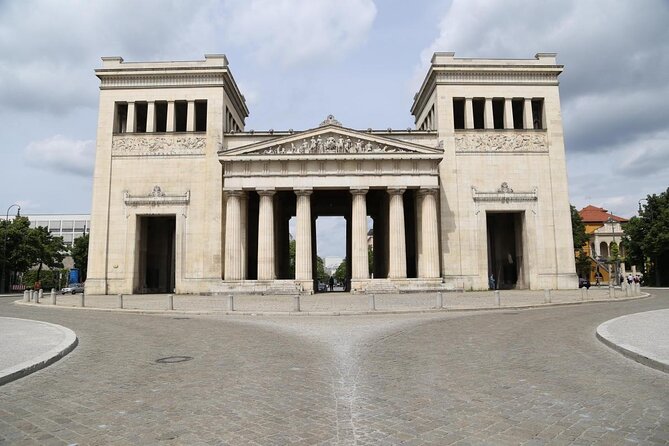
- Königsplatz connects the movement to real mass-rally spaces, not just names and dates
- Hofbräuhaus is treated as a starting point, tied to the first mass meetings of the Nazi movement
- Feldherrnhalle brings in the failed power grab, so you see the plan before the aftermath
- Hofgarten includes the White Rose resistance, balancing Nazi rise with resistance and moral pushback
- You finish at Hitler’s former headquarters, which gives the story a clear “end point”
- Small-group pacing (up to 10 people) helps you ask questions during a tough walk
Third Reich & WWII Walking Tour in Munich: what you’re really seeing
This tour is about how a political movement takes shape in a city you thought you knew. Munich is full of beautiful buildings and everyday street life, but this walk purposely threads through the places where Nazi power and propaganda became visible.
You’ll get context for how things got bad before they got worse: Germany coming out of World War I as a defeated nation, Munich caught in hyperinflation, and a period marked by revolution and assassination. The point isn’t shock for shock’s sake. It’s cause-and-effect, walking you from public spectacle to political violence to the long shadow that followed.
The group format is built for real conversation. It’s limited in size (small-group experience), and that matters on a subject where you’ll likely have questions about details, responsibility, and how people could be pulled in.
You can also read our reviews of more walking tours in Munich
How the story opens at Königsplatz
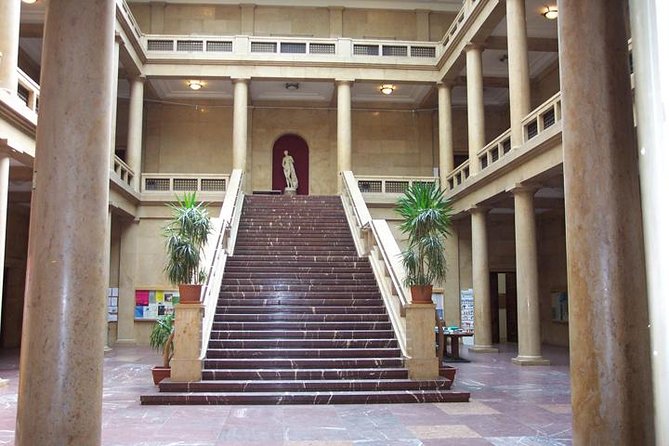
Königsplatz is where you can feel how space gets used for ideology. It’s one of the most important stops because it ties the Nazi movement to mass rally culture—the kind where crowds, uniforms, and architecture help convince people the movement is inevitable.
On this tour, the Königsplatz stop isn’t presented as “look at the cool old buildings.” You’ll be guided through the atmosphere of the early Nazi years, including how Munich’s instability helped create a fertile environment for a movement like this to grow.
A real plus here is that the tour doesn’t only focus on leaders. You’ll also connect what’s happening in the streets to what that meant for regular life in the city during the WWII era. And since this is a walking tour, you experience the geography rather than just seeing it on a museum panel.
The drawback? This isn’t a quick photo stop. You’ll spend time standing and listening, and there’s not a lot of wandering off to rest stops along the way.
Hofbräuhaus and the first mass meetings that changed everything
The tour connects early Nazi momentum to a very specific kind of public gathering: large meetings at Hofbräuhaus. That matters, because it shows the movement wasn’t born fully formed. It grew through attention, repetition, and the psychology of crowd energy.
You’ll learn how the Nazis went from early gatherings to a public presence that could challenge the existing order. In practical terms, it makes the later attempts at seizing power easier to understand. When you see how they built support in public spaces, you understand why they believed they could push harder.
This stop also helps you see why Munich played such a central role. The city wasn’t just a backdrop. It became a stage for political theater, and the walk shows you how that stage was used.
Wear shoes you’ll trust. Hofbräuhaus area time plus the rest of the route adds up to a lot of time on sidewalks and in squares.
Feldherrnhalle and the failed attempt to seize power
Feldherrnhalle is where the tour turns from growth to confrontation. You’ll hear about the failed attempt to seize power—an inflection point that shows the Nazis weren’t just preaching. They were trying to grab control.
This stop is useful even if you already know the broad storyline. It gives the missing texture: the idea that political movements make choices in real time, and that those choices have consequences even when they fail.
What I appreciate about how the tour frames this is that it’s not just “and then it happened.” It ties the failed coup attempt to what comes next in the Nazi rise—how setbacks don’t stop momentum when propaganda and street-level influence are already in motion.
Because this is a city-center walking route, you may also deal with crowds and narrow spaces. It’s one reason guides who manage group flow really matter here.
Hofgarten’s White Rose context: resistance isn’t an afterthought
A standout element is the stop that brings in the White Rose resistance movement at/near the Hofgarten area. This is important because it shifts the story from only perpetrators and victims in the most general sense to people who resisted and acted on conscience.
On a tour about the Third Reich, it’s easy to get stuck in the darkest parts and leave feeling only heavy. The White Rose segment helps balance that feeling with moral clarity—reminding you that opposition existed even when it was dangerous.
I also like that this is woven into the geography of the city. Resistance isn’t treated like a separate chapter you’d read later in a book. It’s tied back into where you are standing, which makes the contrast land harder.
If you’re sensitive to difficult WWII material, this is still handled respectfully, with time to process while moving to the next site.

Marienplatz to the end at Königsplatz 1: pacing and what to expect on foot
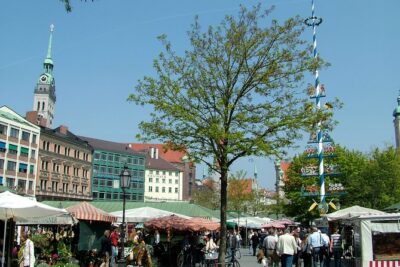
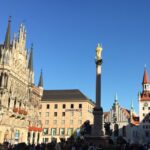
The tour starts at Marienplatz (80331 München) and ends at Königsplatz 1 (80333 München). The ending point matters because the final stretch leads you to Hitler’s former headquarters, giving the route a clear direction rather than a “back to the start” loop.
Expect a duration around 2 hours 45 minutes. In real life terms, that’s enough time to see several sites and hear a detailed narrative, but not enough time to fully recover if you’re not a regular walker.
A practical tip that comes up often: bring a snack and a drink. There’s limited time to rest, and the walk can feel long if you show up hungry or underdressed.
A few reviews also point to a short indoor break in the middle (about 15 minutes). It helps, especially in cold weather, but don’t plan on long sitting time.
Also keep in mind hearing. In wind or crowded areas, a guide’s voice can be tough to catch. If that’s a personal issue for you, consider bringing a device for noise support on your own (or simply position yourself where you can see the guide clearly).
What you’ll learn from the guide style (and why it matters)
This is a hard topic, and delivery is everything. The guides connected to this tour are praised for presenting facts with sensitivity—without softening the reality of what happened.
You may encounter guides such as Michael, Alex, Josh, Danielle, Joel, Ulrich, or Bridget (names that show up in confirmed bookings). Across those different personalities, the common thread is clear narration tied to what you’re seeing in front of you.
Another practical benefit: the tone often includes moments to let the group process quietly, then encourages discussion. That gives you a mental off-ramp so the content doesn’t just rush past.
If you’re a beginner with WWII history, this tour can still work, but it moves through a lot of ground. You’ll get the origin story of Nazism in Munich, the key sites of events, and the resistance thread. It’s not “light context.” It’s structured context.
Price and value: is $35.09 for this walk worth it?
At $35.09 per person for roughly 2.5 hours, the price is mostly paying for three things: a professional guide, a narrative built around specific locations, and time-saving navigation in central Munich.
You’re not just buying access to sites. You’re buying the connective tissue—the “why this mattered” explanation that turns streets and squares into a timeline. That’s where the value is, especially with a topic like this where details matter.
You should also think about what you’d otherwise do for the same value. If you try to piece together a DIY route, you’d spend time finding the best sequence and then guess which details are important. Here, the ordering of stops is part of the service: early growth → major public spaces → confrontation → resistance → culminating in the former headquarters area.
The cost also feels more reasonable when you compare it to paying for multiple separate entries or guides just to get a similar historical through-line. And because it’s in English and designed for small groups, you get more interaction per ticket than you’d in a large bus-style format.
Who should book this tour (and who may want to skip)
This tour is best for you if you:
- want the Nazi origin story tied to Munich’s specific locations
- appreciate a guided explanation that keeps the subject respectful and factual
- can handle 2.5+ hours of walking and standing in city weather
It may not be the best fit if you:
- need frequent breaks or lots of sitting time
- are traveling with children under 12 (it’s not recommended for that age group)
- are looking for something purely sightseeing-focused rather than historical and emotionally heavy
If you’re into WWII history already, this tour helps you see why Munich became a key setting, not just a distant chapter. If you’re newer to it, you’ll still get a clear overview, but be ready for the content density.
Should you book the Third Reich & WWII Walking Tour in Munich?
Yes, if you want a structured way to understand how Nazism rose in Munich and how that story shows up in the city’s most consequential sites. The small-group feel and the tight route through Königsplatz, Hofbräuhaus, Feldherrnhalle, and the Hofgarten area are the reasons this tour earns its reputation.
No, if you prefer light, low-emotion content or you can’t manage a mostly standing walk. This is history with weight, and even with sensitive guidance, it’s not built to be easy.
If you do book, come prepared: comfortable shoes, a warm layer, and a drink/snack to keep your energy steady. It’ll make the experience better and let you focus on the story rather than your legs.
FAQ
How long is the Third Reich & WWII Walking Tour in Munich?
The tour runs for about 2 hours 45 minutes.
Where does the tour start and end?
It starts at Marienplatz, 80331 München, Germany and ends at Königsplatz 1, 80333 München, Germany (the tour ends at Hitler’s former headquarters).
What’s included in the price?
Your ticket includes a professional guide. Admission tickets are noted as not included.
Is this tour appropriate for kids?
It’s not recommended for children under 12.
What language is the tour offered in, and is there a mobile ticket?
It’s offered in English, and it uses a mobile ticket.
What’s the cancellation policy?
You can cancel for a full refund up to 24 hours before the experience starts.