REVIEW · GHOST & TRUE CRIME TOURS
Mystic Munich – Sagas and Legends of the Old Town
Book on GetYourGuide →Operated by DIE STADTSPÜRER® · Bookable on GetYourGuide
Munich has monsters, not just beer. This 105-minute Old Town walk is interesting because it links famous sights with stories that feel dark, strange, and oddly specific to the city. You’re not just sightseeing, you’re learning how the legends attach to real buildings and street corners—especially at dusk.
I really like two things. First, the story line stays focused on key landmarks tied to myths, from the Lindwurm at the New Town Hall to the monsters connected with the Marian column. Second, you get major Munich classics like Marienplatz, Old Peter, and the Frauenkirche while the guide explains why these spots matter beyond the postcard view.
One consideration: the route passes through busy areas, and with a larger crowd it’s easier to lose track of your guide near the end. If you’re worried, wear something noticeable so you can spot the group again fast.
In This Review
- Key moments you’ll care about
- Finding the tour start at Marienplatz and the Toy Museum entrance
- What makes this Mystic Munich tour work: German storytelling tied to real places
- New Town Hall and the Lindwurm: learning to read a symbol on purpose
- Marienplatz and the Marian column: Putti versus monsters
- Old Peter and the devil: why this story lives in the everyday
- St. Onuphrius and the eye test: a quick detail with big meaning
- Frauenkirche and Old Town landmarks: seeing the tour theme expand
- How the Old Town route feels at dusk, and how long 105 minutes really is
- Value and price: why $26 can be a smart move for your Munich plan
- Who should book Mystic Munich (and who might skip it)
- Should you book Mystic Munich – Sagas and Legends of the Old Town?
- FAQ
- What is the duration of Mystic Munich – Sagas and Legends of the Old Town?
- Where does the tour meet?
- Is the tour available in English?
- What sights does the tour include?
- Does the tour include legends or only historical facts?
- Is the tour wheelchair accessible?
- How much does it cost?
- Is there a cancellation option?
- Is there a pay-later option?
Key moments you’ll care about
- Legend-led walking route through Munich’s Old Town that ties famous buildings to specific stories
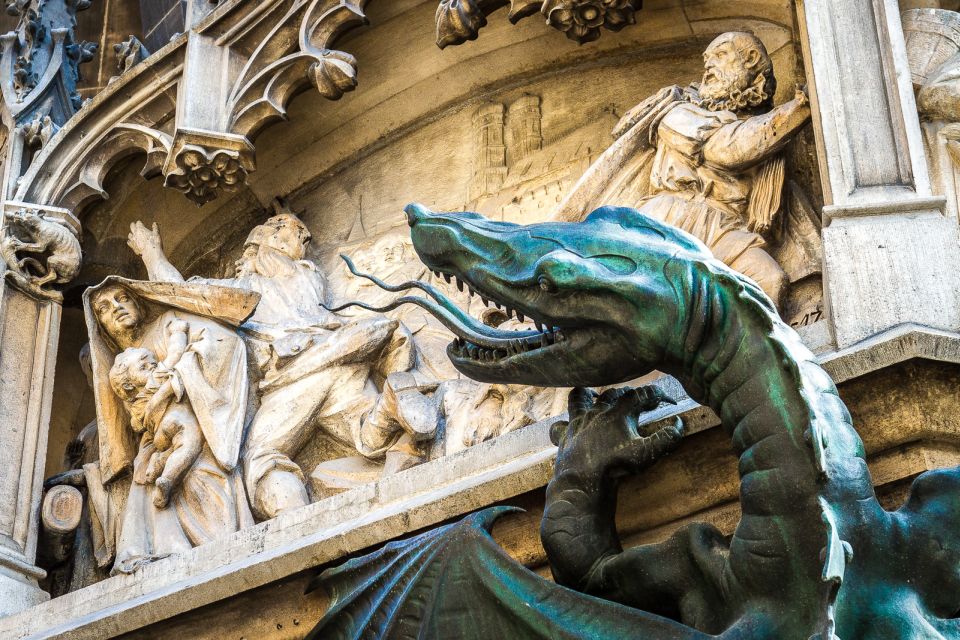
- New Town Hall Lindwurm explained as more than a spooky rumor
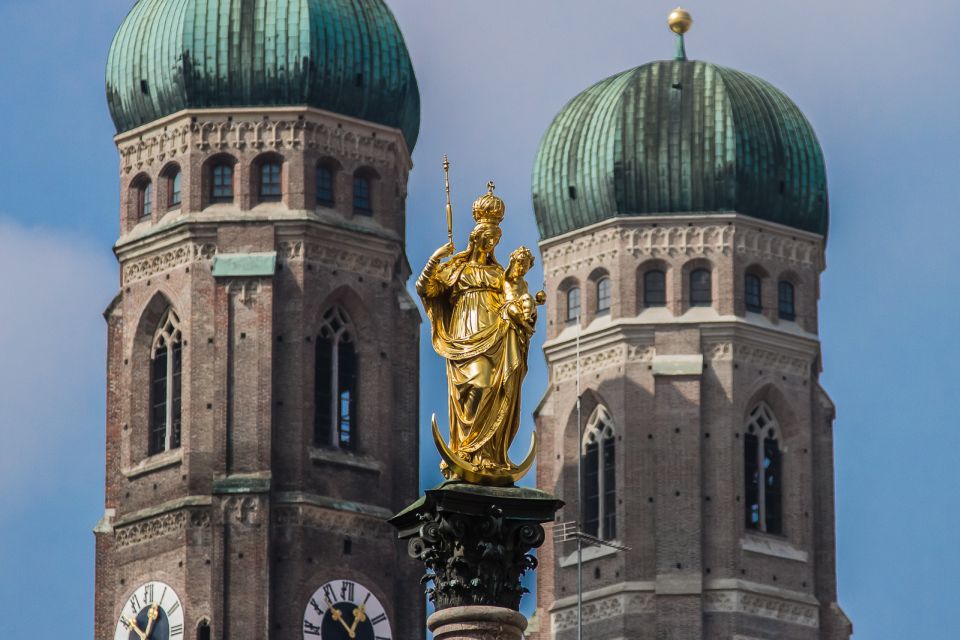
- Marian column Putti monster story gives you something to look for while you’re standing still
- Old Peter devil connection that reframes what you think you know about the square
- St. Onuphrius detail check that turns a quick glance into a real moment of attention
- A short, satisfying 105-minute format designed to keep you moving without rushing
Finding the tour start at Marienplatz and the Toy Museum entrance
You’ll meet at Marienplatz 15, right in front of the entrance of the Toy Museum. The key detail: the Toy Museum entrance sits under the Old Town Hall between Marienplatz and Tal. That matters because Marienplatz can feel like a maze when you’re arriving, and you don’t want to waste the first five minutes searching.
I like that the tour starts in the thick of things. You’re already at the heart of the Old Town, close to the landmarks you’ll walk past—so the stories land immediately. You’re not being shipped to a distant starting point and then asked to “catch up” on context. You’re in the right place, from the first minute.
You can also read our reviews of more tours and experiences in Munich.



What makes this Mystic Munich tour work: German storytelling tied to real places
This tour is guided in German by a local guide from DIE STADTSPÜRER. The pitch is legends and mysteries, but what makes it feel worthwhile is the balance: you’re hearing stories that sound larger than life, and then you’re getting pointed toward the reality behind them—why a symbol got attached to a building, why a detail kept being retold, and how the city keeps these tales alive.
I also like the pacing. At 105 minutes, you get a clear route and a clear theme without the awkward feeling of being dragged from stop to stop for hours. The guide is essentially your filter. You walk past major sights, but you’re doing it with questions in your head: What is the connection? Why here? What detail should I notice?
If you’re coming for a light, casual stroll only, you might want a different tour. This one leans into dark folklore and explains it with enough clarity to keep you engaged.
New Town Hall and the Lindwurm: learning to read a symbol on purpose
One of the tour’s signature stories is the Lindwurm at the New Town Hall. The Lindwurm is the kind of figure that sounds mythic on first hearing, but the tour’s value is that it pushes you to connect folklore to architecture—turning a carving or reference into a clue about how Munich talks to itself.
Here’s what I’d suggest you do during this part: don’t just look at the building like it’s scenery. Listen for what the guide says the Lindwurm represents, then keep your eyes moving. You’ll get a new habit—looking for the small connection points that legends often cling to.
This is also where the tour’s “mystery” framing becomes practical. You’ll see how the city’s imagination uses landmarks as anchors. Once you catch that pattern, the rest of the Old Town stops feel less like separate photo ops and more like connected chapters.
Marienplatz and the Marian column: Putti versus monsters
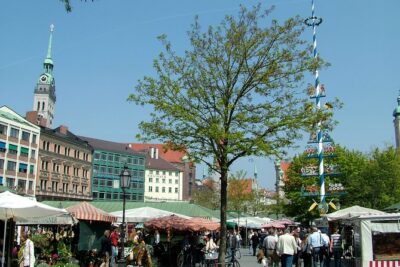
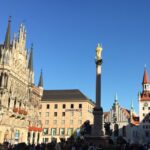
Next up is Marianplatz and the Marian column, where you’ll hear about Putti and the monsters the hero fought. Even if you already know Marienplatz as Munich’s center, this story changes how the space feels. Instead of seeing it as a busy square for walking through, you start seeing it as a stage where symbolism was meant to be read over time.
I like that this section gives you a reason to slow down at a spot that usually feels fast. When you’re standing near a monument and listening to a legend tied to it, you naturally notice details you’d otherwise miss. And that’s the real payoff: you leave with memories that include what you looked at, not just where you went.
If you’re the type who enjoys stories but also wants factual grounding, this is one of the best parts. The tour doesn’t just hand you spooky drama. It tries to show you how people understood these images—then how later retellings kept them alive.
Old Peter and the devil: why this story lives in the everyday
The tour also covers Old Peter, including the question of how it was possible to stop the devil from destroying it. That’s a heavy theme for a city walk, but it’s exactly why the tour feels different from a standard Old Town highlights loop.
When you hear a devil story attached to a real landmark, you start asking better questions. Was it a warning? A way to express fear and protection? A metaphor that stuck? The guide’s job here is to help you connect the legend’s mood to the city’s emotional landscape—how Munich (like many European towns) made sense of danger by turning it into a narrative you could point to.
Practical tip: Old Peter and the surrounding areas can be busy, especially around popular sightseeing times. If the crowd thickens, don’t panic. Stay close to the guide when possible, and keep your attention on the landmark being discussed. Even if you’re not perfectly in line, you can still follow the “what to notice” focus the guide provides.


St. Onuphrius and the eye test: a quick detail with big meaning
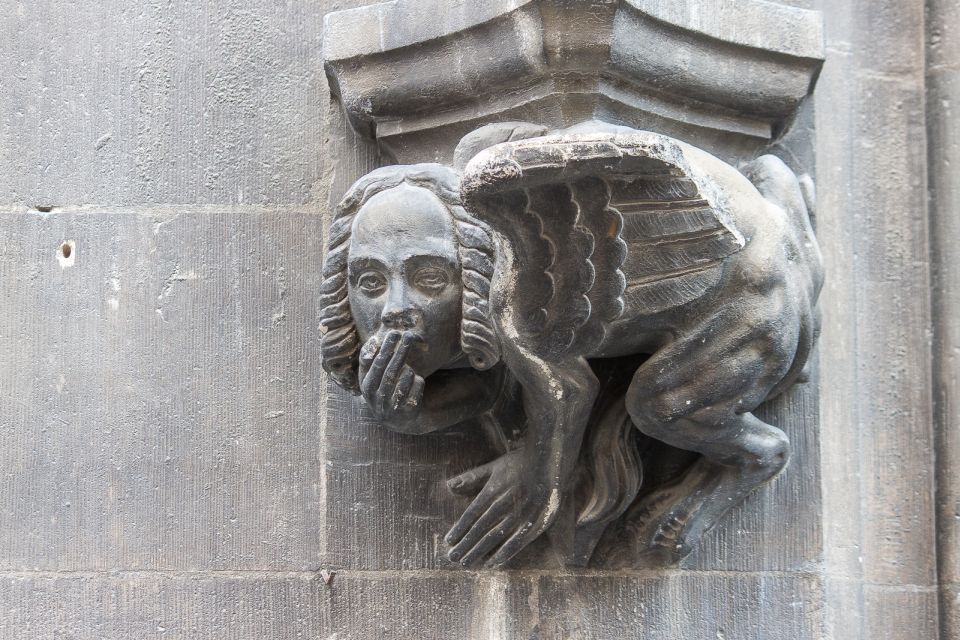
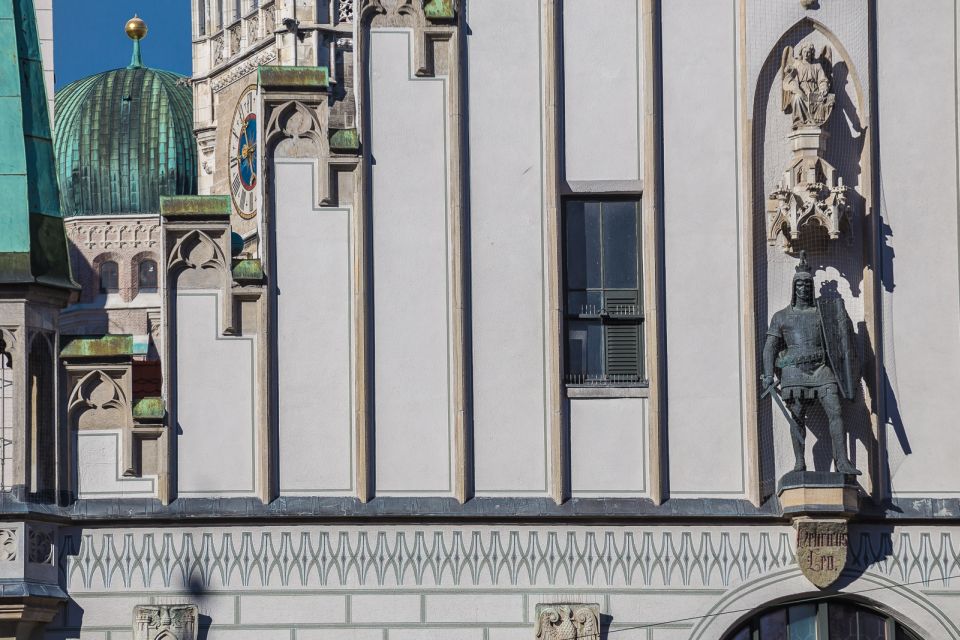
One of the tour’s most memorable prompts is to look St. Onuphrius straight in the eye. That might sound like a playful line, but in context it’s a strong travel skill: the tour nudges you to pay attention to a face, a figure, a specific point of contact. Instead of treating sculptures and figures like background decoration, you’re asked to engage with them.
This is also where the tour’s “legends and reality” idea clicks again. The story becomes a guide to observation. You’re not only learning the myth; you’re learning a way of seeing Munich—one focused on details and symbols that a casual passersby might never notice.
If you enjoy guided attention—being told where to look and when—this is likely to be a highlight. If you prefer your sightseeing strictly free-form, you might find this part more “guided” than you want. But it’s short, and it changes how you’ll remember the Old Town.
Frauenkirche and Old Town landmarks: seeing the tour theme expand
The tour doesn’t stop at the spooky anecdotes. It also includes classic Munich monuments along the way, including the Frauenkirche. Hearing legends near a major church can feel like two worlds at once—architecture and imagination—but that’s what makes it effective.
Here’s why: it helps you understand that these buildings weren’t created to be neutral. They were made to communicate, to comfort, to warn, to inspire. Legends grow in that kind of environment. People remember messages, and they attach those messages to stone and space.
You’ll also pass other Old Town highlights such as the Old Court and the Old Town Hall. The guide ties them back into the bigger thread: how the city’s history and its storytelling culture overlap. It’s the difference between walking past a building and learning what kind of “language” that building speaks.
How the Old Town route feels at dusk, and how long 105 minutes really is
The description emphasizes how the legends “come to life at dusk,” and it’s easy to see what that means. As light changes, squares and facades stop looking like flat surfaces and start looking like scenes. Even without any special effects, your brain reads shadows and angles as mood.
The timing matters too. 105 minutes is long enough for a real narrative arc, but short enough that you won’t feel stuck when the crowd gets large. I’d treat it like a guided evening story walk. You’ll do some strolling, a lot of listening, and enough looking around to make the city feel personal.
One note based on real-world experience: evening crowds can stretch groups apart. If you’re traveling with someone, decide in advance what you’ll do if you lose each other for a moment (for example, stop and look for the guide at the next landmark). And dress for temperature if you’re going in colder months. The city can be beautiful, but the wind at open squares doesn’t care about your itinerary.
Value and price: why $26 can be a smart move for your Munich plan
At about $26 per person, this tour is priced in a way that feels fair for what you get: a 1.75-hour guided walk, a local guide, German commentary, and a small gift at the end. The value isn’t just time or convenience. It’s the storytelling focus that transforms “I saw Marienplatz” into “I learned how Munich explains itself.”
You can certainly wander the Old Town on your own. But you’d have to be your own interpreter. This tour gives you the interpretation on the spot, with a route designed to keep the legends attached to the places—so the effort doesn’t fall on you.
If you like planning tightly and prefer to get answers quickly, it’s a good buy. If you hate being guided or you want your time to be strictly silent and self-paced, it may feel too narrative-driven.
Who should book Mystic Munich (and who might skip it)
You’ll probably love this tour if:
- you enjoy legends, religious symbolism, and city stories that connect to real landmarks
- you want an Old Town walk that feels more like a guided narrative than a checklist
- you’re okay with German as the main language of the experience
You might skip it if:
- you’re looking for an English-language tour
- you want a purely historical lecture with no supernatural framing
- you prefer to explore without a group and without a guide directing where to look
This is at its best when you’re curious and a little game for the dark side of city folklore.
Should you book Mystic Munich – Sagas and Legends of the Old Town?
If your idea of a great Munich day includes more than churches and squares, then yes, I’d book it. The tour’s strength is the way it anchors spooky stories to specific places—New Town Hall, Marian column, Old Peter, St. Onuphrius, Frauenkirche—so you don’t leave with vague myths. You leave with a better map in your head, built from symbols and explanations.
Book it especially if you plan to be in the Old Town anyway. This tour doesn’t feel like a detour. It feels like a lens. One guide voice, one route, and suddenly Munich’s landmarks start talking back.
FAQ
What is the duration of Mystic Munich – Sagas and Legends of the Old Town?
The tour lasts about 105 minutes.
Where does the tour meet?
You meet at Marienplatz 15, in front of the entrance of the Toy Museum. The Toy Museum entrance is under the Old Town Hall between Marienplatz and Tal.
Is the tour available in English?
The tour is in German.
What sights does the tour include?
The tour includes stops connected with Marienplatz, the Old Town Hall, Old Peter, Marienian column (with Putti), St. Onuphrius, the Old Court, and the Frauenkirche.
Does the tour include legends or only historical facts?
It includes stories, legends, and mysteries, and focuses on the reality behind them.
Is the tour wheelchair accessible?
Yes, it is listed as wheelchair accessible.
How much does it cost?
The price is listed as $26 per person.
Is there a cancellation option?
Yes. Free cancellation is offered up to 24 hours in advance for a full refund.
Is there a pay-later option?
Yes. You can reserve now and pay later.