REVIEW · GHOST & TRUE CRIME TOURS
Munich Macabre Group Walking Tour
Book on Viator →Operated by Dark History Tours · Bookable on Viator
Munich stops being the postcard version on this walk. You’ll follow guide Taff Simon through central sites while he mixes archaeology with stories about the grim side of medieval life. Expect short stops, a guided route with no map stress, and hands-on moments that make the past feel less distant.
Two things I especially liked: first, the tour is built around actual artifacts you can handle, including ancient coins and examples of pottery the guide can explain at your level. Second, the beer piece feels genuinely tied to history, not just a gimmick—because in old Munich, beer was public life, law, and survival.
One drawback to plan for: some of the subject matter is intense, including topics around disease, persecution, and execution methods. If you’re bringing younger kids, it’s worth knowing that the tour notes this content may be too descriptive for some ages, even with moderation.
In This Review
- Key highlights to look for
- Meeting at Marienplatz and getting oriented fast
- Hands-on archaeology: why you remember coins and pottery
- Marienplatz origins: how Munich’s center got shaped
- The Medieval Jewish quarter and the long shadow of blood libel
- St. Peter’s Church: reading gravestones like evidence
- Viktualienmarkt: market life, brewing rules, and medieval beer
- Alter Hof and Old Town Hall: murder, sword skills, and witch trials
- The role of dark humor: a tour pitch that avoids pure dread
- Beer isn’t a break from history—it’s part of it
- Price and value: $42.24 for artifacts, alcohol, and an archaeologist guide
- Pace, weather, and route changes you should expect
- Who should book Munich Macabre, and who should skip it
- Should you book? My take
- FAQ
- Is this Munich Macabre tour offered in English?
- How long is the tour?
- How much does it cost and is anything included?
- Where do I meet the guide?
- Does the tour end at the same place?
- Do I need good shoes?
- Will I be able to try the medieval beer?
- What happens if the weather is bad?
Key highlights to look for
- An archaeologist-led experience with Taff Simon, plus answers to your questions
- Hands-on handling of original ancient coins and pottery, plus replica medieval arms
- Dark history anchored to real places from Marienplatz to the Old Town Hall
- Medieval beer tasting tied to brewing history and penalties for bad product
- Small group size (maximum 15) for a more interactive pace
Meeting at Marienplatz and getting oriented fast
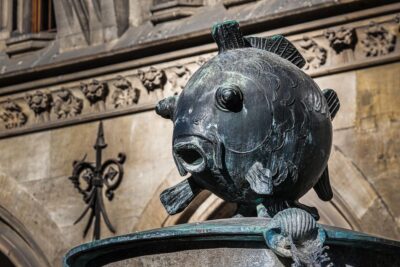
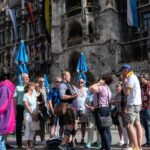
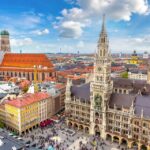
This tour starts at Fischbrunnen, Marienplatz 8 (6:00 pm). You meet at the fountain area and then the guide brings you along a tight loop through the city center, so you’re not trying to figure out which street comes next. It runs about 2 hours 30 minutes to 2 hours 45 minutes, which is a good length for an evening: long enough to feel like an experience, short enough that you can still enjoy Munich afterward.
It’s offered in English only, and the group is kept small—up to 15 people. That matters because the guide can actually slow down when you ask something, and the hands-on stops don’t turn into a quick photo-op line.
Wear shoes for uneven surfaces. Even though it’s not a hike, the route does have some ground that’s not perfectly level. If you need a seating-friendly approach or you walk slowly, the organizer says they can adjust the route to accommodate mobility or speed—just flag it at booking so they can plan the alternative path.
You can also read our reviews of more walking tours in Munich


Hands-on archaeology: why you remember coins and pottery
The tour’s big differentiator is tactile learning. At several points, you get to handle original ancient artifacts, not just look at photos. The guide is an archaeologist and historian (Taff Simon), and he uses that background to explain what you’re holding—how coin wear, break patterns, and material clues can tell you about trade, daily life, or belief systems.
One of the nicest parts of this style is how it changes the mood. When you’re holding an object from centuries ago, you stop seeing history as a distant timeline and start treating it like evidence. I also like that the guide doesn’t talk like he memorized a script. He’ll connect the artifacts to the story while staying grounded in what the object can actually say.
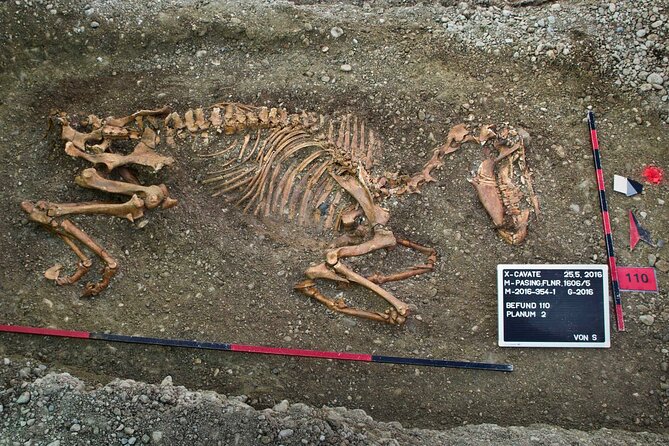
You should also know about the “real-world dig” angle. One stop uses examples of early medieval burial rites shown through archaeological excavation photos from construction sites. That’s educational, but it can be sensitive. If you’re the kind of person who gets affected by images of death rituals, go in with that in mind and keep an eye on how the guide frames it.
Marienplatz origins: how Munich’s center got shaped
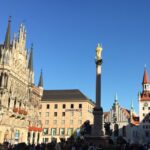
You kick off at Munich Marienplatz, the old market square. This is where the city’s story makes sense fast: why it grew where it did, and why the center looks the way it does today. It’s a short start—about 15 minutes—but it sets the foundation for everything that follows.
I like the way this kind of start works. You’re not just ticking off famous landmarks. You get a quick sense of how medieval Munich organized daily life around markets, churches, and power structures, and then the rest of the walk becomes easier to follow.
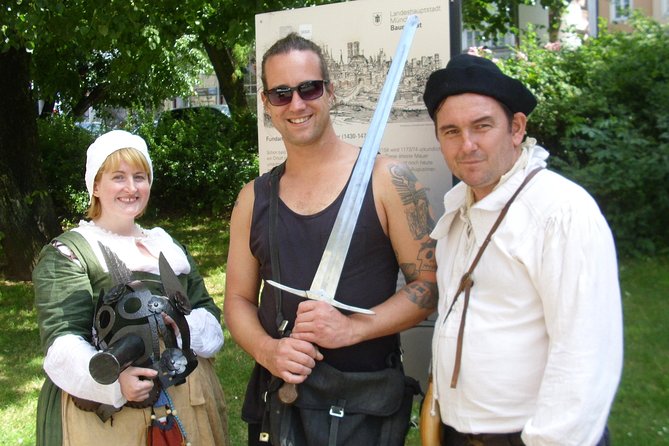
This is also where you’ll meet Taff Simon in full guide mode. A couple of reviews mention his costume and theatrical flair, but the important part is that the costume doesn’t replace expertise—it supports the storytelling tone.
The Medieval Jewish quarter and the long shadow of blood libel
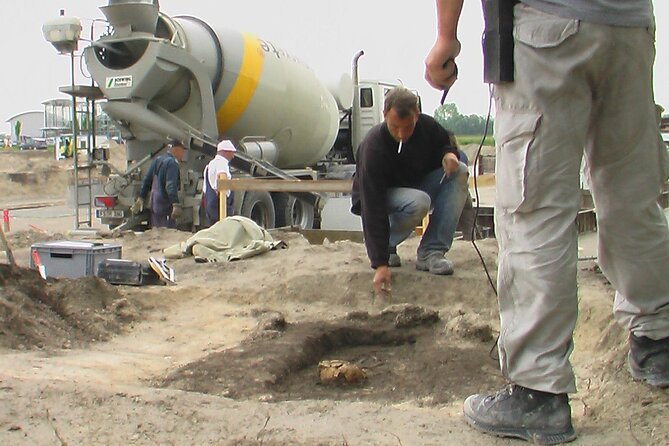
Next you move to Landschaftstraße, where the guide links today’s street layout to the area that once ran alongside Munich’s medieval Jewish quarter. It’s easy to walk past a normal-looking street and miss the layers underneath. Here, the guide gives you that “how do we know” feeling by explaining both lived community history and persecution.
You’ll learn about how the community contributed to the city’s economic and cultural life—and then suffered baseless accusations such as blood libel, including claims tied to spreading the Black Death. The tour also connects this to how modern archaeology supports the story, including insights from excavations connected to the U-Bahn project.
A key value for you: this stop doesn’t treat persecution like an abstract concept. It ties it to real civic life, which makes the history harder to dismiss as something that happened far away or long ago.
St. Peter’s Church: reading gravestones like evidence
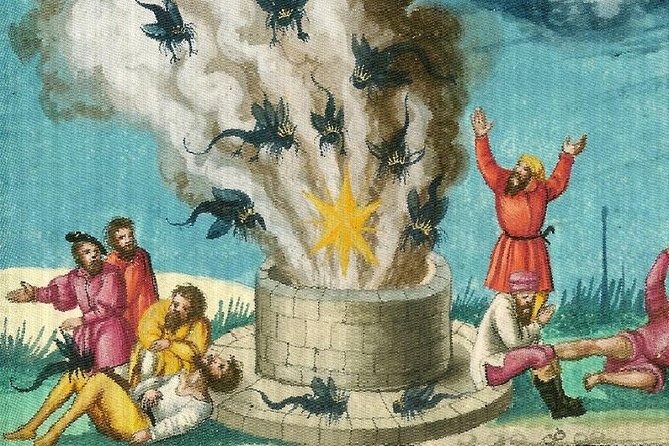
At St. Peter’s Church, the tour turns to death rituals and what people left behind. The guide explains why the church matters in Munich’s oldest layers and then brings you to the cemetery question: yes, “oldest church” often means some of the earliest burial material you can interpret.
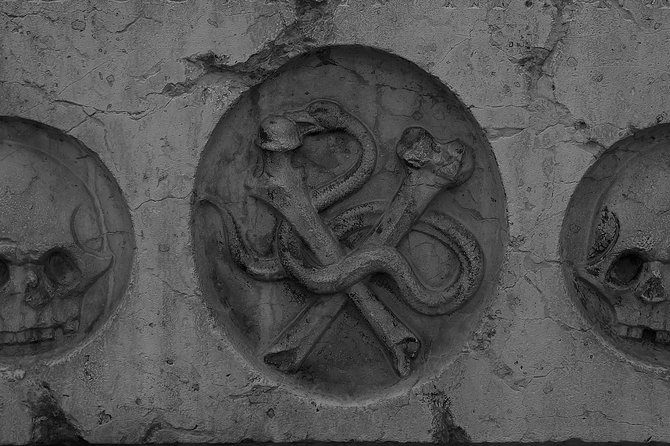
You’ll learn how to decipher symbols on gravestones, and you’ll hear about burial rites that span earlier Bavarian periods up through later changes. One line worth remembering is that the phrase Rest in peace often didn’t mean it stayed peaceful—because burial conditions and time can mean remains and grave goods don’t survive in one intact picture.
You also get a hands-on moment tied to alms and belief. The tour includes handling original ancient coins that would have been given as offerings. Even if you know little about numismatics, the guide can explain what to look for and what the coin can imply.
This is also the stop where grave goods come into focus—jewelry, weaponry, and what those choices can reflect about social structure or religious belief. As a heads-up: the tour explicitly notes this subject can be sensitive and that it uses excavation photos as examples. If you’re bringing a child, I’d make that decision based on your child’s comfort level with death-related content.



Viktualienmarkt: market life, brewing rules, and medieval beer
The tour then heads to Viktualienmarkt, which today feels like a lively food-and-garden space. The guide reframes it through a medieval lens: in the past, the area could be associated with people who were treated as outcasts.
From there, you move into the beer story. This stop is where the tour ties drinking culture to law and daily life. You learn why beer mattered so much—because it was a staple, because brewing had rules, and because making low-quality beer wasn’t a small mistake.
You’ll hear about terrible penalties for making bad beer and pretzels, which is exactly the kind of detail that makes history feel real. Then you get to try authentic medieval beer samples. These are samples, not full pours, but it’s enough to taste the idea of historical brewing rather than just being told about it.
One practical note: the tour says they aim to offer at least two historical beverages, but if supply issues happen, they might substitute with more modern styles while still illustrating Munich’s brewing history. Either way, you’ll get the tasting component built into the narrative, not tacked on at random.
Alter Hof and Old Town Hall: murder, sword skills, and witch trials
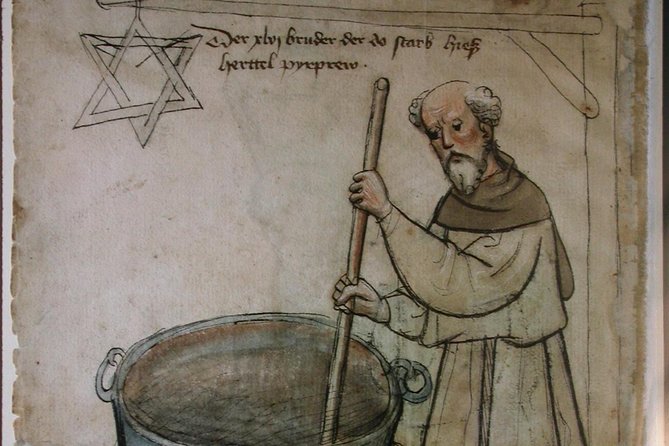
At Alter Hof, you’re in the orbit of Wittelsbacher power, with the area originally functioning as a castle for the Bavarian royal family. The guide uses that setting to talk about a murder that shocked medieval Europe, and how the fallout echoed through future generations of Munich’s people.
Then the tour shifts gears into combat history. The guide brings in theories from Hans Talhoffer, a legendary late medieval sword master, to discuss medieval combat ideas. If you’re curious about how people trained and what weapons meant beyond Hollywood, this is a hands-on moment: you can handle replica swords and possibly some armor too.
There’s also an archaeological surprise. The tour notes that in 1944, an Allied bomb inadvertently unearthed seriously ancient artifacts. Here, you get to handle and compare types of ancient pottery and other artifacts, which is a nice reminder that even modern conflict can expose older layers of the city.
Next you reach Old Town Hall, where the tour focuses on the most vicious German witch trial in history, linking the background, charges, evidence-gathering methods, and the fate of the Pappenheimers. The guide explains how the process worked—what counted as evidence, and why people were condemned—and how the results didn’t stay local. The story is described as having consequences felt as far away as a small town in colonial Massachusetts.
If you want history that stays gray rather than clean, this is the stop. It’s not just “bad things happened.” It’s how institutions, fear, and supposed evidence can combine into something that destroys families.
The role of dark humor: a tour pitch that avoids pure dread
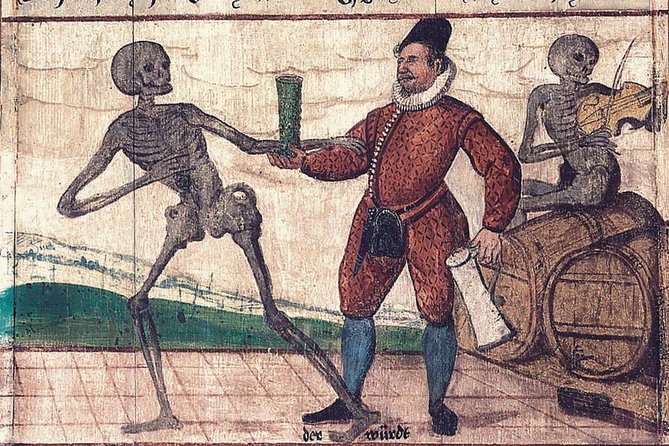
A lot of this walk could turn heavy fast—plague stories, persecution, execution-related topics, and violent crime. Yet the guide’s tone aims for balance. Multiple reviews mention humor, acting chops, and a theatrical costume, and you can feel that the humor is used as pacing, not as denial.
That matters for you if you want to learn without leaving depressed. The goal seems to be: tell hard stories clearly, then keep moving so you can actually absorb it. The tour also notes it’s not a lecture, even though it’s history-rich.
One line from the tour info says it’s not recommended for people with an over vivid imagination. I take that to mean: if you’re very sensitive to the graphic nature of death and persecution in storytelling, this may push your limits. If you’re okay with careful, educational discussion, it’s still intense but manageable.
Beer isn’t a break from history—it’s part of it
I like that the tour treats beer as a historical thread, not a reward. In many Munich tours, beer is a generic cultural note. Here, beer is tied to rules, penalties, and daily survival.
You get tasting samples in the middle of the story, which helps you remember the point. It’s easier to understand why brewing mattered when your senses are involved—smell, taste, and the slight strangeness of medieval flavors.
Also, because the tasting is included in the price, you’re not scrambling to find a beer stop that may or may not fit your evening plan. The guide also tries to provide at least two historical beverages, but the organizer flags that substitution could happen due to supply. Either way, the tasting remains part of the historical explanation of brewing in Munich.
Price and value: $42.24 for artifacts, alcohol, and an archaeologist guide
At $42.24 per person, this isn’t a budget “quick walk” tour. But it’s also not priced like a luxury experience. For me, the value comes from three things you don’t usually get in standard city walks.
First: you’re paying for an archaeologist and historian guide rather than someone relying on a script. Second: you’re paying for hands-on access—original coins and pottery, plus replica arms and armor. Third: you’re getting medieval beer samples included, plus the guide connects the tasting to brewing rules and penalties.
There’s another quiet value point: the stops listed are tied to famous public spaces (churches, market squares, historic civic buildings). The tour experience itself is what you’re buying, not entry fees to a museum.
If you’re the type who likes to learn by doing—holding objects, asking questions, and walking from clue to clue—this price makes more sense. If you want purely scenic sightseeing with minimal discomfort, you might want something lighter.
Pace, weather, and route changes you should expect
The tour is a walk with multiple short stops, so you’re on your feet for most of the evening. It requires good weather, and the organizer says that if conditions are poor, you’ll be offered a different date or a full refund. That’s an important detail for Munich, where rain can turn cobblestones into a slip risk.
Route changes can also happen due to events that block the regular path, like concerts or rallies. The tour notes they may adjust the route while still covering the advertised historical themes as much as possible—sometimes going lighter on one stop and adding more time to another.
Seating is mixed. Some stops have seating; some don’t. If you need seats, tell them at booking so they can slightly adapt the route. They can also adjust for mobility or speed issues, but they can’t control whether other public visitors take seats in those locations.
Who should book Munich Macabre, and who should skip it
Book it if you want Munich with teeth. If you like archaeology, hands-on learning, and stories that connect plague, power, and civic life, this tour fits your taste. The small group size helps, and the fact that it’s English-only means the storytelling should be clear and consistent.
Skip it if you need a gentle evening or you’re bringing very young kids who can’t handle dark, persecution-heavy topics. The tour explicitly notes some content isn’t really suitable for particularly young children, even if the guide tries to temper it.
Also, if you dislike alcohol-based tourism: it includes alcoholic beverages for sampling, specifically medieval beer samples, and they aim for at least two historical beverages. You can still participate if you’d rather not drink, but the experience is built around the tasting component.
Should you book? My take
I’d recommend booking this tour if you want a memorable evening that goes beyond the usual highlights. The hands-on archaeology is the star, and Taff Simon’s approach ties objects to real locations instead of treating history like a lecture. Add the medieval beer sampling and the careful way the tour balances humor with grim topics, and you’ve got a strong value for the money.
If you’re only after light sightseeing, or if you know you get rattled by death-and-persecution storytelling, look for a different Munich tour style. This one is for people who want the darker layers—and want them explained by someone who can point to evidence in your hands.
FAQ
Is this Munich Macabre tour offered in English?
Yes. This tour is only offered in English.
How long is the tour?
The duration is about 2 hours 30 minutes to 2 hours 45 minutes.
How much does it cost and is anything included?
It costs $42.24 per person, and it includes alcoholic beverage samples (medieval beer) plus hands-on handling of original ancient artifacts and replica medieval arms and armor.
Where do I meet the guide?
You meet at Fischbrunnen, Marienplatz 8, 80331 München, Germany.
Does the tour end at the same place?
Yes. It ends back at the meeting point.
Do I need good shoes?
The route has some uneven surfaces, so suitable footwear is strongly recommended.
Will I be able to try the medieval beer?
Yes. The tour includes medieval beer samples. The organizer says they aim to offer at least two historical beverages, but substitutions may happen if supply issues occur.
What happens if the weather is bad?
The tour requires good weather. If it’s canceled due to poor weather, you’ll be offered a different date or a full refund.
If you want, tell me your travel dates and whether you’re bringing kids or have mobility needs, and I’ll help you decide if this is the right evening slot for your Munich plan.