REVIEW · DACHAU MEMORIAL TOURS
Munich WWII and Dachau Concentration Camp Private Tour with Licensed Guide
Book on Viator →Operated by Sightseeing Bavaria Exclusive · Bookable on Viator
WWII history in Munich feels uncomfortably close. I especially like having a licensed guide keeping the story straight, and I also love the smooth private pickup-and-minivan setup that saves you time and stress. The main drawback: this is emotionally heavy, and Dachau involves walking on uneven ground, so go prepared.
This tour is built as a long, guided day (about 9 hours 30 minutes) that starts from your Munich hotel/address and ends back with you. You also get mineral water, mobile tickets, and a clear schedule of Munich landmarks tied to Nazi power, propaganda, and the White Rose resistance, before heading to Dachau for a focused memorial visit.
In This Review
- Key Things That Made This Tour Work So Well
- Private Munich WWII and Dachau: How the Day Is Structured
- Marienplatz and Old Town: Seeing Nazi Power in the City’s Daily Heart
- Frauenkirche and St. Michael: When Bombing Becomes a Visual Lesson
- Residenz München and Feldherrnhalle: Luxury, Control, and a Failed Power Grab
- Opfer Memorials and the White Rose: When the Tour Turns to Resistance
- Schwabing, Hofbräuhaus, and the Everyday Face of Fascism
- Nazi-Era Architecture: Göring’s Ministry, Nazi Art, and Controlled Culture
- Eisbachwelle: A Brief Breather That Still Fits the Theme
- Hitler’s Munich at Home: Bogenhausen, Prinzregentenstraße, and Ramersdorf
- Königsplatz, Karolinenplatz, and Maxvorstadt: The Party Center and the Plans
- Dachau Concentration Camp Memorial: What the Guided Visit Actually Feels Like
- Price and Value: Is $804.18 Per Person Worth It?
- Who Should Book This Tour, and Who Might Want Something Lighter
- Should You Book the Munich WWII and Dachau Private Tour?
- FAQ
- How long is the Munich WWII and Dachau private tour?
- What is the price per person?
- What language is the tour offered in?
- Does the tour include hotel pickup in Munich?
- Is transportation included?
- What is included versus not included?
- Is Dachau suitable for children?
Key Things That Made This Tour Work So Well
- Hotel pickup + private transport: new minivans (or a small coach for bigger groups) with a driver mean fewer logistics headaches
- Licensed guidance for both Munich and Dachau: one expert voice connects the dots instead of you piecing it together
- Baked-in context at major Nazi-era locations: you don’t just see buildings, you learn what happened there and why it mattered
- Balanced pacing between sites: short stops in central Munich keep momentum, then Dachau gets the deeper time
- A guide who knows when to slow down: one guide named Max was praised for making sure the group saw everything they came for—and more
- Practical comfort: mineral water included, and you’ll get footwear guidance for Dachau’s rough paths
Private Munich WWII and Dachau: How the Day Is Structured
The big value here is that you’re not juggling transit, tickets, and timing across two heavy hitters: Munich’s Nazi-era sites and the Dachau concentration camp memorial. You start with pick-up from almost anywhere in Munich at 8:00 a.m., 9:00 a.m., or 9:30 a.m., and you’re driven in a new VW or Mercedes minivan with air-conditioning (or a small coach if your group is larger than 7). That matters because the locations are spread out, and you lose too much time if you try to DIY this.
The schedule runs long, but it’s not one of those days where you’re stuck in one place for hours without meaning. Munich gets a string of focused stops—often 5 to 25 minutes each—so you can cover the arc of the story efficiently. Dachau is where time expands, with an average stay of about 1.5 to 2.5 hours at the memorial site.
You can also request different start times, and pick-up/return outside Munich (like the airport) is possible on request. So if you’re flying in or out, you can often line this up with your real travel day.
You can also read our reviews of more guided tours in Munich

Marienplatz and Old Town: Seeing Nazi Power in the City’s Daily Heart
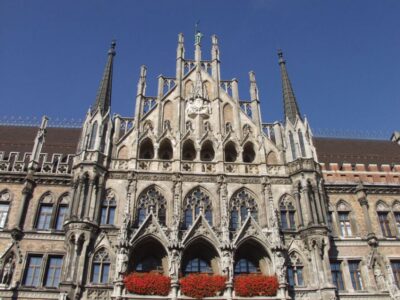
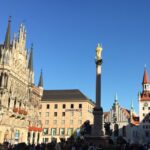
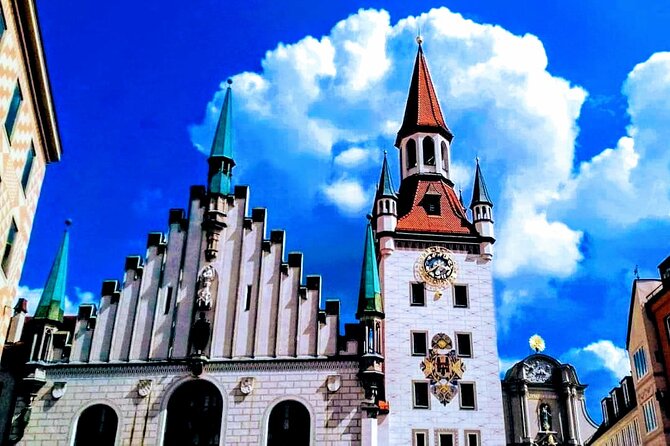
You begin at Marienplatz, which is one of the best places to get your bearings fast—literally the center of Munich’s old city life. Your guide starts you with about an hour-long old town tour, and you learn that Marienplatz has been the city’s bourgeois center since the 12th century. The name also shifted over time—until 1852 it was known as Schrannenplatz—and that helps you understand how the square evolved long before the Nazi era.
This stop also shows the technique of regime-era messaging: take a place people already use and reshape it visually. During National Socialism, the neo-Gothic town hall was fitted with swastika flags, and even a 15th-century old town hall was given an extra-wide passage to handle rising traffic. It’s a reminder that propaganda wasn’t only speeches and rallies; it was also how space and movement were managed.
A good practical note: since this start point is in the middle of the city, you’ll want to dress comfortably for walking even if the stops are short. You’re meant to move, absorb, and then move again.
Frauenkirche and St. Michael: When Bombing Becomes a Visual Lesson
From Marienplatz, you head to the Frauenkirche, the iconic late Gothic Munich cathedral built at the end of the 15th century in just 20 years. Here, the tour angle shifts: you’re not just learning what the building looks like—you’re seeing how Allied bombings and reconstruction changed it. Your guide uses historical images to connect destruction to what stands there now.
Then you visit St. Michael, known for having the second-largest barrel vault in the world. It was built about a century after Frauenkirche, in Mannerist style, which makes the architectural contrast helpful. The same theme continues: bombing damage and reconstruction changes, explained with historical visuals.
Why this works on a WWII-focused tour: these are not museum objects. They’re still part of the city’s skyline. So when you see how wartime damage and postwar restoration altered major landmarks, the story feels more real than a textbook timeline.
The only drawback is also simple: churches mean you might be walking on uneven stone floors and possibly dealing with lighting changes inside. If you’re sensitive to low-light or confined spaces, plan for that.
Residenz München and Feldherrnhalle: Luxury, Control, and a Failed Power Grab
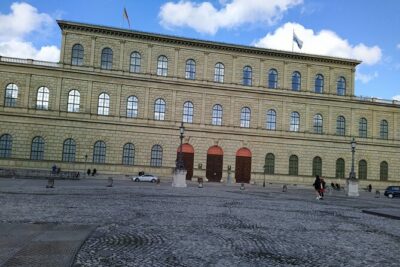
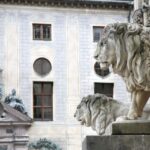
One of the more chilling early stops is at Residenz München. In 1933, SS Brigade Leader Christian Weber set up residence in part of this grand complex. Your guide talks about the building’s different stylistic periods and the significance of the lions at the side entrances—yes, you’ll actually hear why that little detail matters in the context of how people dressed power up as something normal.
Then you get a small detour to a narrow street: Viscardigasse. Your guide explains why it was called Drückebergergäßchen. This kind of stop is easy to skip on a typical sightseeing day, but it’s useful here because it gives you a sense of how language and everyday place-names can carry meaning.
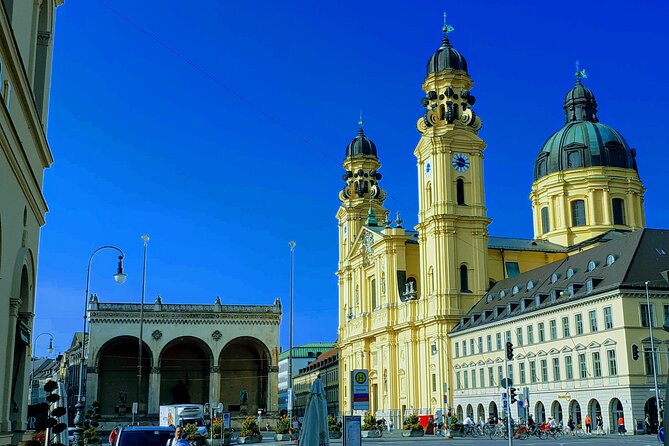
Next comes Feldherrnhalle, a prime viewpoint on Ludwigstrasse built for King Ludwig I. This is tied directly to the Hitler putsch in 1923, which ended in bloodshed. Your guide also places the location within older city geography, including the former northern city gate Schwabinger Tor, which stood until about 200 years earlier.
This stretch of the day is great for people who want to understand how the Nazi story is embedded into Munich’s “famous places.” You’re not wandering aimlessly; each stop is chosen to show a different face of power.
Opfer Memorials and the White Rose: When the Tour Turns to Resistance
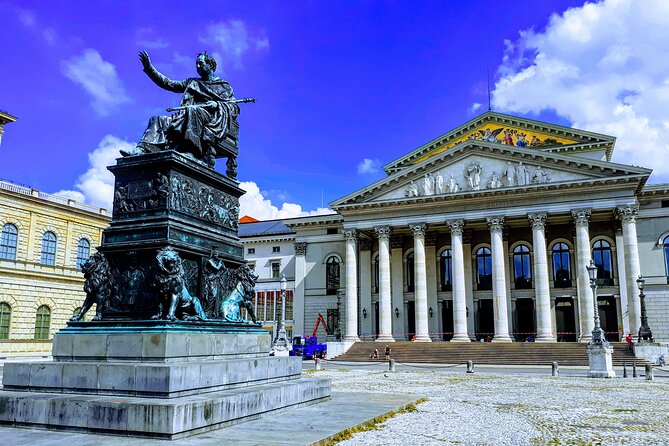
At Platz der Opfer des Nationalsozialismus, you’ll find a memorial built in 1985 on the site of a destroyed Schiller memorial. An eternal flame burns in a symbolic dungeon-like setting. It’s a short stop, but it hits hard because it forces you to separate Nazi power from the human cost and the people who suffered under it.
Then it’s off to Ludwig Maximilians University (LMU), a key anchor for the White Rose resistance group. The university moved from Ingolstadt to Munich in 1826, and in the Nazi period your guide explains how the White Rose formed around students including Hans and Sophie Scholl, Christoph Probst, Alexander Schmorell, and Willi Graf, plus professor Kurt Huber. The tour also notes that caretakers were murdered in 1943 (with the memorial visit included).
Later, the route reaches Stadelheimer Straße, tied to 1943 when White Rose members Hans and Sophie Scholl, Christoph Probst, Alexander Schmorell, and Willi Graf, plus Professor Kurt Huber, were guillotined at the penal institution in Stadelheim. Their graves are located in the nearby cemetery in the Perlacher Forest.
This is the part of the tour I’d treat as the emotional center. You’ll want a steady pace, and you’ll probably feel a stronger pull toward quiet attention than toward photos.
You can also read our reviews of more private tours in Munich


Schwabing, Hofbräuhaus, and the Everyday Face of Fascism
Munich has a way of looking beautiful while carrying ugly stories underneath. The tour leans into that reality in areas like Schwabing, the former artists’ quarter. Your guide points out that Hitler liked to stop at Osteria Italiana, which still exists today. You also hear about propaganda and media locations, including the editorial house Völkischer Beobachter and the Heinrich Hoffmann Verlag National Socialist Pictures.
A detail I like here is the personal history thread: in 1929, Hitler met his future wife Eva Braun at the later Photohaus Hoffmann. When a tour includes those small factual connections, you start to see how political power grew out of social networks, not only ideology.
Then you reach Staatliches Hofbräuhaus. The guide explains that Hitler and his entourage enjoyed meeting in a niche on the first floor. If you want lunch, this stop is timed for a break, but lunch is not included in the tour price. You can sit on the ground floor in the Schwemme or, if weather allows, in the inner courtyard.
Practical take: if you do eat here, keep it simple and stay aware of your energy level. This day asks a lot emotionally, and Hofbräuhaus is popular. If you’d rather avoid crowds, you can also just enjoy the atmosphere and save your meal for later.
Nazi-Era Architecture: Göring’s Ministry, Nazi Art, and Controlled Culture
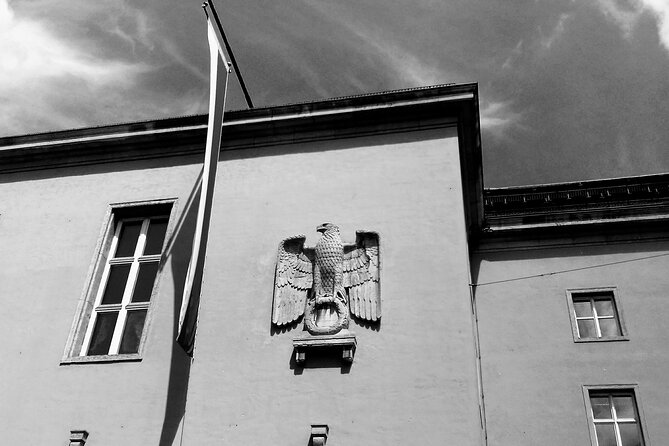
Some stops in Munich are about buildings used to project authority. For example, Altstadt-Lehel includes a monumental 225-meter facade erected in 1937 by Hermann Göring’s Reich Aviation Ministry for the new Luftgaukommando V. You’ll see swastikas on window grilles and steel helmets on house walls—visual proof that the regime’s branding was literally built into the streetscape.
Then there’s Haus der Kunst, described here as the first representative Nazi building in Munich. During Hitler’s time it was called the House of German Art, and it showed works of artists aligned with Nazi regime tastes. Today, the building still carries swastika decor, and the tour frames it as a goosebump-style reminder of how art and ideology were linked.
What makes these stops valuable is that they show how cultural control works: it wasn’t just politics and police. It was also what people were encouraged to see, admire, and treat as acceptable.
Eisbachwelle: A Brief Breather That Still Fits the Theme
Right near these heavier sites, the tour includes Eisbachwelle—the spot where you can watch the famous Eisbach surfers riding a standing wave created by the river’s setup. The experience here is basically an off-switch: you get a chance to forget the horrors of Hitler’s time for a few minutes.
This is not a random detour. It’s a mental reset that helps you keep going later, because Dachau demands attention and stamina. If you’re planning your own day, this kind of break can make the difference between processing the story and burning out.
Hitler’s Munich at Home: Bogenhausen, Prinzregentenstraße, and Ramersdorf
The tour then shifts into residential and upper-class territory with stops that show how leaders lived, how society was organized, and how plans were built to fit Nazi ideology.
In Bogenhausen, your guide shows a house of Adolf Hitler in the noblest district of Munich. He moved into a luxury 317 sqm, 9-room apartment in 1929. Today it’s the police station, and it can only be viewed from the outside. You’ll also learn about Eva Braun’s nearby villa property, where she lived since 1936—and that this house was later demolished.
In Prinzregentenstraße, named for Prince Regent Luitpold, you’ll see a curious Nazi building: an apartment building for the National Socialist upper class with flanking air raid shelters. The tour notes it was a model for other buildings, but World War II meant only this one was ever completed.
Then comes Ramersdorf, where you’ll visit a Nazi-built “model settlement.” In 1934, nearly 200 settlement houses with their own gardens were built for German national comrades. Today it’s a listed building.
These stops work if you want the day to feel specific and grounded. Instead of only seeing monuments, you see where power decided to live and how policies shaped everyday housing design. The main consideration: some of these points are outside-only views, so keep your expectations realistic about what you can photograph or enter.
Königsplatz, Karolinenplatz, and Maxvorstadt: The Party Center and the Plans
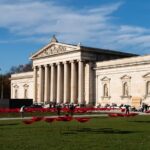
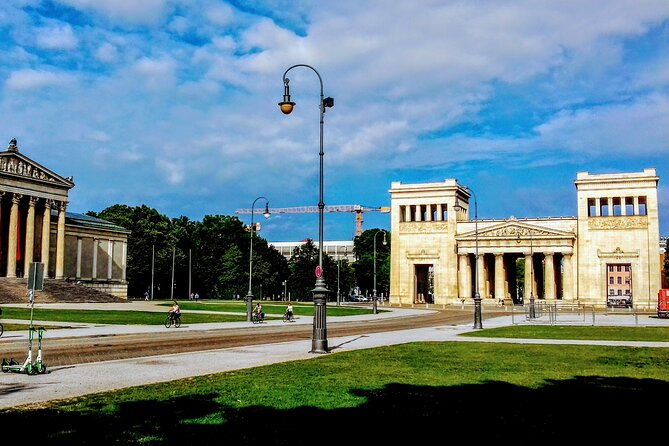
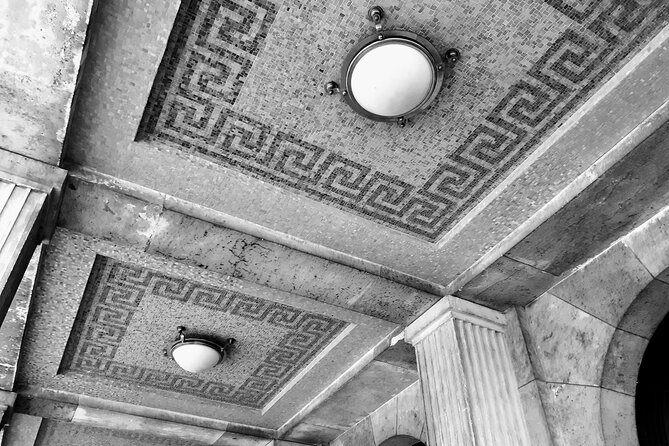
The route covers Königsplatz, in the historical area between Karolinenplatz and Königsplatz. This was quickly shaped into the party center of the NSDAP, with administrative buildings and the Führerbau. The tour notes that almost all Nazi buildings survived Allied bombing attacks unscathed. You’ll also visit the NS Documentation Center, which opened in 2015, built on the site of the destroyed Brown House.
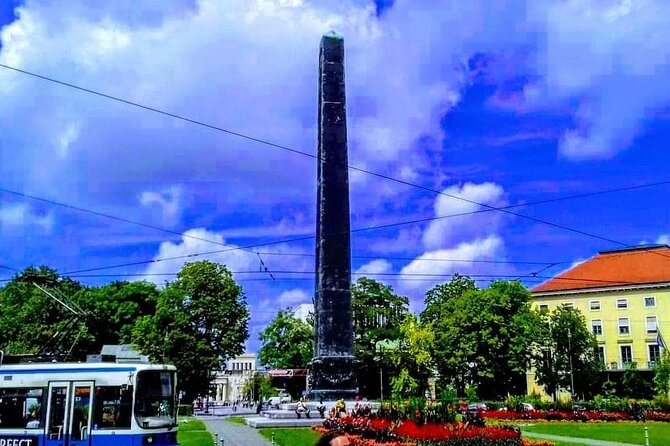
Then you visit Karolinenplatz, built around an obelisk in a power-centered layout. The obelisk dates to 1833, ordered by King Ludwig I.
Finally, Maxvorstadt ties back to Hitler’s pre-power days. You’ll see the now-renovated apartment house where Hitler shared a shabby room with Austrian Rudolf Häusler after moving from Vienna in May 1913 as an unsuccessful postcard painter. The guide also points out the location of a mausoleum Hitler planned himself, with an adjoining Hall of the Party. It even mentions Hitler’s inspiration from seeing Napoleon’s sarcophagus in the Invalides during a 1940 Paris visit.
This section is useful because it shows how the Nazi regime tried to manufacture long-term legitimacy: monumental plans, carefully arranged spaces, and symbolic structures that made their worldview feel inevitable.
Dachau Concentration Camp Memorial: What the Guided Visit Actually Feels Like
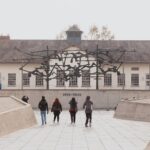
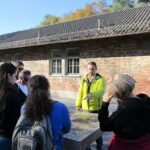
This is the heart of the day. At the Dachau Concentration Camp Memorial Site, a licensed guide leads you through an experience that the tour description stresses as beyond what you might expect. In the 12 years of its existence, over 200,000 people were imprisoned, and 41,500 were murdered. Dachau opened about six weeks after Hitler was appointed Chancellor, so the memorial also sits at the start of the Nazi machinery, not just near the end.
Before you even start touring the memorial proper, the guide shows you luxurious villas on former SS grounds. That contrast is jarring in the best possible way: it forces you to confront how close comfort and cruelty can coexist.
Time matters here. The average stay at the memorial is 1.5 to 2.5 hours, which is long enough to absorb the main parts without feeling like you’re being rushed through tragedy. It’s also why you should plan for emotional energy. The guide’s role becomes essential because names, dates, and site layouts can be hard to connect alone.
Practical note: some footpaths are coarse pebbles. Bring suitable footwear. And the tour notes that visiting Dachau is not recommended for people under 12.
Price and Value: Is $804.18 Per Person Worth It?
At $804.18 per person, this is not a budget excursion. But it can still feel reasonable for what you get—especially if you’d otherwise be paying for multiple separate guided elements.
Here’s what’s included, and why it matters:
- A licensed professional tour guide covering both Munich and the Dachau memorial
- Private transportation in a new minivan (or small coach for larger groups) with a chauffeur
- A full route across Nazi-era Munich sites plus the guided memorial time at Dachau
- Mineral water and no hidden costs
- Mobile ticket support
What’s not included is also clear: lunch and tips. So if you’re looking for true all-in pricing, you’ll still need to budget for a meal.
Value comes from removing friction. Munich WWII sites are spread out, and Dachau needs structured explanation to be more than sightseeing. When you’re paying this kind of money, you want efficiency, context, and pacing—this tour is built around that.
A small detail I appreciate: one guide named Max was specifically praised for making sure the group saw everything they came for and more. That kind of comment usually points to real competence with timing and priorities.
Who Should Book This Tour, and Who Might Want Something Lighter
This is a good fit if you:
- want a private Munich WWII day that ties buildings to events
- prefer licensed guidance rather than audio-only or self-guided wandering
- can handle intense subject matter with focus
- like the idea of seeing both propaganda-era landmarks and resistance stories like the White Rose
It may be less suitable if you:
- want a relaxed sightseeing day
- are traveling with young kids, since Dachau is not recommended under 12
- struggle with walking on rough surfaces (especially at Dachau)
If your goal is to understand how Nazi power worked through public space, institutions, media, architecture, and everyday life, this route is built to do that. If your goal is purely scenic Munich highlights, you might feel like the emotional load is too heavy for your vacation mood.
Should You Book the Munich WWII and Dachau Private Tour?
I’d book this tour if you want one guided day that connects Munich and Dachau without gaps—especially with the comfort of pickup and private transport. The strongest reason to choose it is the guidance: the day is dense with locations, but it’s organized so you learn what you’re looking at instead of just collecting names.
I’d hesitate only if you’re not ready for heavy content or if you’re traveling with someone who would struggle with long, emotionally difficult site visits and Dachau’s uneven paths. Otherwise, this is the kind of tour that respects your time and your attention.
FAQ
How long is the Munich WWII and Dachau private tour?
It runs for about 9 hours 30 minutes.
What is the price per person?
The price listed is $804.18 per person.
What language is the tour offered in?
The tour is offered in English.
Does the tour include hotel pickup in Munich?
Yes. Pickup is available from any hotel/address in Munich, with pick-up times at 8:00 a.m., 9:00 a.m., 9:30 a.m., or other times if you request them.
Is transportation included?
Yes. You’ll travel in a new, air-conditioned VW or Mercedes minivan with a driver (or a small coach for groups larger than 7).
What is included versus not included?
Included features are licensed guide services, visits to the Nazi buildings and memorials in Munich and the Dachau memorial, mineral water, and no hidden costs. Lunch and tips are not included.
Is Dachau suitable for children?
The tour states that visiting the Dachau concentration camp memorial is not recommended for people under 12 years of age.
If you want, tell me your group size and your exact pickup time window, and I’ll suggest what to plan for lunch and how to pace the day so you feel steady through Dachau.