REVIEW · MUNICH OLD TOWN WALKING TOURS
Munich: Walking Tour Old Town 3D VR Tour in GERMAN
Book on GetYourGuide →Operated by Weis(s)er Stadtvogel GmbH · Bookable on GetYourGuide
Marienplatz becomes a time machine in 3D. This Munich Old Town walking tour pairs a live German guide with VR glasses so you can see 3D renderings of the city as it looked in different ages, right as you walk past today’s landmarks.
What I really like is how the tour forces you to look closer at familiar places, and how the 3D visuals are built around specific spots (not random haywire effects). You also get real context from a guide with a clear plan.
The other big win for me is the split-then-compare feeling: the guide walks you through Marienplatz at two different times and then continues with more key stops like Platzl and the Hofbräuhaus area. One thing to consider: the VR experience depends on your smartphone, because you have to download an app at the meeting point and plug your phone into the VR glasses. Some people found the glasses disappointing or had trouble getting everything to work, so come ready to troubleshoot a bit.
In This Review
- Key things to know before you go
- Finding the Orlandohaus meet-up and getting your phone-and-VR ready
- Marienplatz in 3D: a square split into 1570 and later centuries
- The medieval grain market, gallows, and the disgraceful donkey
- Old Town Hall as it looked in 1870, plus carriages and old professions
- Platzl at 1895: how the area became Urmünchner place
- Hofbräuhaus then and now through the VR glasses
- VR and smartphones: tips to prevent the most common frustrations
- Price and value: is $37 worth it for a 2-hour Munich VR walk?
- Who this Munich Old Town VR tour is best for
- Should you book this Munich VR walking tour?
- FAQ
- What is the meeting point for the Munich Old Town VR walking tour?
- How long is the tour?
- Is the tour guided, and what language is used?
- Do I need a smartphone for this experience?
- What’s included in the price?
- Is wheelchair access available?
- Is food included?
- FAQ
- How much does the tour cost?
- Can I cancel and get a refund?
- How many places are covered with 3D renderings?
Key things to know before you go
- Bring a charged smartphone and internet access so the VR setup can actually run.
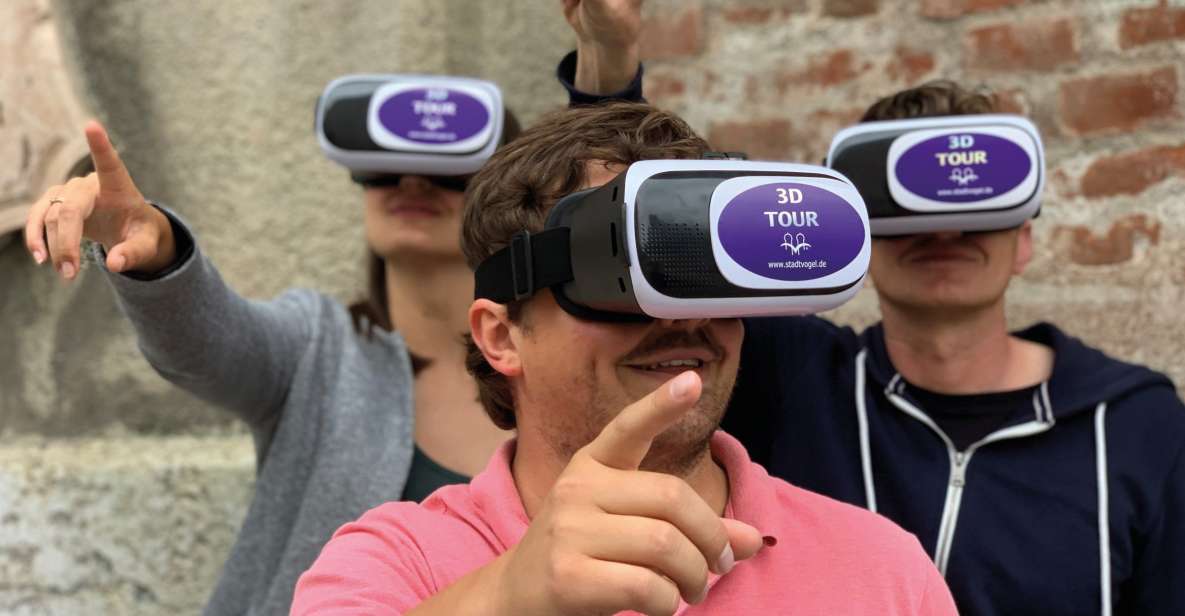
- Download the required app at the meeting point and insert your phone into the VR glasses.
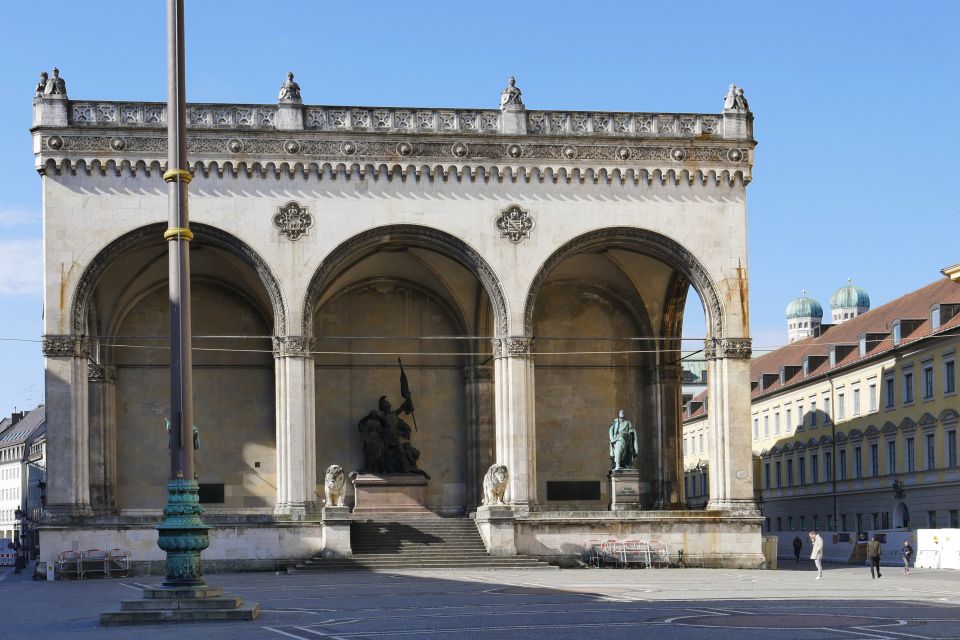
- Four 3D-focused places in Munich’s Old Town guide the route, so you’re never wandering without a reason.
- Marienplatz is split into two eras (west side around 1570, east side around 300 years later).
- VR is paired with a live walking guide, so you get stories and meaning, not just visuals.
Finding the Orlandohaus meet-up and getting your phone-and-VR ready
Meet directly in front of the Orlandohaus at Platzl 4. Your guide will be easy to spot: they’ll carry a big blue bag with the white text Weis(s)er Stadtvogel and have a 3D Tour sign. This matters because the tour starts with setup, not with sightseeing freedom.
Here’s the practical piece: every participant must download an app onto their smartphone at the meeting point. That app then gets inserted into the VR glasses so you can see the 3D images. If your phone battery is low or your connection is weak, you’ll feel it fast. I’d treat this like you’re starting a day-trip where your phone is your ticket, not just your camera.
The good news is the tour is only 2 hours, so there’s less risk of “setup fatigue” stretching forever. Still, arrive with your phone charged and your internet ready. Once it clicks, the VR part turns ordinary walking into a layered timeline.
You can also read our reviews of more walking tours in Munich



Marienplatz in 3D: a square split into 1570 and later centuries
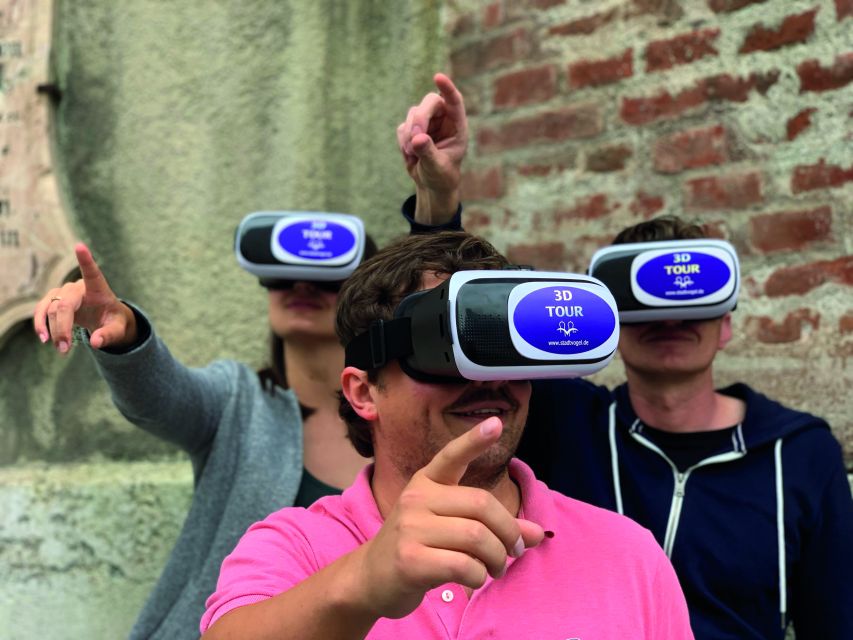
The centerpiece of the experience is Marienplatz, and it’s handled in a clever way. For the tour, Marienplatz is divided in half: on the western side you’re taken to around 1570, and on the eastern side you’re placed roughly 300 years later. Same square. Different world.
What you’ll get from this structure is comparison. You’re not just learning facts about the past—you’re constantly re-checking what you see in the present by overlaying a historical view. That’s where the tour earns its keep. The guide helps you connect physical details you can spot right now with the rendered scenes you see through the glasses.
Also, the tour doesn’t treat Marienplatz as one bland stop. It’s used like a classroom: one side to set the medieval-ish vibe and another side to show how the place evolved over time. If you enjoy “why does this square look like this today?” questions, this format will feel satisfying.
The medieval grain market, gallows, and the disgraceful donkey
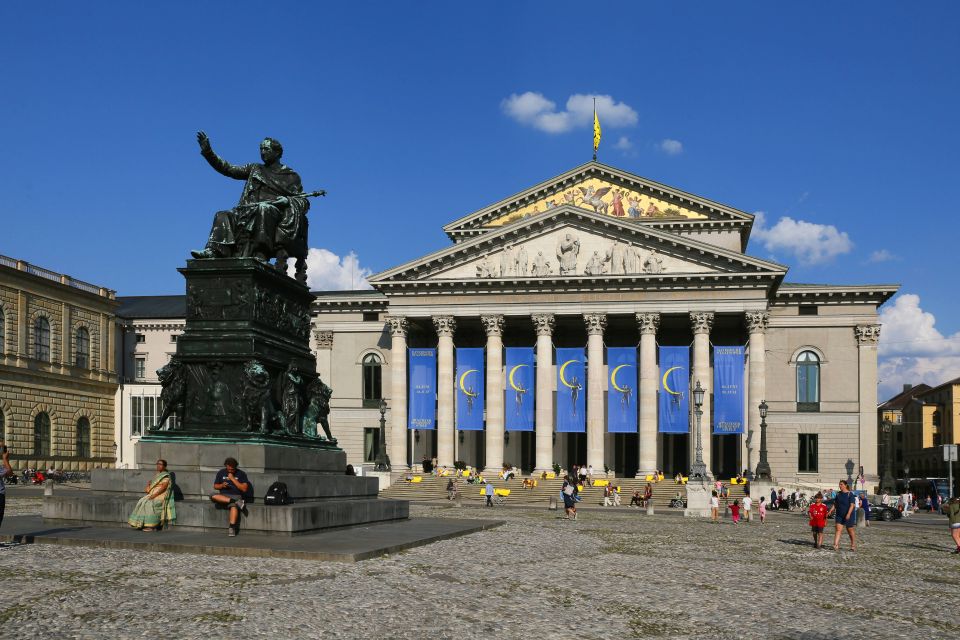
On the square, the tour focuses on the medieval grain market and the darker parts of public life. Through the 3D visuals, you’ll see the grain market setting and also features tied to punishment and spectacle—like the gallows for special executions and the so-called disgraceful donkey.
I like stops like this because they break the usual sunny, postcard-only version of Munich. You get the idea that Old Town squares weren’t just for shopping and celebrations. They were stage space—economic, social, and sometimes harsh. That makes the later parts of the tour easier to understand, because you see how the square’s role changed over centuries.
A small caution: these are the kinds of historical details that can feel intense even when presented briefly. If you’re traveling with kids or someone who dislikes grim history, you might want to mention it to your guide so you can adjust how you approach that segment.
Old Town Hall as it looked in 1870, plus carriages and old professions
After the earlier Marienplatz focus, the tour shifts again on the eastern side to a later historical view. You’ll see what the old town hall looked like in 1870, including the first completed part of the hall. The 3D scenes also include carriages and references to old professions in action.
This portion is valuable because it’s not just architecture. It connects buildings to movement and work—what people actually did in and around the city center. The guide’s job here is to help you translate a rendered scene into something that makes sense in a real street-level walk.
And if you like details you can spot with your own eyes—edges, shapes, placement—this is a good moment to slow down. Even without the VR glasses, the stories can help you see the town hall area differently. The 3D part just gives your brain a faster shortcut to “what am I looking at here?”
Platzl at 1895: how the area became Urmünchner place
Next comes Platzl, with a historical “surprises” theme centered on 1895. You’ll hear how the area came to be, how it changed, and how it turned into what people recognize today as an Urmünchner place.
This is a good mid-tour shift because it moves you away from one big anchor landmark and into neighborhood texture. You’re not only looking at famous buildings—you’re learning why an area developed the way it did and what that meant for locals.
The best part of this segment is that it likely feels more personal than the earlier centuries. Late 1800s history often connects more directly to how people think of daily life. Even if your main interest is Munich’s famous sights, this stop can add the “how it became itself” layer that most quick visits skip.




Hofbräuhaus then and now through the VR glasses
The tour also includes the Hofbräuhaus area in both past and present forms. The 3D images are meant to show you how the place connects across time—what it was and how it functions in Munich now.
Even if you’re not a beer-hall devotee, the historical angle is useful. It helps explain why certain entertainment and food spots in Old Town feel so deeply rooted. The “then and now” pairing gives you a reason to stop and look, instead of treating it like just another photo point.
One practical note: this is the kind of moment where you may want your phone positioned comfortably, because you’ll be switching between what you see on the street and what you see through the glasses. If your setup is clunky, it can distract. If everything’s working, it’s one of the most fun segments.
VR and smartphones: tips to prevent the most common frustrations
The tour’s biggest hinge is the VR setup. Everyone needs the app, and your smartphone is part of the hardware. That’s not just a technical detail—it changes how smooth the tour feels.
Based on what you should expect from this format, here’s how to make your experience smoother:
- Start with a full charge. A half-battery phone plus VR often leads to stress.
- Use internet before you reach the tightest part of setup. If the app download stalls, you’ll lose time.
- Treat the phone as necessary equipment, not optional. The VR glasses are designed to work with it.
- Be ready to troubleshoot quickly if one pair of glasses or one phone setup isn’t cooperating.
Some people found the VR glasses less impressive than they hoped, saying the images looked like photos instead of moving video. Others also mentioned tech hiccups with one or more glasses/phones during the tour. That doesn’t mean the concept fails—it means your mindset matters. Go in expecting 3D renderings and scenes, not cinematic action sequences.
If you’re the type who enjoys tech-friendly experiments on vacation, that’s a plus. If you’re hoping for big-budget motion like a theme park, you might feel let down.
Price and value: is $37 worth it for a 2-hour Munich VR walk?
At $37 per person for 2 hours, the value depends on what you want most: a standard guided walk or a guided walk with a tech layer. This tour is clearly the second option. You’re paying for three things working together:
- a live guide in German,
- a walking route through key Old Town areas,
- and VR glasses plus a phone-based app that delivers 3D renderings.
If you already know Munich’s highlights and love adding context, the guide-led storytelling can justify the cost fast—especially because Marienplatz gets a structured timeline split and the route stays focused on four 3D locations.
If you’re less interested in VR and more focused on classic sightseeing, this may feel slightly pricey compared to a purely walking-based tour. And if you’re sensitive to tech glitches, build in the possibility of a less-than-perfect VR experience. Still, even when the VR portion is hit-or-miss for some people, the route is built around meaningful stops: Marienplatz, Platzl, and the Hofbräuhaus area.
Who this Munich Old Town VR tour is best for
You’ll probably enjoy this most if:
- you like Old Town history but want it explained in a more visual way,
- you enjoy comparing “then versus now” right on the street,
- you’re comfortable using your smartphone as part of the experience.
It’s also a good fit for couples and groups who want shared novelty. Because the tour covers familiar landmarks in an unusual format, it’s one way to make a repeatable city center feel fresh.
If you’re traveling with someone who hates tech setup, this could be a mismatch. Since the app download happens at the meeting point and depends on your phone, the tour asks for a little cooperation.
Should you book this Munich VR walking tour?
If you want a Munich Old Town guided walk with a timeline twist, I’d say it’s worth booking—especially for the Marienplatz 1570 vs later centuries concept and the structured stops around Platzl and Hofbräuhaus. The concept is fun, and the guide-led stories are the backbone.
The only real reason to hesitate is the tech dependency. Because the VR relies on downloading an app and inserting your phone into the glasses, it’s smart to go in prepared. Bring your charged phone, use decent internet, and set your expectations for 3D scenes rather than blockbuster motion.
If you’re okay with that trade-off, you’ll come away with a different mental picture of Munich’s center—one where the past actually sits on top of the present.
FAQ
What is the meeting point for the Munich Old Town VR walking tour?
Meet directly in front of the Orlandohaus at Platzl 4. The guide will have a big blue bag with Weis(s)er Stadtvogel and a 3D Tour sign.
How long is the tour?
The tour lasts 2 hours.
Is the tour guided, and what language is used?
Yes. It includes a live guide, and the tour language is German.
Do I need a smartphone for this experience?
Yes. You need a charged smartphone with internet access. All participants must download an app at the meeting point, and the phone is inserted into the VR glasses.
What’s included in the price?
Included are the guide, the walking tour, and the VR glasses.
Is wheelchair access available?
Yes, the tour is wheelchair accessible.
Is food included?
No. Food and drinks are not included.
FAQ
How much does the tour cost?
It costs $37 per person.
Can I cancel and get a refund?
You can cancel up to 24 hours in advance for a full refund.
How many places are covered with 3D renderings?
The tour focuses on 4 places in Munich’s Old Town that have 3D renderings.