REVIEW · CITY TOURS
Munich: Private Walking Tour of the Historical City Center
Book on GetYourGuide →Operated by Travmonde OÜ · Bookable on GetYourGuide
Munich’s center tells stories fast on foot. This private walking tour strings together the streets, squares, and landmarks that shaped modern Munich, from wartime drama to beer-garden tradition. I especially like how it keeps history practical, with explanations you can actually see as you walk.
Two things I like most: the way the tour connects WWII turning points to real Munich stops, and the payoff of iconic sights with clear meaning—like the Rathaus clock tower. You also get a classic beer-culture arc, including a stop tied to Hofbräuhaus, founded in 1589.
One possible drawback: because it’s a walking tour, you’ll rely on your guide’s voice and pacing, and some past guests found their guide hard to hear. Also, it’s not suitable for wheelchair users, so plan for stairs and uneven old-city surfaces.
In This Review
- Key Highlights You Won’t Want to Miss
- Why This Munich Private Walk Fits The City So Well
- Meeting at Marienplatz: The Start That Makes Everything Click
- Rathaus-Glockenspiel in Plain English: More Than a Nice Clock Show
- Old Town Hall, New Town Hall, and Mary’s Column: Civic Power and Naming Stories
- St. Peter’s and the Monks: How a City Gets Its First Religious Footing
- Frauenkirche Views and the Devil’s Footprint Legend
- Odeonsplatz and WWII: Learning How the War Was Almost Stopped
- Beer Culture Stops: Hofbräuhaus (1589) and Munich’s Old Beer-Garden Tradition
- Viktualienmarkt: The Most Practical Way to End With Local Life
- Optional Residenz Museum: When Royal Rooms Add Value
- Price and Value for a Private Group Up To 15
- Who This Tour Is Best For (And Who Should Skip)
- Booking the Right Session: A Couple Practical Tips
- Should You Book This Munich Private Walking Tour?
- FAQ
- FAQ
- How long is the Munich private walking tour?
- What’s the meeting point for the tour?
- Is this tour private?
- What languages are offered?
- What’s included in the price?
- Are entrance fees included for museums or sights?
- Is food and drink included?
- Can I add a visit to the Residenz Museum?
- Is the tour wheelchair accessible?
Key Highlights You Won’t Want to Miss
- Marienplatz and the Rathaus-Glockenspiel meaning: hear what makes the clock tower matter, beyond the show
- WWII suspense at key Munich sites: Georg Elser’s assassination attempt comes alive in context
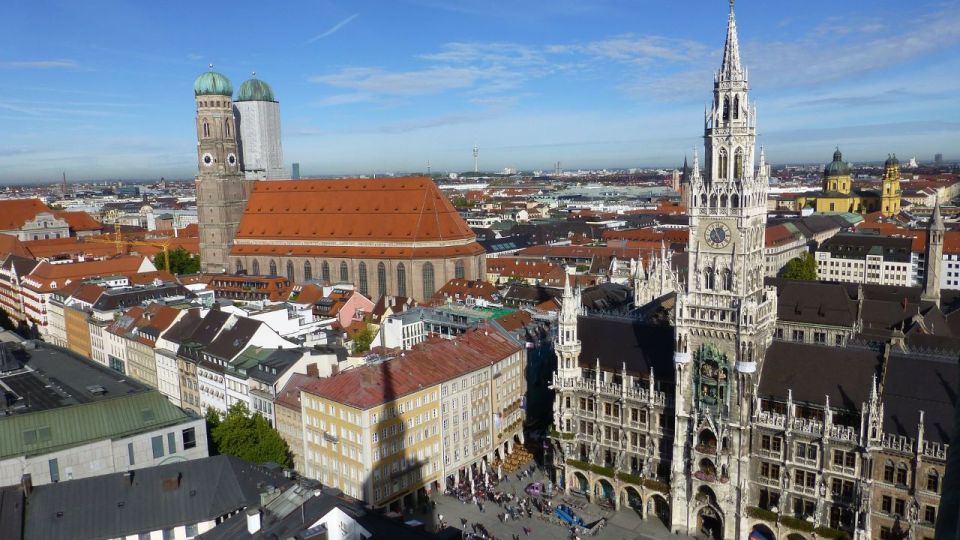
- Cathedral legends on the route: the Frauenkirche’s devil’s footprint is explained where you can see it
- Odeonsplatz and the Beer-Hall-Putsch: learn how Munich’s political story ignited in the early Nazi era
- Beer history in real places: Hofbräuhaus (1589) and older beer-garden traditions
- Viktualienmarkt as a local finish: a food market stop that doubles as a central social hub
Why This Munich Private Walk Fits The City So Well
Munich’s old center is compact enough that you can connect the dots quickly, without losing your energy in transit. In a 3-hour private format, you also get flexibility to linger at details that catch your eye, like a clock mechanism explanation or a church legend.
I like the balance here: it’s not only monuments. You get stories about power, survival, and everyday local culture, tied to the exact places you’re standing. That matters because Munich can feel orderly from a distance, but up close, the city’s plot twists are right there on the street level.
You should expect a steady walking pace. The tour is built for people who want to learn while moving, not people who want lots of long seated time.
You can also read our reviews of more walking tours in Munich

Meeting at Marienplatz: The Start That Makes Everything Click
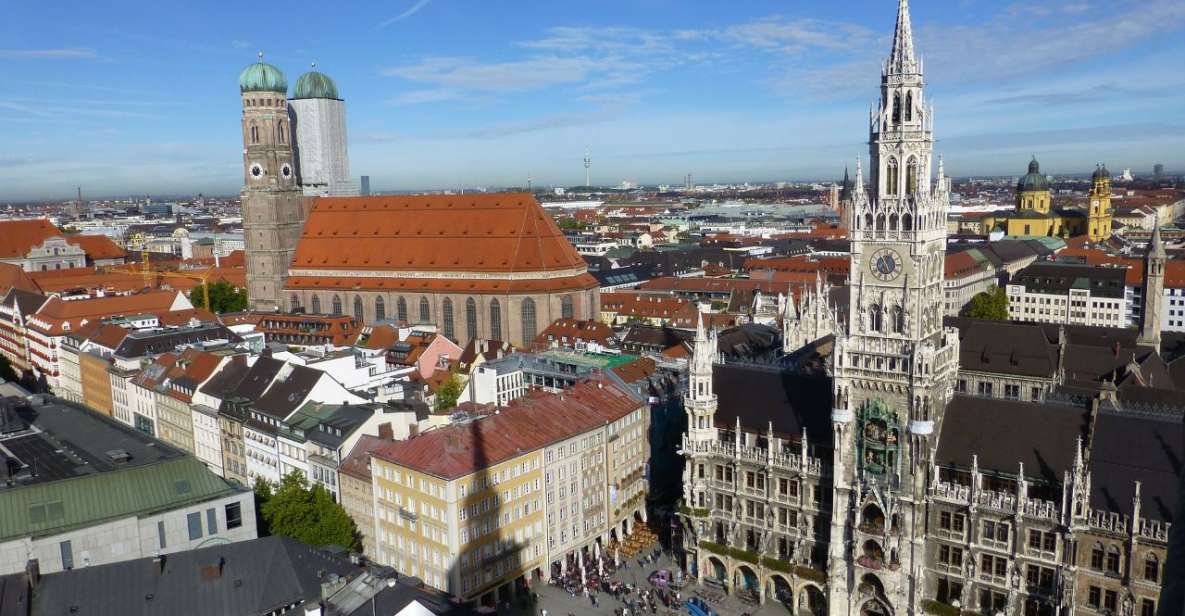
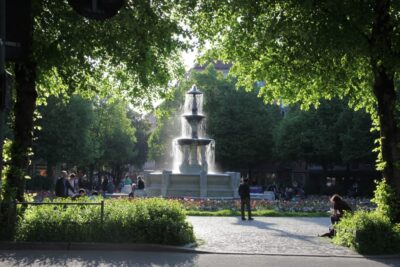
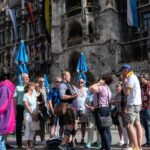
You’ll meet at the fish fountain in front of the Town Hall at Marienplatz 8 (80331 München). This is a smart starting point because Marienplatz is the visual center of Munich’s historic core, and it sets the tone for the day.
From the first moments, your guide frames what you’re about to see: how squares and institutions shaped civic life, and how Munich’s identity formed in layers. If you like the feeling of getting your bearings fast, this meeting point helps a lot.
Tip: wear comfortable shoes. Even on a “short” walk, Munich’s center includes classic old-city sidewalks and the kind of small detours that make walking tours worth it.
Rathaus-Glockenspiel in Plain English: More Than a Nice Clock Show
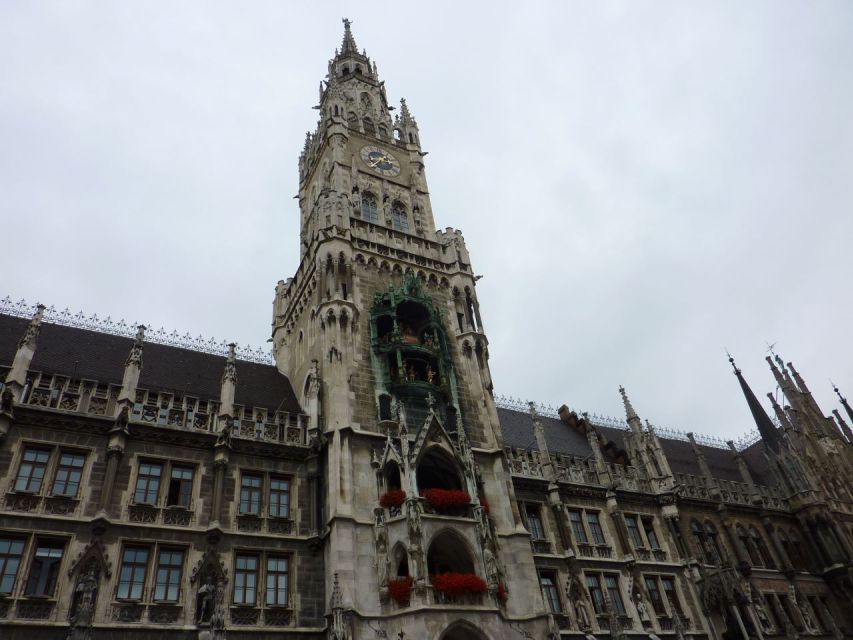
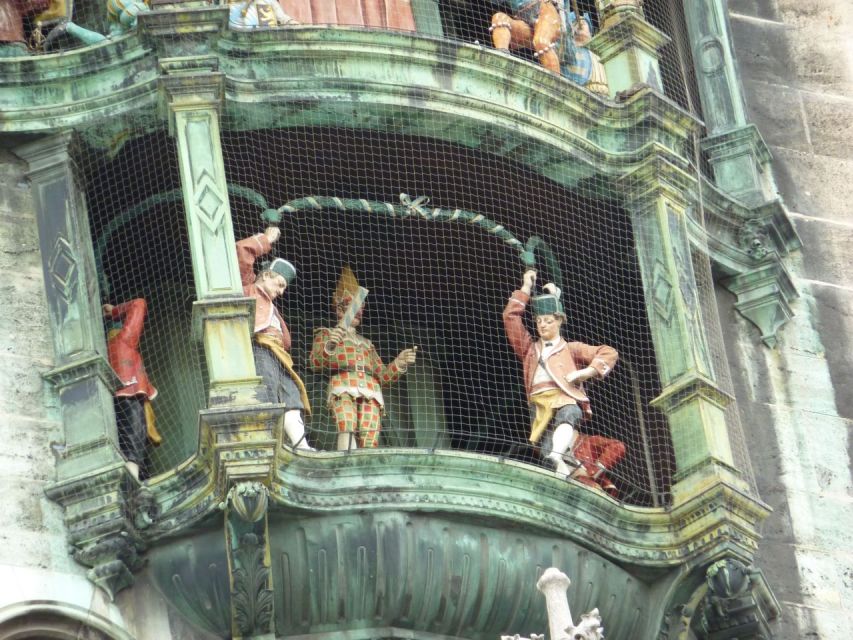
One of the tour’s best hooks is the Rathaus-Glockenspiel, the famous landmark clock tower. The value isn’t the spectacle alone; it’s the meaning behind it. Your guide explains what you’re seeing and why it became part of Munich’s public identity.
This is the kind of stop where your eyes will make sense immediately. After the explanation, you can look up and connect the details to what the guide described. That’s the difference between watching a clock and understanding why people gather around it.
If you’re the type who enjoys explanations while you’re standing in the exact context, you’ll probably rate this segment highly.
Old Town Hall, New Town Hall, and Mary’s Column: Civic Power and Naming Stories
As the tour moves through the center, you’ll pass both the Old and the New Town Hall. Even if you’re not a architecture fanatic, the framing helps. These aren’t just buildings; they represent Munich’s civic shift over time and how public life organized itself in the city center.
You’ll also hear why Mary’s Column gave its name to the central square. Naming stories matter more than people think. They’re often the easiest way to learn who was celebrated, what events were remembered, and how a city chooses symbols for everyday use.
This part works well because it’s visual. You’re walking in the same civic space where Munich’s public life unfolded.
St. Peter’s and the Monks: How a City Gets Its First Religious Footing
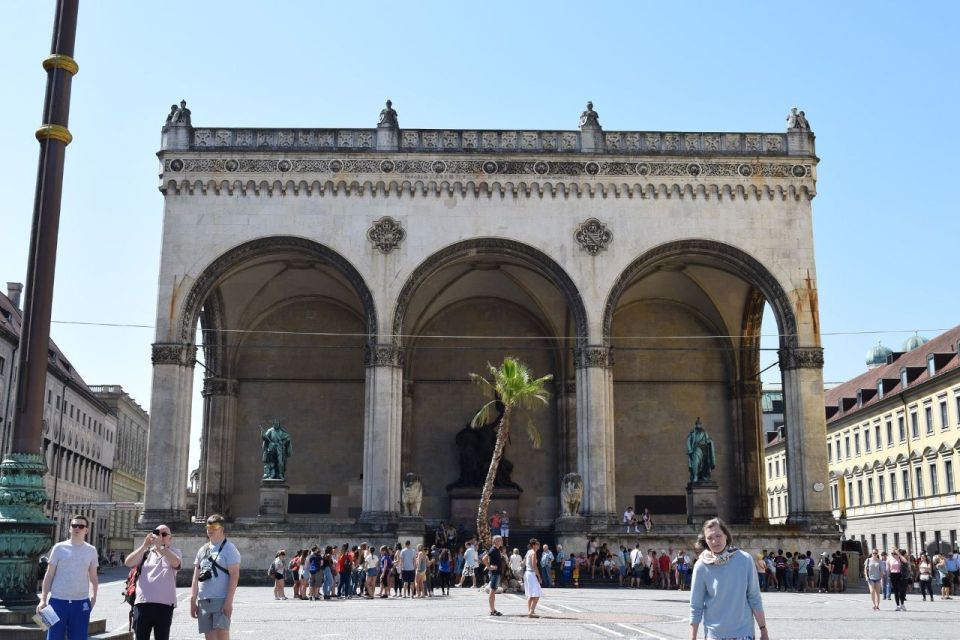
Monks helped give rise to Munich, and the tour points you to St. Peter, the city’s oldest Catholic church. This is a good stop if you like origin stories—those earliest chapters that explain why a city grows the way it does.
The benefit is perspective. Instead of treating churches as isolated landmarks, you understand them as part of the city’s early network. That makes later stops—especially the cathedral segment—feel more connected.
If you’re short on time in Munich and want the quick logic behind the city’s historic formation, this segment is a strong use of your 3 hours.
You can also read our reviews of more city tours in Munich



Frauenkirche Views and the Devil’s Footprint Legend
You’ll get a good view of Frauenkirche’s double towers, which are hard to miss once you know what you’re looking for. Your guide also describes the devil’s footprint legend associated with the cathedral.
Legends can feel like campfire stories unless you learn where they connect to the real building. Here, the value is that you’re not just hearing the tale. You’re standing where the story is tied to the physical site, so the legend becomes easier to remember.
If you enjoy folklore with a real sense of place, this stop is one of the more fun segments of the walk.
Odeonsplatz and WWII: Learning How the War Was Almost Stopped
This is the emotionally heavy part, but it’s also where the tour feels most grounded. At Odeonsplatz, you’ll hear about the Beer-Hall-Putsch—when about two thousand men led by Adolf Hitler marched to the center of Munich in the Nazi’s first attempt to seize power.
Then the story pivots to Georg Elser, a carpenter in Munich who planned a daring assassination attempt to prevent the outbreak of WWII. Whether you know the outline or not, the way these stories are linked to the same streets helps the timeline feel real instead of abstract.
I like that the tour doesn’t treat WWII as a distant headline. It frames it in local decisions and local actors, which is exactly what makes history stick.
Beer Culture Stops: Hofbräuhaus (1589) and Munich’s Old Beer-Garden Tradition
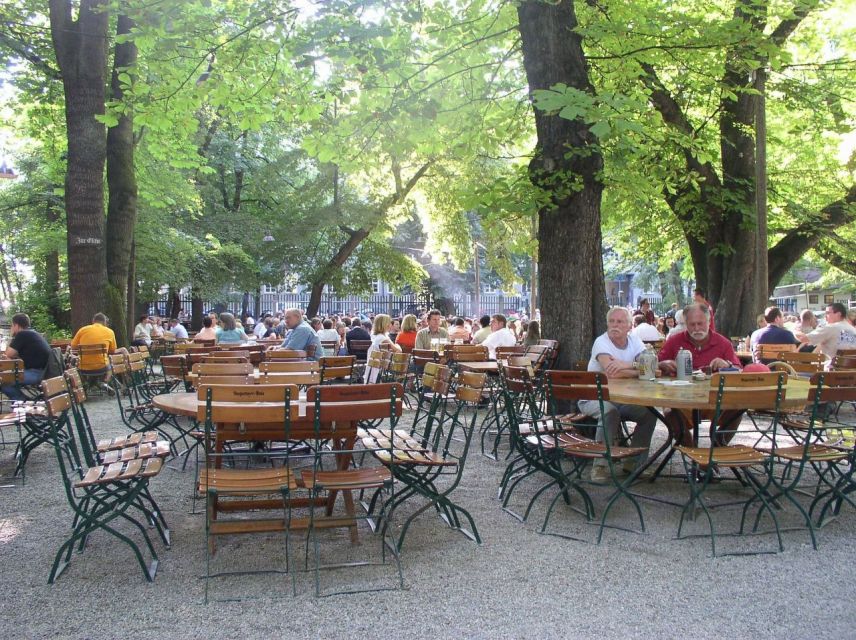
Munich beer culture is not a side hobby here. It’s built into the tour’s rhythm, and the route includes famous beer gardens established nearly 450 years ago.
A key detail you’ll hear is about Hofbräuhaus, the royal brewery founded in 1589. That date gives context: Munich didn’t just develop beer culture as a modern tourist thing. The roots go back into the city’s long-term social routine.
This isn’t a hard sell to drink. It’s more about understanding why beer gardens and breweries became civic meeting points. That viewpoint helps you enjoy the real places later, even if you only grab a beverage on your own after the tour.
Viktualienmarkt: The Most Practical Way to End With Local Life
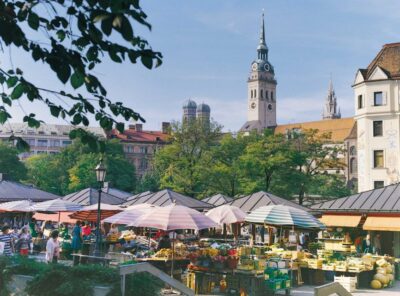
You’ll finish by passing Viktualienmarkt, a public food market known for local delicatessen and fresh produce. It’s also home to one of Munich’s most central beer gardens, so it naturally ties together what you learned about beer culture earlier.
What I like about this ending is that it gives you an easy next step. After a history-focused walk, a market stop is a low-stress way to keep exploring on your own. You can snack, browse, or sit for a while without planning anything complicated.
If you want a Munich experience that feels like normal city life rather than museum-only sightseeing, this is a solid final note.
Optional Residenz Museum: When Royal Rooms Add Value
There’s an option to have your guide lead you to the Residenz Museum. If you like interiors—rooms, power displays, and court history—this can turn your walking tour into a more complete day of context.
Important practical point: entrance fees aren’t included. So you’ll want to budget for museum tickets if you choose this add-on.
For some travelers, the walking tour alone is enough. For others, the Residenz Museum can be the payoff that turns the outdoor history into something you can study up close.
Price and Value for a Private Group Up To 15
The price is $288 per group up to 15 people, for a duration of 3 hours. For solo travelers or couples, this typically isn’t the cheapest way to see Munich. But private tours make sense when you value direct Q&A, a guided pace that works for your interests, and less time lost figuring things out.
Here’s the value math I’d use: split the group cost among multiple people and the per-person price drops quickly. If you’re traveling with family or friends, this can be a smart pick—especially because you’re getting a guide-led explanation of multiple major stops in a short time.
Also, included is only the local professional guide. Entrance fees and food and drinks are on you, so plan for a little extra spending if you opt into the Residenz Museum or want to eat along the route.
If your priorities are history plus a clear guide voice, a private format is often worth it.
Who This Tour Is Best For (And Who Should Skip)
This tour is a good fit if you want:
- a structured walk through Munich’s historic center
- WWII and political history tied to specific places
- beer culture context while you’re still in the city center
- clear explanations of landmarks like Rathaus-Glockenspiel and Frauenkirche legends
It may not be ideal if:
- you strongly prefer museum time over walking
- you need accessibility accommodations, because it isn’t suitable for wheelchair users
- you rely on loud, animated commentary to enjoy tours (some past guests had trouble hearing a quiet guide)
If you do well with steady walking and enjoy learning on the move, you’ll likely enjoy this format.
Booking the Right Session: A Couple Practical Tips
Because the tour is private and has a fixed meeting point, choose a time when you’ll be comfortable walking in that part of the city for the full 3 hours. Munich’s center can feel busy, and a calm start makes the explanations easier to absorb.
If you choose the Residenz Museum option, plan your energy. Museum time can shift the feel from street-level storytelling to slower inside-time. Entrance fees aren’t included, so check ticket timing if you’re trying to fit it into a tight schedule.
Also, I’d suggest coming with at least one curiosity question ready—WWII motivations, beer history, or how Munich’s landmark clock got its meaning. A good guide will answer fast when you give them a direction.
Should You Book This Munich Private Walking Tour?
Book it if you want a guided walk through the core of Munich with clear explanations at landmark points, plus WWII and beer culture woven into the route. The private group format is especially appealing if you’re traveling with others and want a pace that matches your interests.
Skip it if you need wheelchair accessibility, or if you know you struggle to hear quieter guides on walking tours. In that case, you might prefer a different format with more frequent rest stops and less reliance on standing audio.
FAQ
FAQ
How long is the Munich private walking tour?
It runs for 3 hours.
What’s the meeting point for the tour?
Meet at the fish fountain in front of the Town Hall, Marienplatz 8, 80331 München.
Is this tour private?
Yes. It’s a private group experience.
What languages are offered?
The live guide is available in English and German.
What’s included in the price?
A local professional guide is included.
Are entrance fees included for museums or sights?
No. Entrance fees are not included.
Is food and drink included?
No. Food and drinks are not included.
Can I add a visit to the Residenz Museum?
Yes, you can choose the option to have your guide lead a visit to the Residenz Museum. Entrance fees still aren’t included.
Is the tour wheelchair accessible?
No, it’s not suitable for wheelchair users.