REVIEW · WALKING TOURS
Munich 4hr Private Walking Tour with Certified Guide
Book on Viator →Operated by Japan Guide Agency · Bookable on Viator
Munich clicks into focus fast on foot. I love the private, certified guide (Vanessa on my tour) who shared practical local food and transit tips. I also love that you can customize to 2–3 stops, so the day feels personal instead of rushed. The main drawback: some big sights charge extra, since entrance fees are not included for several museums and palaces.
This is a true small-group setup. You meet on foot in a designated area, and pickup is offered, with a mobile ticket provided for smoother access.
With a good plan, 4 hours is enough to see Munich’s core highlights and still breathe. One note: the experience requires good weather, so if conditions are bad, you’ll likely be offered a different date or a refund.
In This Review
- Key highlights you should care about
- Why this 4-hour Munich private walk works
- Price and value: what $391.40 really buys you
- Pacing, meet-up, and using Munich transit like a local
- Marienplatz, Neus Rathaus, and the Glockenspiel clock-tower moment
- St. Peter’s Church: Munich’s oldest church and a green-dome viewpoint
- Viktualienmarkt: a smart, low-commitment taste of Bavaria
- Frauenkirche: twin domes, cathedral drama, and skyline clarity
- English Garden: the park reset and the Eisbach wave
- Olympiapark: Olympics-era architecture and the Olympic Tower view
- Asamkirche: Bavarian Rococo that feels like theatre
- Theatinerkirche St. Kajetan: a yellow façade with a Baroque interior
- Residenz Munich: royal palace power, opulent rooms, and art collections
- Nymphenburg Palace: a summer residence with wide grounds
- Deutsches Museum: science and technology for curious minds
- BMW Museum: car design and engineering history
- Alte Pinakothek: European masters in a major art hall
- Should you book this Munich private walking tour?
- FAQ
- How long is the Munich private walking tour?
- Is this a private tour or shared group?
- Can I choose which sights to visit?
- Are entrance fees included?
- Is pickup available?
- What if the weather is bad or I need to cancel?
Key highlights you should care about
- Custom selection of 2–3 sites means you’re not paying for time you’ll skip
- Marienplatz + the Glockenspiel gives you one of Munich’s most clockwork-famous moments
- Tower views included where available (like St. Peter’s and Frauenkirche) help you orient fast
- Viktualienmarkt is a low-stress way to get Bavarian flavors without turning the day into a food tour
- English Garden + Eisbach surfers makes a clean break from the city center
- Your guide can coach public transit apps (the bus/train ticket app tip is a real time-saver)
Why this 4-hour Munich private walk works
Munich can feel spread out if you rely only on buses and maps. This tour fixes that by putting a licensed English guide next to you and keeping things walkable. In practice, it’s the kind of format that helps you get your bearings fast and then choose how long you want to linger.
I also like that the tour isn’t built around “one-size-fits-all” checklist pressure. You’re not herded through multiple stops just to fill a schedule. With 2–3 selected sites, you get a tighter story and less time lost to transit and line-waiting.
Finally, the vibe is practical. One guide example: Vanessa kept a good pace and made it feel easy, even when guests were staying farther out. She also showed how to use the bus/train app and how to take public transportation, which is exactly the kind of help you want before you’re on your own.
You can also read our reviews of more walking tours in Munich
Price and value: what $391.40 really buys you
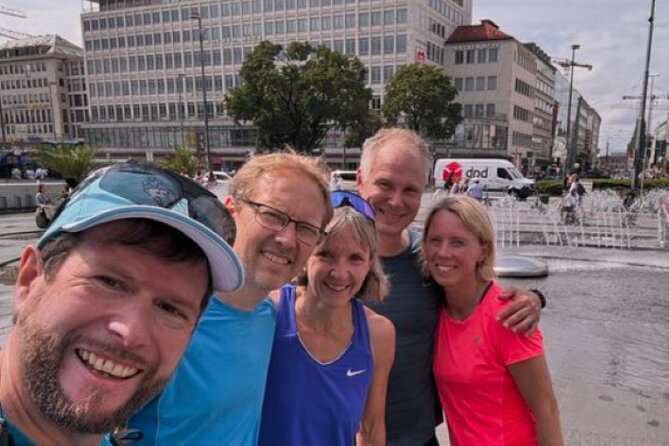
At $391.40 per person for about 4 hours, this isn’t a budget tour. You’re paying for a government-licensed English-speaking guide and a private experience where only your group participates. That matters in Munich because the most rewarding moments often happen when someone points out what you’d otherwise miss.
Here’s the value math I’d use: several of the listed highlights show as free admission (Marienplatz, the Glockenspiel, Viktualienmarkt, and certain churches). That means your money often goes toward interpretation and time, not ticket fees.
The trade-off is that key attractions are not included (examples: Residenz Munich, Nymphenburg Palace, Deutsches Museum, BMW Museum, and Alte Pinakothek). So the final cost depends on which 2–3 sites you choose and whether you want palace interiors, museum halls, or tower climbs.
Pacing, meet-up, and using Munich transit like a local
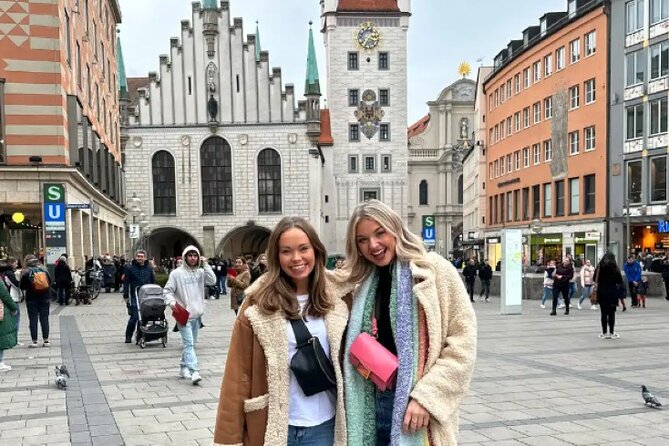
This is a walking tour, so your day starts with good logistics. You meet your guide on foot within a designated area, and pickup is offered. In one case, Vanessa met guests farther from the center, then guided them through using the bus/train app for tickets and taking public transportation.
That sort of coaching is a quiet win. Munich’s transit is strong, but it can be confusing when you’re jet-lagged. A guide who can help you figure out the app and the basics means you spend less time stressed and more time seeing.
Pacing is another value point. The best tours don’t feel like a sprint, and this one hits the balance well in real use: not too fast, not too slow. You also get small, focused time blocks at each stop (often around 15 minutes, with some options lasting longer), which helps you avoid the “we only glanced at it” feeling.
Marienplatz, Neus Rathaus, and the Glockenspiel clock-tower moment
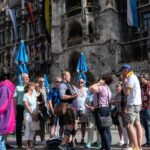
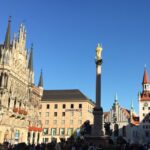
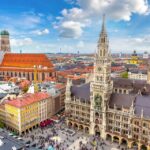
If you want the quickest path into Munich’s center, Marienplatz is where you begin. It’s the heart of the city’s activity, anchored by the New Town Hall (Neues Rathaus). Even if you’ve seen photos, being there in person helps you understand how the square works as a daily meeting point.
At Marienplatz, you’re not just looking at buildings. Your guide can help you connect the square to how Munich schedules its public life—markets, gatherings, and the city’s rhythm. It’s a great way to start because you instantly get orientation for the streets around it.
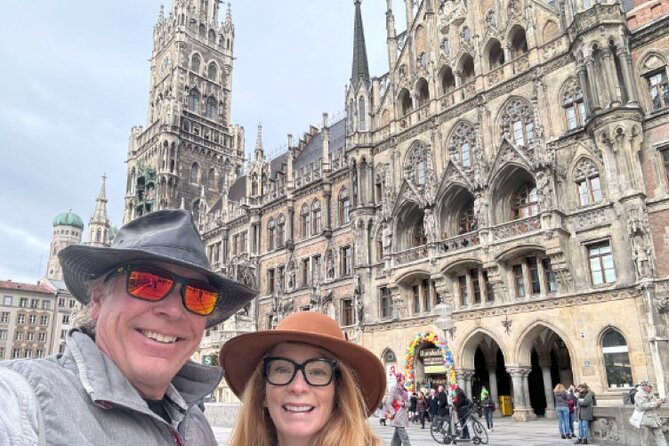
Then comes the New Town Hall itself. The façade is Gothic Revival, and the big feature is the tower and its animated Glockenspiel. The Glockenspiel performs twice daily, with mechanical figures reenacting historical events from Munich’s past. If you’re the kind of traveler who likes “small details with big atmosphere,” this is a short stop that delivers.
Practical note: the clock show is time-based. If your timing is off, you might not catch it in the exact moment you want, so choose a schedule that gives you a little wiggle room during the walk.
St. Peter’s Church: Munich’s oldest church and a green-dome viewpoint
St. Peter’s Church (Peterskirche) brings a different feel than the town square. It’s Munich’s oldest church, with Baroque architecture and the striking green dome. Inside, you’ll typically see intricate altars and artwork, which can slow you down in the best way.
The big payoff for many visitors is the tower view. Going up helps you map Munich in your head—where the center sits, where the larger boulevards lead, and what stretches toward the Alps in the distance (on clear days). Even a short stop can change how you experience the rest of the city.
A realistic consideration: churches are popular, so if you pick a time when foot traffic is high, your “15-minute window” may feel tighter. If you care more about views than interiors, prioritize tower time and don’t feel guilty about moving on.
You can also read our reviews of more guided tours in Munich


Viktualienmarkt: a smart, low-commitment taste of Bavaria
Viktualienmarkt is Munich’s famous open-air market. It has a long tradition of selling fresh produce and local specialties, and it tends to feel easy to navigate even when it’s crowded.
This is one of the best stops for travelers who want “flavor without a formal food tour.” You can taste items you like, skip what you don’t, and still get a feel for everyday Munich. Your guide can also point you toward local foods and drinks that make sense for the season and for what you’re craving.
One drawback to plan for: markets are sensory places. If you’re sensitive to noise or want a quiet break, treat it as a short stop, not a long wandering afternoon.
Frauenkirche: twin domes, cathedral drama, and skyline clarity
Frauenkirche (Cathedral of Our Dear Lady) is one of Munich’s most recognizable sights, thanks to its twin onion domes. The church is Gothic, and the interior includes stained glass windows plus an ornate design that rewards a careful look.
Again, the tower is the reason many people choose this stop. From above, you can see Munich’s skyline and (when conditions allow) the Alps in the distance. That means you’re not just learning about the city—you’re visually linking the city to its geography.
Possible trade-off: if you’re choosing only 2–3 sites, Frauenkirche takes a solid chunk of attention. I’d pair it with another nearby core stop (like Marienplatz or St. Peter’s) so you aren’t backtracking.
English Garden: the park reset and the Eisbach wave
English Garden (Englischer Garten) is a breather built into Munich. It’s one of the largest urban parks, with winding paths and open meadows that make it easy to step away from the dense center without leaving the city.
The famous detail here is the Eisbach wave. Even if you’re not a surfer, it’s one of those Munich quirks that feels uniquely local. Watching surfers in a city park is a reminder that Munich isn’t only about churches, palaces, and museums.
A practical thought: parks are weather-dependent. Since the tour requires good weather, English Garden is likely to be a highlight when skies cooperate. In poor conditions, your plan may shift, so keep your expectations flexible.
Olympiapark: Olympics-era architecture and the Olympic Tower view
Olympiapark is a recreational area built for the 1972 Summer Olympics, now used for sports and events. You get open space, a lake nearby, gardens, and big modern-style park architecture.
The Olympic Tower is the key landmark for panoramic views. If you pick Olympiapark as one of your 2–3 sites, it can balance a day heavy on historic churches by giving you a wide-angle sense of the city.
One consideration: if you prefer “old town density,” you might feel like this is a change of pace rather than an extension of the center. I like it as a contrast stop—especially if your other chosen sites lean religious or royal.
Asamkirche: Bavarian Rococo that feels like theatre
Asamkirche (Asam Church) is a standout for travelers who love dramatic interiors. It’s Bavarian Rococo from the 18th century, created by the Asam brothers. The church is known for intricate frescoes, ornate altars, and a ceiling that pulls your gaze upward.
This is the stop to choose when you want art that moves fast even when you stand still. Rococo churches can feel like you’ve stepped into a painted world, and Asamkirche is the kind of place where photos don’t fully explain what you’re seeing.
Possible drawback: Rococo details reward time. If you only have a short window at this stop, you may want to focus on just a few areas—the ceiling work and the main altar—rather than trying to take it all in at once.
Theatinerkirche St. Kajetan: a yellow façade with a Baroque interior
Theatinerkirche St. Kajetan brings a clean visual punch. It has a striking yellow exterior and a Baroque interior filled with frescoes, ornate altars, and a prominent dome.
Because this is also a church stop marked as free admission, it’s a high-value pick when you’re choosing only 2–3 sites. You get an “architectural contrast” moment: different styles from different streets of Munich, without paying museum-level entry fees.
A practical note: church interiors can be visually dense. If you’re someone who likes to slow down, this could be the stop where you ask your guide to point out what to watch for first.
Residenz Munich: royal palace power, opulent rooms, and art collections
Residenz Munich is the royal palace complex of the Wittelsbach dynasty. It’s now a museum, with opulent rooms and impressive art collections that show how Bavarian royalty lived and displayed power.
If you’re picking just one palace/museum stop, Residenz is a strong choice because it packs a lot into one place—rooms, history, and art in one sweep. It’s also a good match if you’ve already seen Munich’s public square (Marienplatz) and want the story to shift from civic life to court life.
Consideration: this stop is listed as not included for admission, so budget for it. Also, palace museums can run longer than you expect, so make sure it fits your 4-hour pacing plan.
Nymphenburg Palace: a summer residence with wide grounds
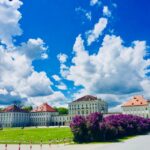
Nymphenburg Palace was the summer residence of Bavarian kings. It’s Baroque and known for grand architecture and landscaped gardens, plus interior rooms and galleries.
If your other selected sites are mostly churches and city views, Nymphenburg gives you a different texture: scale. The grounds and pavilions add space and change the feel of your walk.
The trade-off is time and admission cost. Since it’s not included for entry, it can push the day’s total spend higher than a fully free church stop.
Deutsches Museum: science and technology for curious minds
Deutsches Museum is one of the largest and oldest science and technology museums in the world. The scope covers physics, aviation, renewable energy, and more. If you like hands-on exhibits and historical artifacts, this is the kind of place that can keep you engaged well beyond the first room.
Because it’s not included for admission, it’s best for travelers who genuinely want museum time rather than a quick look. Pick it if your group energy is right for longer indoor exploration.
BMW Museum: car design and engineering history
BMW Museum focuses on one of the world’s best-known automobile brands, using interactive exhibits and car displays that cover classic and modern vehicles. The architecture is sleek, and the theme connects design and technology in a way that’s easy to follow even if you’re not a full-on car enthusiast.
This can be a fun change if your other selected stops are all about churches and royal buildings. You trade old-world ornament for modern industrial design.
A drawback: it’s not included for admission, so if you’re keeping costs tight, treat it as your “one paid highlight” choice.
Alte Pinakothek: European masters in a major art hall
Alte Pinakothek is a major art museum with a strong collection spanning European masterpieces. You’ll find works linked to artists like Rembrandt, Rubens, and Dürer, spanning from the Middle Ages through the 18th century.
Choose it if you want art history that’s concrete and recognizable. And if you like museum architecture as much as art, this one is often worth your attention.
Again, admission is not included, so plan for it. Also, art museums can be emotionally slower than churches or markets, so your guide’s pacing matters.
Should you book this Munich private walking tour?
Book it if you want a guided day that feels flexible, not factory-made. The biggest strengths are the private format, the guide’s interpretation, and the ability to choose 2–3 sites that match your interests, whether that’s churches, squares, a park break, or a museum/palace stop.
Skip it or adjust expectations if you’re trying to keep entrance fees at zero. Many of the free stops are listed, but several major attractions you may want (Residenz, Nymphenburg, Deutsches Museum, BMW Museum, Alte Pinakothek) are not included for admission, which can raise your final spend fast.
If your group wants history and architecture but also wants a say in the day, this is a solid fit. On the guide side, the real value shows up in pacing and practical help, like learning how to use the bus/train app and getting local food and drink pointers.
FAQ
How long is the Munich private walking tour?
The tour is about 4 hours.
Is this a private tour or shared group?
It’s private. Only your group participates.
Can I choose which sights to visit?
Yes. It’s customizable so you can pick 2–3 sites from the available options.
Are entrance fees included?
Admission is free for some listed stops, but entrance fees are not included for several major attractions.
Is pickup available?
Pickup is offered.
What if the weather is bad or I need to cancel?
This experience requires good weather. If canceled due to poor weather, you’ll be offered a different date or a full refund. Free cancellation is available up to 24 hours before the experience starts.