REVIEW · DACHAU
From Munich: Dachau Memorial Site Tour in Spanish
Book on GetYourGuide →Operated by Bayern a medida GmbH & Co KG · Bookable on GetYourGuide
Five hours in Dachau changes how you see history. This guided Spanish tour connects the permanent exhibition with the remaining camp structures, so you don’t just read facts—you walk through the physical place of memory. I especially liked the way the guide explains the camp’s history and the fate of victims, and I also appreciated the respectful, emotionally careful pacing at key sites. One possible drawback: this is strictly Spanish-only, and children under 13 can’t join.
You’ll also get a full sense of the site, not just a quick stop. The route includes major areas tied to daily life and persecution, plus the International Memorial and other religious memorials, which give the story a wider human context. If you’re traveling with lots of luggage or expect lots of breaks, plan ahead because the tour has clear rules and you’ll be on your feet.
In This Review
- Key highlights at a glance
- A 5-hour Dachau visit with a Spanish memorial guide
- From Munich by train: how to plan your day without stress
- Meeting under Karlstor Gate at Karlsplatz (and what to watch for)
- The permanent exhibition: context that changes what you see outside
- Roll-call, bunkers, barracks, and the crematorium
- Roll-call
- Bunkers and barracks
- The crematorium
- International and religious memorials: remembering beyond borders
- Price and value: why $40 makes sense here
- Who should book (and who should skip) this Spanish-only tour
- Should you book this Dachau Memorial Site tour in Spanish?
- FAQ
- How long is the Dachau Memorial Site tour from Munich?
- Is the tour available in languages other than Spanish?
- Do children under 13 years old have access to the tour?
- Where do I meet the guide?
- Will there be a bus pickup at the meeting point?
- Is hotel pickup or drop-off included?
- What’s included in the price?
- Is transport ticket included?
- What should I bring, and what isn’t allowed?
- What if the tour doesn’t reach the minimum number of participants?
Key highlights at a glance
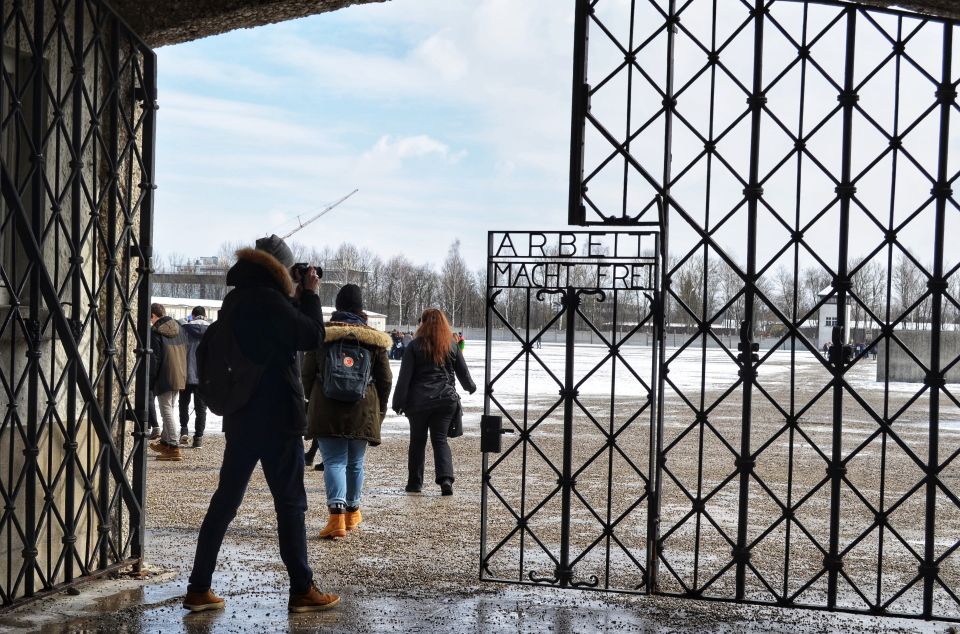
- Spanish-only official Dachau Memorial Guide with clear explanations and a serious, respectful tone
- Permanent exhibition for solid context before you walk the grounds
- Original remains and reconstructions that show how the camp worked in practice
- Roll-call, bunkers, barracks, and the crematorium as part of the main route
- International and religious memorials that broaden remembrance beyond one country
A 5-hour Dachau visit with a Spanish memorial guide
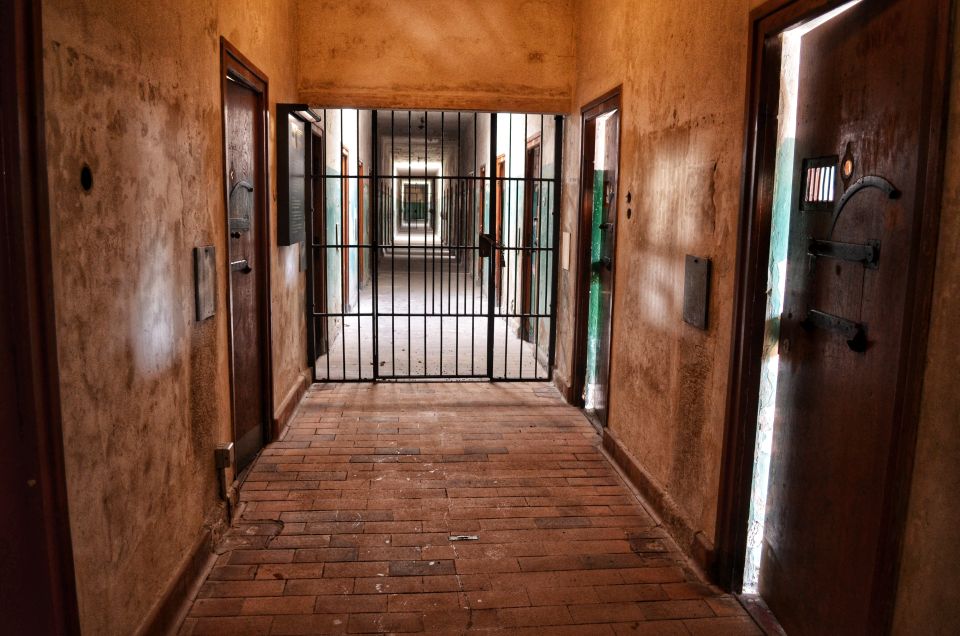
Dachau isn’t a place for casual sightseeing. It’s a memorial site, and the tour format makes that clear from the start. You’ll spend about five hours with an official Dachau Memorial Guide who stays with you throughout the visit, keeping the focus on history, victims, and what the camp left behind.
Two things make this tour especially worth your time. First, the guide ties the story together instead of listing details in isolation. You start with context in the permanent exhibition, then you move to the grounds and can connect what you learned to what you’re seeing. Second, the explanations are offered with patience and care—exactly what you want at a difficult site where silence and attention matter.
The other thing I like: the scope. This isn’t a short route that skips the hard parts. You’ll visit the core areas, including spaces linked to confinement and forced labor, and you’ll also see the international and religious memorials that honor victims in a broader way.
You can also read our reviews of more tours and experiences in Dachau.
From Munich by train: how to plan your day without stress
This tour is built for people already in Munich. You travel from Munich to the Dachau Memorial Site by train, accompanied by the guide. That matters because it reduces decision fatigue. Instead of figuring out your own route mid-trip, you’re with someone who knows the flow of the day and can keep everyone together.
It also helps that the tour has a clear start time window. The meeting is structured, and once you’re with the group, the visit stays organized. The result is a day that feels purposeful rather than scattered.
Practical tip: plan to move light. The tour rules don’t allow food, and large bags or luggage aren’t part of the setup. Bring only what you truly need for several hours outdoors and indoors, and keep your hands free for taking in the site respectfully.
Meeting under Karlstor Gate at Karlsplatz (and what to watch for)
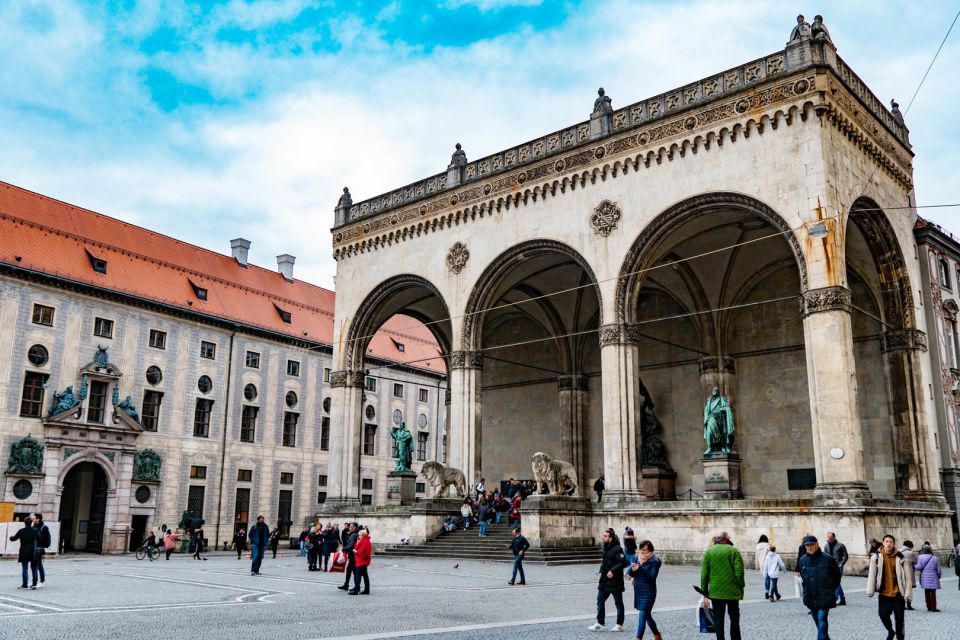
Meet under Karlstor Gate at Karlsplatz about 10 minutes before the activity starts. This is one of those details that can make or break the beginning of your day, because there’s no wandering around looking for a bus.
You’ll meet directly under the Karlstor arch at Karlsplatz, not at a vehicle. The guide will be waiting there, and the instruction is very explicit: don’t hunt for buses, and don’t try to board one on your own.
I recommend you arrive early enough to slow your brain down. Use those ten minutes to settle your things, check your shoes, and get your head in the right place. Dachau deserves that kind of mental prep.
Also, remember this is a Spanish guided tour only. If you don’t speak Spanish, don’t assume you can tag along anyway. The tour is restricted to Spanish speakers, so build your language plan before you go.
The permanent exhibition: context that changes what you see outside
Your visit starts with the permanent exhibition, and that’s not just “a warm-up.” It’s the foundation. The exhibition provides an overview of the history of Dachau Concentration Camp and helps you understand what you’re about to witness on the grounds.
This is where the guide’s job becomes essential. The exhibition can be heavy and sometimes overwhelming on your own. With a guide explaining events and showing how different parts of the camp fit together, you get a clearer timeline and a better grasp of how the camp system operated.
What I like most here is the cause-and-effect feeling. You’re not bouncing between isolated facts. Instead, you’re building a picture of how Dachau developed, who the victims were, and why the camp’s physical layout mattered.
And because the tour is in Spanish, you’ll feel the explanations more directly than you would through summaries or guidebooks. You’re listening to a human voice connect the dots, and that makes the later stops hit harder in a focused way.
Roll-call, bunkers, barracks, and the crematorium
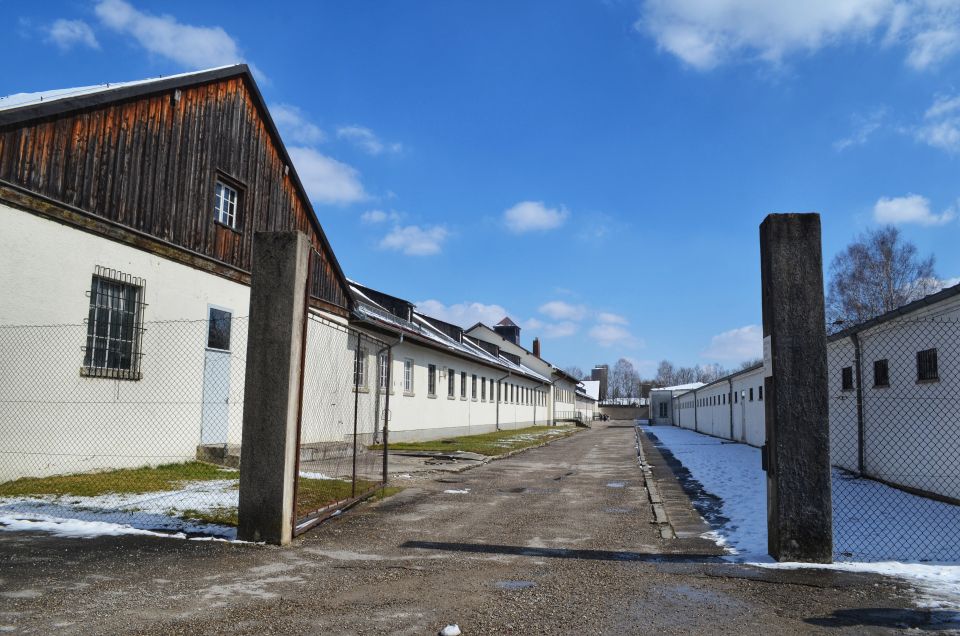
Once you step from the exhibition into the site, the tour becomes physical. This is where you see the remaining buildings and reconstructions—places that testify to what happened here. You’ll visit key areas tied to the daily mechanics of the camp: roll-call, bunkers, barracks, and the crematorium.
These are not casual stops. Expect the guide to keep the tone serious and the pacing respectful, because these locations carry real weight. Even if you’ve read about Dachau before, seeing the spaces helps you understand scale and routine. It turns history from a page into a place.
Roll-call
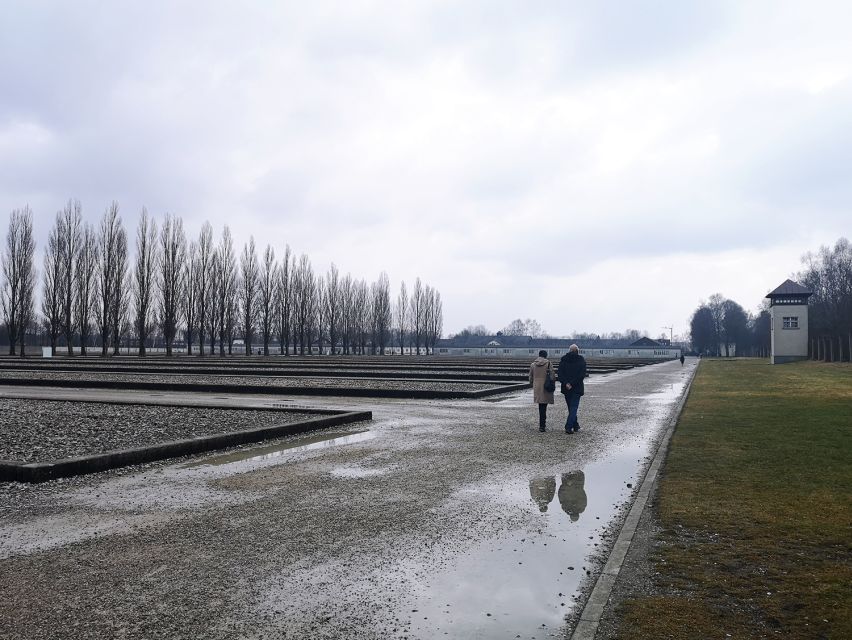
The roll-call area matters because it represents control and forced routine. Even without extra guessing, you can feel how the camp demanded presence and obedience. It’s one of those stops that makes the concept of dehumanization real, in the way only physical space can.
Bunkers and barracks
The bunkers and barracks help explain confinement and living conditions under the camp system. The guide’s explanations help you interpret what you’re seeing, instead of relying on your own imagination. The reconstructions also help you understand how the camp functioned, even where original details are no longer intact.
The crematorium
The crematorium is the most emotionally demanding portion. The purpose of visiting it isn’t shock value. It’s part of understanding the full process of persecution and survival. The tour structure keeps this visit framed in historical meaning, not sensationalism.
Throughout these stops, comfortable shoes are a must. The day is built for walking and standing. If you’re sensitive to long periods on your feet, plan to wear supportive footwear and keep your pace steady.
International and religious memorials: remembering beyond borders
One of the most powerful pieces of the route is the section dedicated to remembrance beyond Dachau’s local story. You’ll have the chance to see the International Memorial and other religious memorials within the concentration camp area.
Why this matters: it shifts the focus from one place to the wider network of victims and identities impacted by Nazi persecution. Instead of only learning about Dachau as a location, you see how memory gets organized across nationalities and faiths.
These memorials also change the tone of the visit. After the hard, explanatory stops tied to camp operations, the memorial spaces invite reflection. They give you a chance to process the meaning of what you’ve learned, with quiet cues that this site is meant for remembrance, not forgetting.
If you’re the kind of person who likes your history tours grounded in humanity, this part lands well.
Price and value: why $40 makes sense here
At about $40 per person for a roughly five-hour guided experience, you’re paying for more than narration. You’re paying for an official Dachau Memorial Guide who can interpret the grounds and connect the permanent exhibition to what remains on site.
That matters because Dachau is not a place where generic commentary works well. You need someone who can explain the history accurately, guide you through the site thoughtfully, and help you understand who the victims were without turning it into an information dump.
Value also comes from the coverage. This tour includes the main exhibition plus the key parts of the camp route, including roll-call, bunkers, barracks, and the crematorium, plus the International and religious memorials. For a one-day visit from Munich, that’s a lot of guided learning packed into a fixed time.
If you’re considering going without a guide, you might still learn plenty—but at Dachau, a guided framework helps you make sense of what you’re looking at and why it mattered. That structure is where a large chunk of the value lives.
Who should book (and who should skip) this Spanish-only tour
This tour fits best if you meet two practical requirements:
- You speak Spanish (the tour is not open to non-Spanish speakers)
- You can handle a difficult, respectful site visit for about five hours
It’s also not suitable for kids under 13. Children under 13 aren’t allowed to participate in the guided tour, which keeps the experience focused and age-appropriate for the memorial setting.
You should also think about your physical comfort. You’ll be walking through multiple areas of the memorial site. Wear comfortable shoes, and don’t plan on big luggage carry. Large bags and luggage aren’t allowed, and there’s no food permitted—so pack like you’re heading to a structured day trip.
If you’re traveling with a group and want something meaningful, the tour’s minimum of four participants can matter. In the rare case that the minimum isn’t met, you’ll be contacted with an alternative, but you shouldn’t plan on improvising your day last minute.
Should you book this Dachau Memorial Site tour in Spanish?
If you want a guided, structured visit to Dachau that combines the permanent exhibition with the core parts of the grounds, I’d say this tour is a strong choice. The official guide and the focus on victims’ history make it more than a checklist stop. And the inclusion of the International Memorial and religious memorials adds a reminder that remembrance is shared and personal, not just historical.
Book it if:
- Spanish is comfortable for you and you want the full explanation live
- You prefer a guided route over self-paced wandering
- You want to see the main camp areas, not only the museum parts
Skip it if:
- You’re not confident speaking Spanish
- You’re looking for something light or short, because the experience is serious by design
- You’re bringing children under 13, pets, or large luggage
If that sounds like your trip, plan your day, wear good shoes, and show up ready to listen. This isn’t about collecting souvenirs. It’s about understanding a place of memory with care.
FAQ
How long is the Dachau Memorial Site tour from Munich?
The tour duration is 5 hours.
Is the tour available in languages other than Spanish?
No. This guided tour is exclusively in Spanish, and non-Spanish speakers are not allowed to book.
Do children under 13 years old have access to the tour?
No. Children under 13 are not allowed to participate in the guided tour.
Where do I meet the guide?
Meet under Karlstor Gate (at Karlsplatz) about 10 minutes before the activity starts.
Will there be a bus pickup at the meeting point?
No. You should not look for or get on any buses. You need to find the guide waiting under the Karlstor arch at Karlsplatz.
Is hotel pickup or drop-off included?
No. Hotel pickup and drop-off are not included.
What’s included in the price?
You get a Spanish-speaking official Dachau Concentration Camp Memorial guide.
Is transport ticket included?
No. Transport ticket is not included.
What should I bring, and what isn’t allowed?
Bring comfortable shoes. Pets, luggage or large bags, and food are not allowed.
What if the tour doesn’t reach the minimum number of participants?
The tour requires a minimum of four participants. If the minimum isn’t met, the local partner will contact you and offer an alternative.