REVIEW · THIRD REICH & WWII WALKING TOURS
Third Reich Tour Munich
Book on Viator →Operated by Go Tours Munich · Bookable on Viator
A Nazi-era story plays out on Munich streets. This Third Reich Tour threads key sites together, from early Nazi meeting spots to the memorial for victims. You’ll walk a tight route with an expert guide explaining why each location mattered, not just what happened there.
I especially like the focus on places many people skip, like Sterneckerbräu and the Führerbau offices on Königsplatz. The pacing works too: you get short, clear stops that add up to a full picture without feeling stuck in one spot.
One drawback to consider: the topic is heavy, and the best experience depends on your comfort level with learning about persecution and propaganda.
In This Review
- Key things to know before you go
- Price and time: what $34.73 buys you
- Meeting at Isartor and finishing at Königsplatz
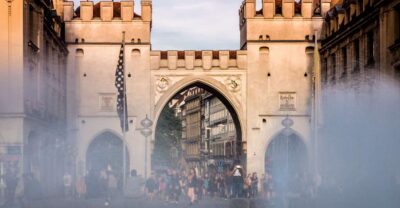
- Isartor Gate: the first five minutes that set the tone
- Sterneckerbräu: the early beer hall origin point
- Hofbräuhaus: Nazi meetings in Munich’s most famous beer hall
- Feldherrnhalle: from failed coup to symbol
- Square for the Victims of National Socialism: the memorial stop that matters
- Führerbau on Königsplatz: offices, meetings, and state power
- Königsplatz: architecture turned into propaganda staging
- What the guides do well: pacing and Q&A energy
- Who this tour fits best (and who should choose something else)
- Should you book the Third Reich Tour Munich?
- FAQ
- How long is the Third Reich Tour Munich?
- Where does the tour start and where does it end?
- Is there an admission fee for the stops?
- Do I get a mobile ticket?
- How large is the group?
- How far in advance should I book?
- How do I get back to central Munich after the tour?
- Are experienced guides included?
- Is free cancellation available?
Key things to know before you go
- Small group size (max 20) keeps the walk interactive instead of lecture-style.
- Free admission listed at each stop means you’re paying for the guide and the story, not museum tickets.
- Mobile ticket makes it easy to show up and move quickly between stops.
- The route connects rise of the movement to symbolic sites and ends at Königsplatz.
- Expect a 2 hours 30 minutes walk with multiple quick stops, so wear shoes you trust.
Price and time: what $34.73 buys you
For about $34.73 per person, you’re buying a guided storyline across Nazi-era Munich for around 2.5 hours. At this price point, the value is the interpretation: a guide helps you connect sites that can look like ordinary buildings from the sidewalk. If you’ve ever visited big monuments and thought, I get it, but I still feel lost—that’s the gap this tour is built to close.
Timing matters here. The schedule is designed around short segments—think 5 minutes at Isartor, then longer hangs where the story thickens (like Hofbräuhaus, Feldherrnhalle, and Königsplatz). You won’t be trapped for hours at one place. You’ll also get moving, which helps when the subject is emotionally difficult and you want to keep your attention.
The tour also tends to be planned in advance. The average booking window is about 7 days, which tells me it’s a popular option. If you’re traveling in busy seasons, I’d treat it like an actual must-book.
You can also read our reviews of more tours and experiences in Munich.
Meeting at Isartor and finishing at Königsplatz
You start at Isartor Gate (Tal 50, 80331 München). It’s a smart way to begin because Isartor is easy to find, and it sets you up for a walking route that stays connected instead of bouncing around town.
You end at Königsplatz 1 (80333 München). That finish is practical. From Königsplatz Station, you can take the U2 to Central Station—it’s one stop and about a minute. If you’d rather walk, Munich’s Old City is less than 15 minutes on foot, depending on your pace.
This ending matters because it means you can comfortably fold the tour into the rest of your day. You’re not stuck on the edge of nowhere after the last stop.
Isartor Gate: the first five minutes that set the tone
The tour meets at Isartor, then quickly moves on. That first stretch is short by design—just enough time for the guide to frame what you’re about to see and how to look at it.
In my experience with guided walks like this, that setup is what makes the rest click. Instead of treating each stop like a separate postcard, you start seeing the route as a chain: public space, gathering spots, power signaling, and finally the places where the Nazi message was pushed outward.
Sterneckerbräu: the early beer hall origin point
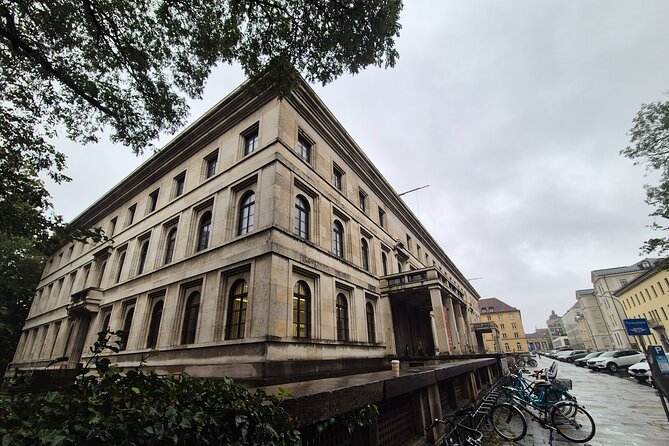
Next is Sterneckerbräu, a former beer hall where the prototype Nazi Party was founded. The big draw here is the early-stage context: this is where the movement started as something small enough to fit inside a familiar local venue—yet already focused on recruiting and momentum.
You’ll learn about Adolf Hitler and followers using the site as an early meeting place. This matters because it challenges the idea that history only happens at giant political buildings. In the Nazi rise in Munich, public persuasion and social spaces were part of the machinery.
If you’re the kind of person who likes cause-and-effect, this stop is a strong starting point. It shows how ideology traveled on the same streets where people went for everyday routines like beer hall gatherings.
Hofbräuhaus: Nazi meetings in Munich’s most famous beer hall
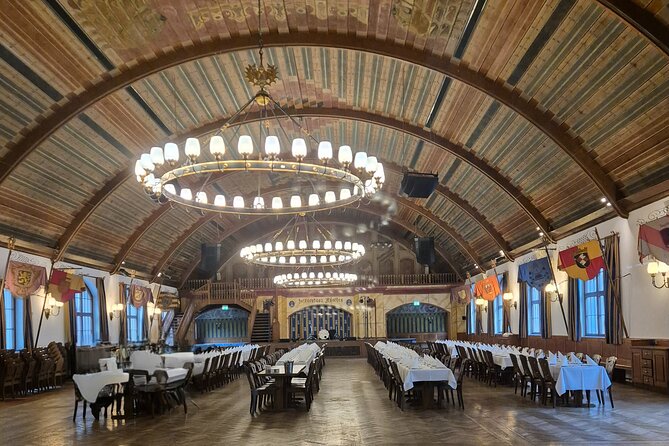
Then you hit Staatliches Hofbräuhaus, one of the city’s best-known beer halls. Here the story shifts from origin to scale.
You’ll hear how Hitler held early Nazi Party meetings there, and how crowds grew as the movement gained momentum. The key idea to listen for is the relationship between message and audience. Beer halls weren’t just bars. They were stage spaces—where speeches could spread and where supporters could feel like the movement was already winning.
If you’ve toured Munich before, you may recognize the building. The guide’s job is to change what you think it is. You’ll leave seeing it less as a tourism landmark and more as a propaganda setting where numbers, noise, and attention mattered.

Feldherrnhalle: from failed coup to symbol
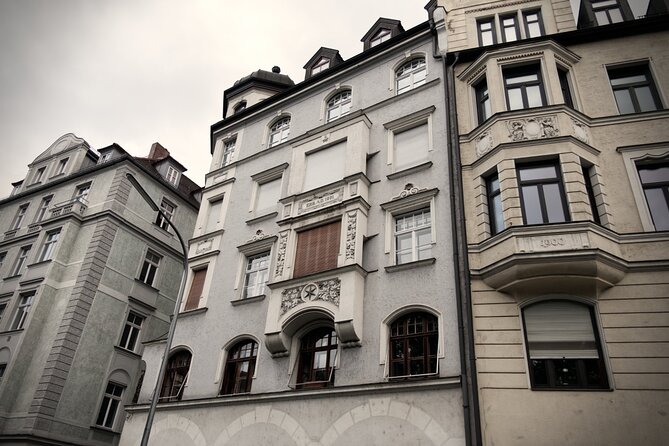
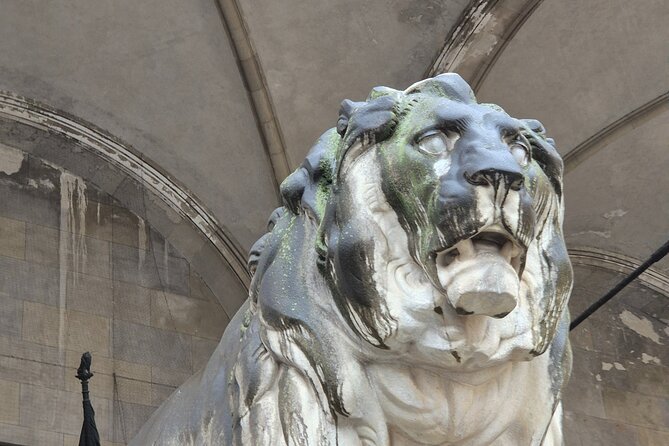
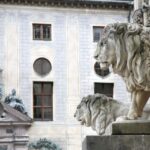
At Feldherrnhalle, the focus turns to the Beer Hall Putsch of 1923—the failed attempt by Hitler and followers to seize power. This is a heavier stop, and it’s also where monuments start doing political work.
You’ll learn that after the clash between Nazi supporters and Bavarian police, the site became a symbol of Nazi martyrdom. That phrase may sound like history trivia until you see how memorial language can reframe violence into a recruitment tool.
What to watch for here: how the story explains the shift from event to meaning. Feldherrnhalle isn’t just where something happened. It’s how the movement tried to control the story after the fact, turning a failed gamble into a rallying narrative.
Square for the Victims of National Socialism: the memorial stop that matters
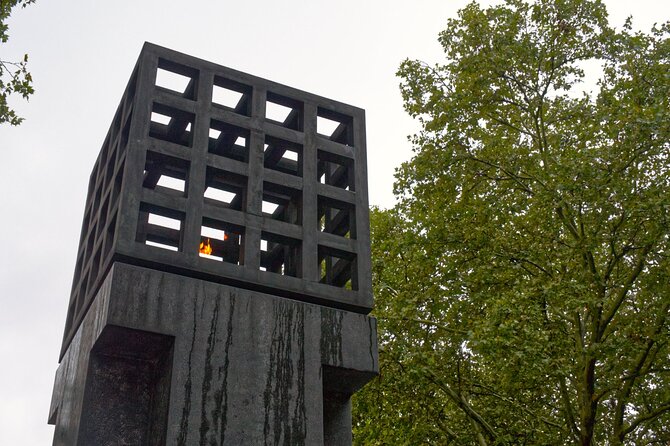
Midway through the walk, you’ll pay tribute at the Square for the Victims of National Socialism, which includes an eternal flame. This stop is important because it pulls you out of the propaganda mechanics and forces the human impact into the foreground.
The guide will explain the memorial’s purpose: honoring those persecuted by the Nazi regime and acknowledging the scale of suffering. It’s the moment where you’re not asked to admire history or evaluate strategy. You’re asked to remember victims.
I find this stop changes how people process the earlier locations. Hofbräuhaus and Königsplatz can feel like architecture until you land at a place built for remembrance. The contrast is part of what makes the tour worth doing.
Führerbau on Königsplatz: offices, meetings, and state power
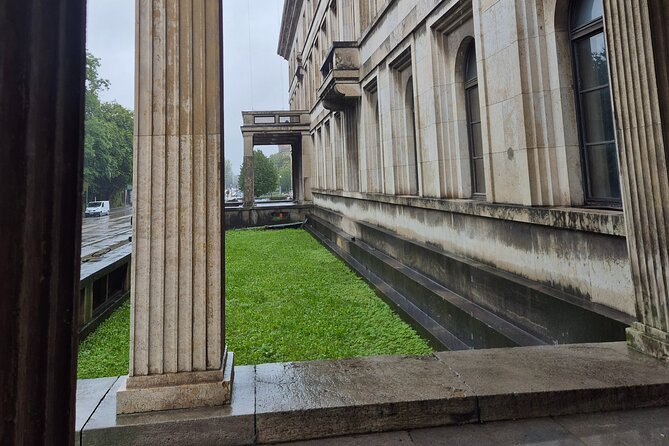
Next you’ll visit the Führerbau—Hitler’s official offices in Munich. This is where the tour becomes more about the machinery of power rather than the street-level recruiting stage.
You’ll learn it’s located on Königsplatz, and that significant events happened there, including the signing of the Munich Agreement in 1938. Even if you’ve heard the Munich Agreement name before, the guide’s framing should help you connect it to the physical place where decisions took shape.
This stop also helps you understand how authority can feel routine. An office building can sound boring, but in this context it’s where leadership met with high-ranking officials and helped orchestrate key decisions.
If you’re hoping for a tour that doesn’t just say what happened but explains how power operated day-to-day, this is one of the strongest stops.
Königsplatz: architecture turned into propaganda staging
The tour wraps with a walk through Königsplatz, a grand square the Nazis transformed into a stage for mass rallies and military parades.
You’ll be guided through the ideas behind the design and how Nazis used the space as part of their propaganda machine. The tour also highlights key public events connected to Königsplatz, including ceremonies and book burnings—examples of how cultural control and political power were linked.
This part is especially useful if you like noticing details you might otherwise ignore. Squares and buildings don’t look political just because a regime used them. The guide shows you how architecture can be recruited into persuasion: size signals dominance, symmetry signals order, crowds signal inevitability.
When you finish here, you’re also in a good location to keep exploring Munich. The end point connects you to the U-Bahn quickly, and it’s close enough to walk back toward the Old City.
What the guides do well: pacing and Q&A energy
The reviews you’ll see on this tour consistently praise the guides’ ability to bring the story to life through clear explanation and good pace. Names that come up are Kaevan and Jamie Buckley, and both are described as able to answer questions as they come up.
That matters because Nazi history gets complicated fast. When you can ask a question in the moment—like why a specific location was useful for recruitment or how propaganda worked—you leave with fewer gaps.
I also like that the guide-led structure keeps you from reading signs and guessing at what matters. You’re moving through a set path, and the commentary tells you what to notice while you’re there.
Who this tour fits best (and who should choose something else)
This is a good fit for you if you’re a history buff who wants practical context, not just dates on plaques. It’s also a fit if you like walking tours that explain the logic of a place—how cities can be shaped to support political goals.
It’s also worth considering if you want something more specific than the usual big highlights. This route focuses on Nazi-era spaces that are closely linked to the rise of the movement and the machinery of control, not just the most famous monuments.
If you prefer light sightseeing, cheerful stories, or purely architectural tours, this one may feel like too much. Even with respectful pacing, the subject includes persecution and propaganda. If you’re sensitive to heavy topics, decide based on your own limits.
Should you book the Third Reich Tour Munich?
I’d book this tour if you want a structured, guide-led walk through Munich’s Nazi-era landmarks that actually connects the dots—from early gathering spots to state power and finally to remembrance. The group size and free-entry format make it easy to justify the cost, and the ending location keeps your day flexible.
Skip it if you’re looking for a casual overview that avoids difficult themes. This walk is designed to teach, and it doesn’t pretend the topic is comfortable.
If you do book, bring two things: solid walking shoes and a mindset that history here includes victims, not just perpetrators and buildings.
FAQ
How long is the Third Reich Tour Munich?
It runs for about 2 hours 30 minutes.
Where does the tour start and where does it end?
It starts at Isartor Gate, Tal 50, 80331 München, and ends at Königsplatz 1, 80333 München.
Is there an admission fee for the stops?
The tour lists admission tickets as free for each stop.
Do I get a mobile ticket?
Yes, the tour offers a mobile ticket.
How large is the group?
The maximum group size is 20 travelers.
How far in advance should I book?
On average, people book about 7 days in advance.
How do I get back to central Munich after the tour?
From Königsplatz Station, the U2 goes to Central Station in one stop (about one minute). You can also use nearby buses and trams, or walk to Munich Old City in less than 15 minutes.
Are experienced guides included?
Yes. The tour includes experienced guides with commentary on Nazi-era history.
Is free cancellation available?
Yes. You can cancel up to 24 hours in advance for a full refund.