REVIEW · THIRD REICH & WWII WALKING TOURS
Third Reich – Facts about WWII : Small Group Walking tour
Book on Viator →Operated by Paul Riedel · Bookable on Viator
Munich’s WWII sites are close, but the meaning is huge. This small-group walking tour strings together key Third Reich locations in a tight route, with a guide who helps you connect the dots without you planning the day. I like the up-close pacing—it stays relaxed at a walking-tour speed—and I love that Paul Riedel focuses on how the regime worked through places like courts, art, and propaganda rather than just naming dates.
The one thing to consider is that several major stops are marked as not included for admission (think museums and special sites). You’ll still get guided context around them, but if you want to go in, budget extra time and money for tickets.
In This Review
- Key Things You’ll Notice on This Walk
- Munich’s Third Reich Tour: How This 2–3 Hours Really Works
- Starting at Karlstor and Ending Near Haus der Kunst
- Konigsplatz: Book Burnings, Camera Points, and Granite Symbolism
- Paul von Trost’s Twin Buildings and What Nazis Did With Architecture
- NS-Dokumentationszentrum München: Brown House and How Control Spread
- Karolinenplatz: The Bruckmanns and the Social Machine
- Justizpalast: The Trials of the White Rose
- Briennerstraße 7 and the Doctors Who Chose Life and Death
- Platz der Opfer des Nationalsozialismus: Gestapo Connections and a Victims’ Monument
- Residenz München: Kings’ Residence and the Nazi Connection
- Hofgarten: Degenerated Art and the Push to Redefine Culture
- Ludwig Maximilian University: White Rose Resistance in Real Place
- Odeonsplatz: The Hitler Putsch and the Tragedy of January
- Haus der Kunst and the Second Paul von Trost Connection
- Price and Value: What You’re Paying For
- Who Should Book This Tour?
- Should You Book the Third Reich Facts Small Group Walking Tour?
- FAQ
- How long is the Third Reich walking tour in Munich?
- What does the tour cost?
- How many people are in the group?
- Is a mobile ticket included?
- Where do I meet the guide?
- Where does the tour end?
- Who is the guide?
- What’s included in the price?
- Are admissions included for all stops?
- Is the tour time fixed, and when does it start?
- FAQ
- Can I cancel for free?
- Are service animals allowed?
- Is the tour near public transportation?
- Does the tour support most travelers?
Key Things You’ll Notice on This Walk
- A short route that hits propaganda, courts, and resistance themes in just 2–3 hours
- Konigsplatz details that go beyond the basic landmarks, like book burning and specific camera-related points
- Art-as-control clues, including talk around Paul von Trost and the idea of Degenerated Art
- Clear resistance focus, with stops tied to the White Rose and Sophie Scholl
- Small-group energy capped at 15 travelers, so questions don’t get lost in the crowd
- A walk that reduces logistics stress, designed for an easy, on-foot route
Munich’s Third Reich Tour: How This 2–3 Hours Really Works
This is a walking tour built for people who want real meaning from the places they’re seeing. You’ll cover a chain of sites across central Munich that connect Nazi power, propaganda, and the resistance that pushed back.
The timing matters. At roughly 2 to 3 hours, you get enough time to ask questions and still finish without feeling like you spent the day in transit. The small group size (maximum 15) helps a lot because the guide can keep the pace human and adjust to what you’re most curious about.
Also, you’ll get a mobile ticket, which makes day-of logistics simpler. And since the tour runs near public transportation, you can plug it into the rest of your Munich schedule without a ton of hassle.
You can also read our reviews of more walking tours in Munich
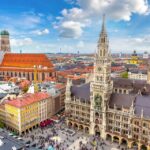
Starting at Karlstor and Ending Near Haus der Kunst
You meet at Karlstor, Neuhauser Str., 80331 München, with a 1:00 pm start. The walk finishes at Haus der Kunst, Prinzregentenstraße 1, 80538 München.
That start-to-finish flow is useful if you like keeping the day efficient. You’re not doing a long backtrack to your starting point, and finishing near Haus der Kunst makes it easy to plan what comes next—especially since that area is already part of your story arc on this tour.
Konigsplatz: Book Burnings, Camera Points, and Granite Symbolism
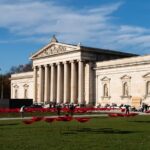
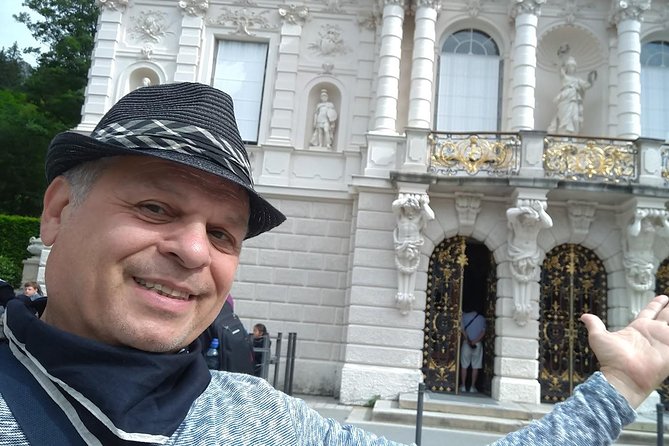
Konigsplatz is where the tour shifts from general WWII conversation into visual, physical evidence. You’ll spend about 10 minutes here, and your guide points out key details tied to the Nazi-era use of spectacle—like the burning of books.
You’ll also hear about camera positions from Leni Riefenstahl and see references to the granit plates over the square. That combination is powerful because it shows how the regime shaped how events looked, not just how they were ordered.
If you’re the type who learns by noticing, this stop is a win. You’ll leave with a clearer idea of how public space was treated like a stage.
Paul von Trost’s Twin Buildings and What Nazis Did With Architecture
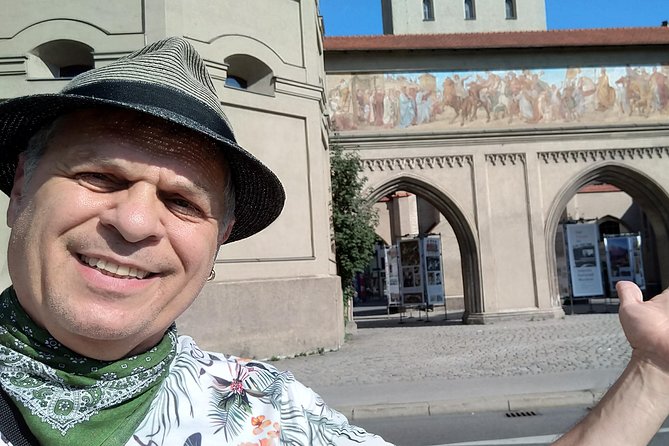
Next comes the Museum fur Abgusse Klassischer Bildwerke and its twin buildings by Paul von Trost. Plan for about 5 minutes, with admission not included.
Even if you don’t go inside, this stop helps you understand a big idea: the Nazi regime tried to wrap ideology in big, solid-looking design. Your guide’s job here is to connect the buildings to the cultural push—showing you how architecture can serve politics when people are told what to admire.
One caution: because admission isn’t included, you may want to decide early whether you’re just taking it in from outside or whether you want more time and a separate ticket for interior access.
NS-Dokumentationszentrum München: Brown House and How Control Spread
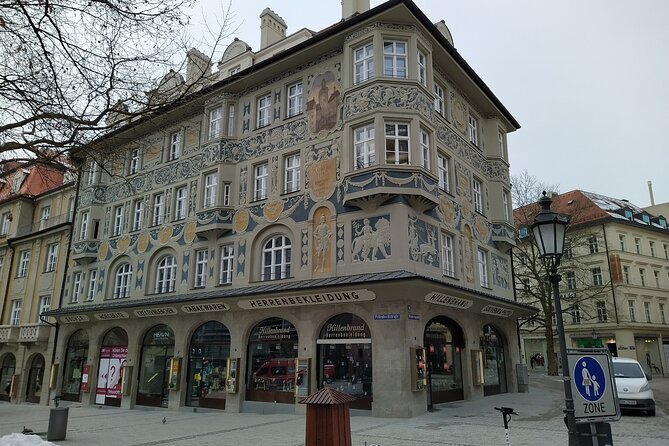
Another short stop, about 5 minutes, is the NS-Dokumentationszentrum Muenchen area. This also lists admission not included, but you’ll get the main context from the guide.
You’ll hear about the Brown House, how Hitler organized the NSDAP, and the involvement of the church in WWII. This is where the tour starts to feel less like a sightseeing walk and more like a guided explanation of how influence worked through institutions.
If you’ve ever wondered how a movement becomes a system, this stop nudges you in that direction. You’ll get the impression of planning, coordination, and persuasion—using the city itself as your map.
Karolinenplatz: The Bruckmanns and the Social Machine
At Karolinenplatz, you get about 5 minutes of story time. The focus is on the Bruckmanns and how they were significant in the rise of Hitler as a charismatic figure, including how they introduced him into society.
This stop can be surprisingly eye-opening because it shifts your attention away from marches and into the human networks behind them. Nazi politics didn’t only run on speeches. It also ran on connections, introductions, and status.
If you like stories that explain the less-obvious pathways of power, you’ll likely find this one memorable.
Justizpalast: The Trials of the White Rose
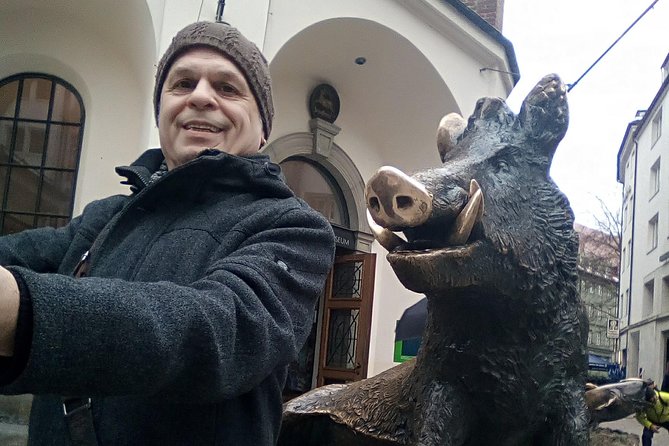
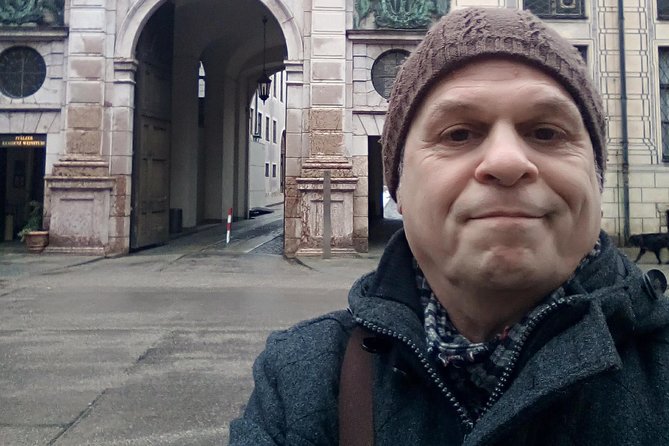
You’ll pause at Justizpalast for around 5 minutes. Here, the tour points to the trials involving the sisters Scholl and Nazi trials.
This stop is short, but it lands emotionally. The White Rose story is tied to student resistance, and standing near the kind of courtroom setting where people were judged brings the message into focus.
It’s also a good moment to slow down mentally. Even without going inside, you’ll get a sense of how punishment and law were part of the regime’s control strategy.
Briennerstraße 7 and the Doctors Who Chose Life and Death
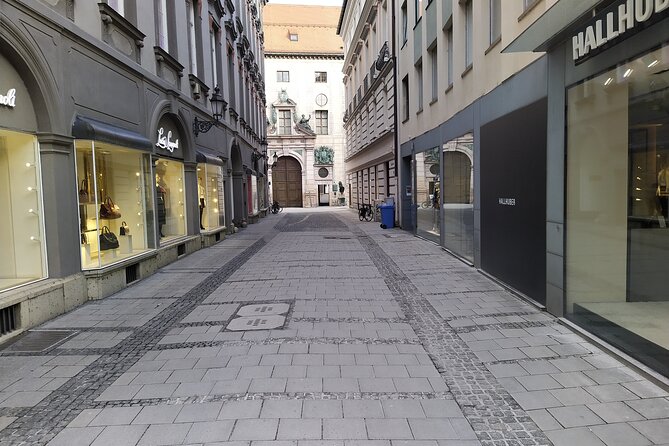
One of the darker stops comes next: Briennerstrasse 7, with the guide referencing Haus der Deutsche Ärzte (number 23). Your time here is about 5 minutes, and it’s listed as admission free.
The key point you’ll take away is that doctors decided about life and death of many. Your guide uses the location to connect policy and practice—how institutional authority can be used for cruelty when ideology is placed above human value.
If you’re sensitive to heavy topics, pace yourself here. Take a breath, watch your footing, and let the guide do the explaining. You can always ask for clarification if something feels unclear.
Platz der Opfer des Nationalsozialismus: Gestapo Connections and a Victims’ Monument
This stop includes about 10 minutes at Platz der Opfer des Nationalsozialismus. Before you reach the monument, the guide points out what you can see relating to the early Wittelsbacher Palais, described here as central to the Gestapo.
After that context, you move on to the monument to the victims from the NSDAP. That sequencing is important. It doesn’t rush past suffering to get to the next landmark. It gives you a moment to understand the harm first, then see how remembrance is built into the city.
If you like tours that respect the seriousness of the topic, this area is one of the best reasons to take the walk.
Residenz München: Kings’ Residence and the Nazi Connection
At Residenz Munchen, you’ll spend about 10 minutes. Admission is listed as not included, and your guide explains that a Nazi man once lived here in the context of the Bavarian rulers’ residence.
You’ll also hear about the night of the amazones. The stop is a reminder that power wasn’t only outside in public squares. It also lived in elite spaces—where influence and status could blend.
Since admission isn’t included, treat this stop as guided storytelling in the historic setting. If you want deeper access inside, you’d likely need a separate ticket and time.
Hofgarten: Degenerated Art and the Push to Redefine Culture
Then the walk heads to the Hofgarten area, roughly 10 minutes. This stop is labeled admission free, and the tour connects it to the idea of Degenerated Art, tied to an exhibit featuring many expressionist artists.
This is one of those moments where you understand how controlling culture can be just as important as controlling politics. Your guide’s job is to show you the difference between art that’s meant to provoke thought and art that a regime wants to label as wrong.
If you’re an art fan, this stop gives you extra “see it through a new lens” energy without needing to become an art historian.
Ludwig Maximilian University: White Rose Resistance in Real Place
At Ludwig Maximilian University, you’ll spend about 10 minutes, admission free. The focus is on the sister Scholl and the White Rose resistance against the Nazis.
This is a key stop for anyone who wants the “resistance” side of the story, not just the mechanisms of control. The university setting makes the resistance feel less abstract—more like something rooted in real students and real choices.
Even if you’ve already read about the White Rose, seeing how the tour grounds it in campus space helps the story stick.
Odeonsplatz: The Hitler Putsch and the Tragedy of January
The route includes Odeonsplatz with multiple touchpoints. You’ll have a shorter stop here (about 10 minutes), and later you return for more time (about 15 minutes), with admission listed as free.
At Odeonsplatz, the guide covers the Hitler Putsch, described as an exiting chapter from tragedy. On the later stop at the same location, you’ll hear about the putsch again along with other major events from the Nazi campaign.
A two-stop treatment for the same square makes sense. One pass sets the scene. The second pass gives you room to understand how events connected and why the location mattered.
Haus der Kunst and the Second Paul von Trost Connection
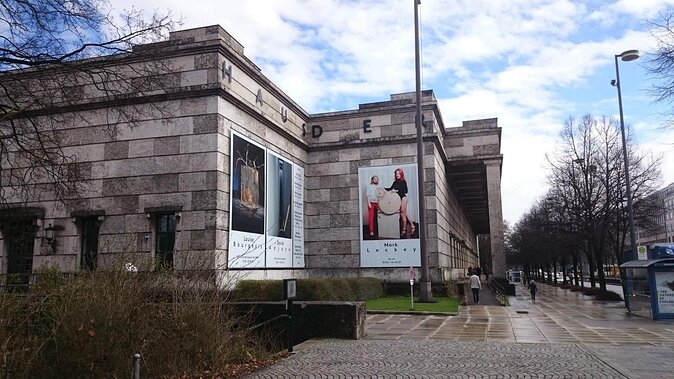
The tour also includes Haus der Kunst, with about 10 minutes, admission not included. You’ll see another Paul von Trost work referenced here and talk about art in the building.
This stop fits the tour’s larger theme: regimes don’t only control laws. They often control aesthetics and messaging too. Your guide links the architecture and the art angle so you come away seeing art spaces as part of political infrastructure.
If you care about the building itself, you might want to check whether you’ll have time on your own for an interior visit later.
Price and Value: What You’re Paying For
At $109.86 per person for a small-group walking tour, you’re paying for two things: focused guidance and time-saving structure. This isn’t a long multi-day plan. It’s 2–3 hours of targeted stops, so the value comes from interpretation, not from sitting on a bus.
Group size matters here. With up to 15 travelers, the tour avoids the feeling of being pushed through stops like a checklist. When the guide (Paul Riedel) paces it to your needs and interests, that alone can justify the cost compared with self-guided wandering where you might miss the story clues.
Just be realistic about admissions. Several sites are flagged as not included. If you plan to go inside those places, you’ll add costs on top of the tour price.
Who Should Book This Tour?
I think this tour is a strong fit if you want a guided walk through Nazi-era power sites and resistance-linked locations without building your own itinerary first. You’ll also like it if you prefer learning through specific place-based details—like what’s pointed out at Konigsplatz, or how the White Rose shows up in a university setting.
It’s also a good pick if you want fewer logistical headaches. You get a clear start point, an efficient route, and a finish near Haus der Kunst, all within a manageable chunk of time.
Should You Book the Third Reich Facts Small Group Walking Tour?
Yes, if you like your history tied to locations and you want a guide who can keep the pace comfortable. The small-group setup and Paul Riedel’s approach—energetic, close-up, and adjusted to your interests—are exactly what make this kind of tour work.
If you’re only interested in museums you can walk into and you hate the idea of extra tickets, you might feel the admission-not-included stops as a compromise. In that case, I’d consider pairing this walk with one or two standalone ticketed sites on your own afterward.
If you want a focused, on-foot Munich WWII story in just a few hours, this is a solid booking choice.
FAQ
How long is the Third Reich walking tour in Munich?
It runs about 2 to 3 hours.
What does the tour cost?
The price is $109.86 per person.
How many people are in the group?
The tour has a maximum of 15 travelers.
Is a mobile ticket included?
Yes, the tour uses a mobile ticket.
Where do I meet the guide?
You meet at Karlstor, Neuhauser Str., 80331 München, Germany.
Where does the tour end?
It ends at Haus der Kunst, Prinzregentenstraße 1, 80538 München, Germany.
Who is the guide?
The experience provider is Paul Riedel.
What’s included in the price?
A professional guide is included.
Are admissions included for all stops?
No. Several stops are listed as admission ticket free, while others are listed as admission ticket not included.
Is the tour time fixed, and when does it start?
It starts at 1:00 pm.
FAQ
Can I cancel for free?
Free cancellation is available up to 24 hours before the experience start time for a full refund.
Are service animals allowed?
Yes, service animals are allowed.
Is the tour near public transportation?
Yes, it’s near public transportation.
Does the tour support most travelers?
Most travelers can participate.