REVIEW · WALKING TOURS
Munich Private Walking Tour With A Professional Guide
Book on Viator →Operated by Global Guide Services · Bookable on Viator
Marienplatz gets real on foot. This private, easy-paced walk helps you connect Munich’s big sights with the stories around them, from the famous Rathaus-Glockenspiel to the beer hall area and Viktualienmarkt. You’ll also get time to ask questions and steer the pacing toward what interests you most.
I like two things a lot. First, you’re with a private guide who can answer on the spot, and in past outings people especially valued the storytelling and humor (guides named Tom Lipton and Peter show up in the group thanks). Second, the route mixes major landmarks with smaller moments you might otherwise skim—like stopping near St. Peter and then pausing for the Frauenkirche legend before you move on.
One possible drawback: I’d plan for the chance that a guide’s voice could be too soft for everyone in the group. If you know your ears need a little help, pick a spot where you’re closer to the guide and don’t be shy about asking for repeat details during quieter stretches.
In This Review
- Key highlights worth knowing before you go
- Marienplatz and the Rathaus-Glockenspiel: where the tour starts to click
- St. Peter and Frauenkirche: Munich’s two-level story, up close
- Odeonsplatz and Theatiner Church: history you can point at
- Ludwigstrasse to Max-Joseph-Platz: from court streets to royal views
- Hofbräuhaus and Viktualienmarkt: beer hall energy plus real food shopping
- How the private guide changes everything (and why some voices matter)
- Timing on a 2-hour walk: fitting the shows, views, and market stop
- Price and value: $305.11 per group up to 15
- Who should book this Munich private walking tour
- Should you book this private Munich walking tour?
- FAQ
- How long is the Munich private walking tour?
- What does the tour cost?
- Is this tour private or shared?
- Where does the tour start?
- What language is the guide?
- Do I receive a mobile ticket?
- What’s included in the price?
- Are entrance fees included?
- Is transportation needed?
- Can I cancel and get a full refund?
Key highlights worth knowing before you go
- Rathaus-Glockenspiel timing and stories: wooden figurines, 43 bells, and two events performed at fixed hours.
- St. Peter and Frauenkirche in the same flow: an early church stop paired with Munich’s best-known cathedral legend.
- Odeonsplatz and the Beer-Hall Putsch context: the story lands where the march narrative is tied to the city center.
- Royal-era landmarks without the museum fatigue: Odeonsplatz to Ludwigstrasse to Max-Joseph-Platz in a single walking arc.
- Hofbräuhaus plus Viktualienmarkt: beer-hall atmosphere right before a practical stop for local food shopping.
- Private pacing: you and your group only, with room to customize as you walk.
Marienplatz and the Rathaus-Glockenspiel: where the tour starts to click
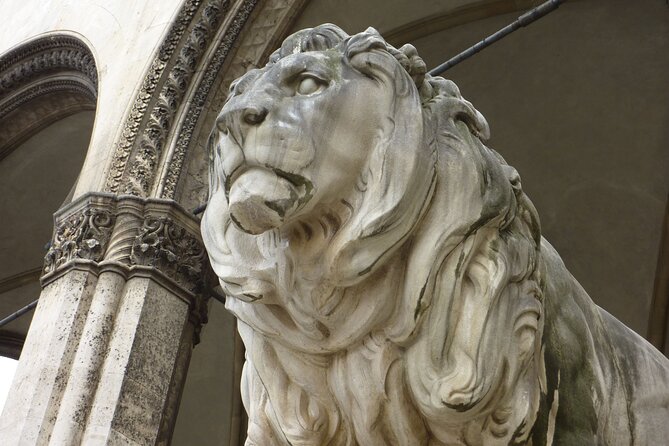
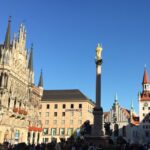
Your walk begins at Fischbrunnen near Marienplatz (Marienplatz 8). That location matters. Marienplatz is one of those squares where you can stare at the buildings for an hour and still miss the point—unless someone connects the details to what they meant at the time.
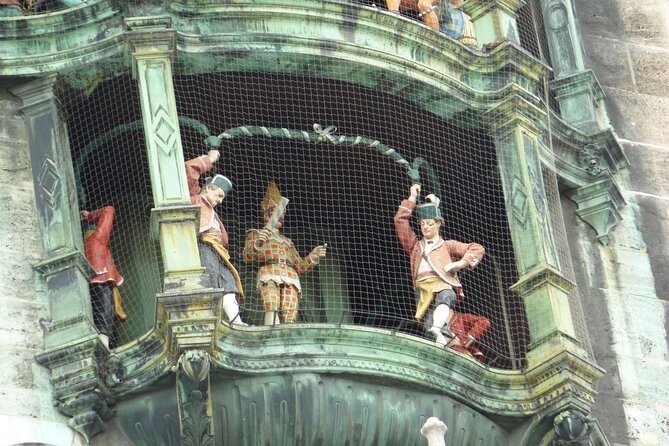
The first big moment is the Rathaus-Glockenspiel (clock tower). You’ll learn why the square’s name ties back to Mary’s Column, then you’ll get a clear picture of what you’re actually looking at: 43 bells and 32 figures. The key payoff is the story your guide gives about the two historical events that the wooden figurines perform at fixed hours. Even if you’re not there for a show moment, you’ll understand what those figures represent and why locals treat it like more than just a nice mechanism.
Practical tip: if you’re trying to catch the figurines in action, you’ll want to arrive a little early. This tour runs about 2 hours, so every minute counts once you’re on the clock.
You can also read our reviews of more walking tours in Munich

St. Peter and Frauenkirche: Munich’s two-level story, up close
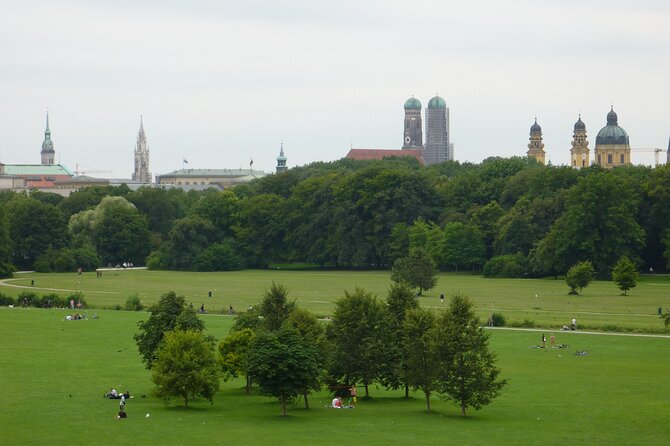
Right after the clock tower, you’ll be within a short walk of St. Peter, described as the oldest Catholic church in the city. That stop gives you a reset. Instead of only looking at power and pageantry in the square, you get a sense of Munich’s earlier layers of faith and city identity.
Then comes the Frauenkirche—worth slowing down for. From your guide’s perspective, you’ll get to take in the famous double towers, and you’ll hear the legend attached to the cathedral, including the footprint of the devil. Whether you’re into legends or not, the story helps you read the building instead of just photographing it.
This part of the tour is also a good time to ask questions. The guide is there for your group, not for a scripted bus-load rhythm. If you want a quick reality-check about what’s myth vs. what’s tradition, this is the moment to do it.
Odeonsplatz and Theatiner Church: history you can point at
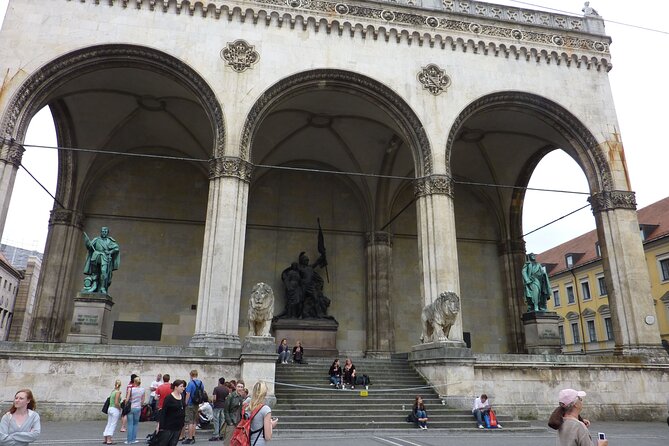
Next up is Odeonsplatz, a square tied to Bavaria’s political stage. Here you’ll learn about the Beer-Hall Putsch and the march toward the center of Munich—where Adolf Hitler led about two thousand men in a failed attempt to seize power. The tour approach keeps it grounded in the location and timeline, so you’re not just getting a dramatic summary. You’re getting a way to connect why the city’s landmarks became part of the historical narrative.
After that, you pass the Theatine Church. The angle here is the Bavarian royal family and gratitude tied to the birth of Prince Max Emanuel’s heir (as the story goes, built by the Elector of Bavaria, Ferdinand Maria, and his wife). It’s a quick walk-by stop, but it’s the kind of detail that makes Munich feel less like a list of postcards and more like a place where different eras still speak to each other.
Short pause idea: if your group wants a breather after the heavier history at Odeonsplatz, this is a decent stretch to slow down, scan the buildings, and reset your attention before moving into the wide boulevards.
Ludwigstrasse to Max-Joseph-Platz: from court streets to royal views
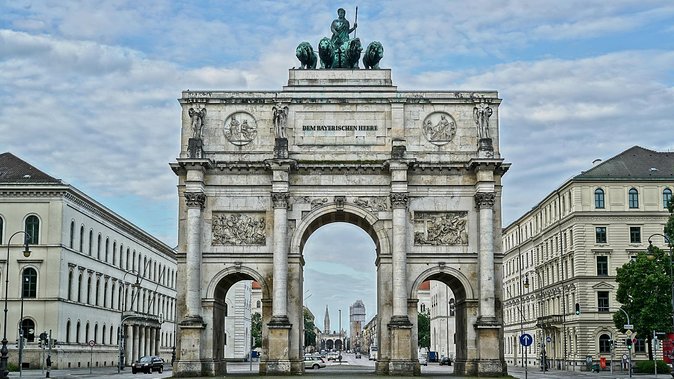
You’ll walk along Ludwigstrasse, which the tour frames as neo-classical. The stops you’re given here aren’t random. You’ll pass the State Library, the oldest university of Munich, and the Gate of Victory, all placed along this street. This is a nice moment where the guide turns architecture into a timeline you can feel.
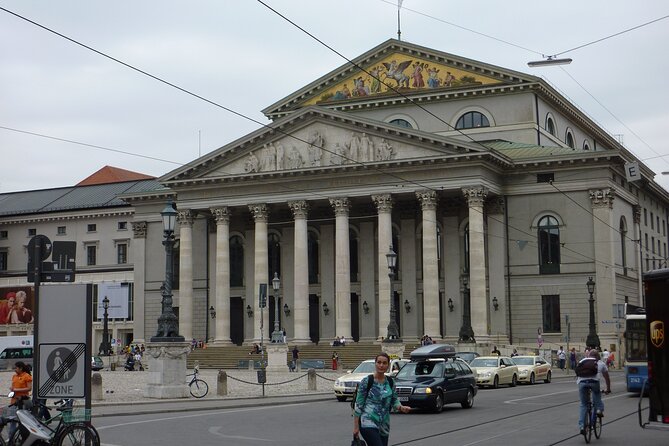
Then you angle back toward the center to Max-Joseph Square. From here, you get a view of the Opera and the National Theatre, plus the Royal Palace, the Residence—described as the largest palace in all of Germany. Even if you don’t go inside, the exterior context helps. You start to see how Munich built its public face: culture, monarchy, and institutions placed where people would notice them.
For me, this section is where the tour earns its “private” label. On a group tour, you usually get two minutes per stop. Here, if you want to spend an extra minute comparing the design of the Opera facade with what you saw at earlier squares, you can.
Hofbräuhaus and Viktualienmarkt: beer hall energy plus real food shopping
The route closes in a very Munich way: you reach the Royal brewery, the Hofbräuhaus, established in 1589 and often described as a key origin point for beer hall culture. The tour doesn’t push you into an expensive paid experience inside—what you get is the atmosphere and the story, which is a smart match for the 2-hour format.
Then you head to Viktualienmarkt, the public food market. This is not a museum stop. It’s practical and sensory. You’ll see fresh local products, and it’s a great place to figure out what you might want to snack on later, or what ingredients you’d look for if you decide to pick up something for a picnic. Even if you’re not planning to buy, it’s the right kind of ending: you leave with a clear sense of where locals go for everyday eats.
A small heads-up: entrance fees aren’t included. Most of what you’ll see along this route is outside or at viewpoints, but if you choose to step into paid sights near the route, you’ll cover those costs separately.
You can also read our reviews of more guided tours in Munich


How the private guide changes everything (and why some voices matter)
Because it’s private, the guide is your main variable. That sounds obvious, but you can feel it in the details. The tour is built around conversation: you can ask questions freely, and you can customize on the spot with your guide.
In past guide notes, people specifically praised the way names like Tom Lipton and Peter paired facts with humor and storytelling. That matters because this route covers everything from town hall mechanisms to royal palace politics to more difficult 20th-century history. A dry lecture would fall flat. A guide who can keep the flow moving—without rushing—turns the walk into something you actually remember.
The one caution from a prior experience: one group felt the guide’s voice was too quiet for most people. So if you’re hard of hearing, or you’re in a group at the larger end (this tour fits up to 15), treat it like a theater: get close enough to the person speaking, and don’t hesitate to request repetition if you missed a key detail.
Timing on a 2-hour walk: fitting the shows, views, and market stop
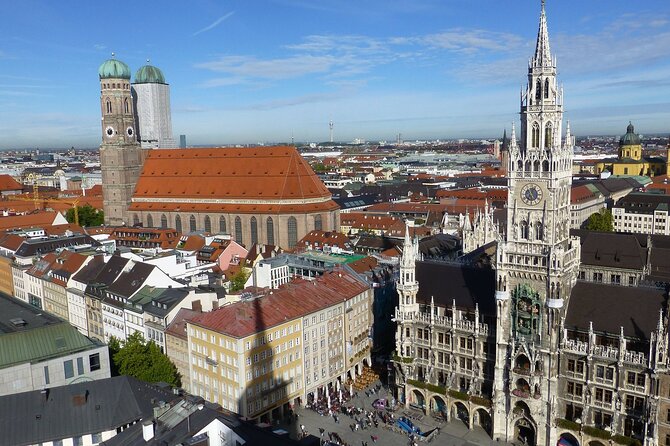
The tour runs about 2 hours and involves an easy walking level with no transportation needed. That means it’s a smart option if you want to see a lot without draining yourself before dinner.
Two timing patterns matter:
- Clock tower shows: the Rathaus-Glockenspiel performs at fixed hours. If you land right before a show, you’ll feel the tour tighten into something special.
- Market at the end: starting with historic points and ending at Viktualienmarkt is convenient. You finish with a place that helps you decide what to eat next.
For photos, I’d plan to linger slightly at Marienplatz for the clock tower story, then take your time at Frauenkirche double-tower viewpoints. By the time you reach Max-Joseph Square, you’ll be in a good position to frame the Royal Palace and surrounding cultural buildings.
Price and value: $305.11 per group up to 15
At $305.11 per group (up to 15), this tour is priced like a private experience rather than a per-person ticket. That can be a strong value if you’re traveling as a family, a small friend group, or a couple that wants a guide who can adapt.
Here’s the practical way to think about it:
- If you’re 2–6 people, the cost per person usually feels reasonable for a custom walk with a professional guide.
- If you’re closer to 15, it’s still one group price, but you’ll want to manage spacing so the guide can be heard and everyone can move together.
Because entrance fees aren’t included, you’re mostly paying for the guiding and the interpretive value—turning landmarks into a coherent story you can follow while you walk.
Who should book this Munich private walking tour
I think this tour is a great fit if you want:
- A guided overview of Munich’s city center that connects buildings to events and personalities.
- A pace that stays easy and keeps you walking, not rushing.
- A private setting where you can ask questions, including more sensitive or political topics tied to Odeonsplatz and the Beer-Hall Putsch.
It may be less ideal if you want a museum-heavy day with lots of indoor tickets, since entrance fees are not included. The strength here is the walk itself: you get context and orientation for the landmarks you’ll keep seeing around town.
Also, it says it’s suitable for any age, with easy activity level, and service animals are allowed. If your group includes someone who prefers steady strolling over lots of stairs and long transit segments, this format tends to work well.
Should you book this private Munich walking tour?
If you want a Munich walk that feels like the city has a narrator—someone who can connect the Rathaus-Glockenspiel to church legends, then move to Odeonsplatz and into the royal boulevard views—book it. The private size, the easy pace, and the option to customize are the big reasons it’s worth your time.
I’d book especially if you care about storytelling that blends the famous sights with the “why” behind them. And if you’re sensitive to audio or your group is large, plan to stay close to the guide so nobody misses the key details.
If you’re the type who only wants highlights and doesn’t care about context, you might feel this is more guide-and-meaning than pure sightseeing. But if you like your photos with explanations attached, this one fits.
FAQ
How long is the Munich private walking tour?
It’s about 2 hours.
What does the tour cost?
The price is $305.11 per group, up to 15 people.
Is this tour private or shared?
It’s private. Only your group participates.
Where does the tour start?
The meeting point is Fischbrunnen, Marienplatz 8, 80331 München, Germany.
What language is the guide?
The tour is offered in English.
Do I receive a mobile ticket?
Yes, the tour includes a mobile ticket.
What’s included in the price?
A local guide is with your group, and it’s a private guided tour. You can also customize the tour with the local guide on the spot.
Are entrance fees included?
No. Entrance fees are not included.
Is transportation needed?
No transportation is needed; it’s a walk only.
Can I cancel and get a full refund?
Yes. You can cancel for a full refund up to 24 hours before the experience starts. After that, refunds aren’t available.