REVIEW · WALKING TOURS
Munich: Must-See Attractions Walking Tour
Book on GetYourGuide →Operated by Guydeez Tours · Bookable on GetYourGuide
Munich can feel big fast, but this short walking tour helps you get your bearings in the historic core. You’ll move through the sights around Marienplatz and the surrounding Old Town streets with a live guide, then finish at the famous beer hall area. It’s a simple plan on paper, but it’s packed with landmarks that explain how the city grew and what Bavarian pride looks like up close.
I especially like the way the tour spotlights Marienplatz’s Rathaus-Glockenspiel and the New Town Hall area, because that’s the kind of detail you miss when you’re just wandering. I also like that you’re taken inside the story of two major churches—Frauenkirche and St. Peter’s—so the stops feel connected, not random. The main drawback to consider is that it’s only 2 hours, so if you’re hoping for a long, slow tour with lots of extra detours, you may want to plan your own follow-up time after.
In This Review
- Key things to know before you go
- Starting at The Charles Hotel on Sophienstraße 28
- Marienplatz Square and the Rathaus-Glockenspiel clock show
- Frauenkirche: Munich’s biggest church stop with story and scale
- St. Peter’s Church: the oldest Catholic church in Munich
- Rathaus-Glockenspiel viewing plus Neues Rathaus architecture notes
- Staatliches Hofbräuhaus: beer hall culture and royal-history context
- The 2-hour pacing: efficient, but not built for endless stops
- Price and value: what $44 buys you in Munich time
- Guide quality: Roberto’s WWII context is a real plus
- Practical tips for shoes, photos, and a smooth walk
- Should you book this Munich Old Town walk?
- FAQ
- How long is the Munich Old Town walking tour?
- How much does the tour cost?
- Where do I meet the guide?
- What major sights are included?
- Is food or drinks included?
- What group options are available?
- What cancellation flexibility is offered?
Key things to know before you go
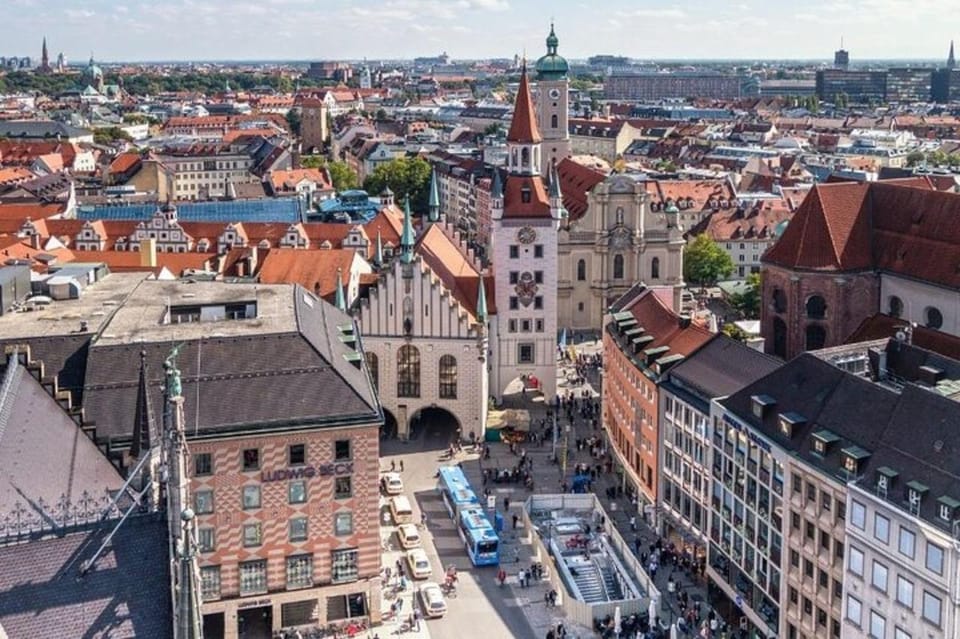
- Marienplatz first: You’ll start at the city’s central square and keep the walk focused around it.
- Mechanical-clock viewing: The Rathaus-Glockenspiel is a 250-year-old showpiece you can see up close.
- Two church stops: Frauenkirche and St. Peter’s are treated as separate anchors with different roles in Munich.
- Neues Rathaus context: You get architecture and civic-history background, not just a photo stop.
- Hofbräuhaus as a finale: You end at the Staatliches Hofbräuhaus, linking sightseeing to Bavarian beer-hall culture.
- Short duration: At 2 hours, it’s efficient—great for first-timers, less so for deep collectors.
Starting at The Charles Hotel on Sophienstraße 28
The tour meets at The Charles Hotel (a Rocco Forte Hotel) on Sophienstraße 28, right in the heart of the city. If you’re staying nearby, this is one of the easiest “start/finish” setups I’ve seen in Munich tours. If you’re not, it still works because you can use the center as your base and then spend the rest of the day exploring without constantly changing neighborhoods.
This meeting point matters more than it sounds. Munich Old Town is walkable, but streets can blur together. When I plan a short tour like this, I like having a clear visual landmark to aim for—especially since the tour’s whole value is time efficiency. Wear comfortable shoes. You’ll be on your feet, and you’ll likely be pausing often to look up and take photos.
You can book either a private group option or a smaller group option (depending on what you select). The time window is tight (2 hours), so a good guide keeps the flow moving while still giving you context at each stop. That balance is usually what makes a walking tour feel worth it instead of rushed.
You can also read our reviews of more walking tours in Munich
Marienplatz Square and the Rathaus-Glockenspiel clock show
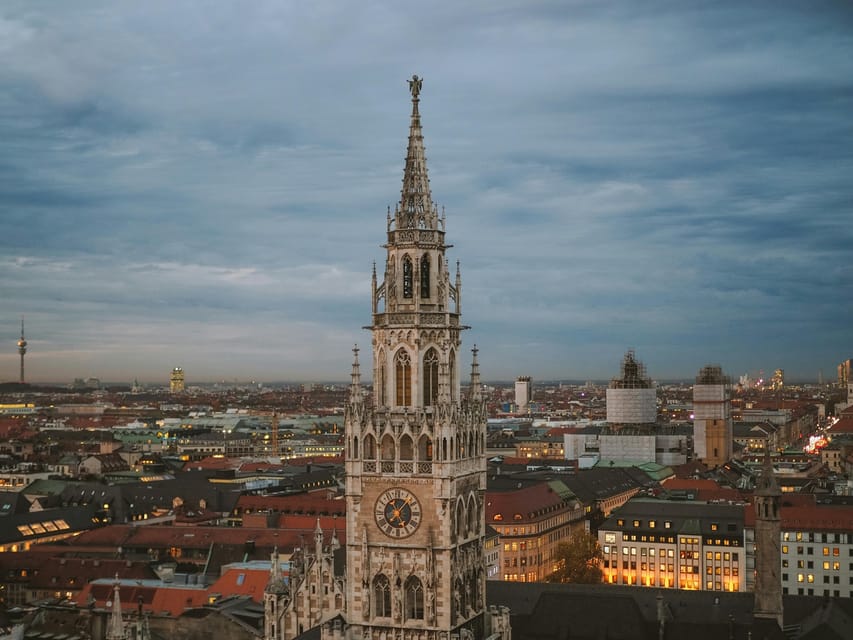
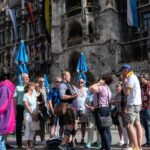
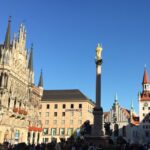
Marienplatz is Munich’s central square, and it’s where the tour naturally makes sense. This is where civic life, tourism, and tradition all overlap, so having a guide here means you don’t just see a busy plaza—you understand why it’s Munich’s “home base.”
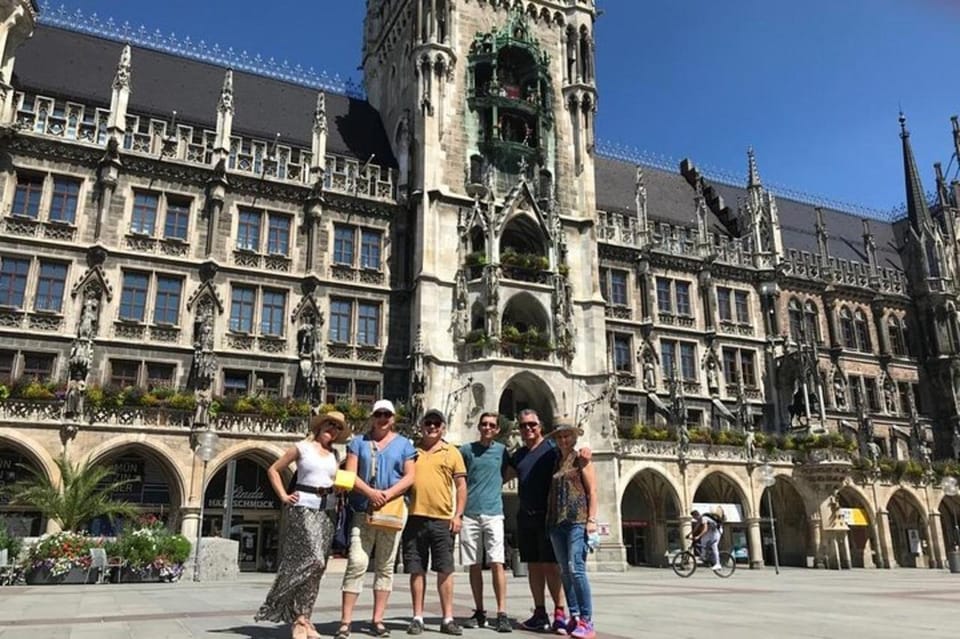
The highlight in this area is the Rathaus-Glockenspiel, a large mechanical clock that’s about 250 years old. With a guide, you’re not only looking at the clock—you’re learning what it is and why it’s tied to the New Town Hall scene. If you’ve ever stood in front of a famous clock while everyone else is shooting video, you know the frustration: without a few facts, it becomes just another landmark. Here, the guide gives you the frame so your photos feel like part of a story.
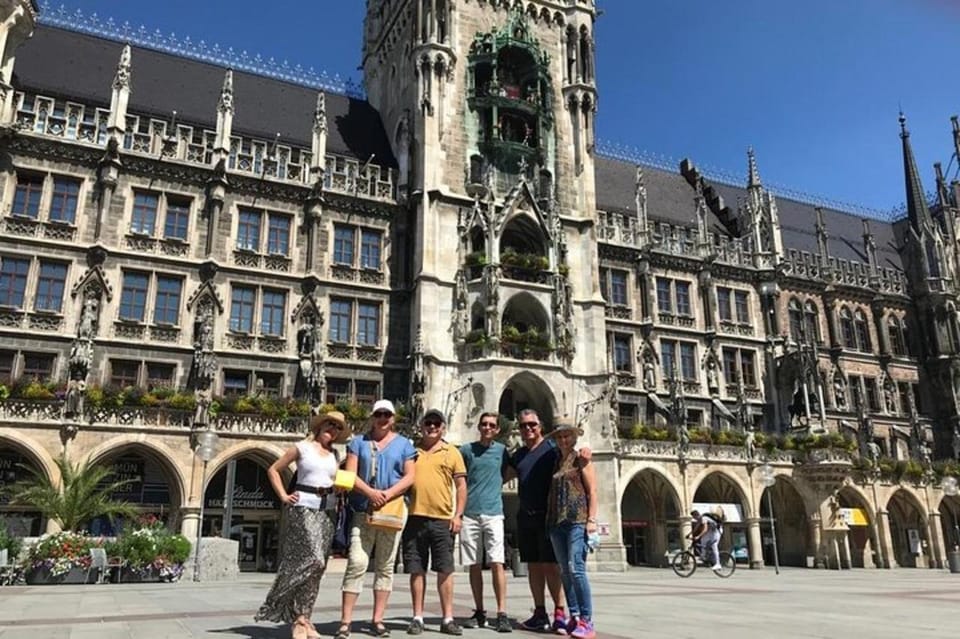
You’ll also focus on the New Town Hall, or Neues Rathaus, the seat of the Munich Town Council. That’s a big part of what makes Marienplatz land better than it does for self-guided wanderers: you’ll connect the architecture to how the city governed itself and how the square functioned as a public stage. Even if you’re not into buildings, the civic context makes the scene feel more purposeful.
One practical note: the clock and New Town Hall area are popular. If you want clean photos, don’t assume you’ll get them instantly. Listen to what the guide is doing and when they pause, then step into position briefly. It’s a small timing game, but it pays off.
Frauenkirche: Munich’s biggest church stop with story and scale
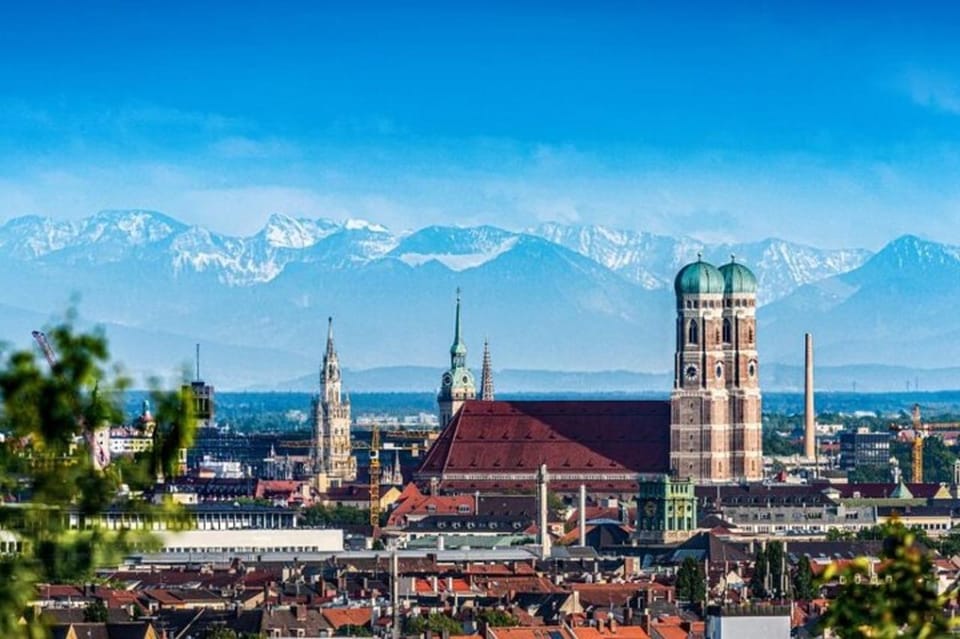
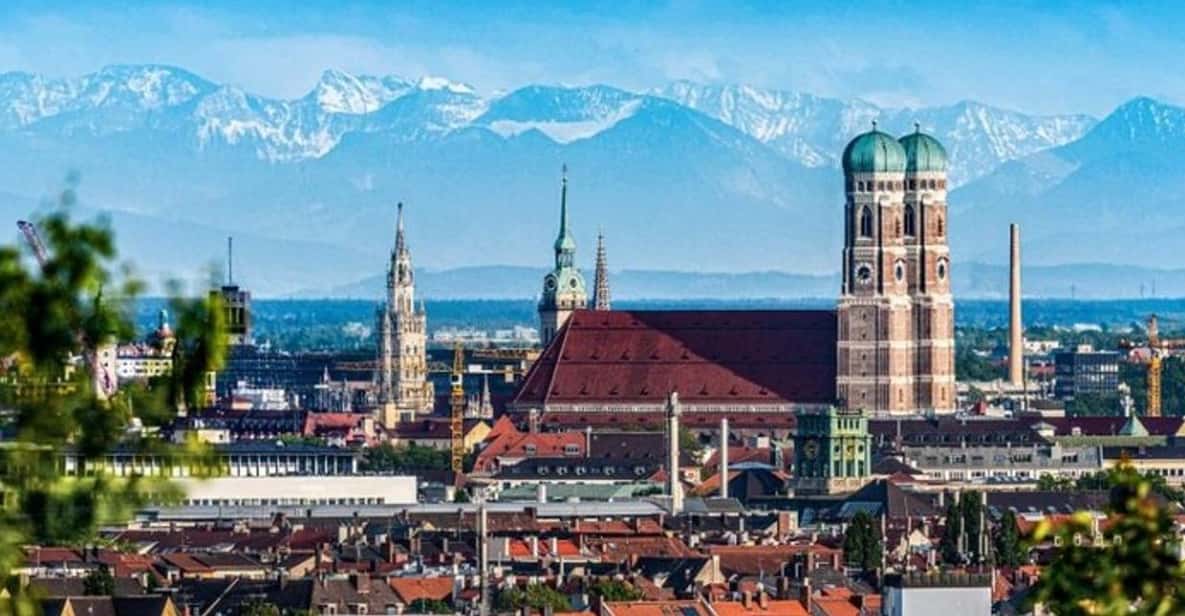
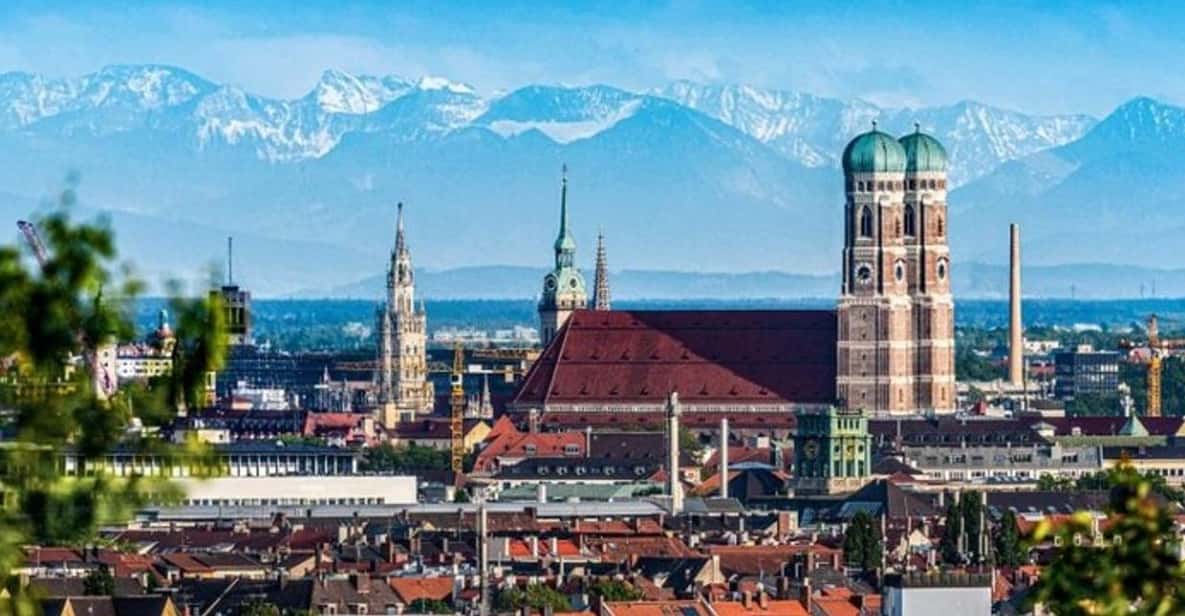
Next up is Frauenkirche, described as the biggest church in Munich. This stop is a strong choice for a short tour because it gives you an anchor you can feel immediately—size and presence. In walking terms, it also breaks up the square-to-square rhythm and gives you a landmark you can orient around after the tour ends.
What I like about this kind of inclusion is that you get the church not just as a sight, but as a chapter. The guide’s job here is to connect what you’re seeing to Munich’s religious and cultural identity—especially through a major cathedral-type landmark. Even if you don’t have deep background knowledge going in, the guide helps you understand why this church is a reference point in the city.
The Frauenkirche stop also sets up the next one nicely, because it contrasts the idea of “major” with “oldest.” You’ll feel the difference when you walk from the church scene to St. Peter’s.
Potential drawback: if you’re the type who wants interior details, this tour data doesn’t promise anything beyond seeing and learning at the landmarks themselves. You can still get a lot out of the explanation and the exterior context, but plan your expectations accordingly. If you want heavy inside-the-building time, you might later add a dedicated church visit on your own schedule.
St. Peter’s Church: the oldest Catholic church in Munich
Then comes St. Peter’s Church, identified as the oldest Catholic church in Munich. This is the stop that turns the tour from “sights” into “timeline.” When you visit an older religious site right after a major one like Frauenkirche, it naturally helps you understand how long Munich has been shaping its identity around faith and public buildings.
This is also a great moment for your guide’s story-telling. Older churches often carry layers: changes in use, changes in style, and changes in the city around them. The tour keeps it focused—short visit, guided context—so you’re not stuck for hours. But you still come away with the sense that Munich didn’t just grow rapidly in recent centuries. It formed itself over a long stretch of time.
If you’re the kind of traveler who likes hearing “why this spot matters,” this is the stop where you’ll probably nod along more. The age detail (oldest Catholic church) gives you a clean reference point that’s easy to remember later when you see other historic buildings around town.
Rathaus-Glockenspiel viewing plus Neues Rathaus architecture notes
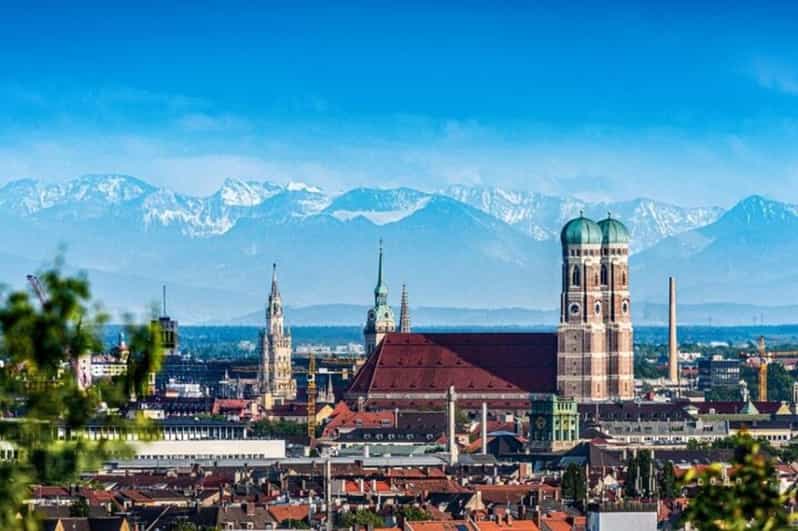
The tour loops back into the Marienplatz civic zone with attention to the Rathaus-Glockenspiel and the New Town Hall area. I’m calling this out as its own section because this is where the tour’s planning really shows: you’re not just hopping between random big names. You’re grouping the experience so your brain can build connections.
Neues Rathaus is more than a backdrop. You’ll learn about it as the seat of the Munich Town Council and take in architectural features from the right vantage points. A good walking tour makes you look longer than you would alone. That’s the hidden value here: you slow down just enough to notice details you’d otherwise skate past.
One thing to keep in mind if you’re very photo-focused: the best shots may involve waiting for the crowd to shift. Use the guide’s pauses to your advantage. When someone points out a clock mechanism or explains the civic layout, that’s your cue to position yourself quickly and then step back before the group moves on.

Staatliches Hofbräuhaus: beer hall culture and royal-history context
The finale heads to Staatliches Hofbräuhaus (the state-run Hofbräuhaus). This is described as the most popular beer hall and brewery in the city, and the guide also gives the cultural and royal-history angle.
This stop is valuable for two reasons. First, it ties the sightseeing walk to something you can still feel after you leave: Munich’s beer-hall culture isn’t just a marketing idea, it’s part of how people socialize and celebrate. Second, the “royal history” context helps you understand why this place became so important—because it wasn’t designed to be only a modern tourist photo spot.
A balanced expectation check: the tour doesn’t include food or drinks. So don’t treat Hofbräuhaus as a tasting experience. Instead, think of it as a guided cultural landing. If you want a beer afterward, you’ll be able to decide then—based on what’s available, what you’re in the mood for, and how long you want to stay.
This stop also works as a perfect handoff point for self-exploring. Once you’re here, you can continue around the center without feeling like you’re escaping the tour prematurely. You’ll end the walk at the same general starting area on Sophienstraße, so it’s easy to return, regroup, or head off to your next plan.
The 2-hour pacing: efficient, but not built for endless stops
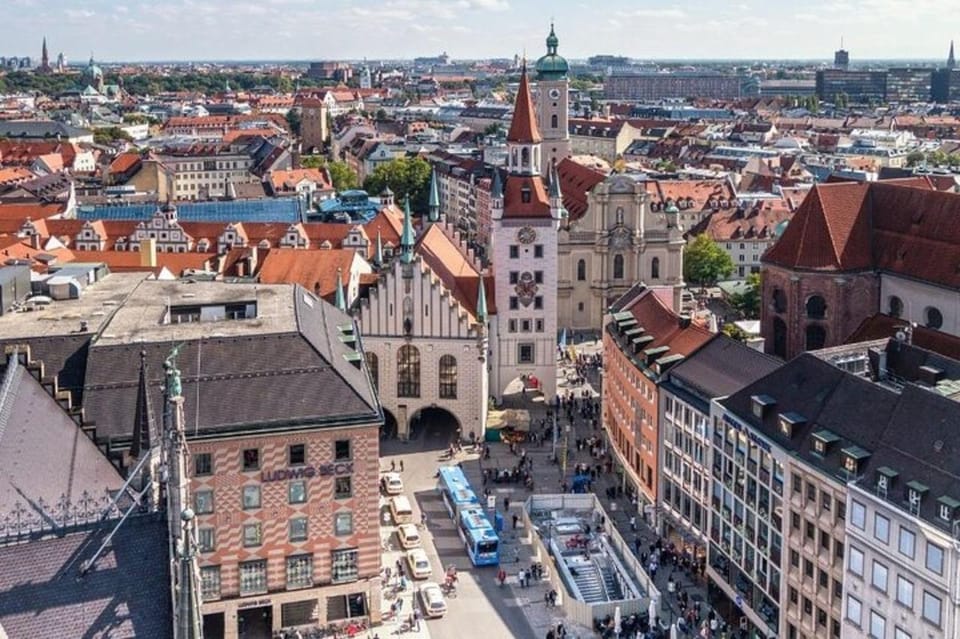
This tour lasts 2 hours, and that time limit shapes everything. You’ll see a concentrated list of landmarks: Marienplatz, Frauenkirche, St. Peter’s Church, Rathaus-Glockenspiel/Neues Rathaus area, and Staatliches Hofbräuhaus. That’s a lot to fit in without rushing straight through without context.
If you’re a first-time Munich visitor or you want a “core sights” day, this duration can be exactly right. You get the key icons and enough background to make the city feel navigable. If you’re a history collector who wants extra detours, you may feel the gaps after you finish—because there simply isn’t time to spread out.
That short format also means the guide has to work with the group’s energy level. You’ll likely get frequent “look here, notice this” moments, then move on. It’s not a slow museum tour. It’s a city-walking orientation with landmark explanations that keep your attention on what matters.
One more pacing detail: you start near the center and remain centered. That’s good for time and comfort, but it also means you won’t cover distant neighborhoods. If your Munich plan includes a specific outside district, you’ll probably want to book a separate activity for that.
Price and value: what $44 buys you in Munich time
The listed price is $44 per person for a guided 2-hour walking tour. In Munich, that price usually reflects the real cost of what you’re buying: someone knowledgeable enough to turn “big buildings” into understandable stories, plus the time saved by not figuring out what to see first.
Here’s how I think about value for this specific tour:
- You’re paying for focused guidance around high-impact landmarks.
- The tour includes a live guide and a small-group or private option, depending on your selection.
- You’re not paying extra for entry fees in what’s described here, and food or drinks aren’t included, so you control that spending.
At $44, it’s a good deal if you care about context more than extra stops. It’s less of a bargain if you’d rather pay nothing and wander independently with a map app. But even then, consider this: the clock at Rathaus-Glockenspiel and the civic/church stories are the kind of things you can miss without help.
If you want the best value, show up ready to ask questions. A good guide will tailor the story a bit, and the right question can turn a quick stop into a memorable takeaway.
Guide quality: Roberto’s WWII context is a real plus
The tour experience often rises or falls on the guide. In the reviews, Roberto stands out as notably personable and knowledgeable, and one review specifically credits him for sharing new, interesting information about WWII while pointing out Munich history through the tour sights.
I can’t promise every guide will cover WWII in the same way, but I do think it’s a smart strategy: ask your guide what the city’s major 20th-century story looks like from these landmarks. When a guide is confident, you’ll get connections you wouldn’t easily find on your own—especially in a city where modern identity was shaped by earlier events.
That said, one review also describes a major service failure: the guide didn’t show up, and messages apparently weren’t answered, turning a paid day into a disappointment. I can’t speak to how common that is from one account, but it does highlight what you should do: be proactive. If something feels off near the meeting time, follow up quickly and double-check the exact meetup point before you assume everything is fine.
Simple habit that helps: take a screenshot of the meeting location and arrive a bit early with a clear plan for what you’ll do if the guide is running late.
Practical tips for shoes, photos, and a smooth walk
A walking tour lives or dies on small practical choices. Here’s what I’d do if I were planning my day around this one.
Wear comfortable shoes, no debate. The itinerary is built around multiple stops and you’ll want the freedom to pause and reposition for photos. Bring your patience too. Marienplatz and the central areas attract crowds, so you’ll often be working around other people’s timing.
For photos, plan for “look up” moments. The Rathaus-Glockenspiel and the New Town Hall area are vertical and detail-driven. If you only bring a quick glance, you’ll miss the good stuff your guide is explaining. If you use your phone camera, keep your settings simple and don’t spend 10 minutes fighting with filters while the group moves on.
Finally, remember that the tour doesn’t include food or drinks. That means you should either eat before you go or plan your post-tour stop nearby. Hofbräuhaus is a tempting finish, but you’ll decide what to order based on your own schedule and appetite.
Should you book this Munich Old Town walk?
Book it if you want a short, focused introduction to Munich’s core sights—Marienplatz, Frauenkirche, St. Peter’s Church, the Rathaus-Glockenspiel area, and Staatliches Hofbräuhaus—plus a guide who explains what you’re seeing so the city makes sense faster.
Skip it or pair it with something else if:
- You’re the type who wants lots of extra stops and a slower pace.
- You prefer self-guided exploring and feel totally comfortable building your own route.
- You need a very flexible format. This is a set 2-hour walk with a fixed sequence.
My final take: at $44 for a guided orientation with major landmarks, this is a smart first-Munich choice. If you can, arrive on time, ask questions early, and then use the rest of your day to roam with a clearer sense of where everything fits.
FAQ
How long is the Munich Old Town walking tour?
It’s 2 hours.
How much does the tour cost?
The price is $44 per person.
Where do I meet the guide?
Meet in front of The Charles Hotel, a Rocco Forte Hotel (Sophienstraße 28).
What major sights are included?
You’ll visit Marienplatz, Frauenkirche, St. Peter’s Church, the Rathaus-Glockenspiel area (New Town Hall/Neues Rathaus), and Staatliches Hofbräuhaus.
Is food or drinks included?
No, food or drinks aren’t included.
What group options are available?
The tour can be private or small-group, depending on the option chosen.
What cancellation flexibility is offered?
Free cancellation is available up to 24 hours in advance for a full refund.