REVIEW · MUNICH
Munich Surf Experience Surfing In Munich Eisbach River Wave
Book on GetYourGuide →Operated by Travel Costa Rica -Worldwide Experiences · Bookable on GetYourGuide
A standing wave in the middle of Munich. If you want something off the usual surf map, the Eisbachwelle is the real thing: a rideable river wave just steps from the Englischer Garten. I love that the experience is both city-friendly and totally weird in the best way, and I also like that your session includes more than just boards, with beer, juice, photos, and all the wet gear waiting for you.
The main thing to consider is safety and fit. This is recreational surfing with a degree of risk, and it’s not suitable for pregnant women, people with epilepsy, people over 331 lbs (150 kg), or anyone with pre-existing medical conditions.
What makes it work is the small group and the way Max runs the session. You’ll get close, constant help (not a quick handoff), and the setup is built for first-timers and intermediates alike, with stability-focused equipment and a Pro Sony photo package so you’re not left guessing how it looked.
In This Review
- Key Things That Make Munich River Surfing Worth Your Time
- Why the Eisbachwelle Feels Like No Other Munich Experience
- The 3-Hour Session Flow: From Meet-Up to Getting Real Rides
- Eisbach Physics in Plain English: What Makes the Wave Rideable
- Your Gear Includes the Stuff That Changes Everything
- Coaching With Max: Small Group, Close Help, Real Feedback
- Where You’ll Actually Be in Munich (and Why That’s the Point)
- Price and Value: What $131 Buys You in the City
- Who Should Go (and Who Should Skip It)
- Practical Tips: What to Bring and How to Be Ready
- Should You Book Munich Surfing at the Eisbach?
- FAQ
- Where is the meeting point for the Munich surf experience?
- How long is the session?
- Is surfing possible at any time of year?
- What’s included with the ticket price?
- What surf equipment do I get?
- What wetsuit and footwear are provided?
- Who is this experience not suitable for?
Key Things That Make Munich River Surfing Worth Your Time
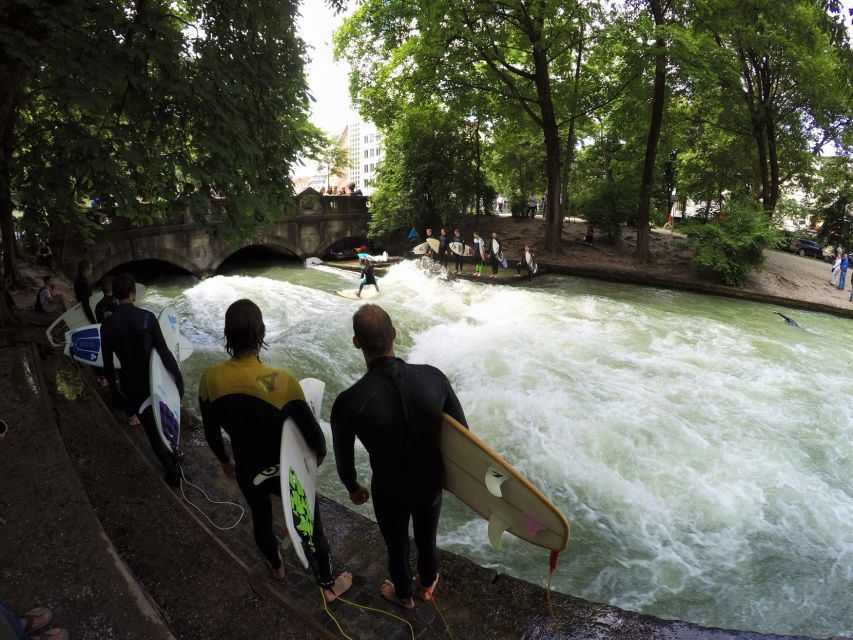
- City-center wave with real surf culture right near the Englischer Garten
- Half-meter standing wave created by the Eisbach river’s stone step and boulders
- Max-style coaching with a small group capped at 5 participants
- Soft-top 7’0 surfboards plus fins and a leash for more stability
- 5 mm full wetsuit with an integrated hood and 4 mm booties for year-round comfort
- Pro Sony camera photos plus water, beer, and juice included
Why the Eisbachwelle Feels Like No Other Munich Experience
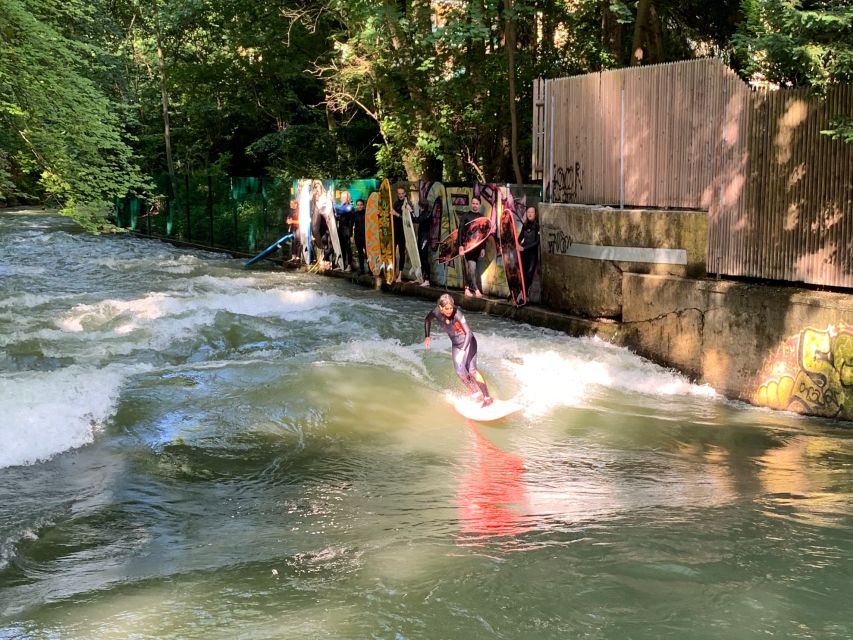
Munich usually sells you culture, beer halls, and a slow stroll vibe. Surfing here does not match that script. Yet the Eisbachwelle has turned into one of Germany’s most famous river-surf spots, precisely because it sits where people live their daily lives.
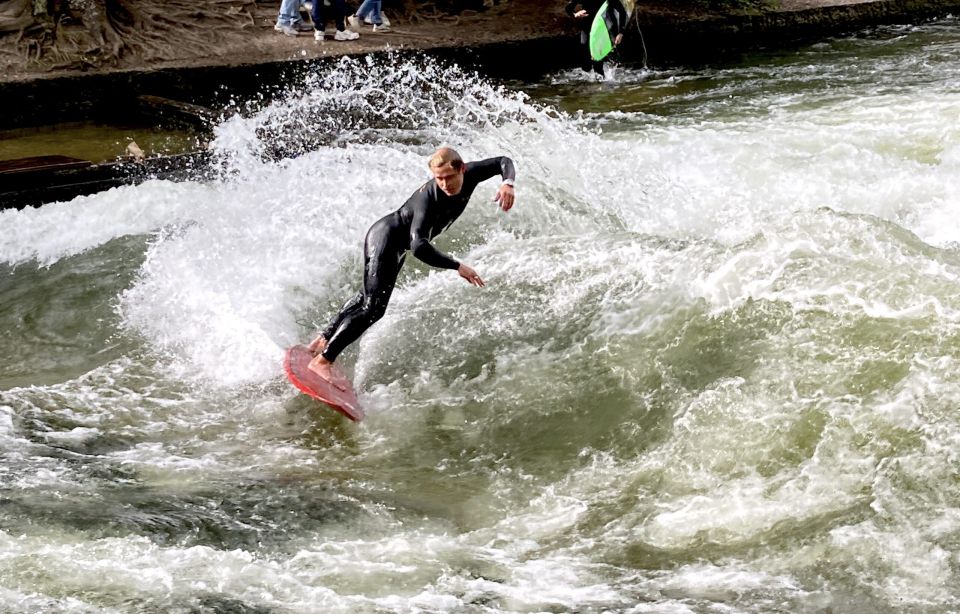
The wave is at the entrance to the Englischer Garten park area, fed by the Eisbach River. The river runs underground for part of the journey and then reappears near Haus der Kunst in Munich’s Lehel district (close to Prinzregentenstrasse). At the outlet, a stone step forces the flow up into a standing wave about half a meter tall. That’s the physics. The magic is that the city carries on around it.
I love the contrast: you’re in a major European city, and yet the moment you see surfers lining up, you get pulled into a totally different rhythm. Watching it from the bank first is half the fun. And once you’re in the water, you understand why locals and visitors keep coming back.
You can also read our reviews of more tours and experiences in Munich.



The 3-Hour Session Flow: From Meet-Up to Getting Real Rides
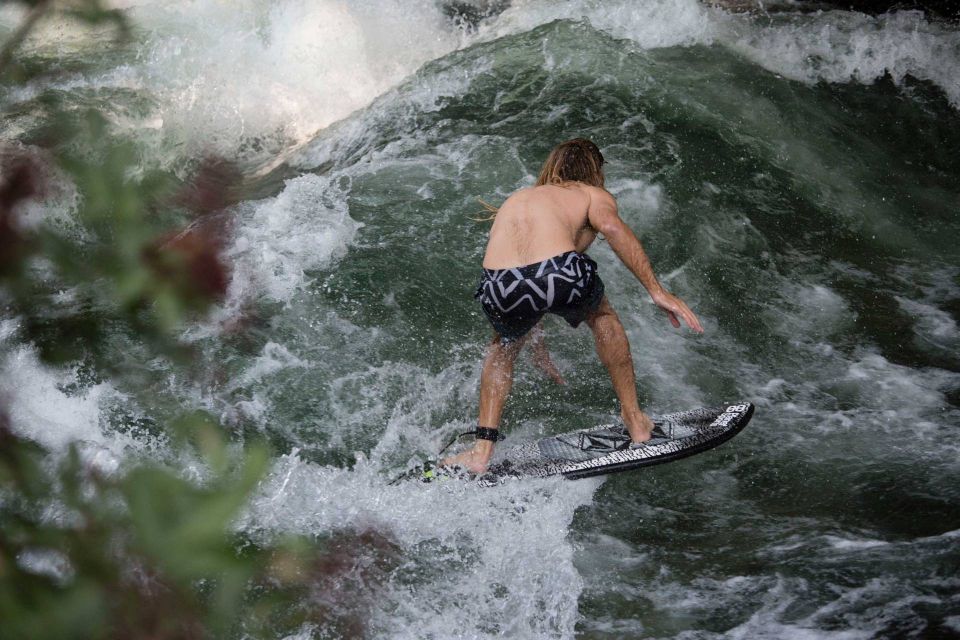
This is a short, focused session, scheduled for about 3 hours (starting times depend on availability). You meet in Altstadt-Lehel, 80538 Munich and the activity ends back at the meeting point.
Here’s what that time is designed to do for you:
1) Meet, gear up, and get oriented
You show up in sportswear and bring essentials like a towel and ID. Then you get suited up and ready with the provided equipment. This matters because Munich weather can change fast, and river conditions are not beach conditions. Having the right wetsuit and booties from the start lets you focus on learning the wave instead of fighting the cold.
2) Practice and positioning before you commit
Before you’re chasing rides, you need comfort—getting used to the board, your balance, and how the current moves past the wave. The surfboards are 7’0 soft tops, which are built for stability and buoyancy. That design choice is huge for reducing stress when you’re new or still learning.
3) Time on the main wave (the part everyone comes for)
The Eisbach standing wave is the target. It’s consistent enough to ride, but it’s still a moving river system, so you’ll want guidance on timing and how to approach the face safely.
4) Photos and the you-did-it moment
You’ll get Pro Sony camera photos included. That’s the smart move for a spot like this: it’s hard to document your own progress while you’re busy not falling. Having photo coverage also lets you replay your session later and learn what to adjust next time.
From the session style, you should expect Max to stay involved. One of the standout details is how accessible and hands-on the guide is, with support at all times. In other words, you’re not thrown into the deep end—though you still need to respect the water and the rules.
Eisbach Physics in Plain English: What Makes the Wave Rideable
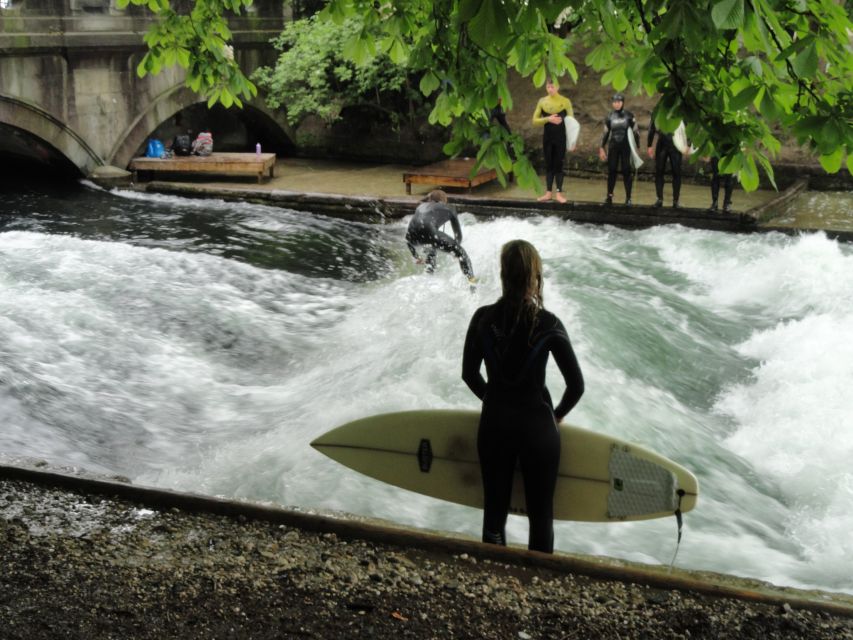
This wave has a reputation because it’s repeatable. The setup is specific: fast-moving water passes under a bridge and then flows over a rise in the river bed. That rise is made of a pile of boulders that creates a hump in the water.
The flow doesn’t just crest and fall away. The hump makes the water almost flow back on itself, which is what creates the standing wave effect you can actually ride.
There’s also a human layer to the wave’s story. The local surfers historically used a log lowered into the wave to make the face smoother. That is now banned due to council regulations, so the wave you’re riding is the official, city-managed version. That also explains why instruction matters: if you know what you’re dealing with, you’ll spend more time learning and less time guessing.
And yes, you’ll see a standing wave about half a meter tall. That number matters because it tells you the ride is not just a tiny ripple. It’s big enough to practice turning and to get that real wave sensation—without needing to travel to a remote coastline.
Your Gear Includes the Stuff That Changes Everything
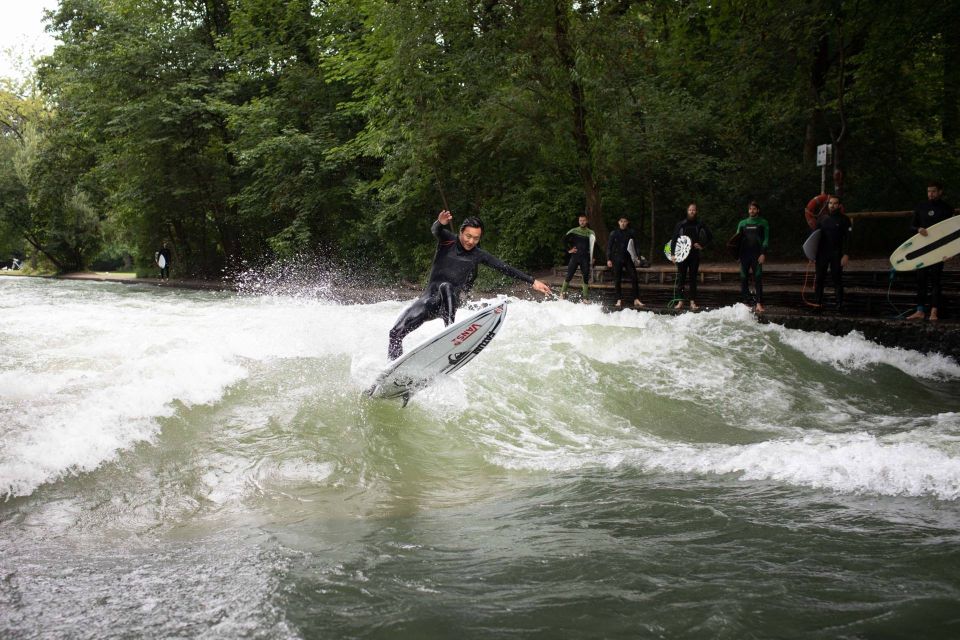
At river surf spots, gear is not a checklist item. It changes whether you can focus on the wave or just try to survive the temperature.
Here’s what’s included with this Munich surf experience:
- Surfboards: 7’0” soft top with leash and fins
- Bodyboard (optional to try): 42”
- Wetsuit: full one-piece neoprene, 5 mm, with an integrated hood
- Booties: 4 mm neoprene surfing booties
- Locker: for storing your items
- Pro Sony camera photos
- Water, beer, and juice
That 5 mm wetsuit with an integrated hood is the kind of detail that makes year-round surf practical in Munich. Even if the air feels mild, river water can feel cold fast. The booties help your feet stay responsive when you’re entering and exiting and when you’re dealing with wet surfaces around the river edge.
The soft-top board is also a smart value choice. A stable board helps you spend less time fighting balance and more time learning your stance, timing, and how the current carries you. When you’re trying to ride a standing wave, being confident about the board is half the battle.
If you want to experiment, you can also try a 42” bodyboard. That can be a nice stepping stone, especially if you’re still figuring out how you like to move on the water.
Coaching With Max: Small Group, Close Help, Real Feedback
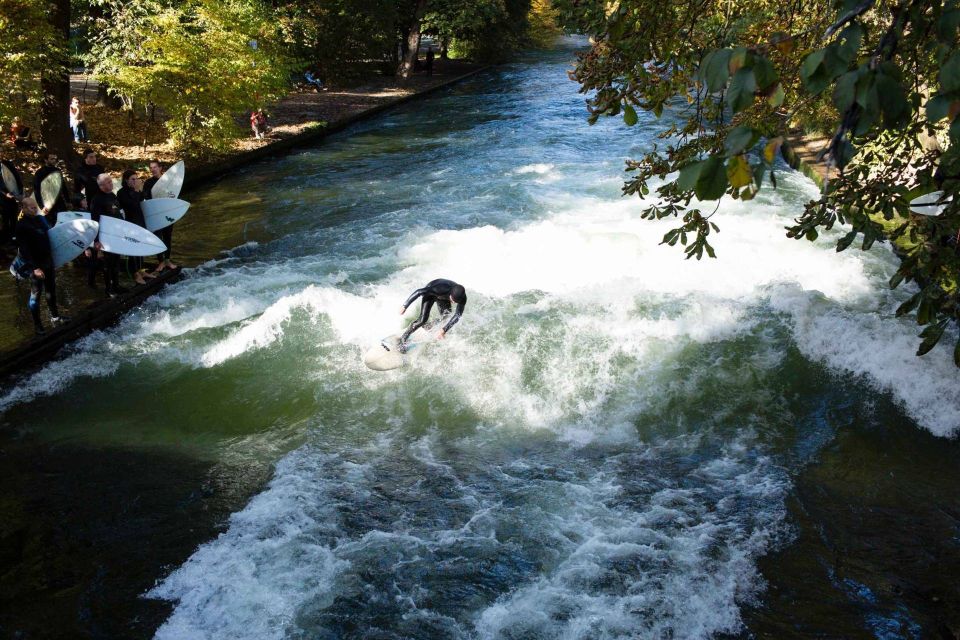
This is limited to a small group of 5 participants, which makes a difference at a spot like the Eisbach. Too many people and the guide has to triage. Here, the structure supports actual coaching.
Max is the host/instructor, and the coaching style is hands-on. The key pattern I’d take from how this session is run is that Max stays with you while you’re learning. You’re not just getting safety rules and then a long wait.
That matters because the wave is consistent, but it still demands technique. You’ll need help with:
- how to approach the wave safely
- how to balance on the soft-top board
- how to read the wave face as the current pushes you along
- how to adjust after a few attempts
If you’re the kind of traveler who likes to learn fast instead of just spectate, this format fits well.



Where You’ll Actually Be in Munich (and Why That’s the Point)
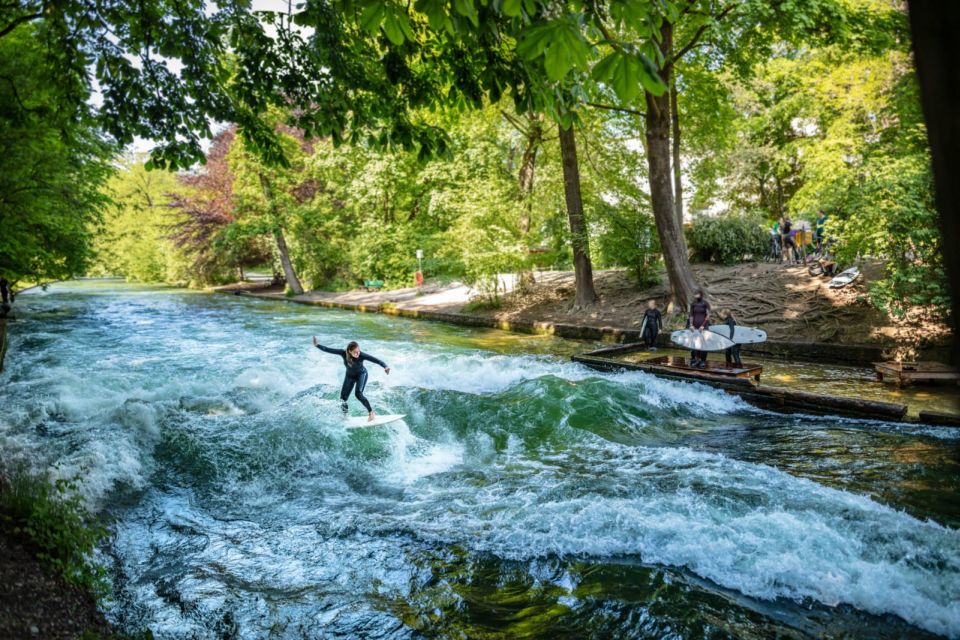
You’re not heading to a remote coastline. You’re surfing in the Lehel district, close to Haus der Kunst, with the wave emerging from underground near the park entrance.
That central location is more than a convenience. It changes the whole trip feel. You can do this without treating it like a multi-day expedition. It’s a short activity that still feels like a major life “yes” moment.
It also explains the crowd energy you’ll see at the river: people gather to watch. That means you’re not surfing in total isolation. You’re part of a long-running city ritual that has been happening for decades—people have been surfing there for around 40 years.
And because it’s right near one of Munich’s most recognizable green spaces, you get a surreal effect. You step out of the water and you’re still in Munich: buildings, park paths, and everyday city life. That’s why the Eisbachwelle keeps pulling people back.
Price and Value: What $131 Buys You in the City
At $131 per person, this isn’t a “cheap thrill,” but it’s also not a luxury-only experience. The value comes from what’s included.
You’re getting:
- boards (7’0 soft top) and fins/leash
- bodyboard option (42”)
- 5 mm full wetsuit with hood and 4 mm booties
- water plus beer and juice
- Pro Sony camera photos
- locker space
- instruction and a small group setup (max 5)
If you price it out, gear rental plus a wetsuit plus guided coaching plus photos would usually add up quickly, especially in a city-center activity. The fact that it bundles all of that into a single 3-hour session is what makes the price feel fair.
The other value point is time. You’re not spending hours figuring out equipment or traveling to the wave. You get focused instruction and real time on the standing wave.
Who Should Go (and Who Should Skip It)
This experience is best for people who want something distinctively Munich and don’t mind a physical challenge in a cold-water setting.
It’s not suitable for:
- Pregnant women
- People with epilepsy
- People over 331 lbs (150 kg)
- People with pre-existing medical conditions
The experience also asks you to accept a degree of risk. That’s not a scare tactic; it’s simply good planning. River surfing has currents, slick surfaces, and a wave you’re trying to ride while staying safe.
If you love novelty and you’re comfortable getting wet in the city, this is a strong match. If you’re expecting a calm paddle or a guaranteed standing-wave ride with no effort, you might feel disappointed. But if you’re there to learn, try, and improve with coaching, you’ll likely have a great time.
Practical Tips: What to Bring and How to Be Ready
Plan like you’re surfing in a cold-weather outdoor river environment, even if it looks sunny.
Bring:
- Towel
- Camera (if you want your own shots)
- Sportswear
- ID card (copy accepted)
A few smart mindset tips:
- Wear layers you can remove easily. You’ll be switching between warm-up, gearing up, and time in the water.
- Keep expectations realistic. The wave is rideable, but you’re still learning a technique.
- If you’ve never worn booties or used a soft-top board before, expect a short adjustment period. That’s normal.
Also, since the wave is created by city infrastructure, you should respect the local rules around the spot. The log smoothing practice has been banned, which shows how the city manages the wave. Follow the guide’s instructions and you’ll have a smoother, safer experience.
Should You Book Munich Surfing at the Eisbach?
Book it if you want a true Munich story. This isn’t just a tour stop; it’s a real city-center surf culture moment where the wave is consistent, the coaching is close, and the included gear makes it practical.
Skip it if you’re not comfortable with water risk, if you fall into the listed non-suitable categories, or if you want a totally no-effort experience. The Eisbach rewards people who show up ready to learn and respect the water.
If you’re curious and adventurous, this is the kind of activity that makes your Munich trip feel unusual in the best way.
FAQ
Where is the meeting point for the Munich surf experience?
The start is in Altstadt-Lehel, 80538 Munich, with a listed Google Maps meeting-point link. The activity ends back at the meeting point.
How long is the session?
The experience runs for about 3 hours. Starting times depend on availability.
Is surfing possible at any time of year?
Yes. The experience says you can surf in Munich at any time of year.
What’s included with the ticket price?
It includes water, beer, juice, surfboards, wetsuits, bodyboard (you can try it), a Pro Sony camera photo package, and a locker.
What surf equipment do I get?
You’ll get a 7’0” soft-top surfboard with leash and fins. A 42” bodyboard is also available to try.
What wetsuit and footwear are provided?
You get a full one-piece neoprene wetsuit that is 5 mm with an integrated hood, plus 4 mm neoprene surfing booties.
Who is this experience not suitable for?
It’s not suitable for pregnant women, people with epilepsy, people over 331 lbs (150 kg), or people with pre-existing medical conditions.