REVIEW · DACHAU MEMORIAL TOURS
Dachau Memorial Public Tour
Book on Viator →Operated by Global Guide Services · Bookable on Viator
Dachau demands your attention from minute one. This 5-hour small-group public tour in Munich gives you a clear route through the Dachau Memorial area, from the Main Gate to the major sites that explain how the camp worked and why it matters.
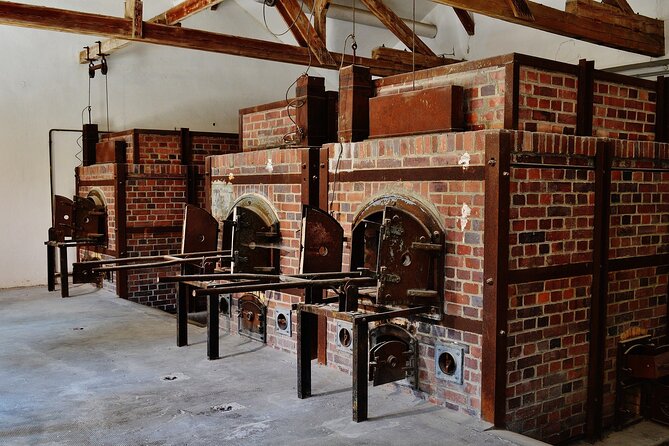
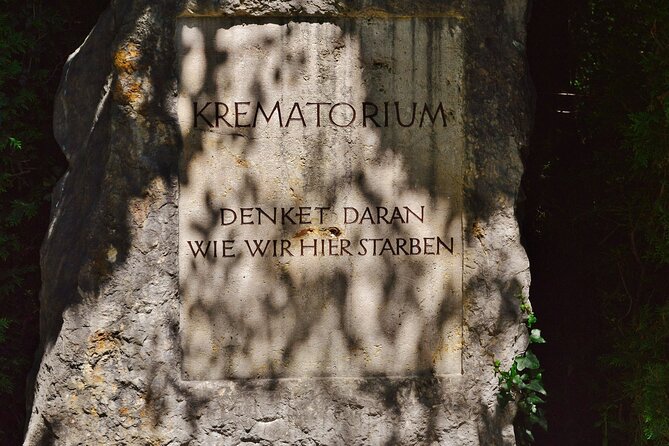
Two things I really like: first, the tour’s history is handled with real command, with guides such as Charlotte and Michael sharing strong context about Dachau and the broader WWII period. Second, the experience has a respectful rhythm, including a moment of silence outside the crematorium to remember those who were lost. One consideration: this is emotionally heavy material, and the tour does not include food or beverage, so plan your day so you’re not hungry during the hardest parts.
In This Review
- Key highlights to know before you go
- A 10:00 am small-group Dachau tour from Marienplatz
- Entering through the Main Gate and Jourhaus corridor
- A note on what you should watch for
- The Former Maintenance Building museum: context before you go deeper
- The Bunker and reconstructed barracks: seeing control in daily life
- Memorials, religious sites, and the camp’s security structure
- Why the guided structure matters at Dachau
- Price and value: what $118.74 really buys you
- Logistics that make the tour easier on your day
- Who should book this Dachau Memorial Public Tour
- Should you book this Dachau Memorial Public Tour?
- FAQ
- Where does the Dachau Memorial Public Tour start?
- What time does the tour begin?
- How long is the tour?
- How much does it cost per person?
- Is the admission ticket included?
- What is included in the tour price?
- How many people are in the group?
- Is food and beverage included?
- What is the cancellation policy?
Key highlights to know before you go
- Up to 15 travelers means you can hear your guide and stay oriented without feeling rushed
- Start at Fischbrunnen near Marienplatz (10:00 am) for an easy meeting point in central Munich
- Route through the camp layout in order, from gate and administration to roll call and camp areas
- Former Maintenance Building museum plus exhibits/documentary material helps you connect what you see to what happened
- Bunker, reconstructed barracks, religious memorials, and security structures show different sides of the system
- Free admission ticket is included, so you’re mainly paying for the guide and organization
A 10:00 am small-group Dachau tour from Marienplatz
This public tour starts back at the meeting point near central Munich: Fischbrunnen, Marienplatz 8 (80331 München), with a 10:00 am start. It ends back at the same meeting spot, which keeps your day simple if you’re using public transport.
The group is capped at 15 travelers, so you’re not getting lost in a big crowd. That matters at Dachau, where you’ll want time to look closely and absorb what’s in front of you without constant shoulder-to-shoulder pressure.
You can also read our reviews of more tours and experiences in Munich.
Entering through the Main Gate and Jourhaus corridor
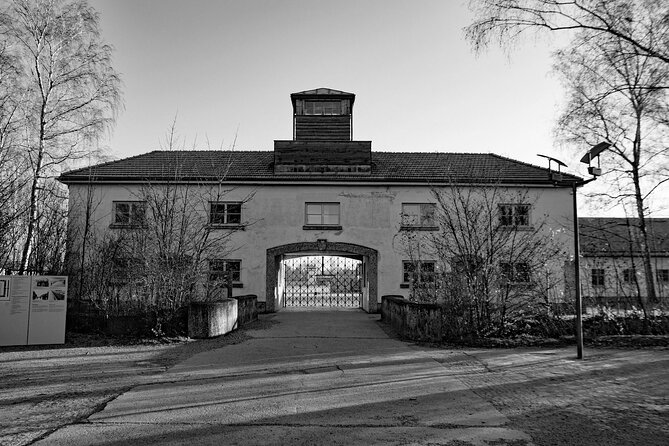
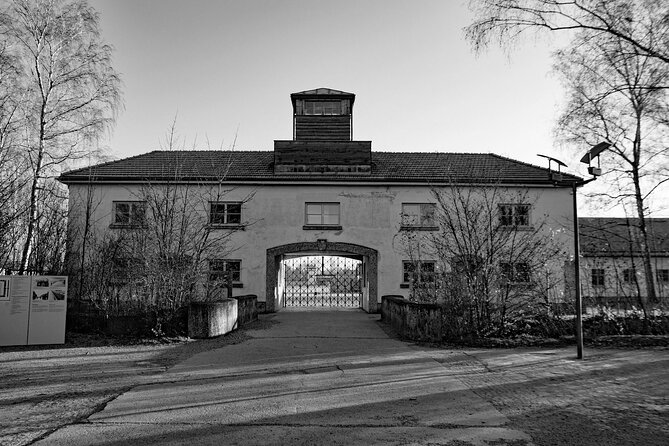
You begin by stepping through the solemn Main Gate, the kind of entry that instantly changes your mood. From there, the tour moves to the Jourhaus, a building once used for camp administration. Even if you’ve read about Dachau before, this is where the place starts to feel real as an organized system, not just a headline.
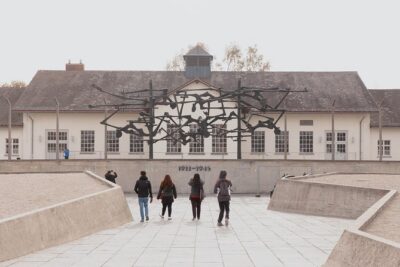
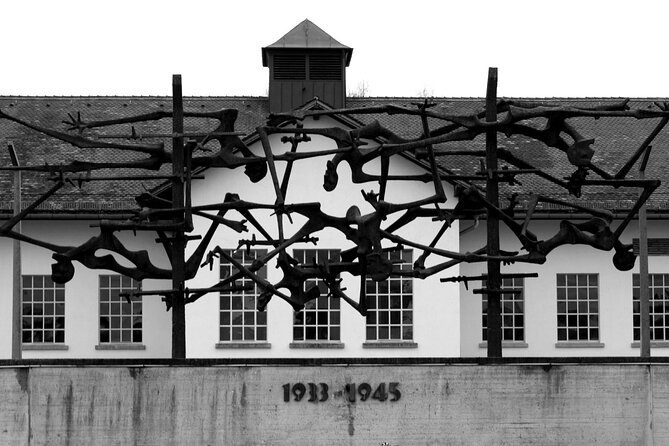
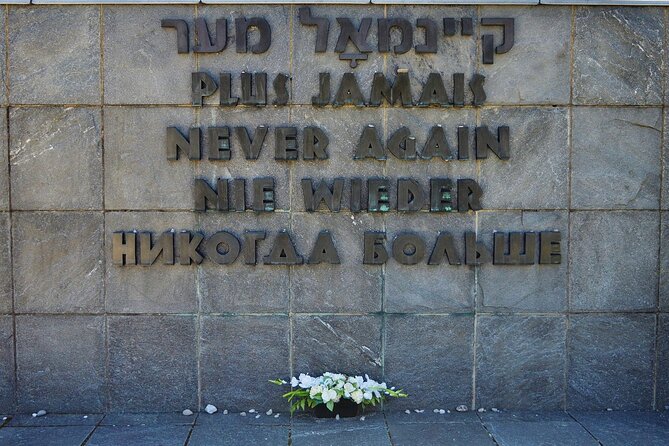
Next comes the Roll Call Area, now marked by the International Monument. This section is powerful because it connects visitors to the scale of imprisonment: Dachau’s inmates came from many places, and the memorial design helps make that international reality visible.
The goal here is not just walking past structures. Your guide’s job is to give you a way to interpret the space: what these areas were for, how daily control worked, and why the camp became known for brutal, methodical terror.
A note on what you should watch for
As you move through each space, don’t rush to “complete the route.” Slow down for the physical details—entry points, sightlines, and where certain areas were designed to control movement. That kind of attention makes the rest of the tour click.
The Former Maintenance Building museum: context before you go deeper
A major part of the experience happens in the Former Maintenance Building, which houses a museum. This is where the tour shifts from the camp’s physical layout to the historical record behind it.
You’ll see exhibits and documentary material that guide you through the camp’s history and evolution. The overview that frames Dachau is stark: it was the first concentration camp opened by the Nazis in 1933 in Germany, originally intended for political prisoners, and later it became a forced-labor camp with over 200,000 inmates over its 12 years of operation.
The tour also emphasizes Dachau’s role as an “Academy of Terror”—a model and training ground for brutality. Knowing that framing before you hit the more confined areas makes those spaces harder to ignore, in the best sense.
The Bunker and reconstructed barracks: seeing control in daily life
After the museum, the tour moves toward the areas that feel most oppressive: the Bunker and the reconstructed barracks.
The Bunker is a former prison area, and it’s exactly the kind of place where your questions shift from what it looked like to what it would have meant to be inside it. Even without adding sensational details, the location communicates punishment and confinement. It’s one of the spots where a guide’s careful pacing helps you stay steady and respectful.
Then you’ll visit two Reconstructed Barracks, which offer glimpses into prisoner daily life. “Reconstructed” is important. It means you’re not just looking at ruin—you’re also being shown how parts of life may have functioned, so the camp’s machinery doesn’t stay abstract.
This is also where I think guides do a great job translating buildings into meaning. Your guide helps you connect the dots between administration, imprisonment, labor, and the way the camp kept power through routine.

Memorials, religious sites, and the camp’s security structure
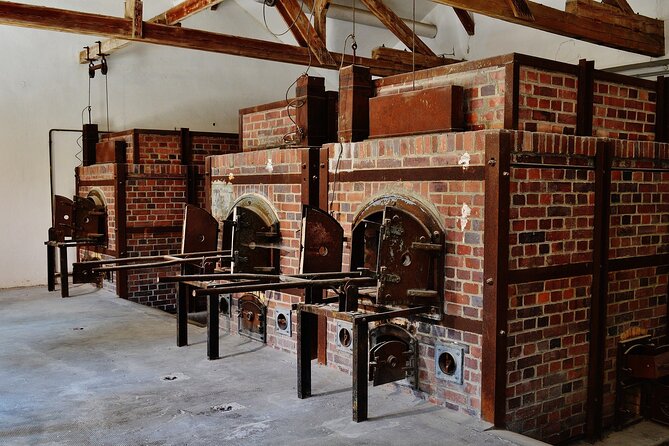
Dachau includes diverse religious memorials, and that part of the route can be surprisingly moving. You’re reminded that people of different faiths were imprisoned here, and the memorials point toward shared humanity even amid deliberate persecution.
The tour also includes security installations—things like guard towers and partially reconstructed outer walls. This part helps you understand how the camp wasn’t only about what happened indoors. It was about control in every direction: who could enter, who could move, and how the camp guarded its boundaries.
If you tend to focus on the museum content, don’t skip these sections. The physical security features are part of the story, because they show the camp was engineered to enforce fear and limit escape—practically and psychologically.
Why the guided structure matters at Dachau
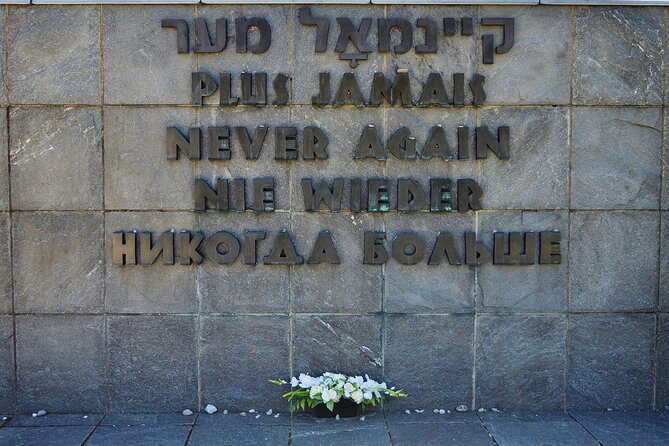
Dachau’s scale and emotional weight can be overwhelming if you go in with no plan. What I like about a guided route like this is that it gives you a logical sequence: gate and administration, roll call and monuments, museum context, and then the more contained areas and memorial structures.
The tour’s emphasis on international impact is not just a statistic. Dachau is described as having killed around 40,000 people from 34 nations before liberation in 1945 by the American army. When you learn that in the right order—while you’re physically in the camp—it sticks. It also helps you understand why memorial sites are designed the way they are: to prevent forgetting and to preserve historical clarity.
Guides such as Charlotte and Michael also add credibility through the way they handle the broader WWII context. In other words, you’re not just touring buildings; you’re getting a framework for the period that produced Dachau and the larger system behind it.
Price and value: what $118.74 really buys you
At $118.74 per person, the price isn’t cheap. But in a place like Dachau, the main value is what you’re paying for: a local professional guide plus a thoughtfully timed route through the memorial site.
Here’s the practical breakdown based on what’s included:
- Local professional guide is included
- Admission ticket is free for the experience
- Small group size (up to 15) is part of the value
- Mobile ticket is used, and group discounts apply
What’s not included is also important. Food and beverage aren’t provided, so you need to budget for lunch or snacks on your own. That doesn’t make the tour worse, but it does mean you should start the day fed, especially if you expect to stay focused for the full 5 hours (approx.).
If you want a simple planning tip: treat this as a half-day commitment with high emotional intensity. You’ll enjoy it more if you’re not rushing to find food midway through.
Logistics that make the tour easier on your day
The meeting point is central and close to public transportation, which is a big deal in Munich. Starting near Marienplatz also helps if you’re already sightseeing nearby before or after.
You’ll also get confirmation at booking time, and you’ll use a mobile ticket. That’s helpful when you’re juggling multiple tickets in one day.
The tour length is about 5 hours, and the experience ends back at the meeting point. That round-trip structure takes a lot of stress out of your planning, especially if you’re trying to fit Dachau into a busy Munich itinerary.
Who should book this Dachau Memorial Public Tour
This is a strong choice if you want:
- a structured visit that follows the camp’s layout rather than wandering
- small-group pacing with time to absorb key areas
- a guide who can explain Dachau’s role and not just point at buildings
It’s also a good fit if you’re traveling with the kind of mindset that respects memorial sites: quiet attention, thoughtful questions, and patience during difficult moments.
If you’re looking for a light, casual outing, this is not it. Expect serious content and plan your day accordingly.
Should you book this Dachau Memorial Public Tour?
Yes, I’d book it if you want a guided route that helps you understand Dachau without getting lost. The combination of a small group, a professional guide, and a route that moves through the most important areas makes the visit more meaningful and easier to process.
I’d think twice only if you’re not prepared for emotionally intense history or if you know you’ll struggle without food during a long stretch. If you’re willing to plan for those realities, this tour offers solid value for the time and the guidance you get in one of the most important memorial sites in Germany.
FAQ
Where does the Dachau Memorial Public Tour start?
The tour starts at Fischbrunnen, Marienplatz 8, 80331 München, Germany.
What time does the tour begin?
The start time is 10:00 am.
How long is the tour?
The duration is approximately 5 hours.
How much does it cost per person?
The price is $118.74 per person.
Is the admission ticket included?
Yes. The admission ticket is listed as free for this experience.
What is included in the tour price?
It includes a local professional guide on the public guided tour.
How many people are in the group?
The tour has a maximum of 15 travelers.
Is food and beverage included?
No. Food and beverage are not included.
What is the cancellation policy?
Free cancellation is available up to 24 hours in advance for a full refund. If you cancel less than 24 hours before the start time, the amount paid will not be refunded.